Rungs Labs

Rungs Pilgrimage · Swimming · Japan

The 10 Best Places to Swim in Japan

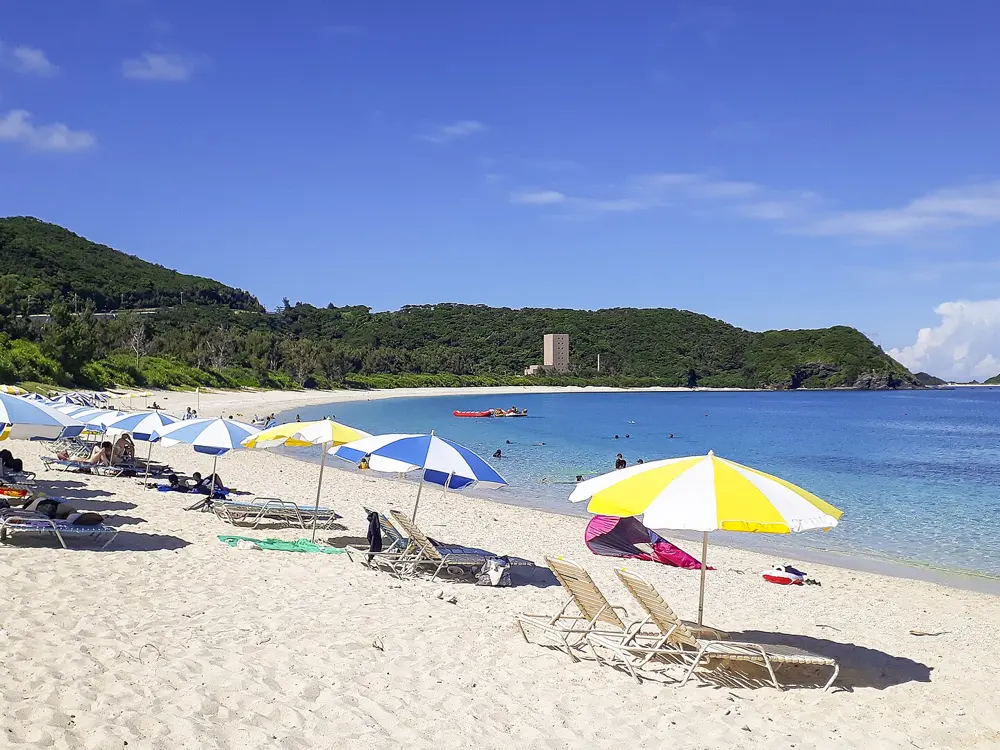
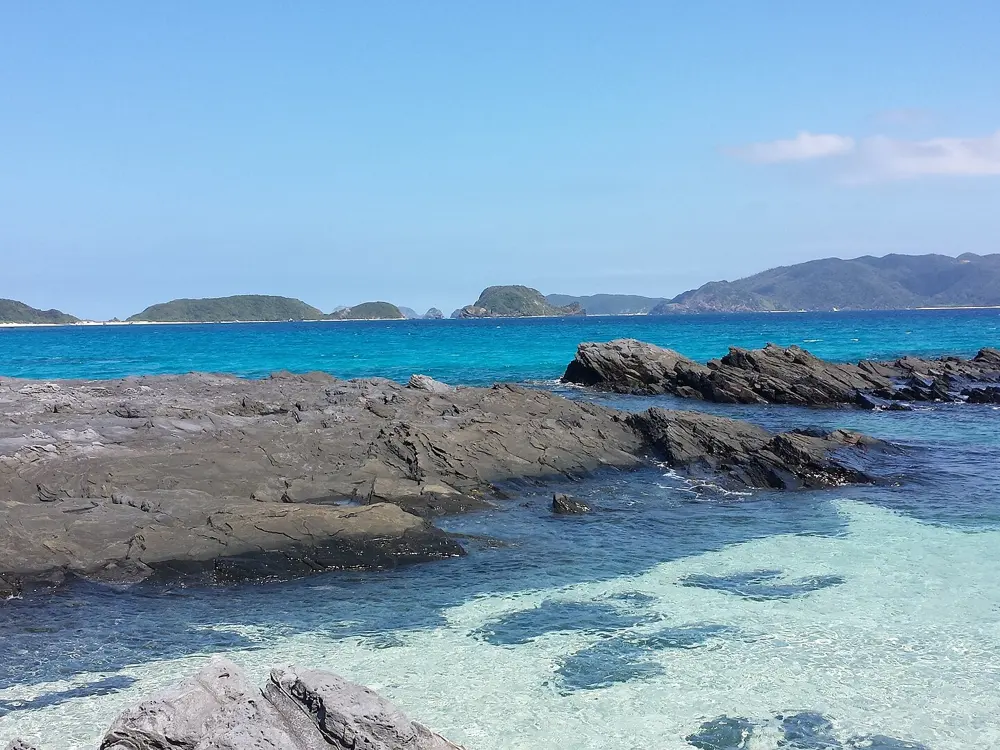
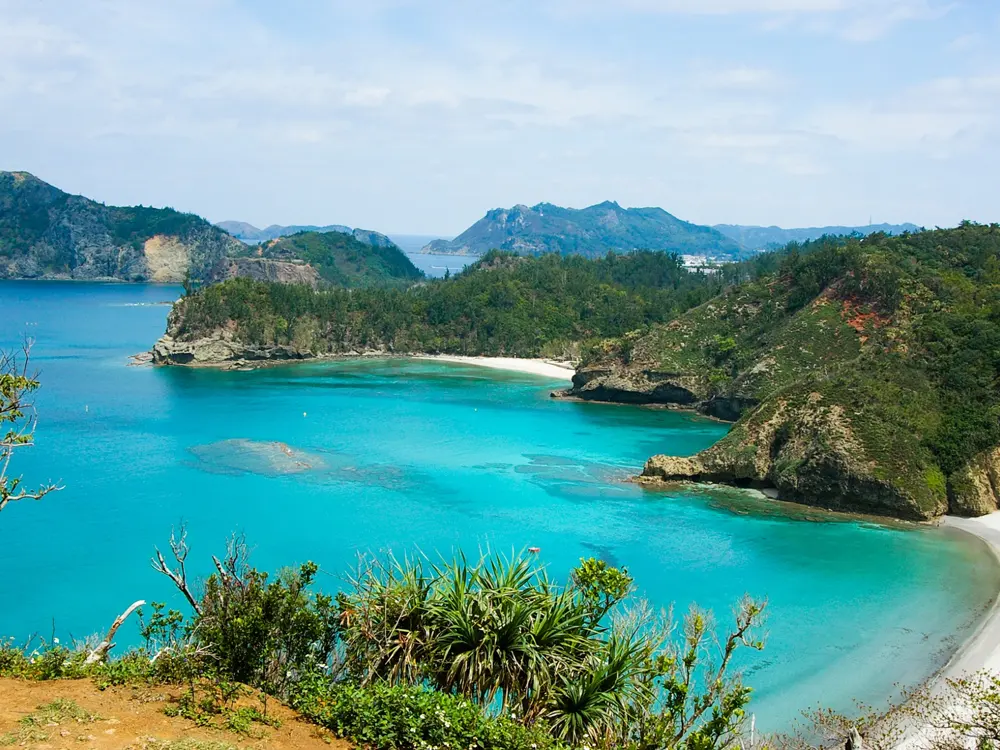
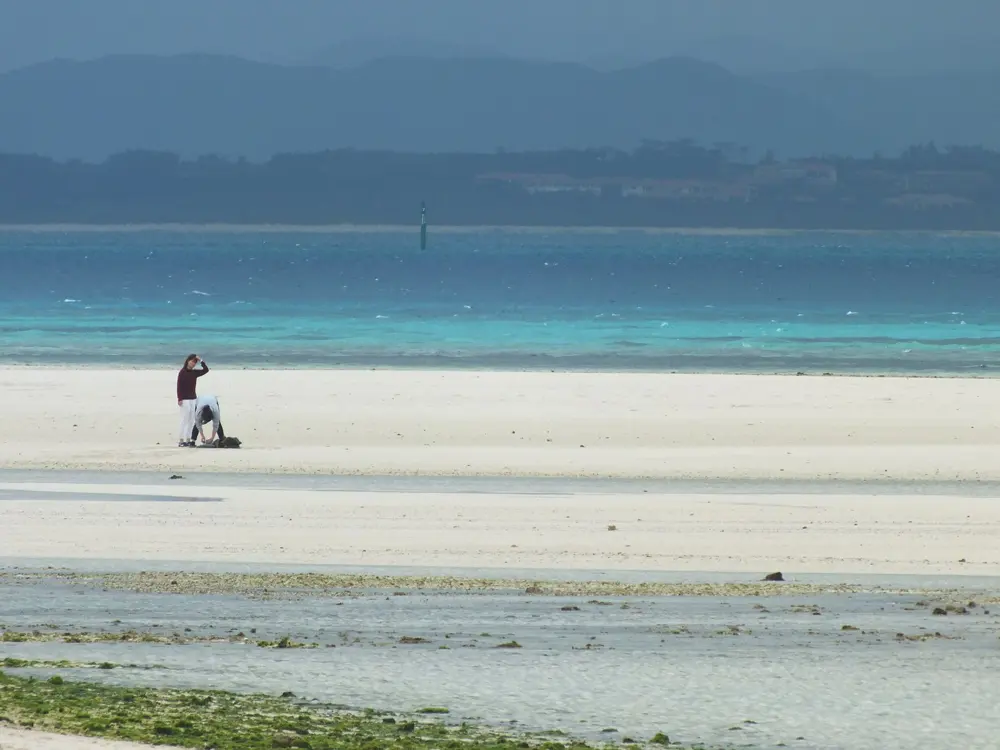
The Kerama Islands, Zamami, Aka and Tokashiki, Okinawa. Photo: Hashi photo (CC BY 3.0)

Japan is an island country with warm seas in the south, cooler water in the north and a great freshwater lake in the middle, and it takes its summer swimming seriously: beaches open on a set day, with a ceremony, lifeguards and a timetable, and most close again at the end of August. The best of it is in the islands of Okinawa and Ogasawara, where you swim off white sand over coral, but the main islands have clear water too, from Izu and the Kii Peninsula to the Sea of Japan and the Sanriku coast.

These ten run from the Kerama Islands, Miyako and Taketomi in Okinawa and the Ogasawara Islands, a day's sail from Tokyo, to Shirahama in Wakayama, Shimoda on the Izu Peninsula, Lake Biwa near Kyoto, Wakasa Wada and Tsunoshima on the Sea of Japan and Jodogahama in Iwate. For each one you get the classic swims, the season, how to get there, the fees and rules, how hard it is and where to stay. Every fact comes from prefectures, towns, tourism bodies, ferry companies, newspapers or the other pages linked at the bottom.

Updated 2026-10-19

  1. 01The Kerama IslandsZamami, Aka and Tokashiki, Okinawa
  2. 02Chichijima, Ogasawara IslandsOgasawara, Tokyo
  3. 03Yonaha Maehama, MiyakojimaMiyako Island, Okinawa
  4. 04Kondoi Beach, TaketomiTaketomi Island, Yaeyama, Okinawa
  5. 05Shirarahama, ShirahamaShirahama, Wakayama
  6. 06Shirahama Ohama and the Shimoda beachesShimoda, Izu Peninsula, Shizuoka
  7. 07JodogahamaMiyako, Iwate
  8. 08Wakasa Wada BeachTakahama, Fukui
  9. 09Tsunoshima Ohama BeachTsunoshima, Shimonoseki, Yamaguchi
  10. 10Omi-Maiko, Lake BiwaOtsu, Shiga
01 / 10

The Kerama Islands

Zamami, Aka and Tokashiki, Okinawa
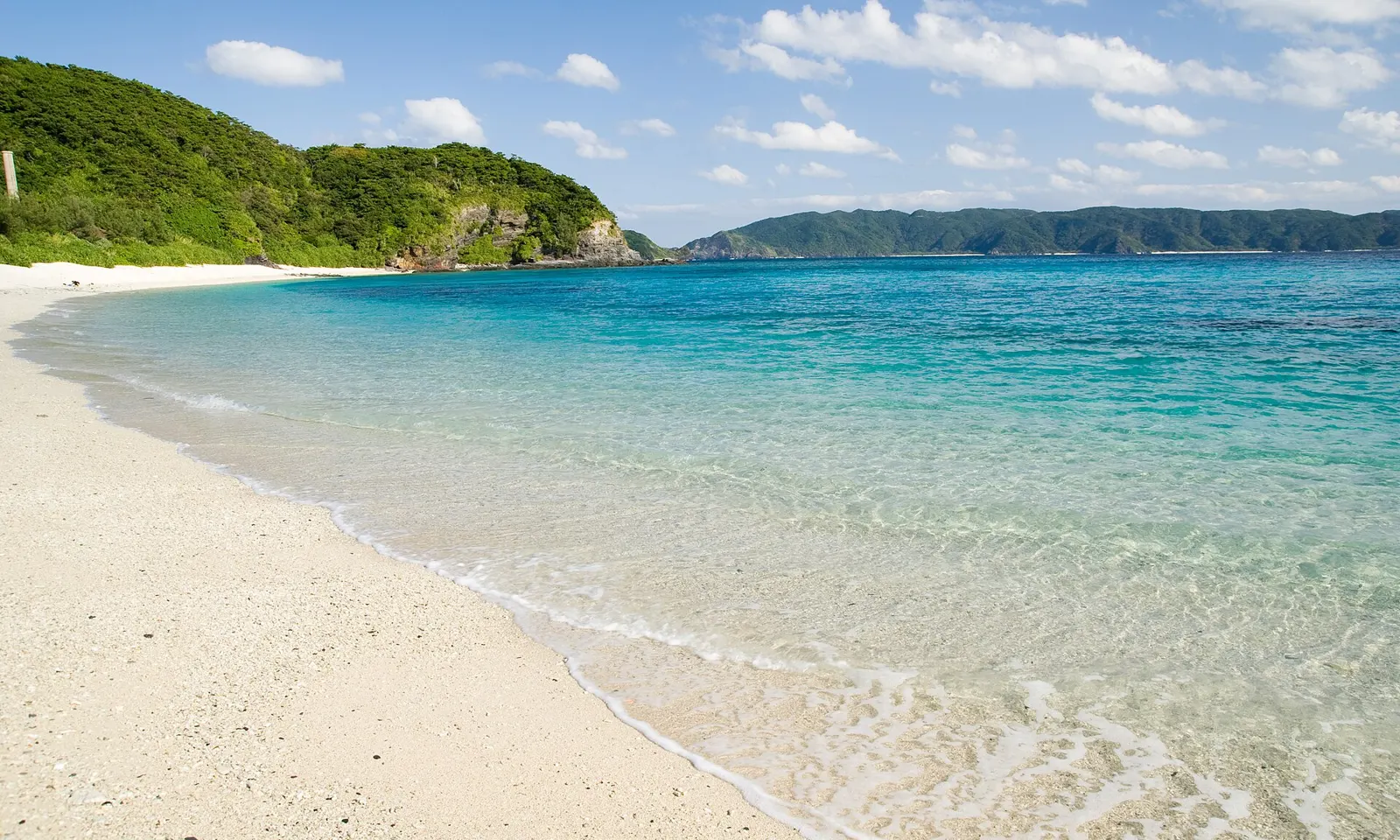
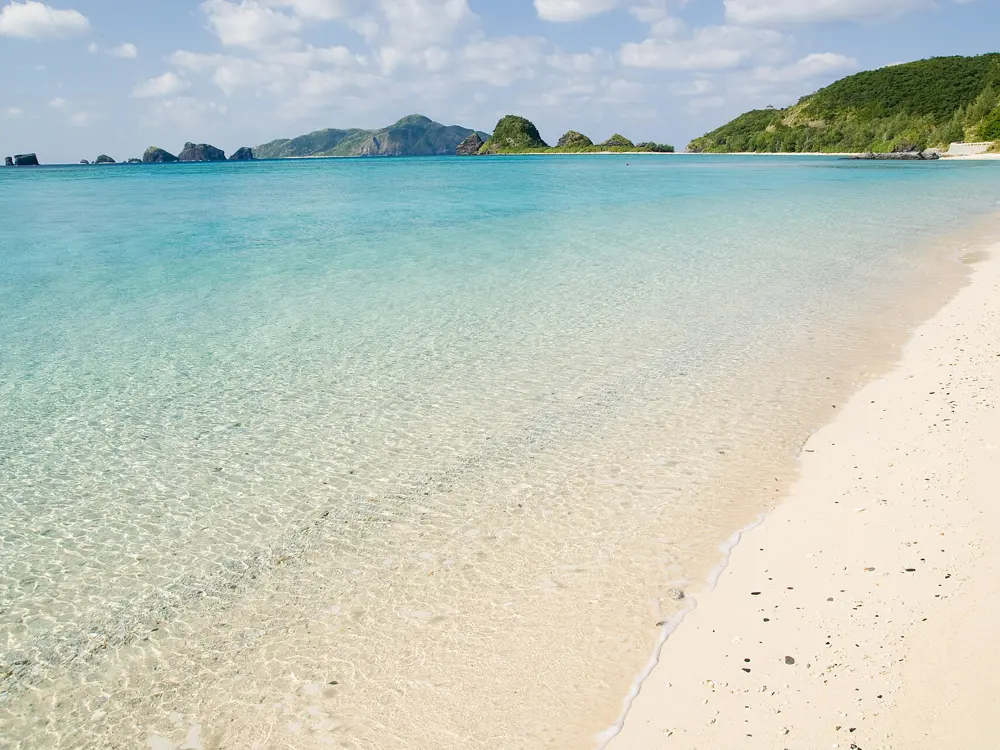
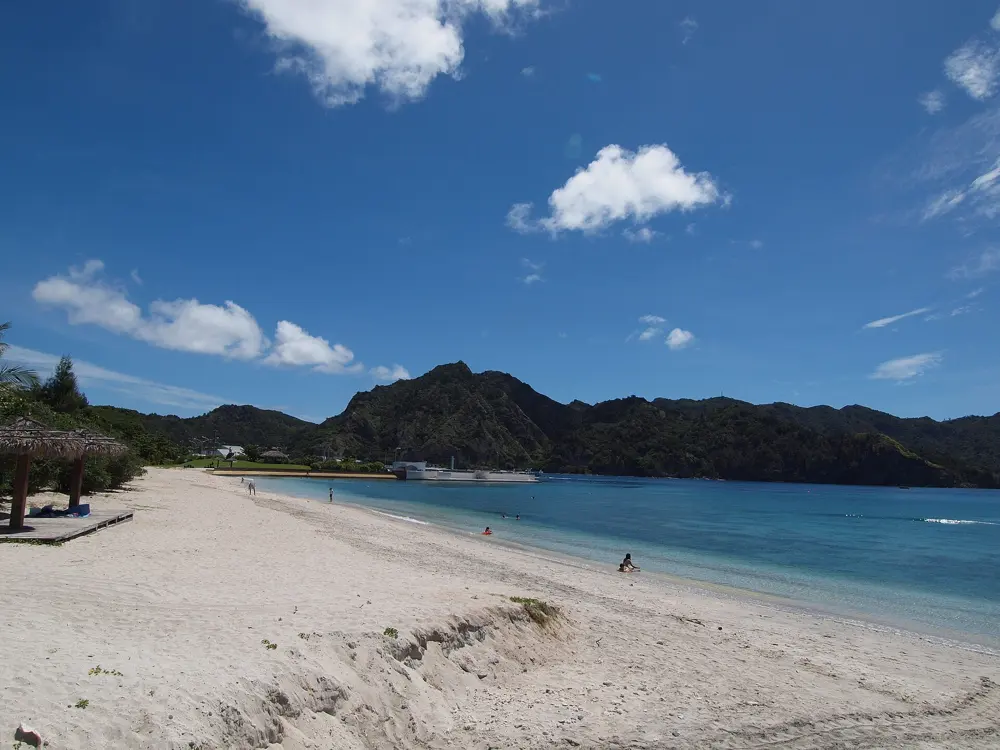
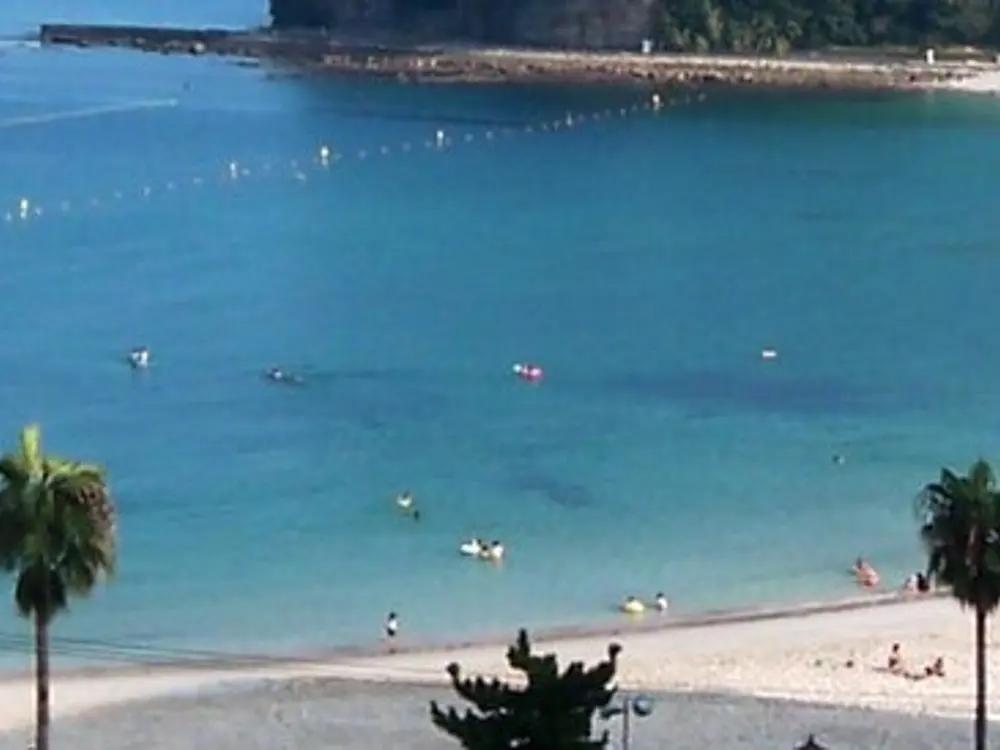
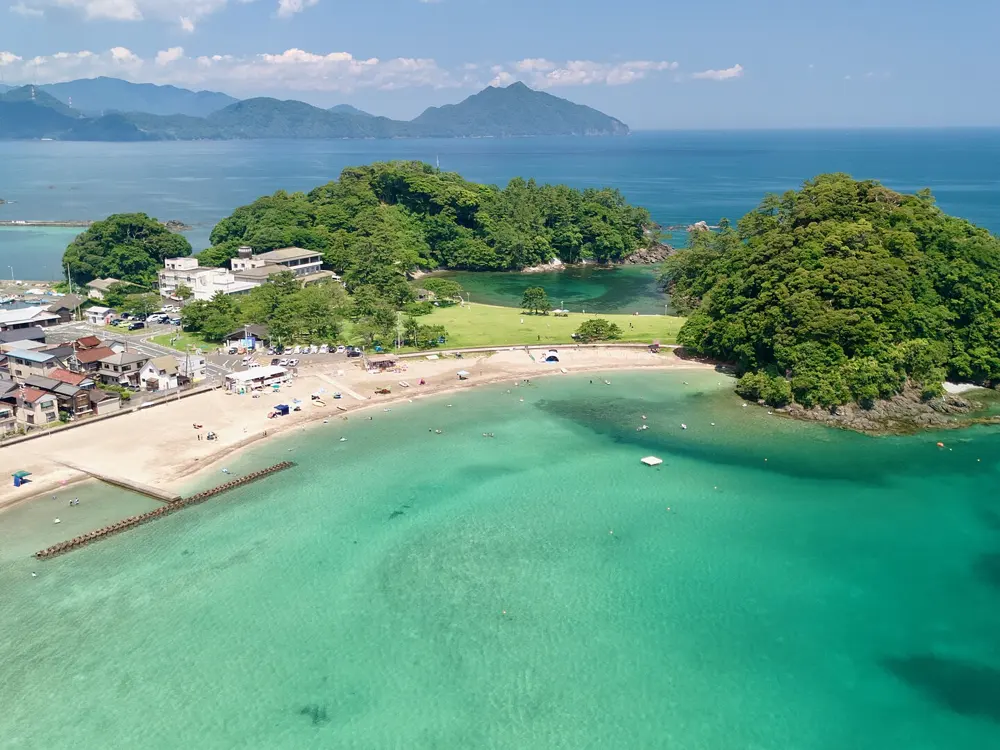
The clear turquoise water and white sand of Furuzamami Beach on Zamami Island

Photos: Hashi photo (CC BY 3.0), Guillaume 1995 (CC BY-SA 4.0), Hashi photo (CC BY 3.0), Rickard Törnblad (CC BY-SA 4.0)

Distance
About 32 km southwest of Okinawa Island
Coral
248 species recorded on the reefs
Swim season
April to the end of October
Ferry
Naha to Zamami in about 50 minutes by fast boat

Why go

The Kerama Islands are a group of 36 islands, four of them inhabited, about 32 km southwest of Okinawa Island, and since 5 March 2014 their islands and waters have been the Keramashoto National Park, known for the clear water locals call Kerama blue. The reefs hold 248 species of coral, and two reef areas, off western Tokashiki and between Aka and Zamami, have been Ramsar wetlands since 2005. It is the easiest place in Japan to swim off a white beach straight onto living coral.

The route

Furuzamami Beach on Zamami, given two stars by the Michelin Guide, is a long, narrow beach facing Tokashiki. It shelves steeply, so big clumps of coral with schools of tropical fish lie only a short swim from the sand, and the water is usually calm enough for snorkelling. Tokashiki, the largest island, and Aka, linked to Geruma, have beaches of their own and are on the same ferry routes from Naha.

When to go

The swimming season runs from April to the end of October, with lifeguards on duty at Furuzamami and parasols and loungers for hire until then. From December to April humpback whales come into these waters, and whale watching trips go out from Zamami.

Getting there

Ferries leave Tomari Port in Naha. In October 2026 the fast Queen Zamami sailed at 9am and 3pm and reached Zamami in 50 minutes; the slower Ferry Zamami takes about 2 hours. Adult fares were 3,950 yen one way on the fast boat and 2,900 yen on the ferry. Tickets are sold on the day at Tomari, and boats fill in summer, so book by phone with the Zamami village office. Separate boats run to Tokashiki.

Permits and booking

No permit is needed to swim. Visitors to Zamami pay a 100 yen island tax; children up to junior high school age are exempt. On 19 October 2026 the Ferry Zamami was out of service while it covered the Aguni route, and the inter-island boat Mitsushima between Zamami, Aka and Tokashiki's Aharen had a suspension notice dated 15 October, so check the village site before you plan island hopping.

How hard it is

The water off Furuzamami is usually calm, but the beach drops off quickly, so weaker swimmers should stay close in. Do not stand on or touch the coral. In summer Okinawa Prefecture warns about the habu box jellyfish: its 2026 advisory ran from 1 June to 30 September, and it asks swimmers to cover their skin, swim inside the jellyfish nets on guarded beaches and carry vinegar for first aid.

Where to sleep

Zamami, Aka and Tokashiki each have small guesthouses and minshuku near their harbours, and many visitors come out from Naha for the day.

Tips

  • Board the Queen Zamami 10 minutes before departure from berth 7A on the north side of Tomari Port, a 7 to 8 minute walk from the Tomari building.
  • Check the Zamami village site on the morning you sail: it posts whether the boats are running and whether swimming at Furuzamami is possible that day.
02 / 10

Chichijima, Ogasawara Islands

Ogasawara, Tokyo

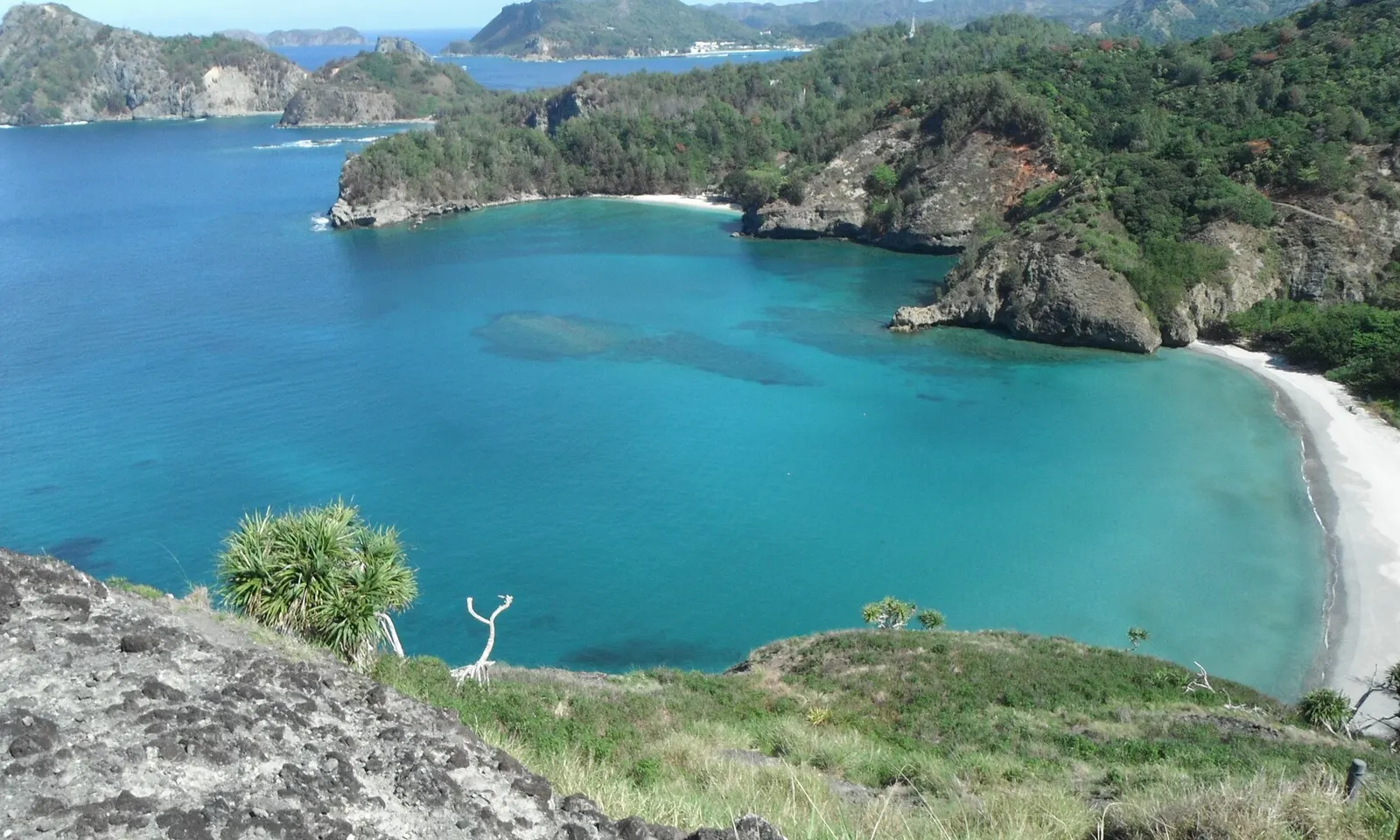
Kominato Beach on Chichijima seen from the Nakayama Pass, a curve of white sand around a turquoise bay

Photos: Ootahara (CC0), タクナワン (CC0), Anagounagi (CC BY-SA 4.0), Kaz Ish (CC BY-SA 3.0)

Distance
Copepe to Kominato, about 20 minutes' snorkel
From Tokyo
About 1,000 km, 24 hours by ferry
World Heritage
Since 2011
Best season
June to October

Why go

The Ogasawara Islands lie about 1,000 km south of Tokyo and still belong to it, and there is no airport: the only regular way in is a 24 hour ferry. That distance keeps the water clear and the beaches empty. The islands were inscribed as a natural World Heritage Site in 2011, bottlenose and spinner dolphins live around them all year, and Chichijima, the main island, with about 2,100 people, has a string of bays where you can walk into the sea from the sand and swim over coral.

The route

Miyanohama, a five minute drive from Futami Port on the north coast, is the sheltered snorkelling bay, with coral close in; the shipping line's guide says not to swim past the yellow buoys, because the currents beyond them are strong. Kominato, the island's longest beach, is shallow and easy, and the classic swim is the snorkel from quiet Copepe Beach round to Kominato, about 20 minutes over fish and coral. At Sakaiura you can snorkel round the partly sunken wreck of the Hinko Maru, a ship from the Second World War. Half day dolphin swimming trips cost about 9,000 yen and full days about 14,000 yen.

When to go

June to October is the best time for swimming and snorkelling, when the air is consistently above 25 C. Humpback whales are most often seen from February to April and sperm whales from July to September. Typhoons can delay the ferry by a day or more, so leave slack at the end of a trip.

Getting there

The Ogasawara Maru sails from Takeshiba Pier in Tokyo and takes about 24 hours. It leaves roughly every six days, and about every three days in the peak seasons, so a trip usually means a week. One way fares range from about 30,000 to 90,000 yen depending on class and season, the cheapest being a shared room with a bedroll. Kominato is easy to reach by bus or car from the village at Futami Port; Copepe has no public transport, so rent a car or scooter.

Permits and booking

No permit is needed to swim from the beaches. Minamijima, 20 minutes by boat from Futami Port, can only be visited with a guide certified by the Tokyo Metropolitan Government, with a limit of 100 visitors a day; rinse your shoes on arrival to avoid bringing in seeds.

How hard it is

Easy to moderate. Kominato and Copepe are shallow and calm, but Miyanohama and the remote beaches near the southwest tip have strong currents outside the bays. Help is a long way off, since emergencies leave the islands by helicopter or seaplane, so stay inside the bays and swim with a partner.

Where to sleep

Hotels, pensions, shops and restaurants are clustered in the small village around Futami Port, which you can walk around, and many lodgings pick guests up from the ferry.

Tips

  • Book your bed before your ferry ticket: the ferry sets the length of your stay, and lodgings fill on peak sailings.
  • Copepe has underwater markers that name the corals found only in Ogasawara, so take a mask even for a short swim.
03 / 10

Yonaha Maehama, Miyakojima

Miyako Island, Okinawa

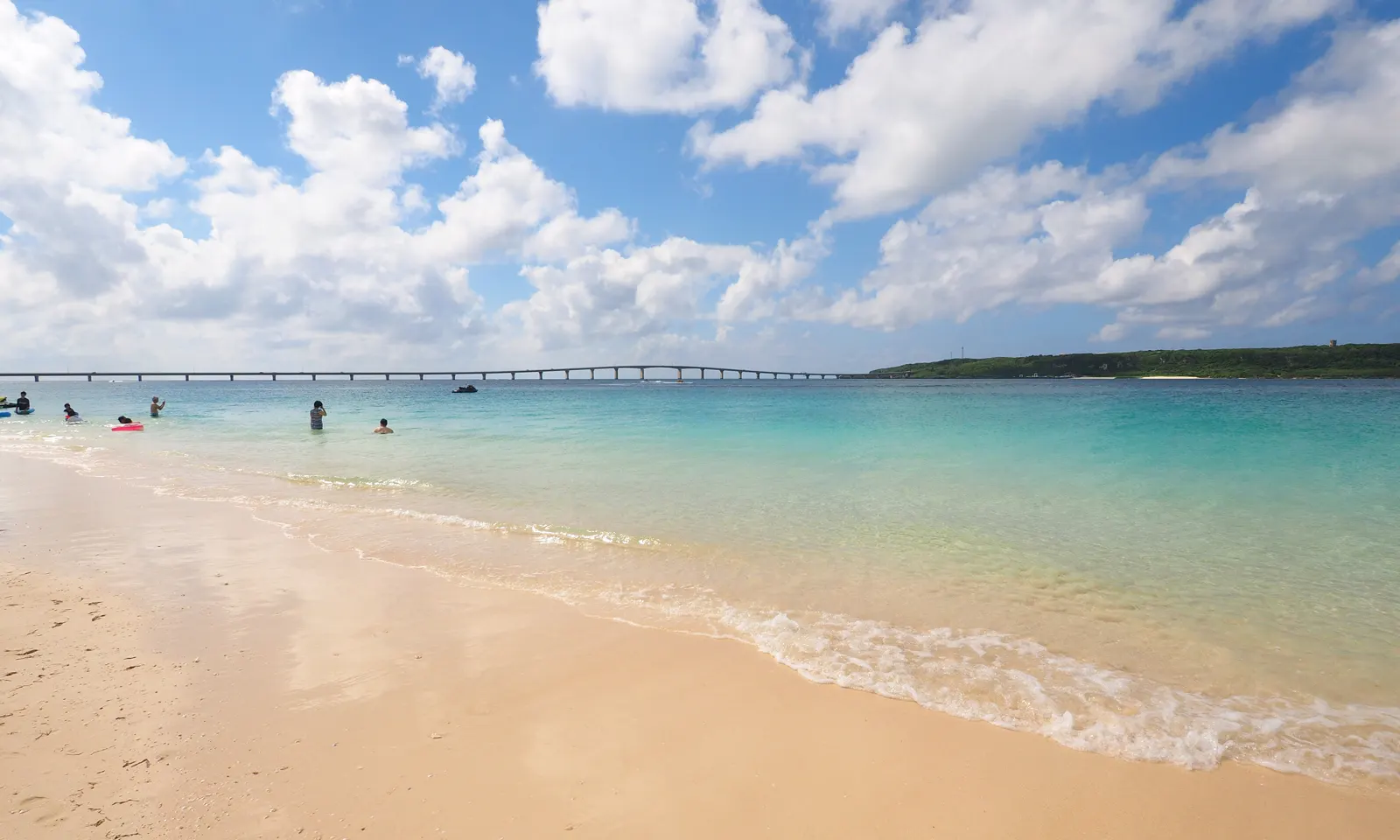
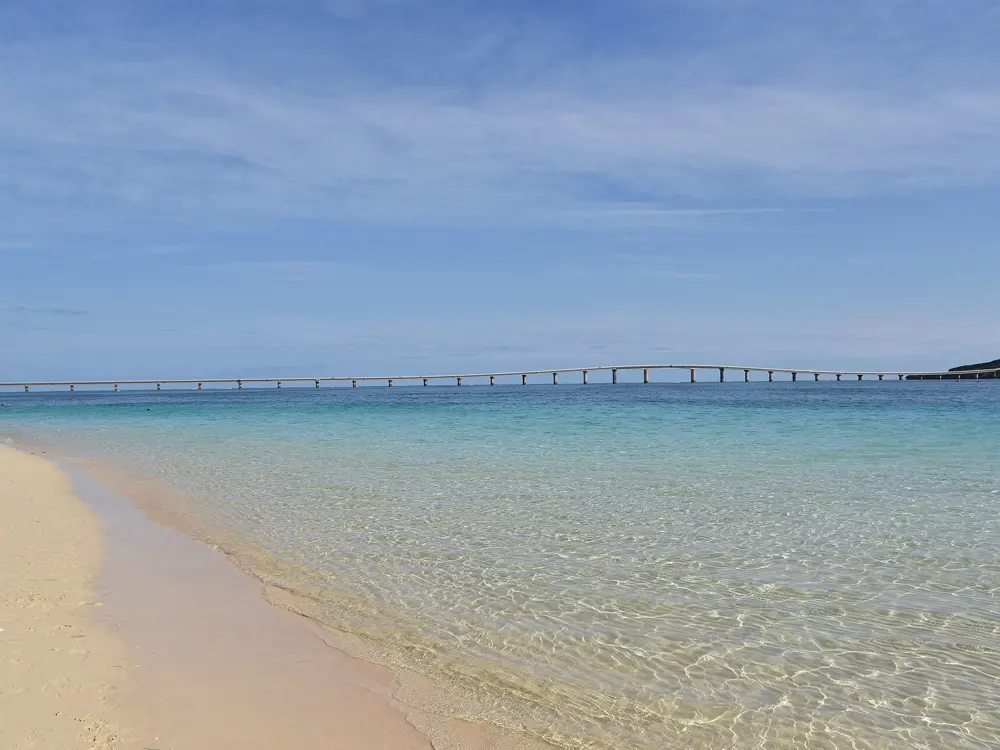
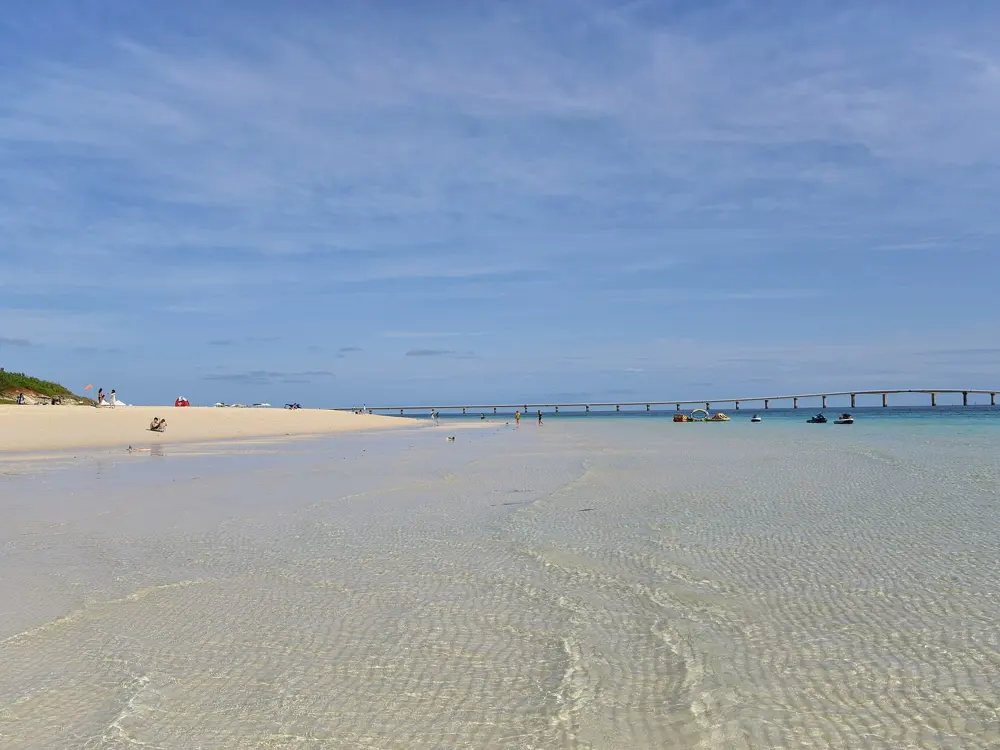
Swimmers in the shallow turquoise water of Yonaha Maehama, with Kurima Bridge on the horizon

Photos: Paipateroma (CC BY-SA 4.0), Raita Futo from Tokyo, Japan (CC BY 2.0), Raita Futo from Tokyo, Japan (CC BY 2.0), Metatron (CC BY-SA 3.0)

Distance
About 7 km of white sand
Swim season
Late March to the end of October
Triathlon swim
3 km, next race 25 April 2027
Kurima Bridge
1,690 m, opened 13 March 1995

Why go

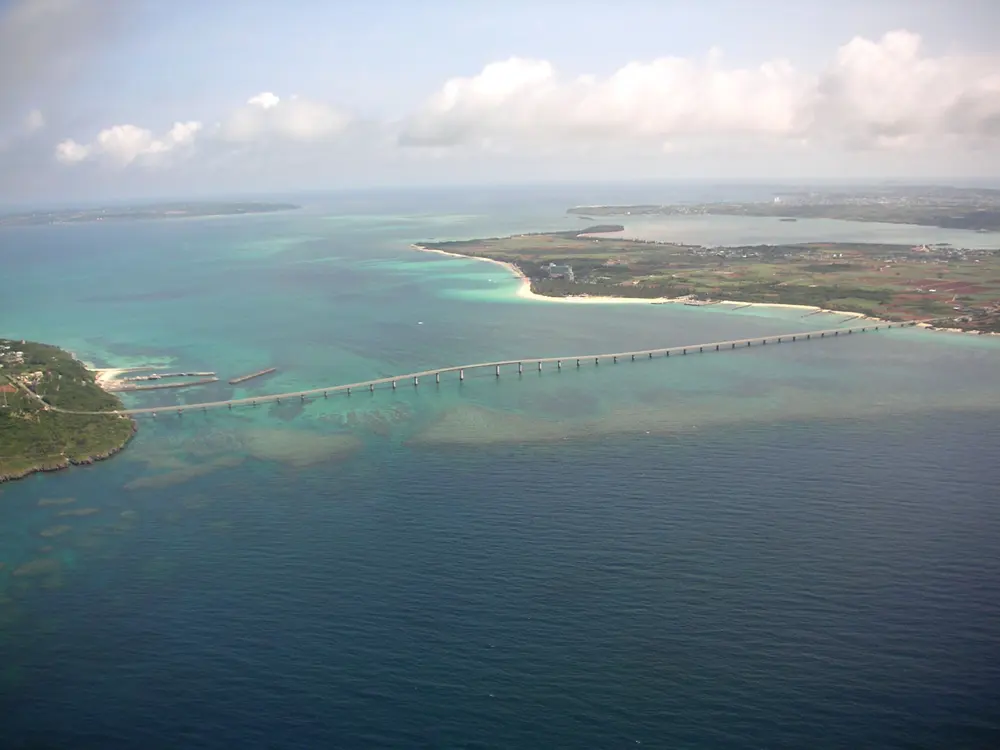
Yonaha Maehama is about seven kilometres of white sand on the southwestern tip of Miyako Island, the beach locals simply call Maehama, or Maipama in the Miyako language. The water over the sand is shallow and pale blue, and the 1,690 m Kurima Bridge runs out from its southeastern end to Kurima Island. It topped TripAdvisor's list of the best beaches in Japan in 2019, and in the same year's in-season survey its water was graded A, suitable for swimming. Every April it is where the swim of the All Japan Triathlon Miyakojima begins.

The route

This is a long beach for swimming parallel to the shore, back and forth over sand in clear water, rather than a reef for snorkelling. The triathlon swim is 3 km off this beach; in 2024 the swimmers had until 8:50 in the morning to finish it before setting off on 123 km of cycling around the island and a 35 km run. For a shorter swim, the stretch toward the bridge, with Kurima Island across the channel, gives you a fixed point to swim toward. Japan's national tourism site also lists snorkelling and diving, and vendors rent equipment on the beach in summer.

When to go

The bathing season runs from late March to the end of October, and the beach is quiet for the rest of the year. The 41st All Japan Triathlon Miyakojima is set for 25 April 2027, with entries taken online from 1 to 31 October 2026 for 1,550 places at 65,000 yen. In summer Okinawa Prefecture's habu box jellyfish advisory applies; in 2026 it ran from 1 June to 30 September.

Getting there

From mainland Japan, Miyako Island can only be reached by air. Buses on the island are infrequent, so a rental car or taxi is the easiest way to the beach; if you go by taxi, keep the company's number to call for the ride back. Scooters and bicycles can be rented in the town centre.

Permits and booking

No permit is needed to swim. Parking is free, and there are showers, toilets, a shop and a cafeteria. Parasols and deck chairs are for hire, along with jet skis and banana boats.

How hard it is

Easy in calm weather: shallow water over sand. Wikipedia notes jellyfish nets and monitors during the tourist season, but a Japanese beach listing gives no lifeguard or first aid post, so swim with someone and stay inside the nets in summer. Typhoons in 2018 eroded parts of the beach and left small sand cliffs along it.

Where to sleep

Miyako Island has resort hotels and guesthouses; the beach is about 20 minutes by car from Miyako Airport.

Tips

  • Drive across Kurima Bridge to Kurima Island for the view back across the channel to the whole length of the beach.
  • If you want to race, the triathlon takes entries in October for the following April.
04 / 10

Kondoi Beach, Taketomi

Taketomi Island, Yaeyama, Okinawa

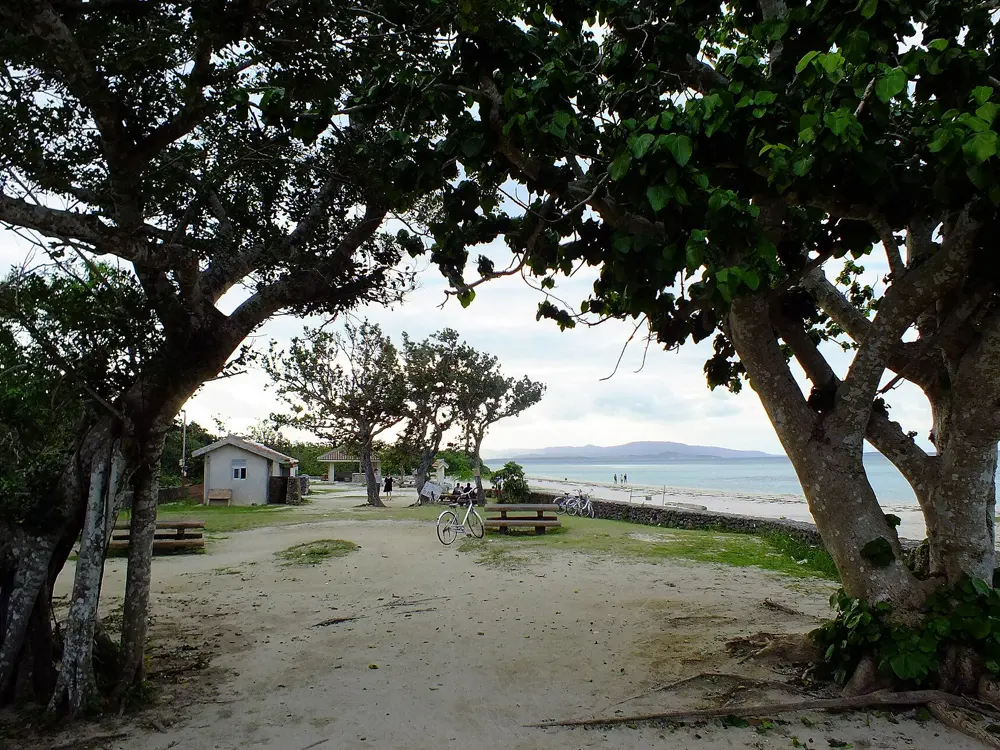
Kondoi Beach on Taketomi, white sand and a pale turquoise lagoon under a blue sky

Photos: 松岡明芳 (CC BY-SA 4.0), 松岡明芳 (CC BY-SA 4.0), 松岡明芳 (CC BY-SA 4.0), 松岡明芳 (CC BY-SA 4.0)

Distance
About 4 km from Ishigaki
Ferry
About 10 to 15 minutes from Ishigaki
Island
5.42 square kilometres
Island fee
300 yen, voluntary

Why go

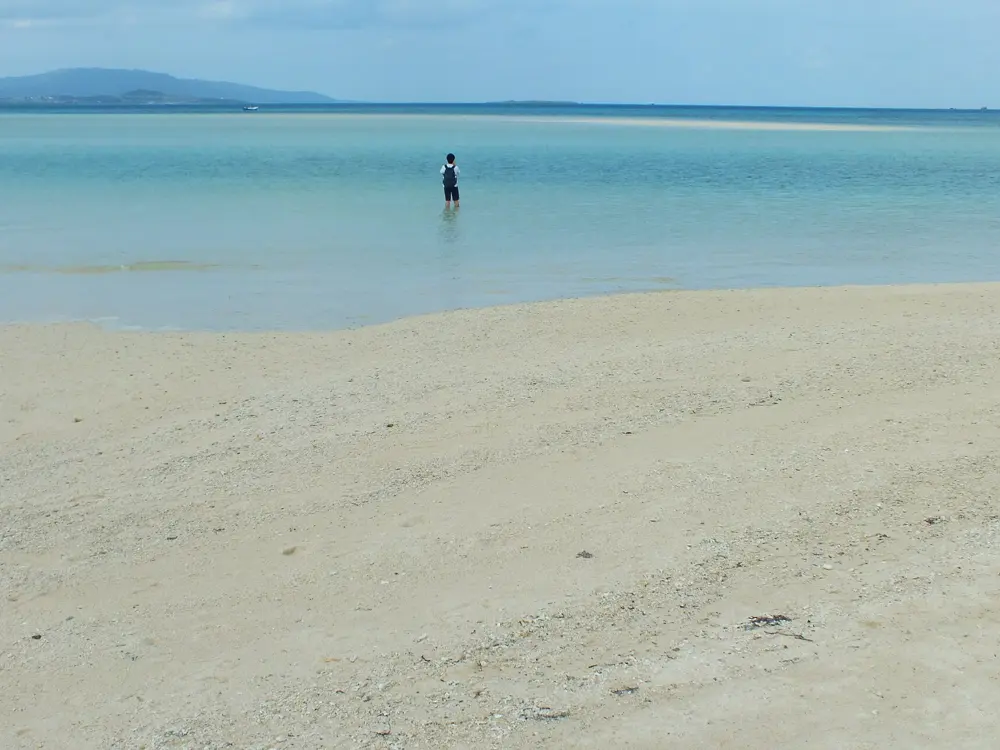
Taketomi is a small island about 4 km south of Ishigaki, part of Iriomote-Ishigaki National Park, and its village of red-tiled houses, stone walls and sandy lanes is kept as it was by rules that limit modern building. Kondoi Beach is the most visited of its beaches: white sand and a broad, shallow, pale blue lagoon. The island is known across Japan for its beaches and its star sand, and about 500,000 people visit it each year. It came sixth in TripAdvisor's 2017 ranking of Japan's best beaches.

The route

Kondoi is a swimming beach more than a snorkelling one: the seabed is sand, the water is shallow and the waves are gentle, so you can wade out and swim lengths in clear water. Kaiji Beach, the island's other well-known beach, is known for its star sand, the star-shaped shells of tiny foraminifera; you can find them by pressing your palm into the sand, but taking them home is not allowed. Guides disagree on whether Kaiji is safe for swimming, and one says individual swimmers are not allowed there because of the fast current, so swim at Kondoi.

When to go

Taketomi is an easy day trip from Ishigaki whenever the sea is warm. In summer, Okinawa Prefecture's habu box jellyfish advisory applies; in 2026 it ran from 1 June to 30 September. Most visitors come over from Ishigaki for the day, so the beach is busiest in the middle of the day.
Getting there

Boats from Ishigaki Port's remote island terminal reach Taketomi Port in about 10 to 15 minutes. From the port, Kondoi Beach is about 25 minutes on foot or about 15 minutes by bicycle, and bicycles can be rented in the village. Kaiji Beach is about 30 minutes on foot or 10 minutes by bus.

Permits and booking

No permit is needed. Since 1 September 2019 visitors have been asked for a 300 yen island entry fee, paid at ticket machines at Ishigaki's remote island terminal and Taketomi Port. It is voluntary, and it pays for looking after the island's landscape and nature.

How hard it is

Easy: shallow, calm water over sand, good for children and for people who are not strong swimmers. There are showers and toilets at Kondoi, but no lifeguard is listed, so keep within your depth.

Where to sleep

Most visitors stay on Ishigaki, ten or fifteen minutes away by boat, and come over for the day; the village on Taketomi also has inns for those who want to stay the night.

Tips

  • Rent a bicycle in the village: the whole island is within walking or cycling distance, and it makes the beach and the village one easy loop.
  • Leave the star sand where it is; souvenir shops sell it if you want some.
05 / 10

Shirarahama, Shirahama

Shirahama, Wakayama

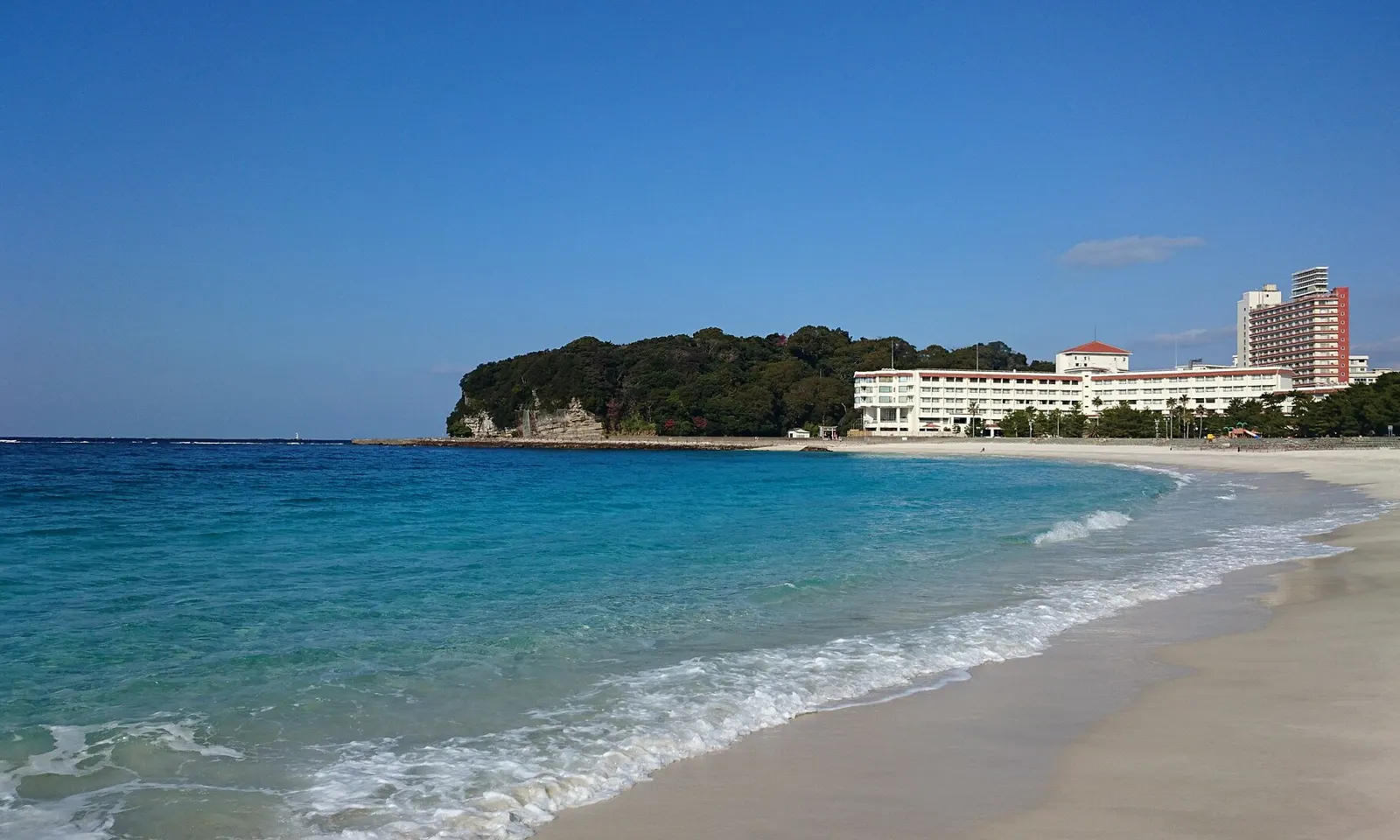
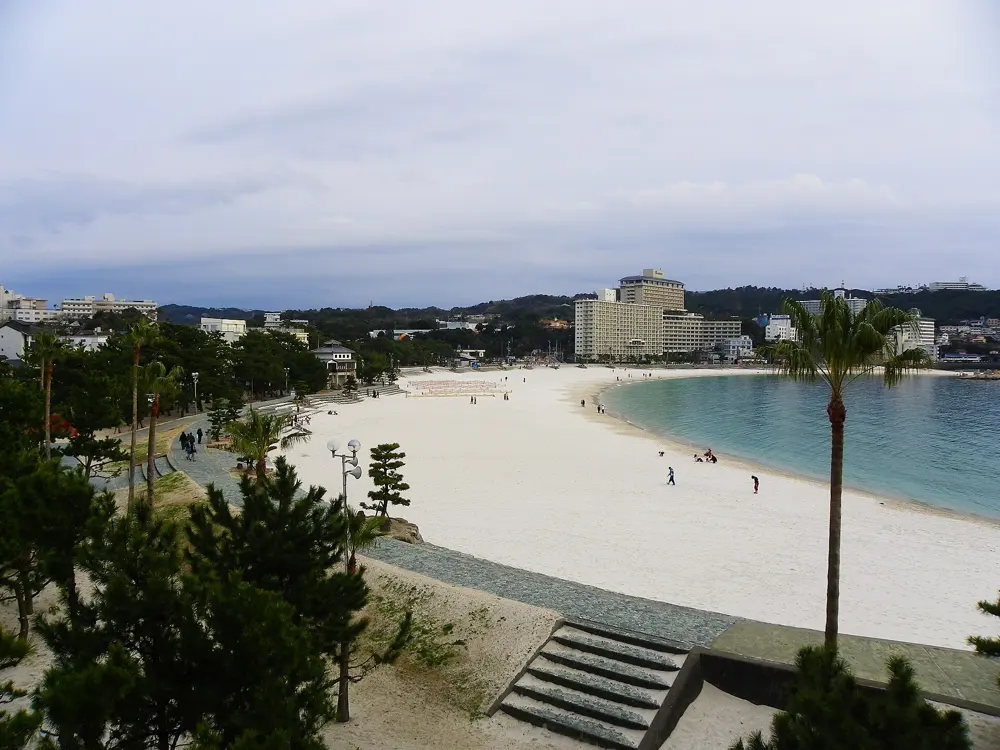
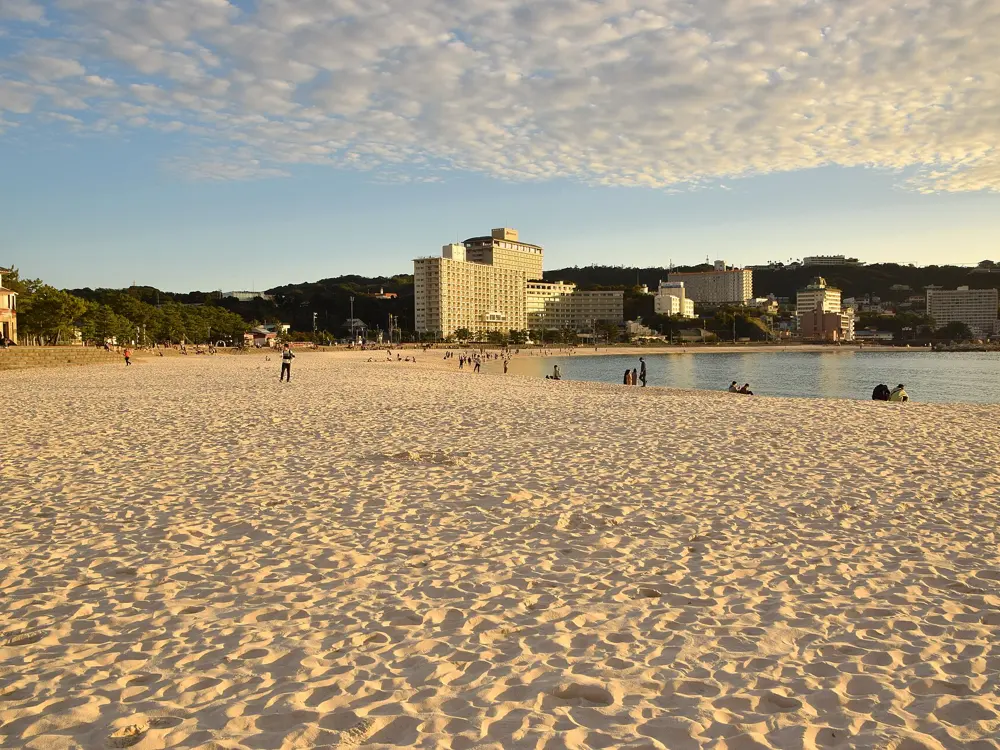
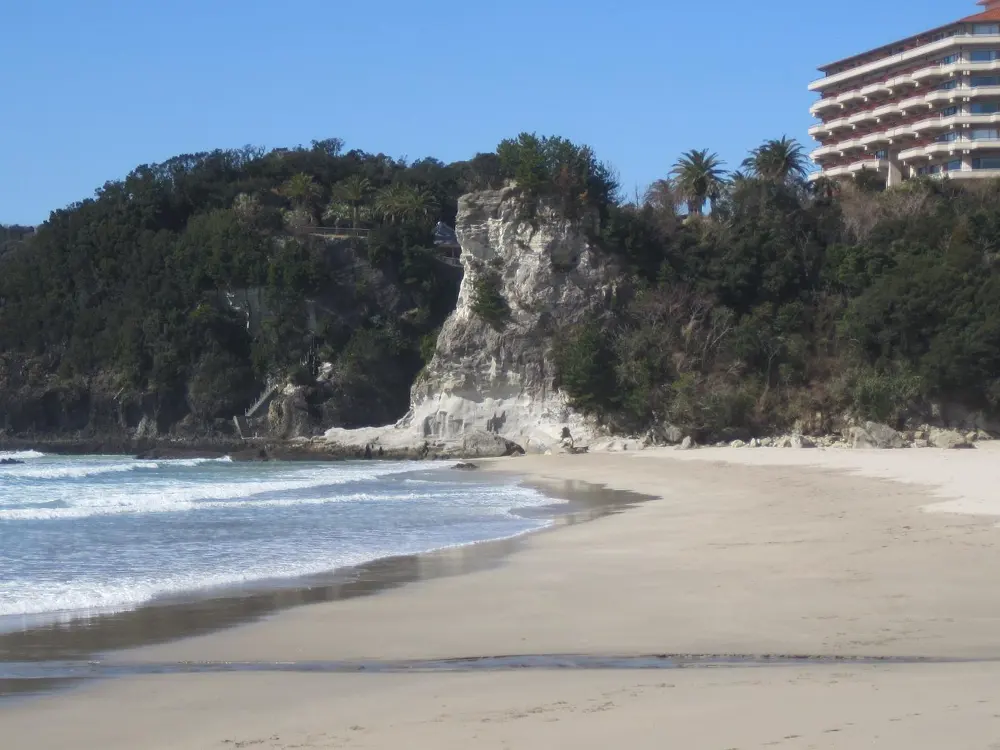
Waves rolling onto the white sand of Shirarahama, with a wooded headland and hotels at the far end of the bay

Photos: Suicasmo (CC BY-SA 4.0), 玄史生 (Public domain), https://web.archive.org/web/20161011031038/http://www.panoramio.com/user/304964?with_photo_id=7815110 米田賢一 (CC BY 3.0), Raita Futo from Tokyo, Japan (CC BY 2.0)

Distance
Beach about 620 m long
2026 season
3 May to 13 September
Sand
745,000 cubic metres shipped from Perth over 15 years
From Osaka
About 2.5 hours by train from Shin-Osaka

Why go

Shirarahama is a crescent of white sand about 620 m long in the hot spring town of Shirahama, on the Pacific coast of the Kii Peninsula. The name of the town means white beach, and the sand has been kept white with help: Wakayama Prefecture began shipping it from Perth, in Australia, in 1989, and brought in 745,000 cubic metres over 15 years. It is a sister beach of Waikiki in Honolulu, and it opens for swimming earlier than any other beach on Honshu, Japan's main island.

The route

The swim here is a bay swim: the beach curves round the bay, so you can swim along the shore from one end of the crescent to the other with white sand under you, then turn and come back. At the season's opening on 3 May 2026 the water was 22 C at 9 in the morning. Along the coast, Engetsu is a natural rock arch just offshore, and the town's hot springs are the place to warm up after a swim.

When to go

In 2026 the beach opened on 3 May, with a Shinto ceremony praying for safety and a ribbon cut before the first swimmers ran in, and the swimming season ran to 13 September. Japan's national tourism site calls it the earliest swimming season on mainland Japan, so this is the place for a sea swim in May.

Getting there

Shirahama Station is on JR West's Kisei Main Line, about 2.5 hours by train from Shin-Osaka; buses run from the station to the beach. Nanki-Shirahama Airport serves the town.

Permits and booking

No permit or fee is needed to swim. The beach is run as a public swimming beach during the season; check the Nanki Shirahama tourism association for the year's dates before you go.

How hard it is

Easy in calm summer weather, and a family beach in the season. In early May the water is still cool, around 22 C at the 2026 opening, so build up to a long swim. Outside the season, swim near the shore.

Where to sleep

Shirahama is a large hot spring resort, with hotels and ryokan along the beach and around the town, many with their own baths.

Tips

  • Come for the opening weekend in early May if you want to swim on Honshu before anywhere else does.
  • Book a room with a hot spring bath: a swim and then a soak is the point of a stay here.
06 / 10

Shirahama Ohama and the Shimoda beaches

Shimoda, Izu Peninsula, Shizuoka

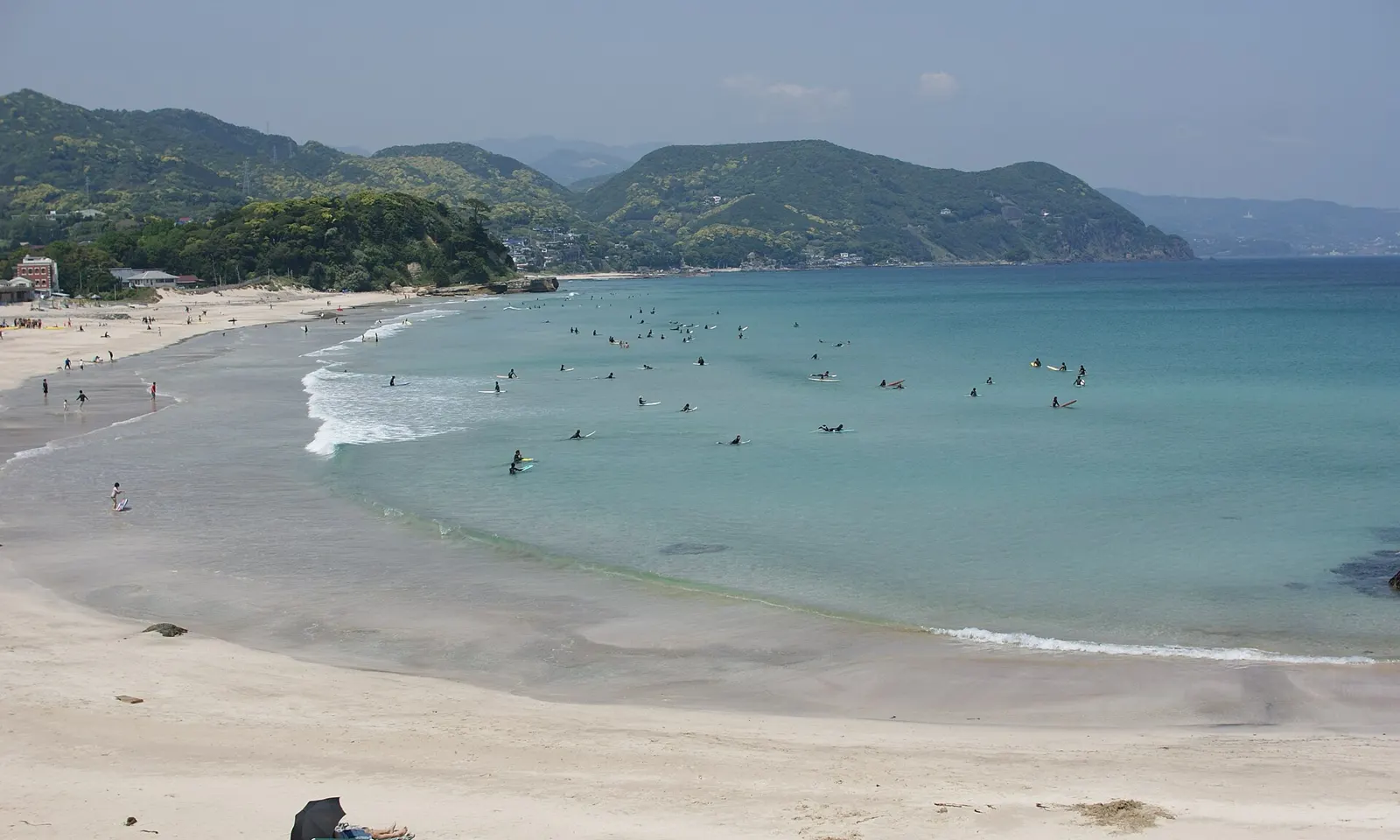
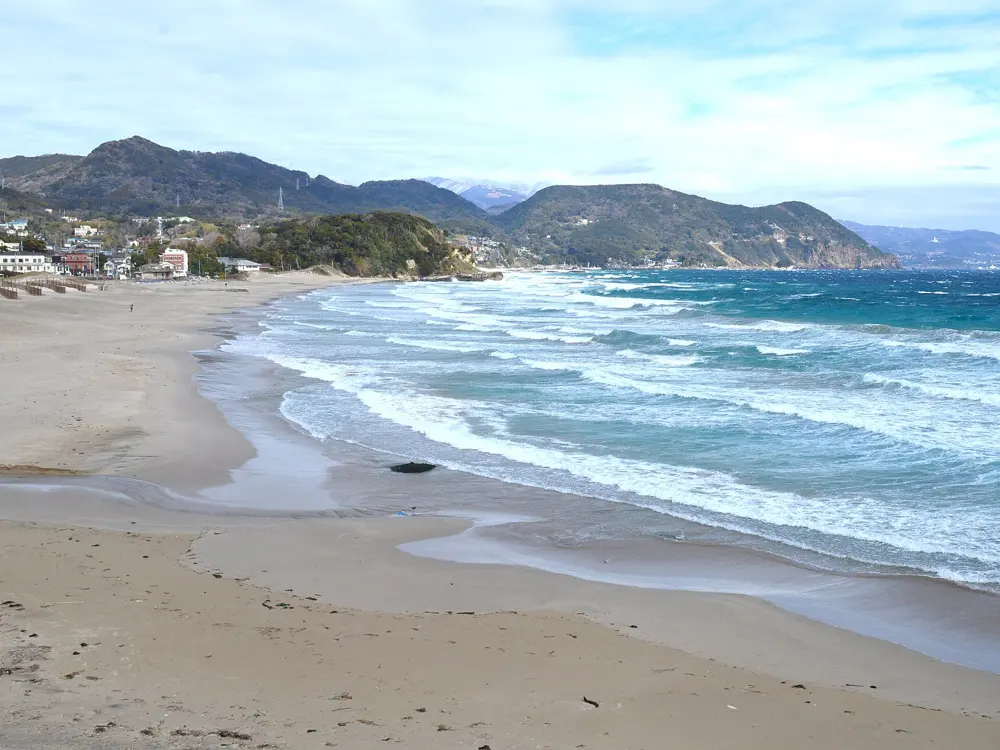
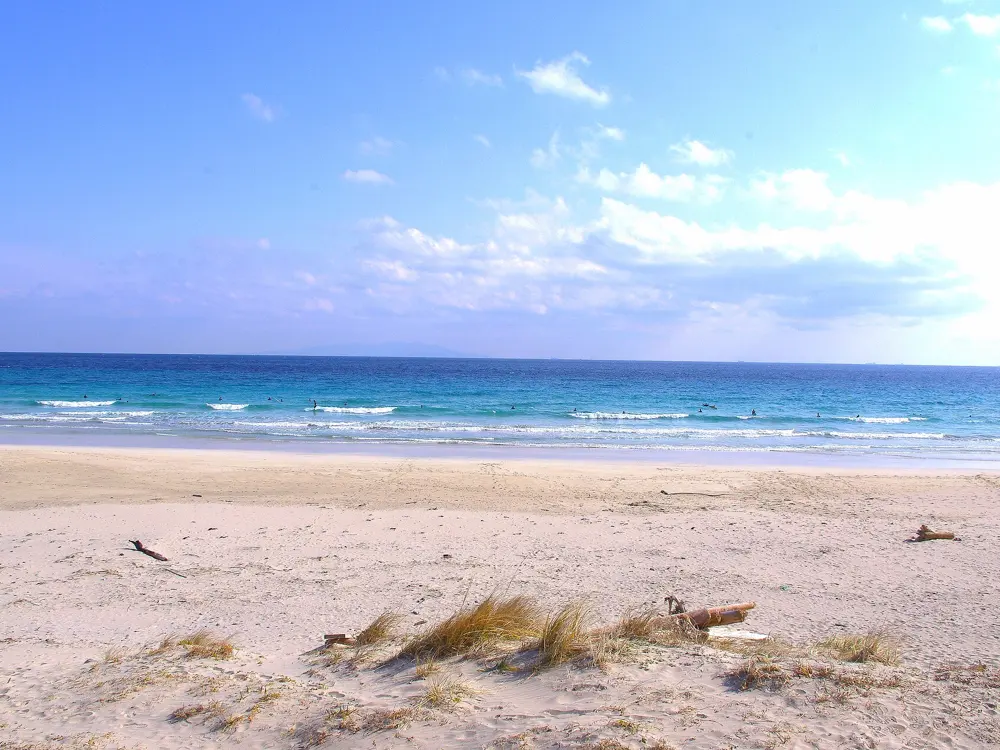
Swimmers and surfers off the long white beach of Shirahama Ohama, Shimoda, with green hills behind

Photos: cafe-lab (CC BY 2.0), Saigen Jiro (CC0), alonfloc (CC BY 3.0), hide.S (CC BY 3.0)

Distance
Shirahama Ohama, about 800 m of sand
Guarded beaches
Nine in Shimoda in 2026
2026 season
18 July to 31 August at Shirahama Ohama
From Tokyo
About 160 minutes by limited express

Why go

Shimoda, at the southern tip of the Izu Peninsula, is about 160 minutes from Tokyo by limited express, and its coast has the clearest, bluest water within easy reach of the capital. The town ran nine official swimming beaches in 2026, and the best known, Shirahama Ohama, is more than 800 m of soft white sand, with Shirahama Shrine beside it and regular surf. Most of the nine are certified by the Japan Lifesaving Association, so in the season you swim with trained lifeguards on watch.

The route

Shirahama Ohama is the long open beach, for swimming in the surf zone in summer or along the shore when the sea is calm. Tatado, Irita, Kisami Ohama, Sotoura and the rest are other beaches on the same coast, each with its own season, so if the surf is up at one you can try another.

When to go

In 2026 Shirahama Ohama was open for swimming from 18 July to 31 August, from 8am to 4pm; Kujuppama also ran to 31 August and Shirahama Chuo to 30 August, while Tatado, Irita, Kisami Ohama, Sotoura, Nabeta and Toji closed on 23 August. Japan's national tourism site says good weather stretches the swimming from June to mid September, but there are no lifeguards outside the official season.

Getting there

Odoriko and Saphir Odoriko limited express trains run from Tokyo, a few from Shinjuku, to Izukyu-Shimoda Station in about 160 minutes, for around 6,500 yen one way; Saphir Odoriko has only Green and Premium Green seats and needs a reservation. The JR Tokyo Wide Pass covers the whole way, while Japan Rail Pass holders pay a supplement between Ito and Shimoda. From the station, buses bound for Itado reach the Shirahama Kaigan stop in 10 to 15 minutes, for 400 yen, about once an hour.

Permits and booking

No permit is needed. Most of the beaches have paid car parks in the season; Nabeta has none. At Shirahama, shops and convenience stores along the main road sell food and rent beach gear, and nearby shops have paid showers.

How hard it is

Moderate. These are open Pacific beaches with surf, so swim inside the flagged areas when the lifeguards are on, and outside the season swim only at your own risk. The Shimoda coast guard asks people at the sea to check the weather and sea conditions and to carry a way of calling for help; the emergency number at sea is 118.

Where to sleep

There are hotels, inns and cottages near Shirahama Ohama, and many more in Shimoda town.

Tips

  • Take the bus from the station: the beach car parks charge in the season, and Nabeta has none.
  • Visit Shirahama Shrine, which stands beside the beach.
07 / 10

Jodogahama

Miyako, Iwate

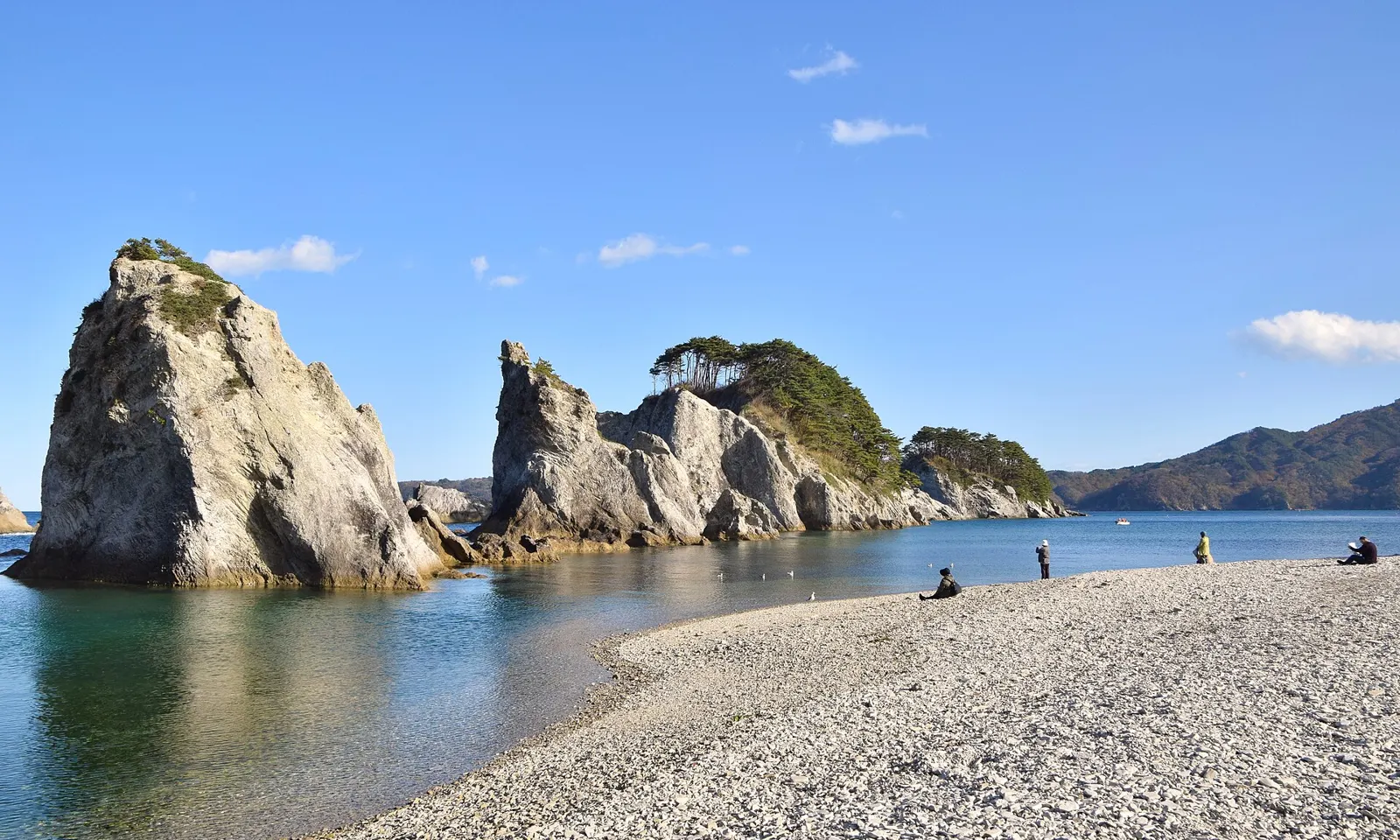
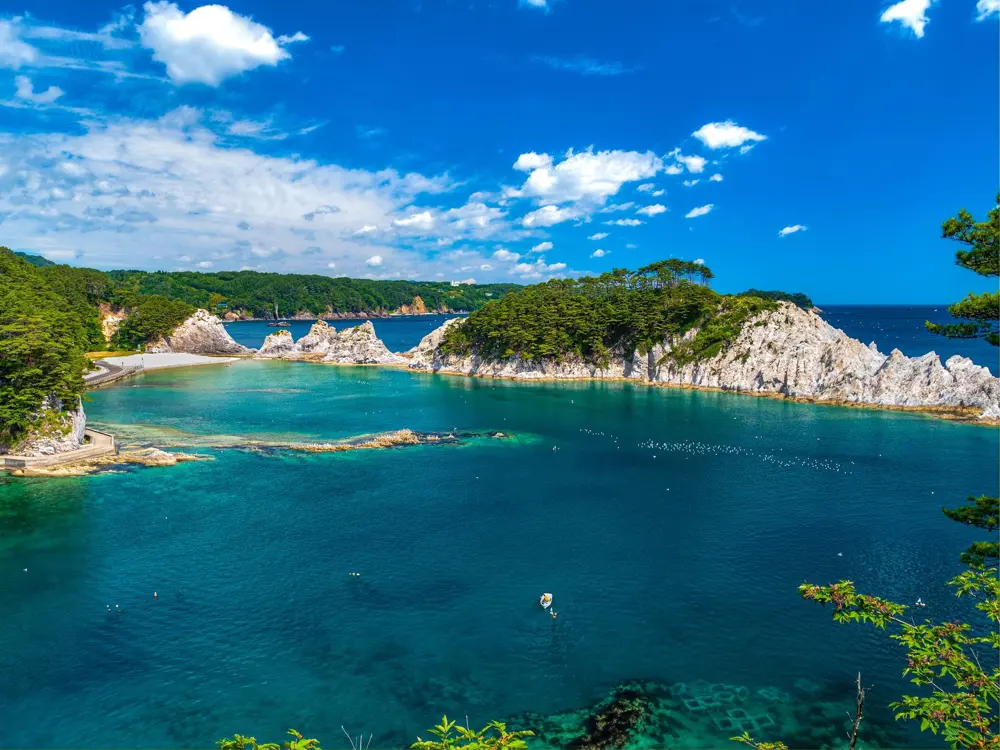
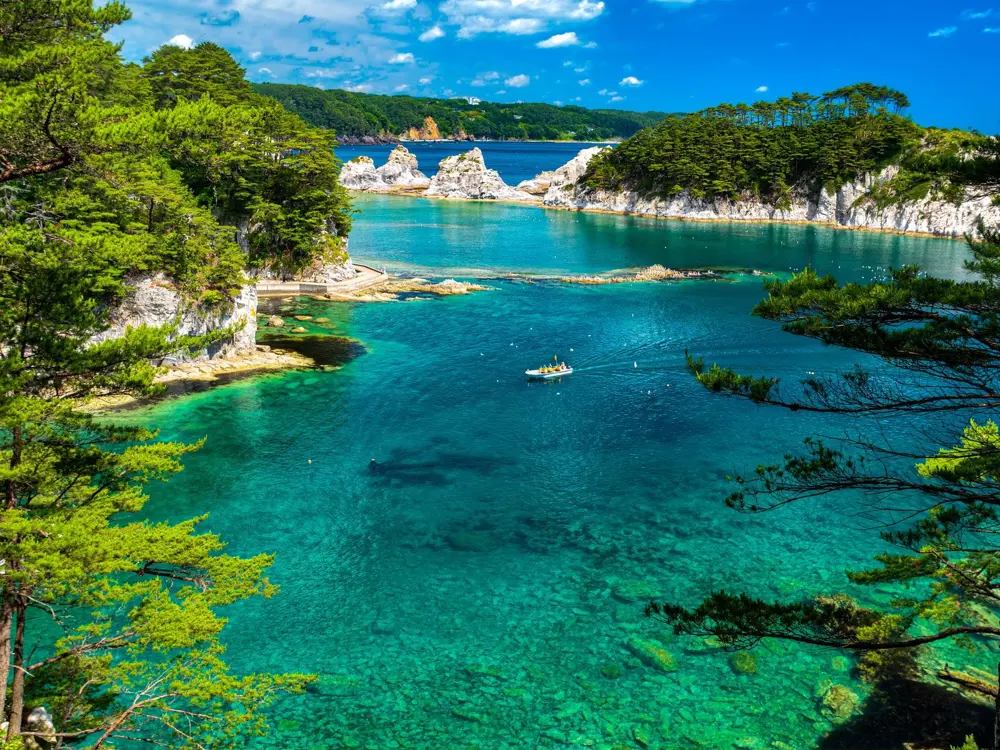
White rocks topped with pines rising from calm, clear water opposite the pebble beach of Jodogahama

Photos: Raita Futo from Tokyo, Japan (CC BY 2.0), くろふね (CC BY 4.0), くろふね (CC BY 4.0), くろふね (CC BY 4.0)

Distance
20 to 24 minutes by bus from Miyako Station
2026 season
4 July to 30 August
Swimmers
50,930 in a recent season
Blue Cave boat
About 20 minutes, 1,500 yen

Why go

Jodogahama, Pure Land Beach, is a calm inlet on Miyako Bay on the Sanriku coast of Iwate, where white volcanic rocks topped with red pines stand out of clear green water opposite a beach of pale pebbles. A Soto Zen priest named it in the 1680s, after the Pure Land of Buddhism, and it is a national Place of Scenic Beauty inside Sanriku Fukko National Park. It is ranked among the 100 best swimming beaches in Japan, in the top grade of the sea category, and it is the northernmost place on this list.

The route

The swim is in the sheltered inlet, with the white rocks on the far side as your view and the open ocean kept out by them. It is a place for a slow swim in very clear water rather than for distance. From the beach, small boats run to the Blue Cave, Ao no Dokutsu, a cave reachable only from the sea and named for its cobalt water, on a 20 minute trip for 1,500 yen that departs on request between 8:30am and 5pm.

When to go

The 2026 swimming season ran from 4 July to 30 August: weekends only from 4 to 17 July and from 17 to 30 August, and every day from 18 July to 16 August, with a lifeguard post staffed from 8:30am to 5pm. The Blue Cave boats do not run from December to February.

Getting there

Iwate Kenpoku buses run one or two times an hour from Miyako Station. All stop at the Jodogahama Visitor Center (15 minutes, 200 yen), from which the beach is a 10 to 15 minute walk, and some go on to Oku-Jodogahama, right by the beach (about 20 minutes, 250 yen). By car it is about 90 km and an hour and a half from Morioka-Minami IC, or 6 km from Miyako-Port IC. The road from the main car park to the beach is closed to private cars from April to October, and a shuttle runs every 30 minutes in busy seasons.

Permits and booking

No permit or entry fee is needed. Fireworks and camping are not allowed. The car park has 422 spaces; showers and the air pump for inflatables are paid.

How hard it is

Easy: a sheltered inlet with calm water and a lifeguard post in season. Outside the season and its hours, nobody is on watch. The beach is pebbles rather than sand, so water shoes help.

Where to sleep

Miyako, the town on the bay, has hotels and inns; the rest house at the beach, rebuilt after the 2011 tsunami destroyed it, has showers, changing rooms, a shop and a dining hall.

Tips

  • Book the Blue Cave boat at the beach: it leaves on request, so there is no timetable to wait for.
  • Walk from the visitor centre down to the beach rather than waiting for the shuttle: it takes 10 to 15 minutes.
08 / 10

Wakasa Wada Beach

Takahama, Fukui

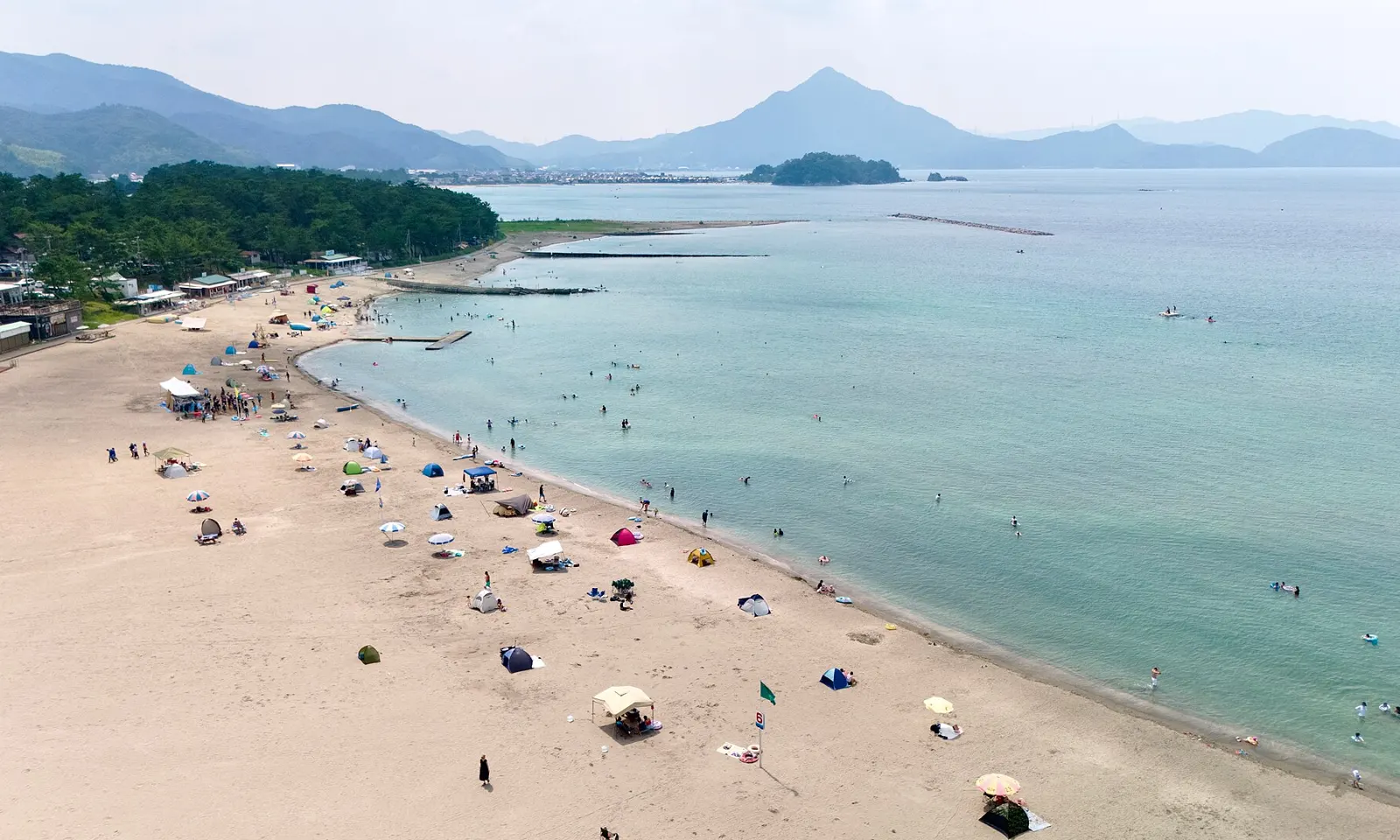
Swimmers and parasols along Wakasa Wada Beach, with calm green water and mountains across Wakasa Bay

Photos: Bryanthelion1985 (CC BY-SA 4.0), Bryanthelion1985 (CC BY-SA 4.0), Bryanthelion1985 (CC BY-SA 4.0), Alpsdake (CC BY-SA 4.0)

Distance
About 10 to 17 minutes' walk from JR Wakasa-Wada Station
Blue Flag
First beach in Asia, April 2016
2026 season
11 July to 30 August
Parking
1,500 yen a car

Why go

Wakasa Wada Beach, in the town of Takahama on Wakasa Bay, was the first beach in Asia to earn the Blue Flag, the international environmental certification for beaches, in April 2016. The bay faces the Sea of Japan between two arms of land, the water is clear and shallow over a wide white beach, and a pine forest, Ao no Matsubara, runs along about a kilometre of the shore behind it.

The route

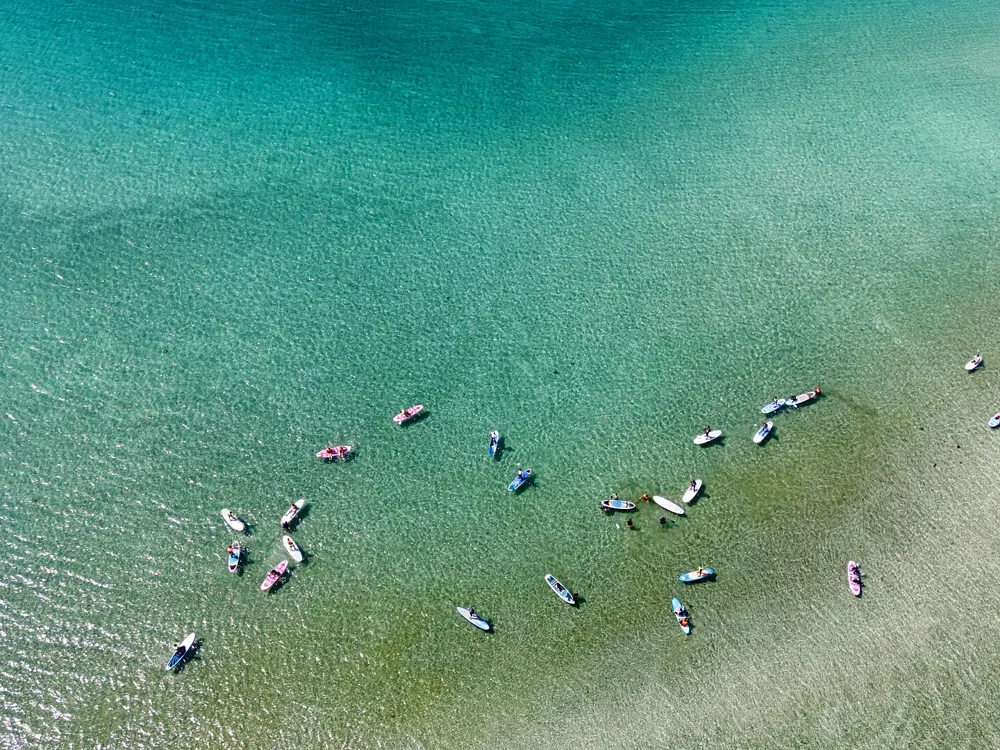
The beach slopes gently into calm water, so this is a place for long, easy swims along the shore in clear water, or for paddleboarding and kayaking on the bay. About 3 km to the east, Shiroyama Park has its own swimming beach, a promenade along the headland and a viewing platform over the sea caves; it is listed among Japan's 100 best sunset spots. Jet skis are banned during the swimming season, so the water stays quiet for swimmers.

When to go

The 2026 season ran from 11 July to 30 August, with lifeguards on duty at all times during it, so July and August are the time to come. The beach has beach huts in the season.

Getting there

By train, the beach is a walk of about 10 minutes (the prefecture's tourism site says 17) from JR Wakasa-Wada Station; a travel guide puts the train ride from Kyoto at about two hours, covered by the Japan Rail Pass. By car it is about 10 minutes from the Oi-Takahama interchange on the Maizuru-Wakasa Expressway. Bicycles can be rented at Wakasa-Takahama Station.

Permits and booking

No permit is needed to swim. Parking costs 1,500 yen for a car and 3,000 yen for a large bus, in lots that hold about 2,000 vehicles in all. Camping and barbecues on the sand are not allowed, and tents and tarps must come down by sunset.

How hard it is

Easy. The water is generally shallow, which makes it good for small children, and in the season there are lifeguards, a first aid post with an AED and a public address system.

Where to sleep

Takahama has ryokan and guesthouses, some of them in Wada itself, close to the beach; a 2018 guide lists sea-view ryokan rooms from about 10,000 yen a person with two meals.

Tips

  • Rent a paddleboard to see how clear the water is from above.
  • Walk or cycle to Shiroyama Park for the sunset after a swim.
09 / 10

Tsunoshima Ohama Beach

Tsunoshima, Shimonoseki, Yamaguchi

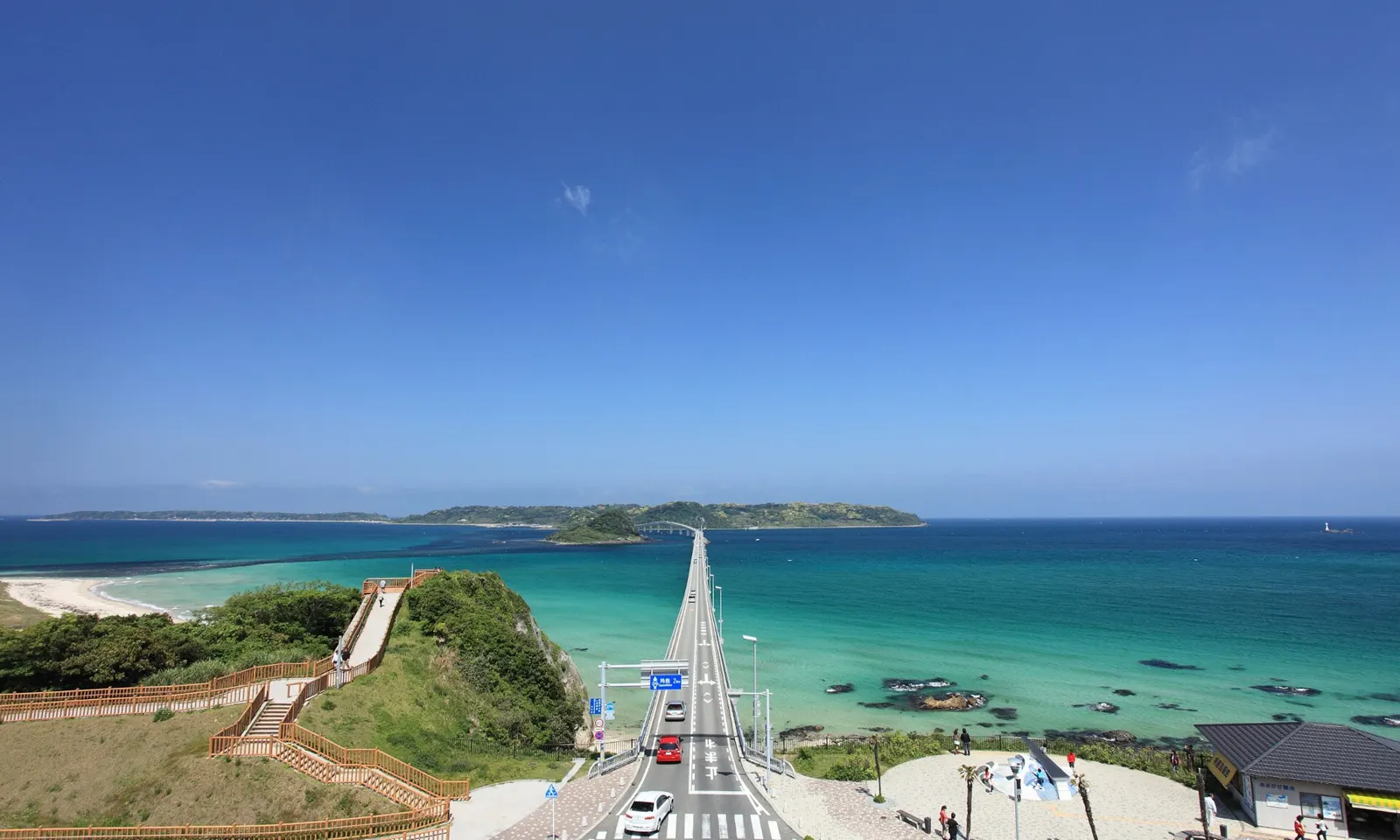
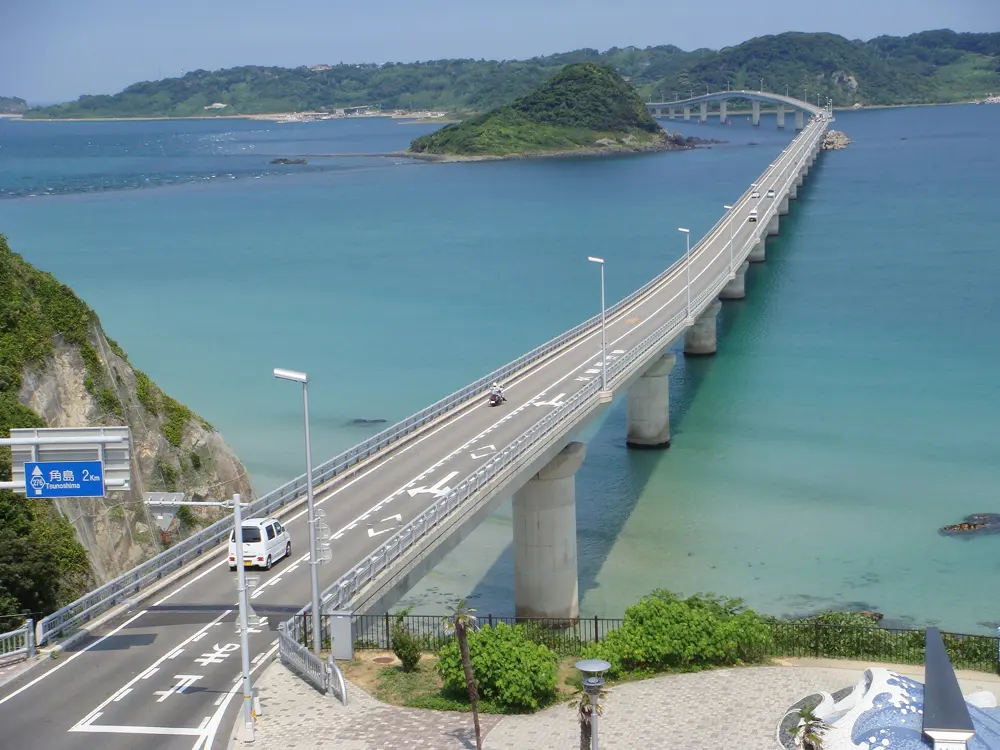
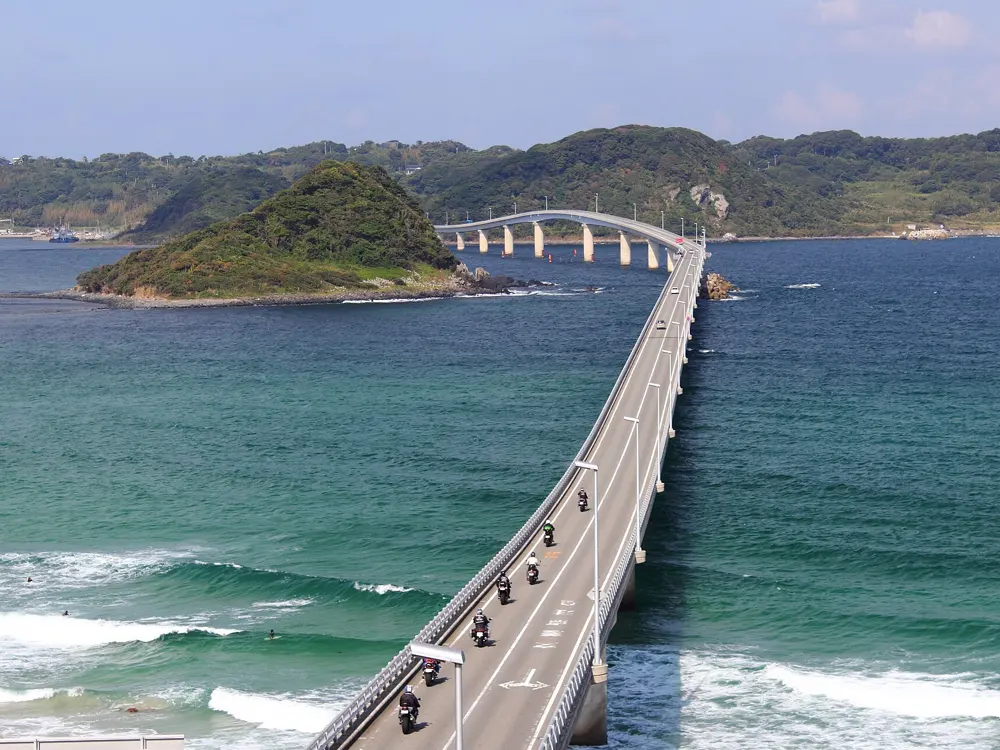
Tsunoshima Bridge running out over turquoise and cobalt water to the island, seen from the mainland

Photos: Syota Takahashi (CC BY 3.0), Nissy-KITAQ (CC BY-SA 3.0), Amy00 (CC BY-SA 3.0), 藤谷良秀 (CC BY-SA 3.0)

Distance
Tsunoshima Bridge, 1,780 m
2026 season
17 July to 31 August
Parking
200 spaces, free
Bridge opened
3 November 2000

Why go

Tsunoshima is a small island off the Sea of Japan coast of Shimonoseki, joined to the mainland since 2000 by the 1,780 m Tsunoshima Bridge, which runs out across clear blue water to the island. Ohama Beach on the island has fine white sand made of small shells and cobalt blue water; Yamaguchi Prefecture's tourism site says its clarity is among the best in Japan, and it recommends the beach for the sunset over the Sea of Japan.

The route

Ohama is a swim straight off a white beach into clear water, along the shore and back, looking down at the sand below you; there is no fixed route. Marine sports are not allowed on the beach, which keeps the water for swimmers. Elsewhere on the island, Tsunoshima Lighthouse, first lit on 1 March 1876 and designed by Richard Henry Brunton, is open to the public. On the mainland about 5 minutes by car from the bridge, Agawa Hosenguri Seaside Park is a calmer bay beach with very clear water, open for swimming from about 11 July to 20 August in 2026, for 600 yen for adults.

When to go

The 2026 swimming season at Ohama ran from 17 July to 31 August, and Agawa's from about 11 July to 20 August. Come in those weeks for the facilities; the campsite is the contact for the coming year's dates.

Getting there

By train, it is about 90 minutes from JR Shimonoseki to JR Kottoi Station on the San'in Line, then about 30 minutes by bus to the Ohama Kaisuiyokujo stop, right by the beach. By car it is about 70 minutes from the Mine or Shimonoseki interchanges on the Chugoku Expressway, across Tsunoshima Bridge.

Permits and booking

No permit is needed. Parking at Ohama is free, with 200 spaces, and there are bungalows, a rest area, showers and a cooking area for the campsite, where camping and barbecues are allowed. The beach is run by the Tsunoshima regional promotion council; call the Ohama campground for the current season.

How hard it is

Easy in calm summer weather. The sea here can be rough: before the bridge, the island ferry was often delayed or cancelled by bad weather, especially in winter, so keep out of the water when waves are breaking.

Where to sleep

The campsite and bungalows at Ohama are the closest beds; Shimonoseki, about two hours away by train and bus, has hotels.

Tips

  • Stop at the viewing platforms of Amagase Park at either end of the bridge for the classic view of it crossing the water.
  • Stay for the sunset: Ohama faces the Sea of Japan.
10 / 10

Omi-Maiko, Lake Biwa

Otsu, Shiga

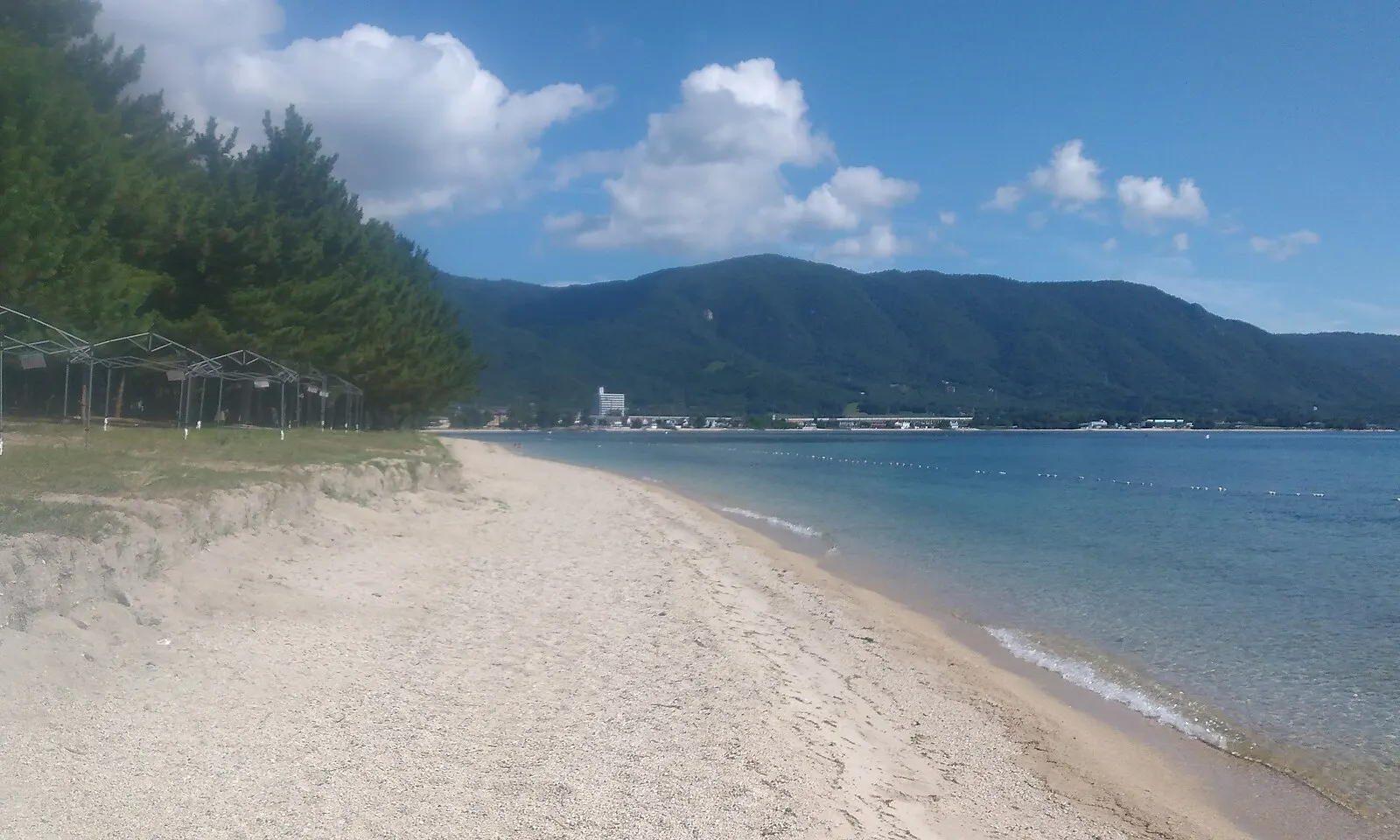
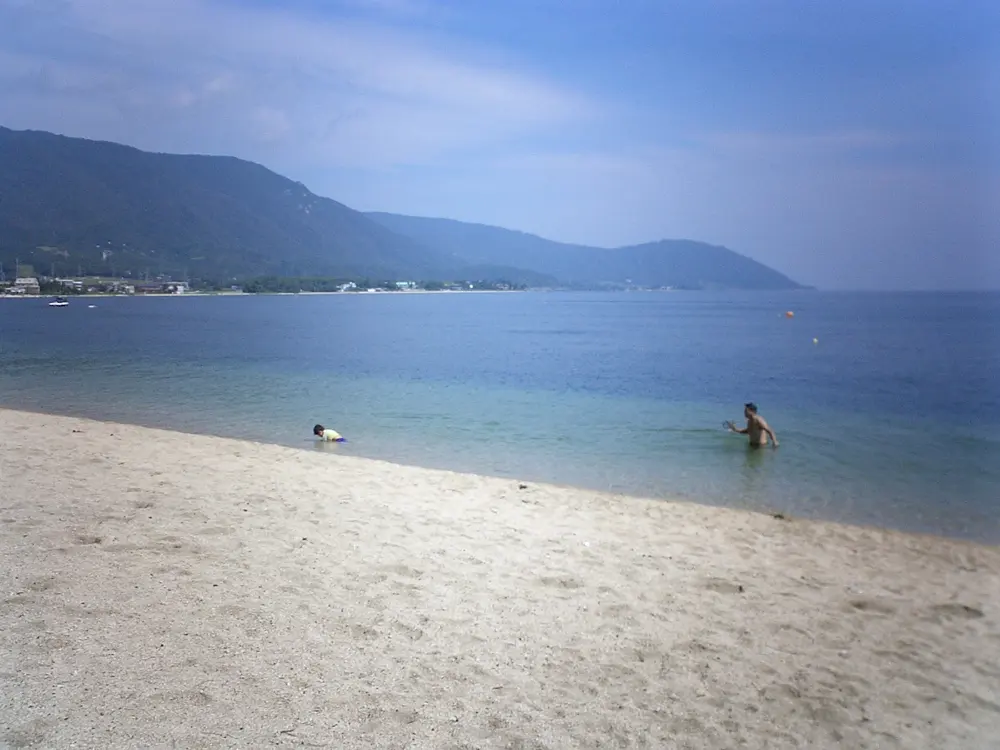
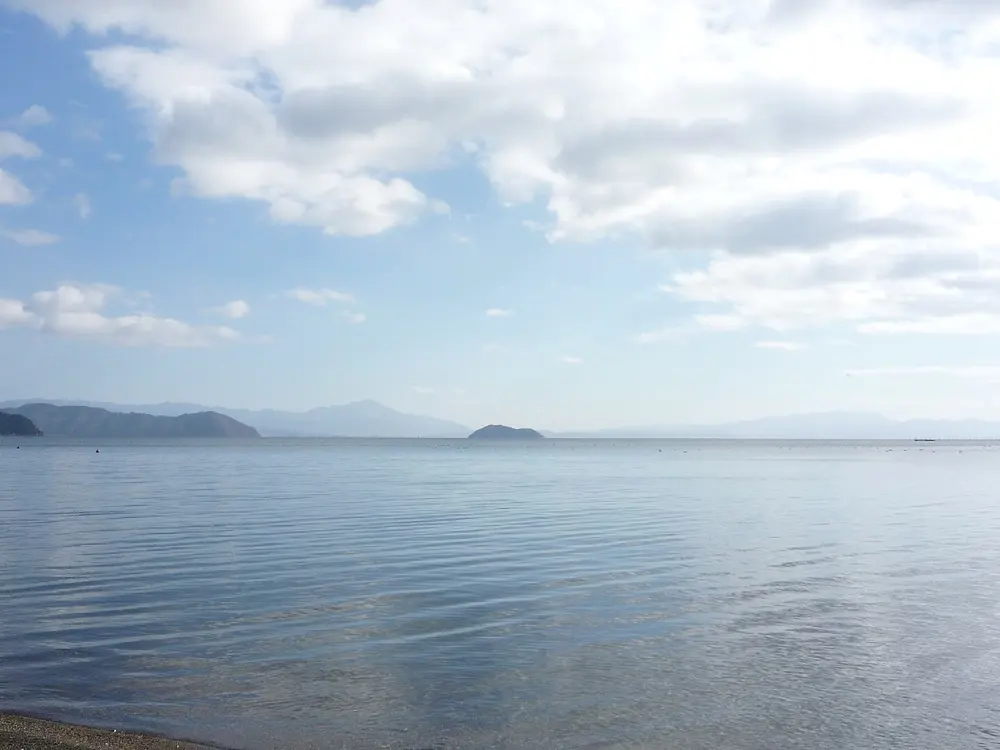
White sand and clear water along the shore of Lake Biwa at Omi-Maiko, with pines and mountains

Photos: Manciniart (CC0), kajikawa (CC BY 3.0), baggio4ever (CC BY 3.0), baggio4ever (CC BY 3.0)

Distance
About 4 km of white sand
Lake
About 670 square kilometres, 104 m deep
2026 season
1 July to 30 September
From Kyoto
About 45 minutes on the JR Kosei Line

Why go

Lake Biwa is Japan's largest lake, about 670 square kilometres of fresh water and more than four million years old, and it supplies drinking water to about 15 million people in Kansai. Its best swimming is on the northwestern shore, and Omi-Maiko is the most popular beach on the lake: about 4 km of white sand under shady pines, with fresh, clear water that is warm in summer. It is a freshwater swim with the feel of a seaside, 45 minutes from Kyoto by train.

The route

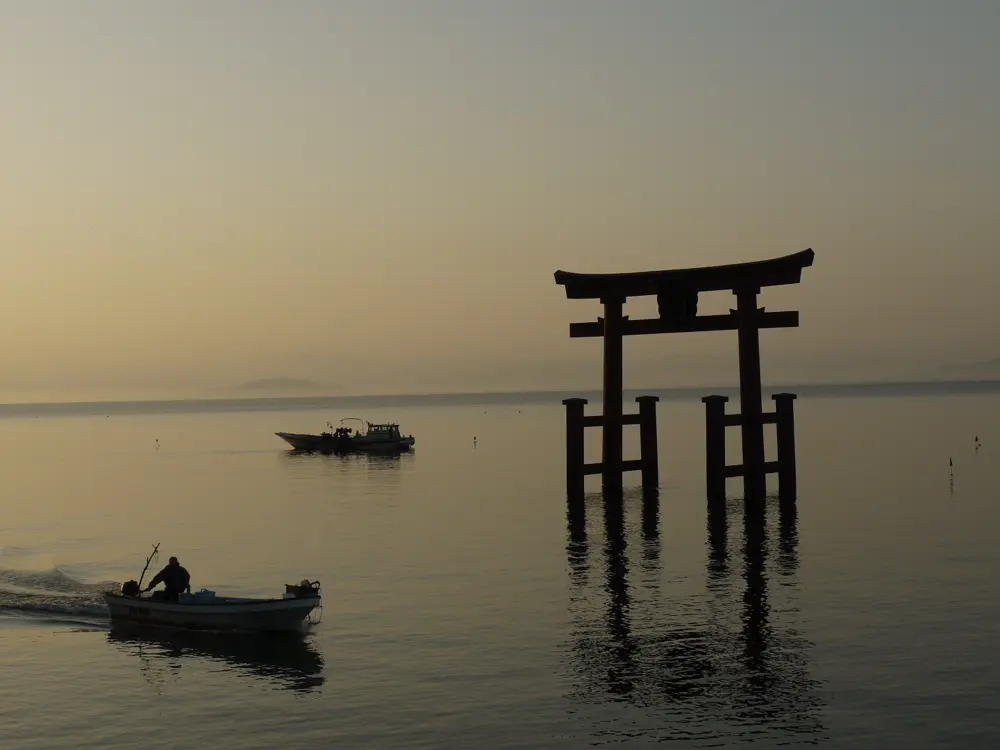
The swim is along the shore in fresh water, parallel to the sand, with the long beach giving as much distance as you want. There are no waves to speak of on a still day and no salt in your eyes. Up the west shore, Omi-Shirahama is wider, with very clear, shallow water, and further north still, Makino has a family beach; the Kosei Line stops at both. Shirahige Shrine, in Takashima, stands with its torii in the lake.

When to go

In 2026 the Omi-Maiko swimming area was open from 1 July to 30 September, from 8am to 8pm, with a first aid and watch post staffed only in that season. Summer is when the beaches are busiest; outside the season there is no watch post.

Getting there

Take the JR Kosei Line from Kyoto Station to Omi-Maiko Station, about 45 minutes, and walk five minutes to the beach. For Omi-Shirahama get off at Omi-Takashima, and for Makino Sunny Beach at Makino.

Permits and booking

No permit is needed, but in the season Omi-Maiko charges a 500 yen environmental maintenance fee to everyone of high school age and over who arrives without a car; drivers pay it in the parking fee. Camping, tents, fireworks, bonfires, generators and pets are not allowed on the beach.

How hard it is

Easy: fresh water, a sandy beach and a watch post in the season. Fresh water is less buoyant than the sea, so weaker swimmers should stay within their depth.

Where to sleep

About eight minshuku, small family guesthouses, stand by the beach at Omi-Maiko and offer paid showers to swimmers; there are campsites nearby, and Kyoto is under an hour away.

Tips

  • Add Shirahige Shrine to the day: take the Kosei Line on to Omi-Takashima and a taxi for about five minutes.
  • The 500 yen fee can be paid in cash, by card, e-money or QR code.

Sources

Distances, heights, seasons and permit rules were checked against these pages. Rules change, so check the park or trail authority before you go.