Rungs Labs

Rungs Pilgrimage · Swimming · China

The 10 Best Places to Swim in China

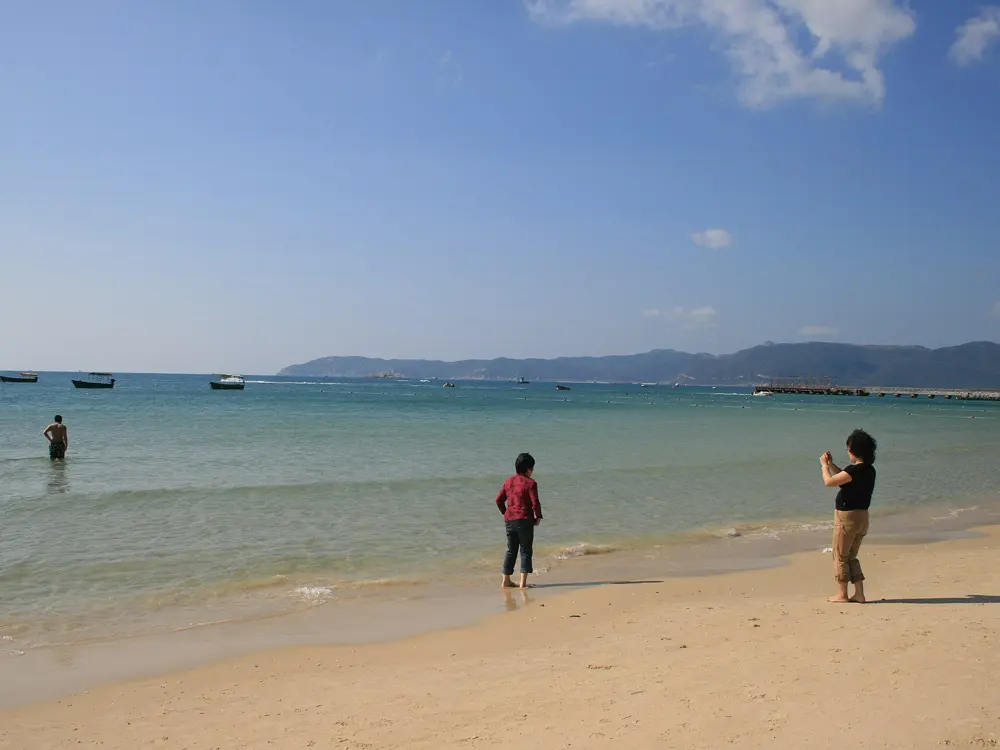
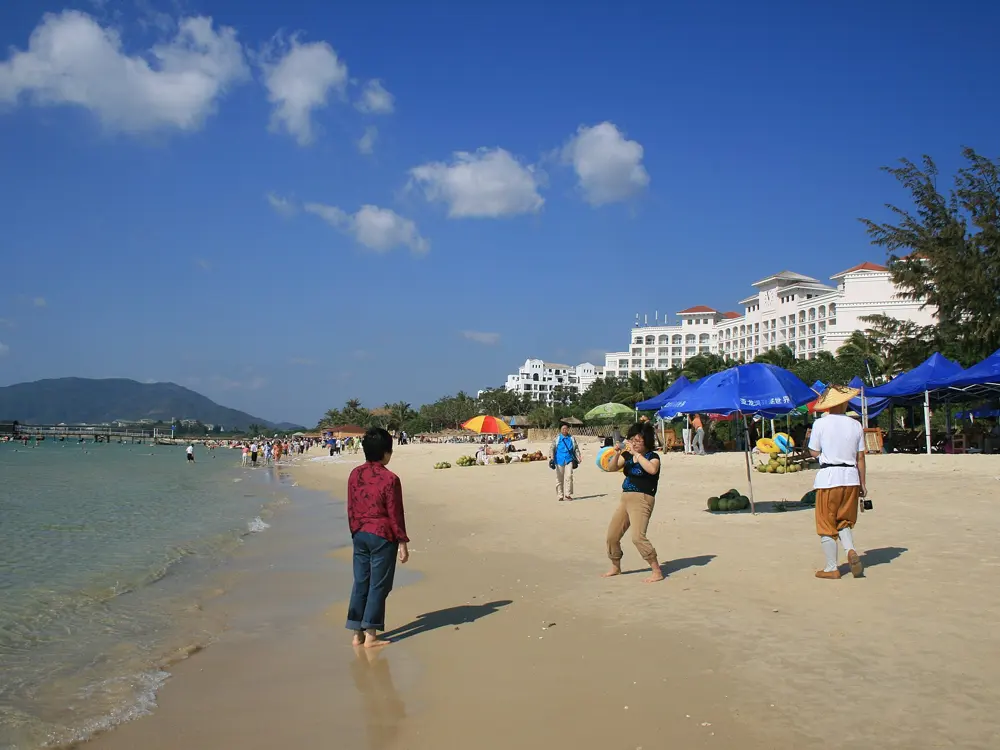
Yalong Bay, Sanya, Hainan. Photo: Gary Todd from Xinzheng, China (CC0)

China has a long coast, from tropical Hainan to the cold Bohai Sea, and swimming at the beach is an organised business: official bathing beaches open for a set season, with lifeguards and shark nets, and every week from June to September the Ministry of Ecology and Environment publishes water quality and swimming ratings for 57 of them. The best swimming is in the warm south, on Hainan, Weizhou and the Fujian coast, but the northern resorts of Qingdao and Beidaihe have drawn swimmers since around 1900, and Dalian swims all winter.

These ten run from Yalong Bay in Sanya, Hong Kong's Big Wave Bay and Weizhou Island to Xiamen, Pingtan and Zhujiajian on the east coast, Qingdao, Beidaihe and Dalian in the north, and the July crossing of the Yangtze at Wuhan. For each one you get the classic swims, the season, how to get there, the fees and rules, how hard it is and where to stay. Many nationalities can now enter mainland China without a visa for up to 30 days under policies that run to 31 December 2026, and Hainan has its own 30-day scheme. Every fact comes from government bodies, the national water bulletins, newspapers or the other pages linked at the bottom.

Updated 2026-10-19

  1. 01Yalong BaySanya, Hainan
  2. 02Big Wave Bay and Shek OHong Kong Island, Hong Kong
  3. 03Weizhou IslandBeihai, Guangxi
  4. 04Xiamen and GulangyuXiamen, Fujian
  5. 05Zhujiajian's Golden SandsZhoushan, Zhejiang
  6. 06Qingdao's bathing beachesQingdao, Shandong
  7. 07BeidaiheQinhuangdao, Hebei
  8. 08Dalian's beachesDalian, Liaoning
  9. 09Longwangtou Beach, PingtanPingtan Island, Fujian
  10. 10The Yangtze at WuhanWuhan, Hubei
01 / 10

Yalong Bay

Sanya, Hainan
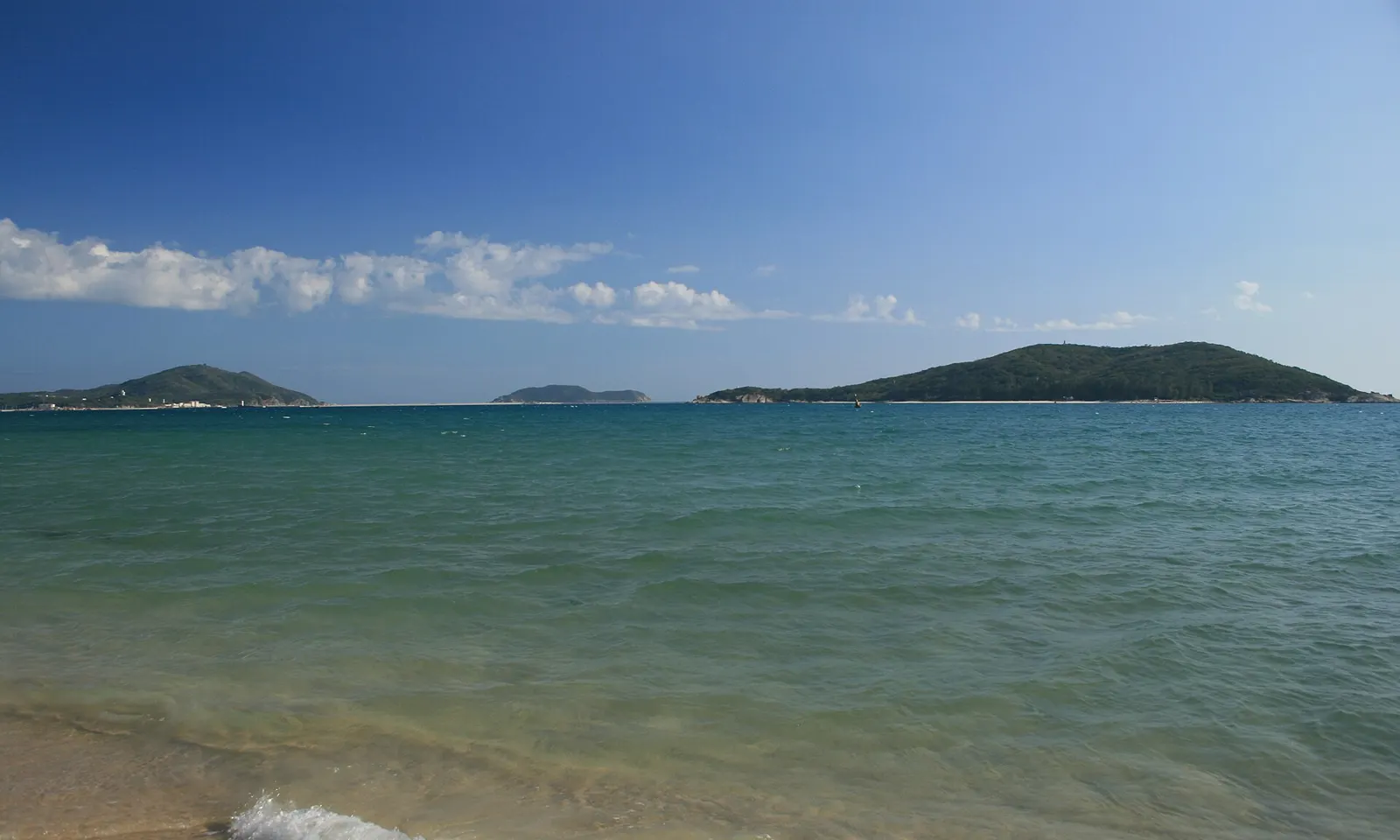
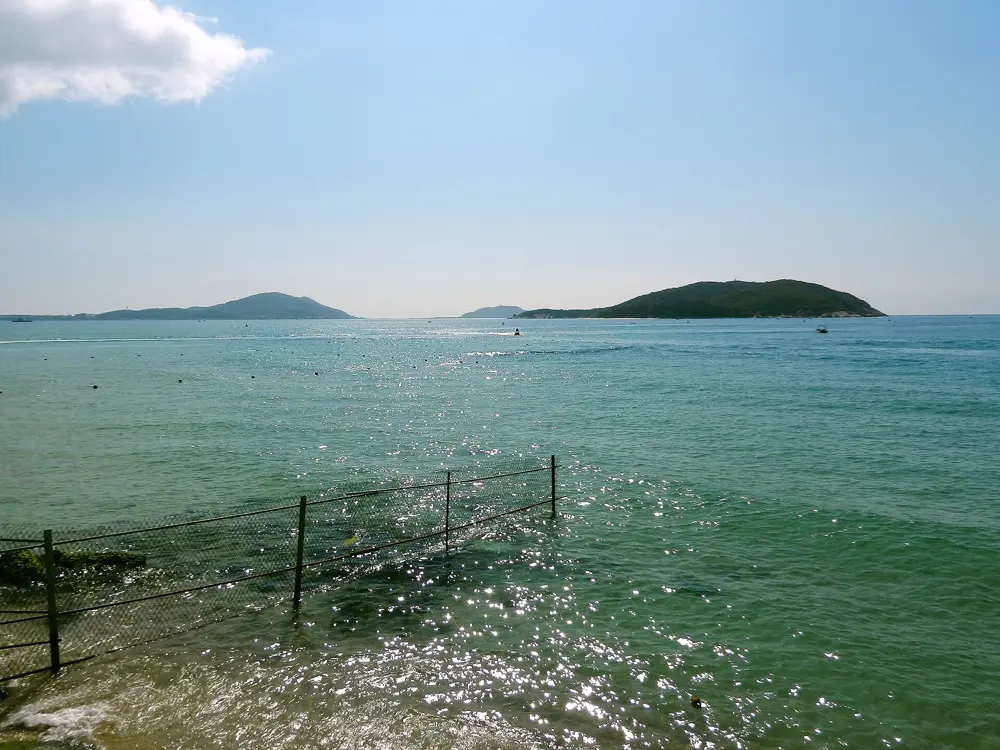
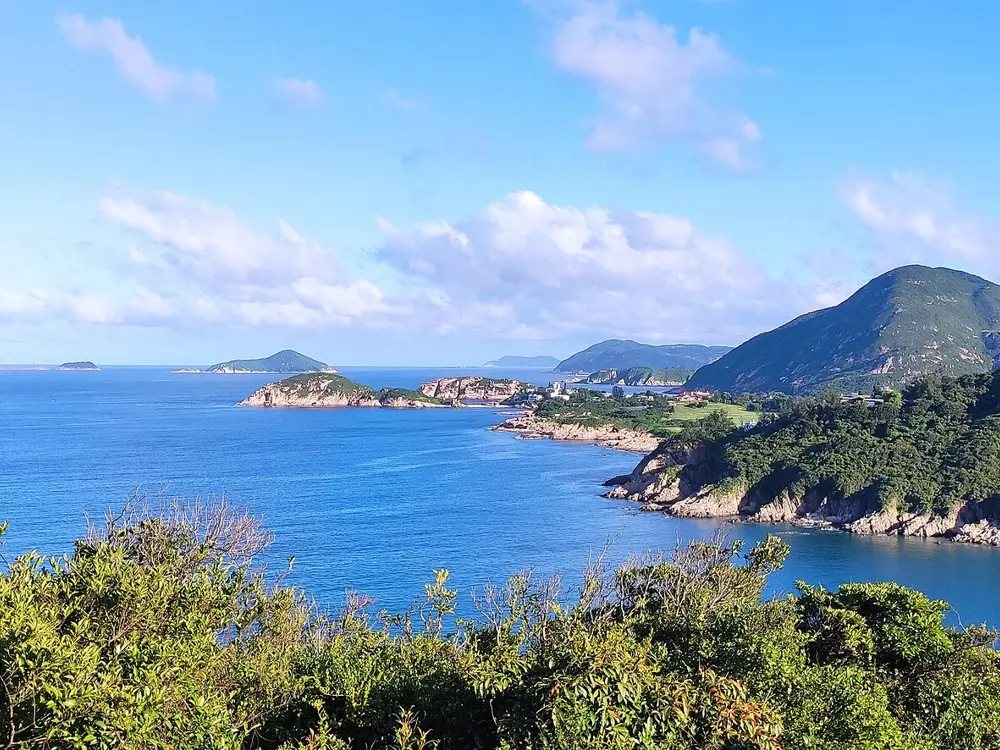
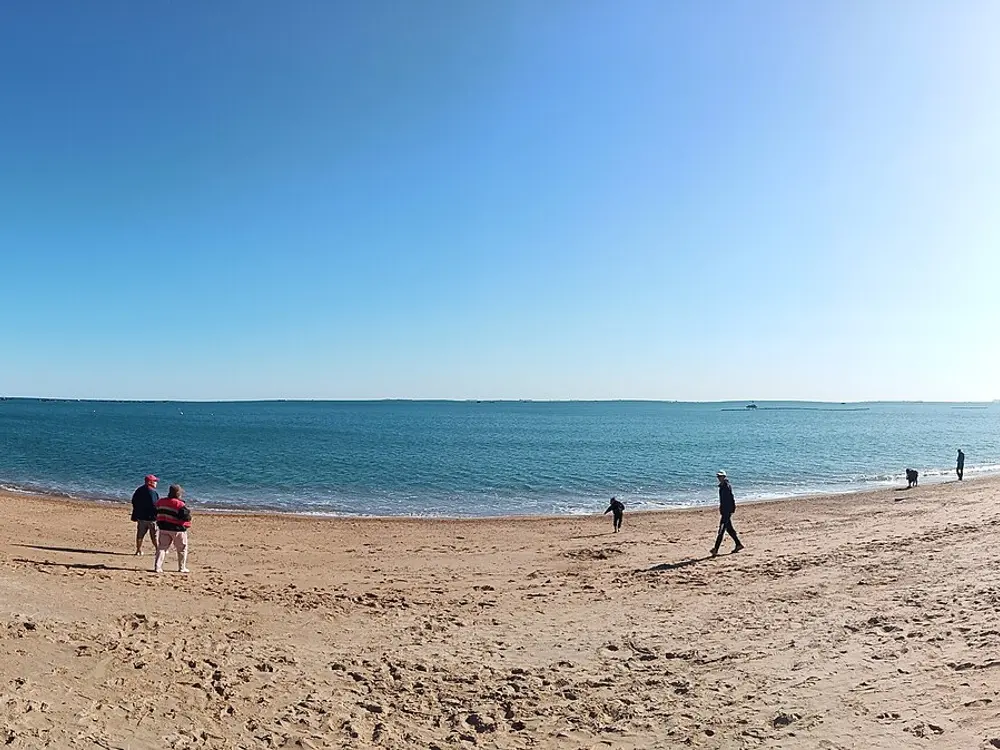
Calm green water and islands across Yalong Bay in Sanya

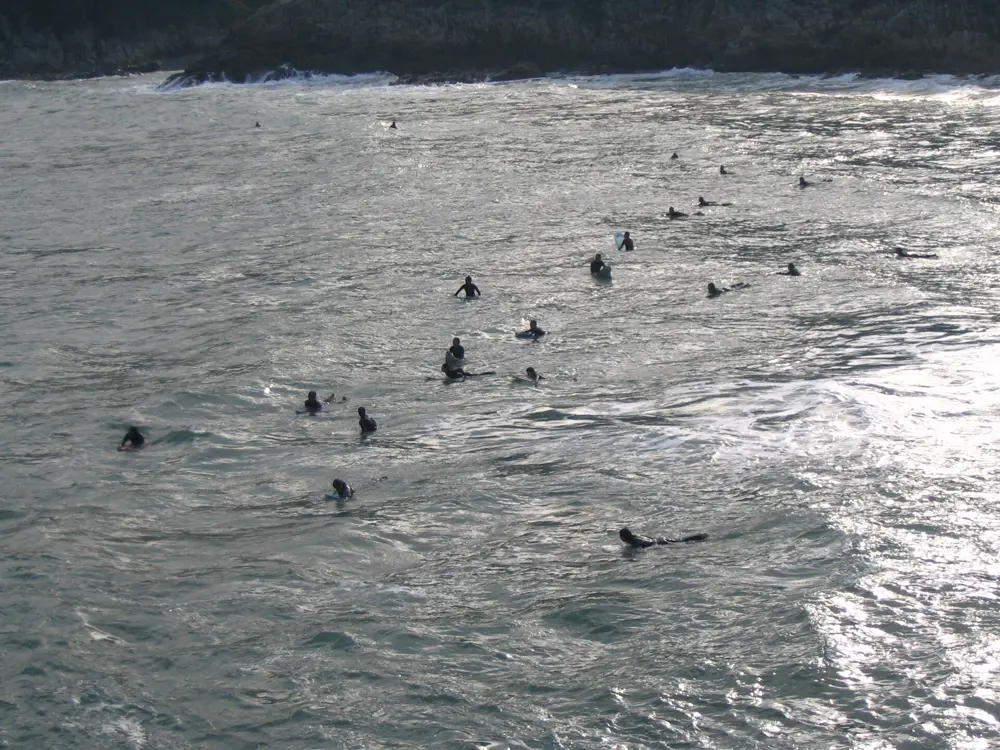
Photos: Gary Todd from Xinzheng, China (CC0), Gary Todd from Xinzheng, China (CC0), Gary Todd from Xinzheng, China (CC0), Tanya Dedyukhina (CC BY 3.0)

Distance
About 25 km by road from central Sanya
Beach
About 7 to 7.5 km of white sand
Visibility
Usually 8 to 12 m
Season
All year; November to April is the most comfortable

Why go

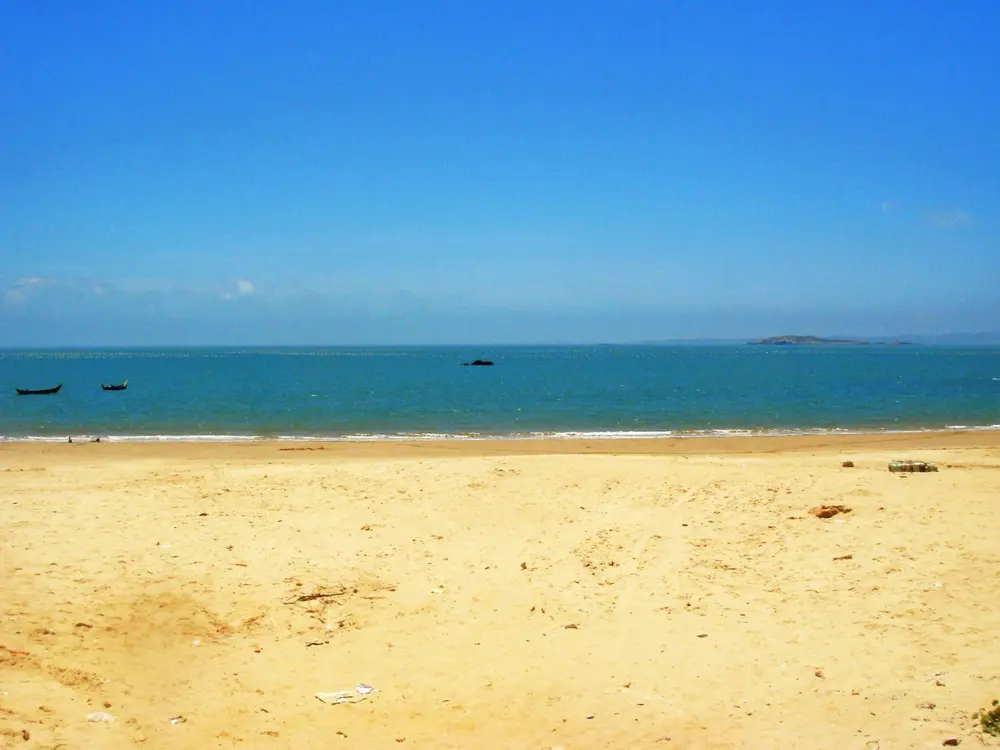
Yalong Bay is the beach most people mean when they talk about swimming in Hainan: a crescent of fine white sand about 7 to 7.5 km long on the southeast side of Sanya, facing a string of green islands. The bay is sheltered, the shallows shelve gently for 50 to 60 m from the shore, and the water is clear enough that guides quote 8 to 12 m of visibility. It is China's nearest thing to a tropical swimming beach, and the sea is warm enough to swim in all year.

The route

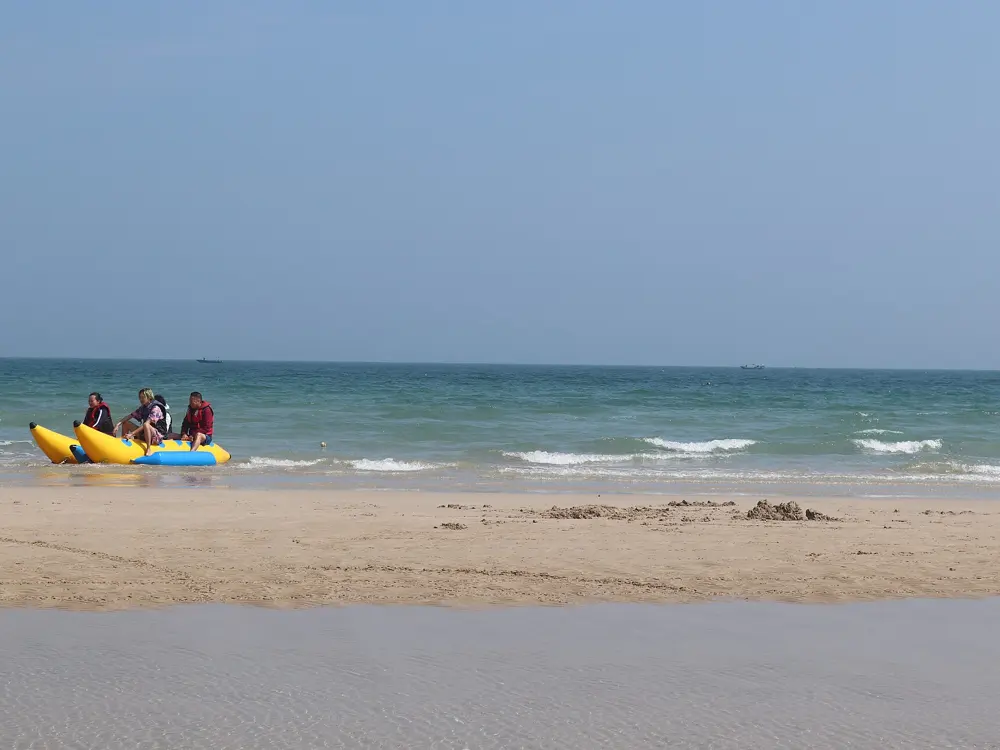
The public beach is reached through several entrances around the central square and the Hundred Flowers Valley (Baihuagu) shopping street, and from there you can swim, snorkel or hire jet skis, banana boats and parasails. The long, easy swim is parallel to the shore inside the buoys in front of the central beach, with the islands on the horizon. Some stretches have rocks and shoals and are better for walking than swimming, so pick a sandy section. Most of the rest of the shore is fronted by resort hotels.

When to go

The sea is warm year round: the coolest water, in winter, is still around 22 C. The Sanya Tourism Board names November to April as the most comfortable months, with drier air and clearer skies, while summer is hotter and is the season for snorkelling. China's Ministry of Ecology and Environment checks the water every week from June to September, and in its July, August and late September 2026 bulletins Yalong Bay was rated excellent each time, and relatively suitable for swimming.

Getting there

Fly to Sanya Phoenix International Airport; in August 2026 Sanya had 36 international and regional air routes. Bus routes 8 and 27 link the airport with Yalong Bay, and routes 16 and 25 run from Nanshan Temple through downtown Sanya and Dadonghai to the bay. A taxi from the city costs about 30 to 50 yuan. Yalongwan station, on the high speed railway, is also in the area.

Permits and booking

The public beach is free and open all day. Nationals of 61 countries can enter Hainan without a visa for up to 30 days, arriving through the island's own ports and staying within Hainan, under a policy last widened on 20 August 2026. Separately, a national 30-day visa-free policy for many European, Asian and Latin American countries, Australia and New Zealand, and since 17 February 2026 the UK and Canada, runs to 31 December 2026. Check your nationality before you book.

How hard it is

Easy. The bay is sheltered and the shallows are wide and gently sloping, which makes it one of the gentlest swims on this list. The eastern end of the bay is occupied by the navy's Yulin base, so stay in the public areas.

Where to sleep

Yalong Bay is lined with resorts, among them the St Regis, Sheraton, Marriott, Ritz-Carlton, Pullman, Grand Hyatt and MGM Grand, along with Chinese hotels such as Resort Horizon, Mangrove Tree and Cactus. Cheaper rooms are in Dadonghai and downtown Sanya, a bus or taxi ride away.

Tips

  • Swim from one of the public entrances near the central square or Baihuagu: much of the rest of the shore is hotel frontage.
  • Choose the sandy stretches; the guide pages warn that parts of the bay have rocks and shoals.
02 / 10

Big Wave Bay and Shek O

Hong Kong Island, Hong Kong

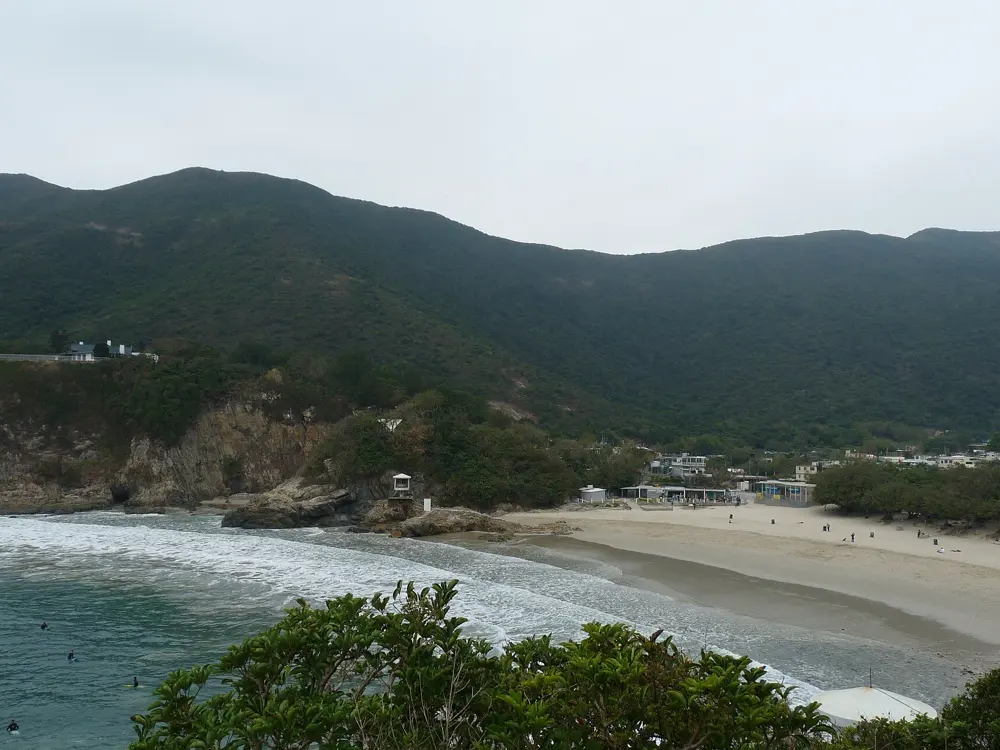
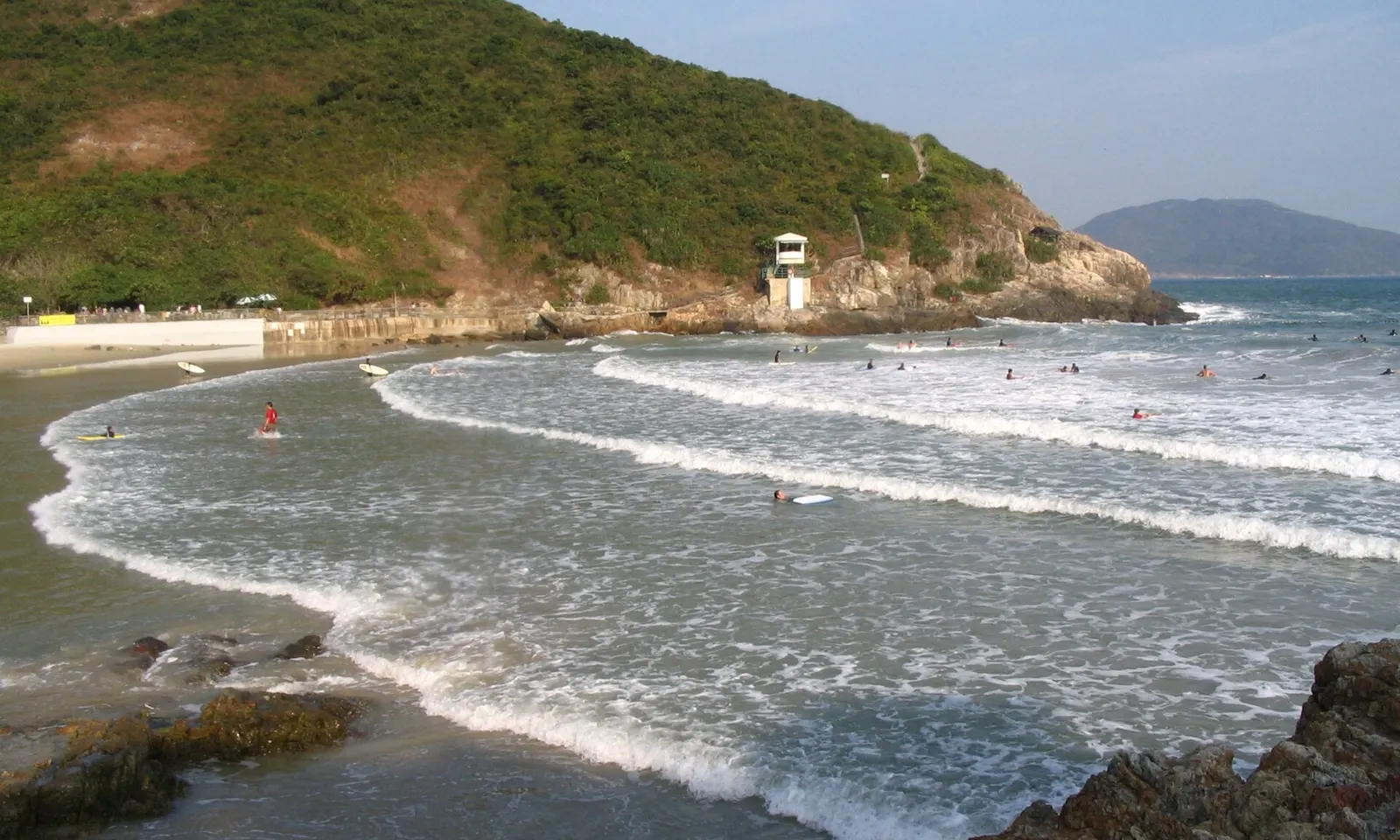
Surf rolling into Big Wave Bay beach on Hong Kong Island under green hills

Photos: Minghong (CC BY-SA 4.0), Minghong (CC BY-SA 4.0), User: (WT-shared) Herngong at wts wikivoyage (Public domain), Nhk9 (CC BY-SA 4.0)

Lifeguards
1 April to 31 October, 9am to 6pm
Winter
Big Wave Bay guarded in November and March, 8am to 5pm (2025 to 2026)
Protection
Shark prevention nets
Getting there
Bus 9 from Shau Kei Wan

Why go

Hong Kong's gazetted beaches have lifeguards in season and many have shark nets, and the best swimming on Hong Kong Island is on its wild southeast corner. Big Wave Bay, tucked between Cape Collinson and Shek O under green hills, is the island's surf beach, with swell most of the year. Shek O, just to the south, is the other beach on this corner of the island.

The route

At Big Wave Bay you swim inside the shark net between the flags while surfers take the waves at the edges; boards and stand up paddleboards can be hired in the village. Big Wave Bay is also the eastern end of the Dragon's Back, section 8 of the Hong Kong Trail, so many people walk the ridge and finish with a swim. For a bigger swim, the Hong Kong Amateur Swimming Association's harbour race, revived in 2011, crosses Victoria Harbour from the public pier at Golden Bauhinia Square in Wan Chai to the Avenue of Stars in Tsim Sha Tsui; the 2019 race, on 27 October, had 4,000 places.

When to go

The swimming season runs from April to October. In 2026 lifeguards were on duty at 22 beaches from 1 April, 9am to 6pm daily, extended to 8am to 7pm at weekends and on public holidays from June to August, and the list from 1 September included both Big Wave Bay and Shek O. In the winter of 2025 to 2026, Big Wave Bay kept lifeguards from 8am to 5pm in November and March only, and Shek O was not among the beaches guarded. The winter list is announced each autumn.

Getting there

Take the MTR Island Line to Shau Kei Wan and bus 9 from the terminus at exit A3 towards Shek O. For Big Wave Bay, get off at the junction of Shek O Road and Big Wave Bay Road and walk about 10 minutes. Red minibuses from exit A2 are a little dearer and quicker. A taxi from Chai Wan takes about 10 to 15 minutes.

Permits and booking

The beaches are free. Hong Kong runs its own immigration system, separate from the mainland's, so check its rules for your passport.

How hard it is

Moderate at Big Wave Bay, where waves break most of the year; easier at Shek O on a calm day. Swim only when lifeguards are on duty and never when the red flag is up. The Leisure and Cultural Services Department closes the beaches when the shark nets need repair, as it did at Big Wave Bay, Shek O and Stanley Main Beach for three days in September 2023.

Where to sleep

There are no hotels at the beaches. Stay in Shau Kei Wan, Quarry Bay or anywhere on the Island Line and come out by bus.

Tips

  • Look for the prehistoric rock carving on the headland at Big Wave Bay, found in 1970 and a declared monument since 1978.
  • Leave early on summer weekends: the bus fills up and so does the beach.
03 / 10

Weizhou Island

Beihai, Guangxi

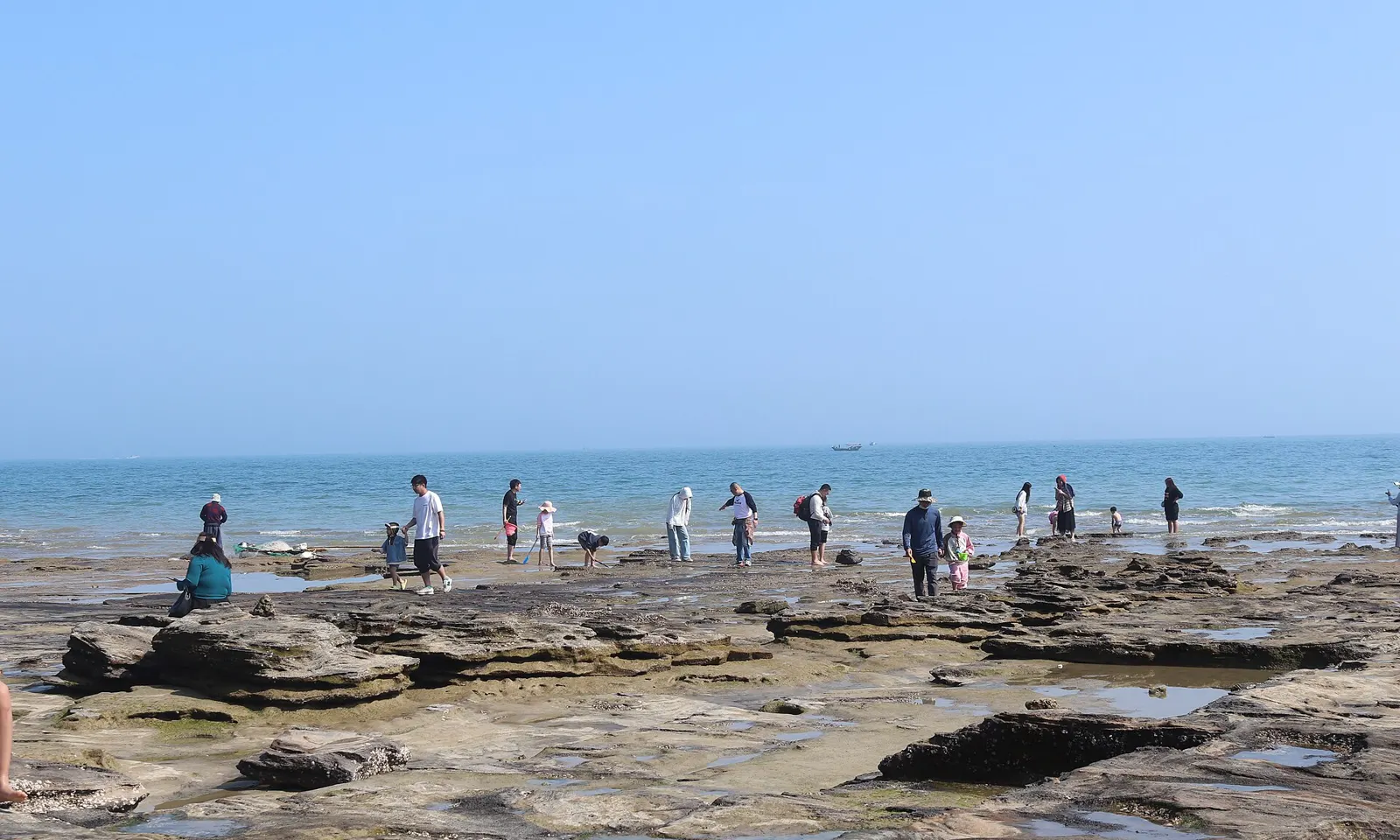
Visitors on the volcanic rock platform of Wucaitan on Weizhou Island

Photos: Liuxingy (CC BY-SA 4.0), Liuxingy (CC BY-SA 4.0), Liuxingy (CC BY-SA 4.0), Sevgonlernassau (CC BY-SA 4.0)

Distance
About 21 nautical miles south of Beihai
Ferry
About 60 to 90 minutes from Beihai
Coast
15.6 km, with 6 to 10 km of sandy beach
Island ticket
98 yuan

Why go

Weizhou is China's youngest volcanic island, a 24.74 sq km disc of dark volcanic rock, banana trees and fishing villages in the Beibu Gulf, south of Beihai. Its last eruptions were roughly 10,000 to 7,100 years ago, and coral reefs have grown around it since. With neighbouring Xieyang Island it forms the Beihai Weizhoudao Volcano National Geopark, and guides quote 8 to 25 m of visibility on the reefs.

The route

Shiluokou Beach on the west coast is the island's officially designated swimming area: a gently shelving, fine sand beach that faces the sunset. Snorkellers head for the coral at North Port and around the Nanwan marine sports park, where coral cover is put at about 50 percent. Elsewhere the shore is volcanic rock, tidal flats and cliffs, among them the Wucaitan rock platform and the cliffs of Dishui Danping, which are for walking and sunsets rather than swimming.

When to go

Guides recommend April to June and September to November, with water activities best from May to October. July to September is typhoon season, when ferries can be cancelled at short notice, and the sea can also be rough in winter, when the water drops to around 15 to 22 C. Bryde's whales are seen around the island in season.

Getting there

Ferries leave from the Beihai International Passenger Terminal several times a day and take roughly 60 to 90 minutes, depending on the boat. Ordinary class one way was about 150 yuan in summer 2026, with business and VIP seats costing more. On the island, motor tricycles and rented e-scooters get you around.

Permits and booking

Every visitor buys a 98 yuan island ticket when they land, which covers the main sights, including Crocodile Mountain volcano park, the Catholic church, Dishui Danping and Wucaitan, for a week. Ferry and island tickets are sold through the official Laiyouba mini program, and summer boats sell out, so book well ahead. Bring your passport: tickets are issued against ID.

How hard it is

Easy to moderate. Shiluokou is gentle, but local guides warn of currents off the island and advise swimming only where there are lifeguards rather than on unattended beaches. Heavy seas stop the ferries, so build a spare day into any trip.

Where to sleep

The island has guesthouses in its villages and hotels such as the Weizhou Island Gangda Hotel and the Beihai Jialai Weizhou North Coast Seaview Hotel. Staying the night lets you swim at Shiluokou at sunset after the day visitors have left.

Tips

  • Walk to Shengtang village to see the Gothic Catholic church, built by the French between 1869 and 1879.
  • Fishing is banned within 6 km of the island, and the reefs are protected, so do not take coral or shells.
04 / 10

Xiamen and Gulangyu

Xiamen, Fujian

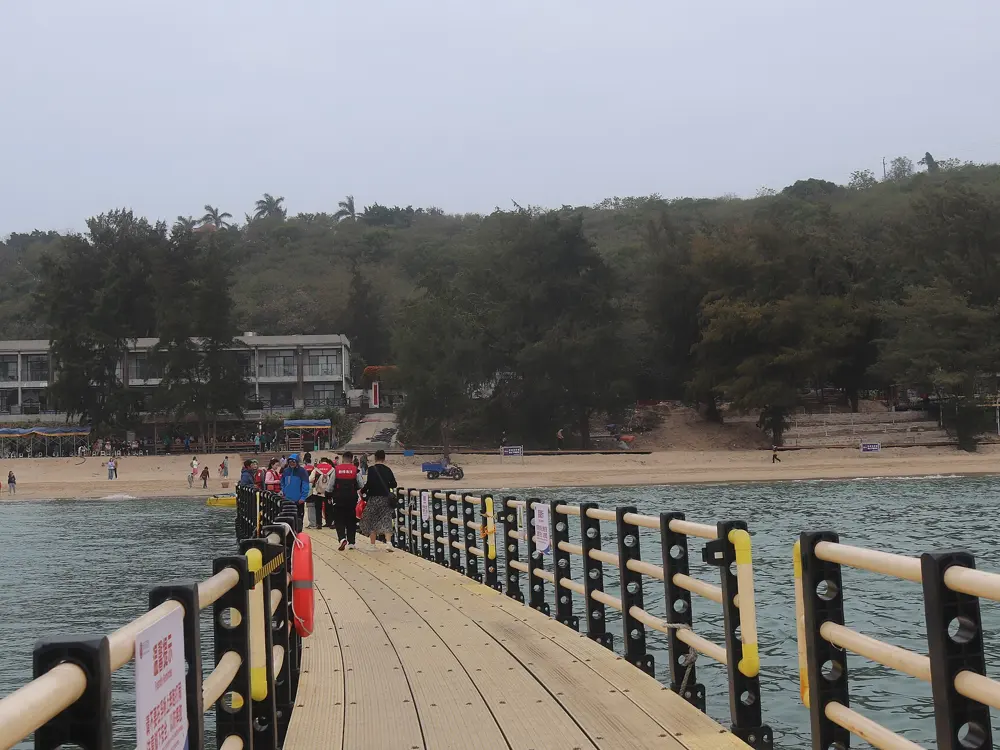
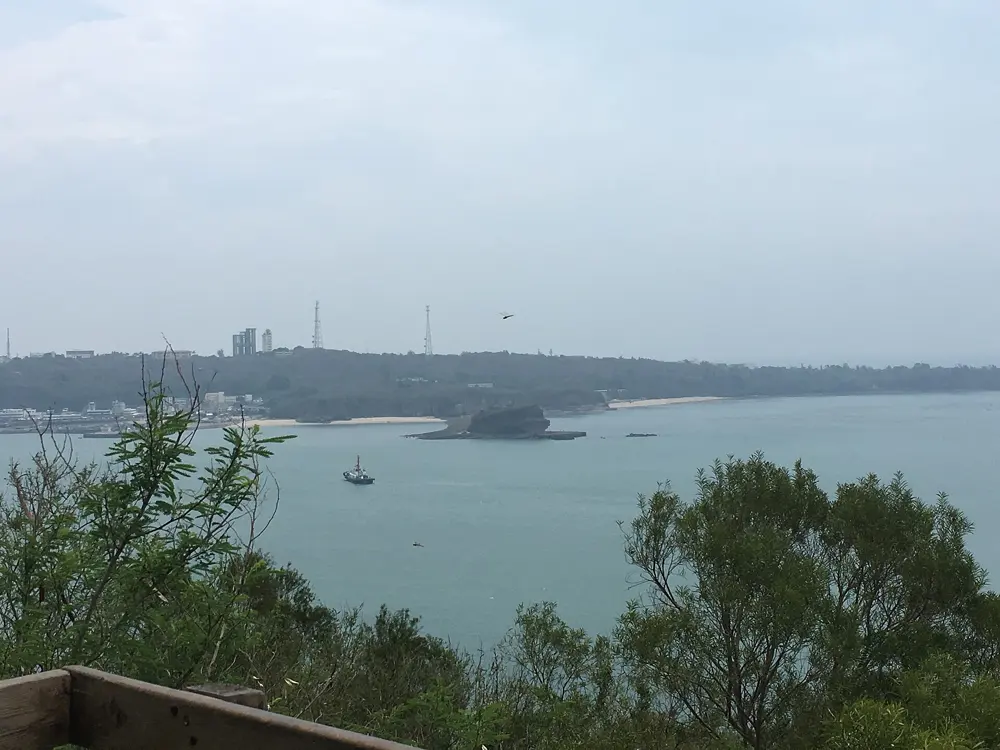
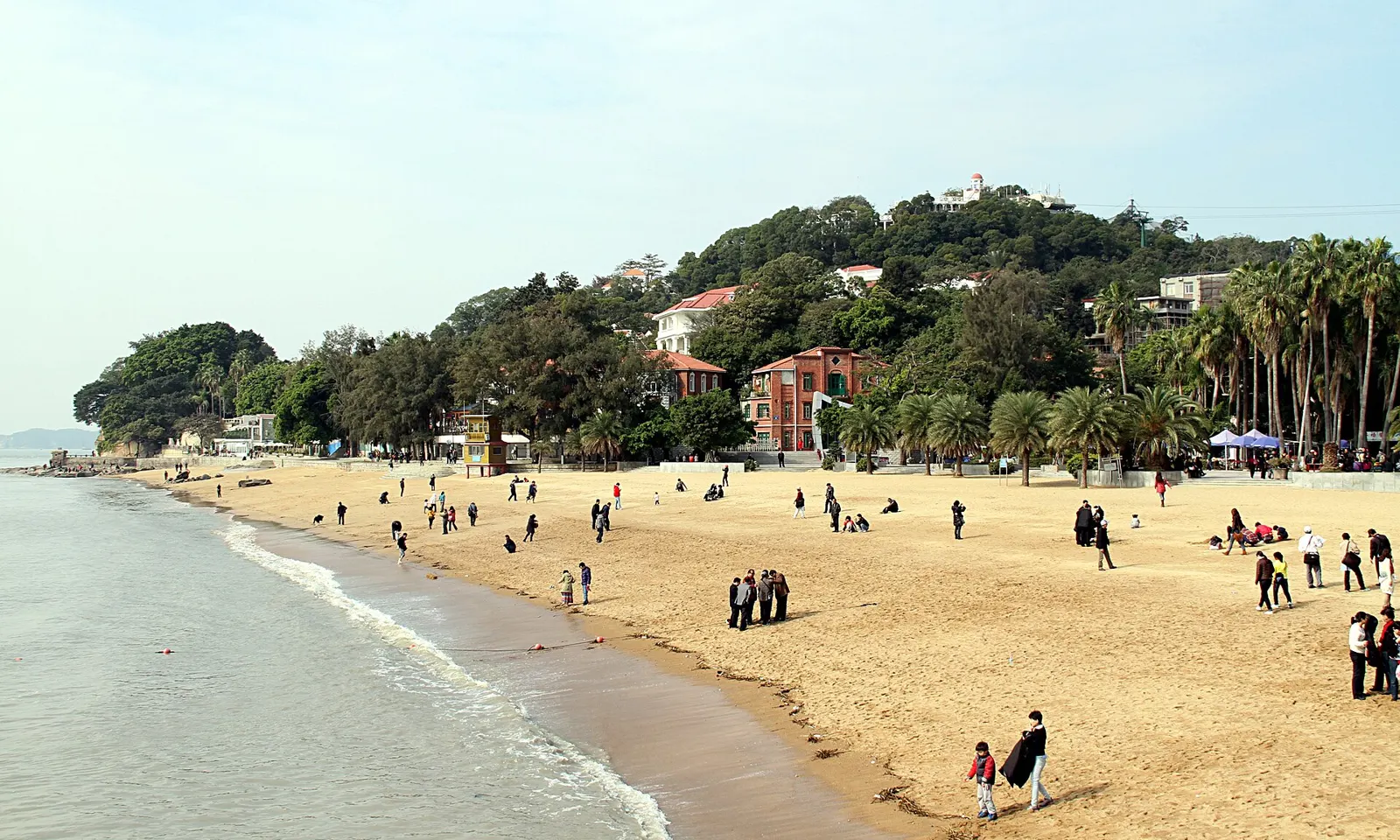
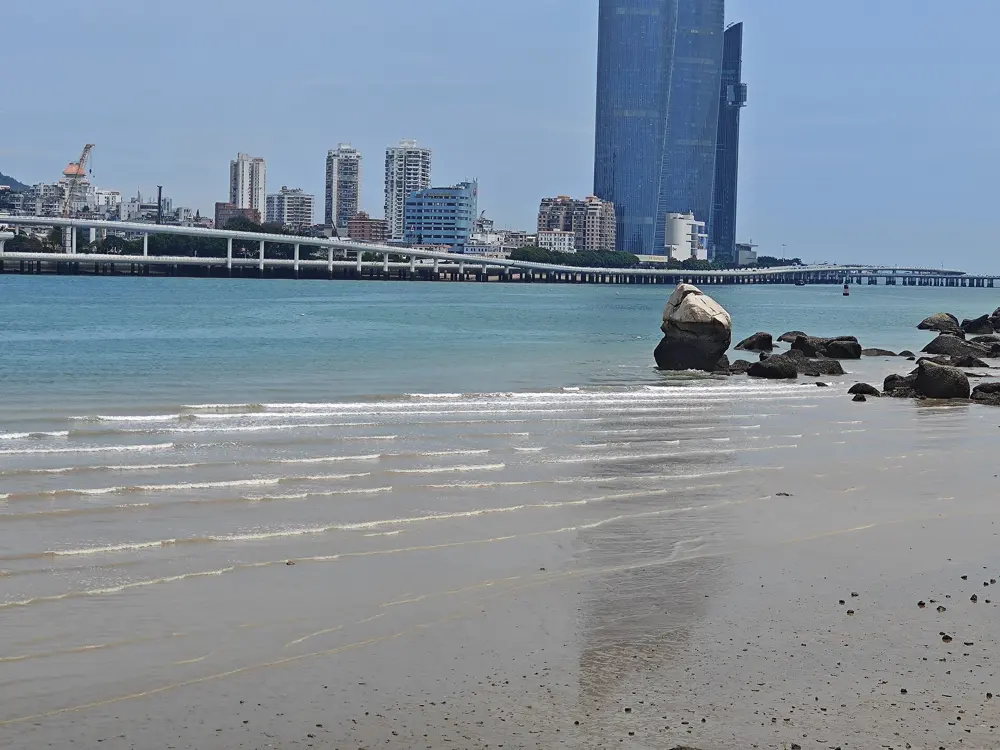
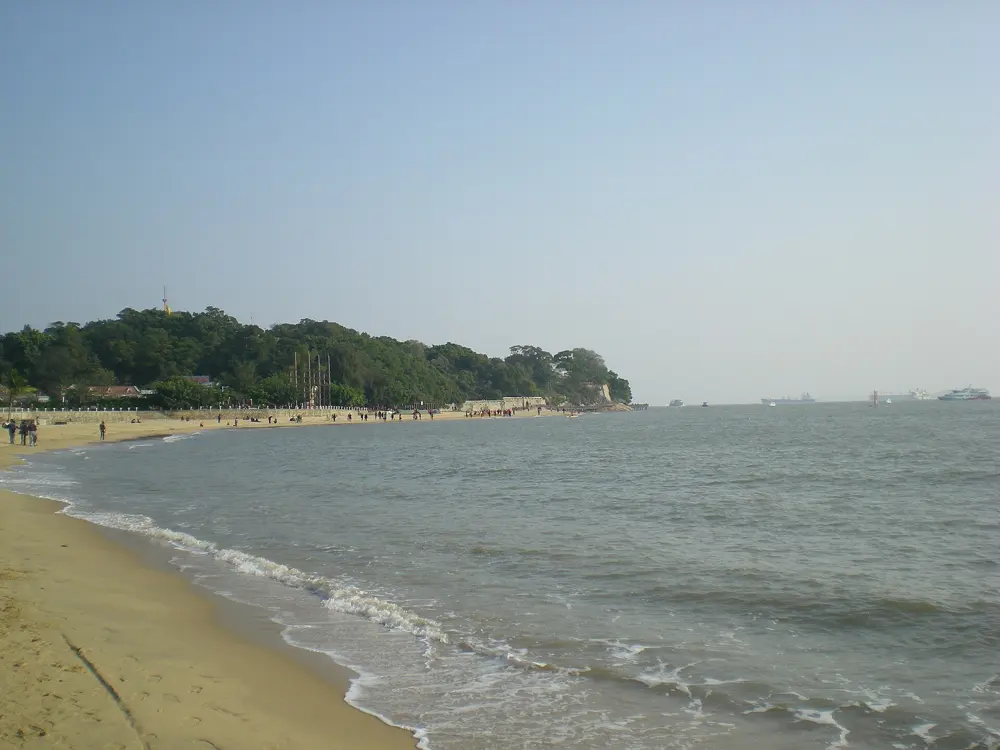
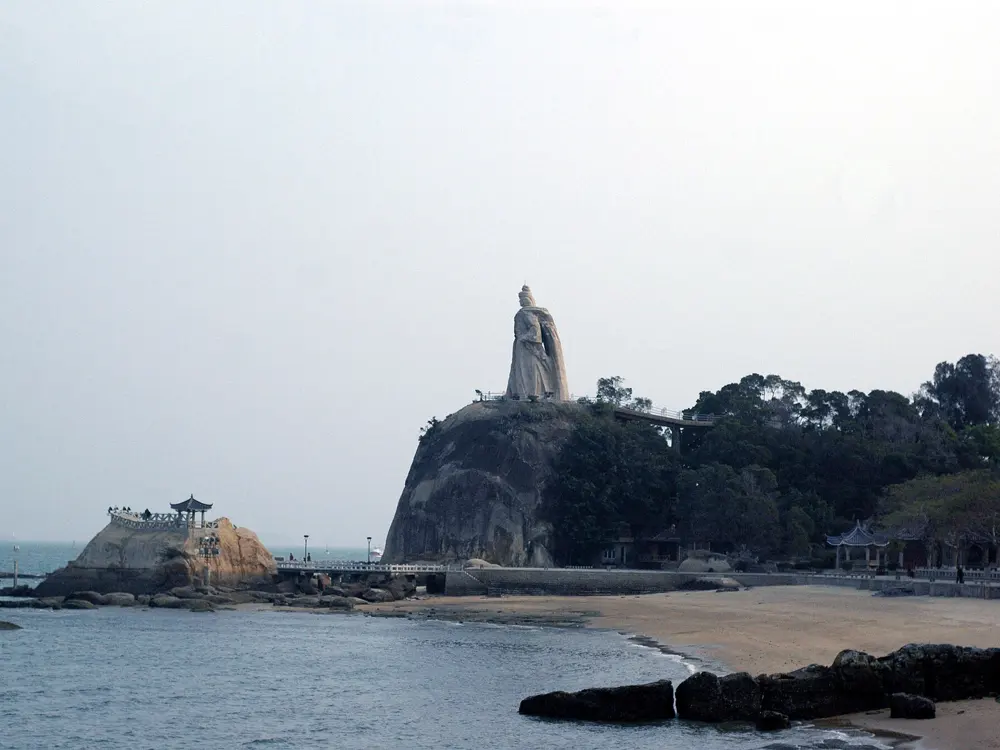
The sweep of Gangzaihou beach on Gulangyu with villas on the hill behind

Photos: Rolfmueller (CC BY-SA 3.0), JULIANISME (CC BY-SA 4.0), Jie Yang (CC BY 3.0), Don Ramey Logan (CC BY-SA 3.0)

Distance
About 1 km across the Lujiang channel to Gulangyu
Ferry
About 20 minutes from Dongdu
World Heritage
Gulangyu, since July 2017
Water
Rated excellent all summer 2026

Why go

Xiamen is an island city on the Fujian coast with beaches along its south shore, and across a narrow channel lies Gulangyu (Kulangsu), which became a UNESCO World Heritage Site in July 2017. To celebrate, more than 200 swimmers swam the 1 km across the Lujiang channel from Gulangyu's beach to the Xiamen docks. Xiamen's three official bathing beaches, Huangcuo, Gulangyu and Zengcuo'an, were rated excellent and suitable for swimming in the national bulletins of July, August and late September 2026.

The route

On Gulangyu, Gangzaihou on the south shore is the island's largest and busiest beach, and Dadeji, with its clear water and odd shaped rocks, is the one guides pick for summer swimming. On Xiamen island, Zengcuo'an and Huangcuo lie along the Huandao Road on the southeast coast; Huangcuo is quieter, with clean sand and very clear water, but reefs and tides make it a beach for strong swimmers. Baicheng beach below Xiamen University is for sunsets: swimming is banned there. The 2017 Lujiang crossing was an organised event, not a swim to try alone.

When to go

Swim from June to September. National monitoring in Fujian and further south runs from 1 June to 30 September, and in 2026 all three Xiamen beaches were rated excellent and suitable in July, August and late September. They were closed for heavy rain for parts of June, so expect the odd closed day early in the season.

Getting there

Daytime tourist ferries to Gulangyu leave Dongdu International Terminal about every 20 minutes from 7:10am to 5:40pm (6:40pm from June to September), take about 20 minutes and cost 35 yuan, landing at Sanqiutian or Neicuo'ao.

Permits and booking

Foreigners need their passport to buy a Gulangyu ferry ticket, and the name on the ticket must match the passport at boarding. Same day tickets are sold at the terminal, but queues reach an hour at busy times, so book ahead online. The beaches themselves are free. Many nationalities can enter mainland China without a visa for up to 30 days to 31 December 2026.

How hard it is

Easy at Dadeji and Zengcuo'an in calm weather; Huangcuo is for strong swimmers only. A beach directory notes that lifeguards are not usually present at Gangzaihou, so swim with care there.

Where to sleep

Gulangyu has guesthouses and small hotels in its old houses, such as the Wang Hai Yuan; staying on the island lets you swim before the first ferries arrive. Otherwise stay on Xiamen island near the Huandao Road.

Tips

  • Allow 15 minutes at Dongdu to exchange your ticket and clear the queue.
  • Do not swim at Baicheng beach below Xiamen University: it is a place for sunsets, and swimming there is banned.
05 / 10

Zhujiajian's Golden Sands

Zhoushan, Zhejiang

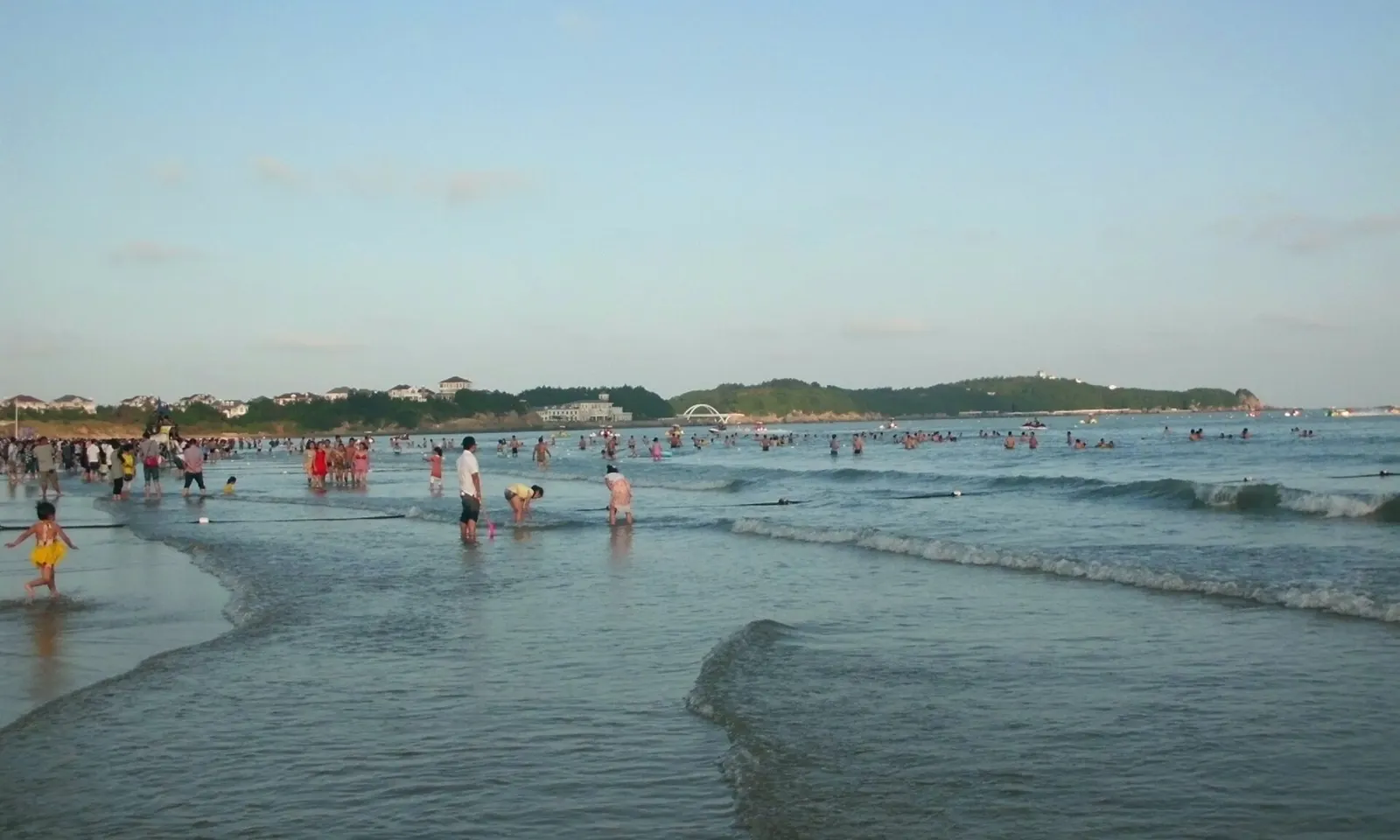
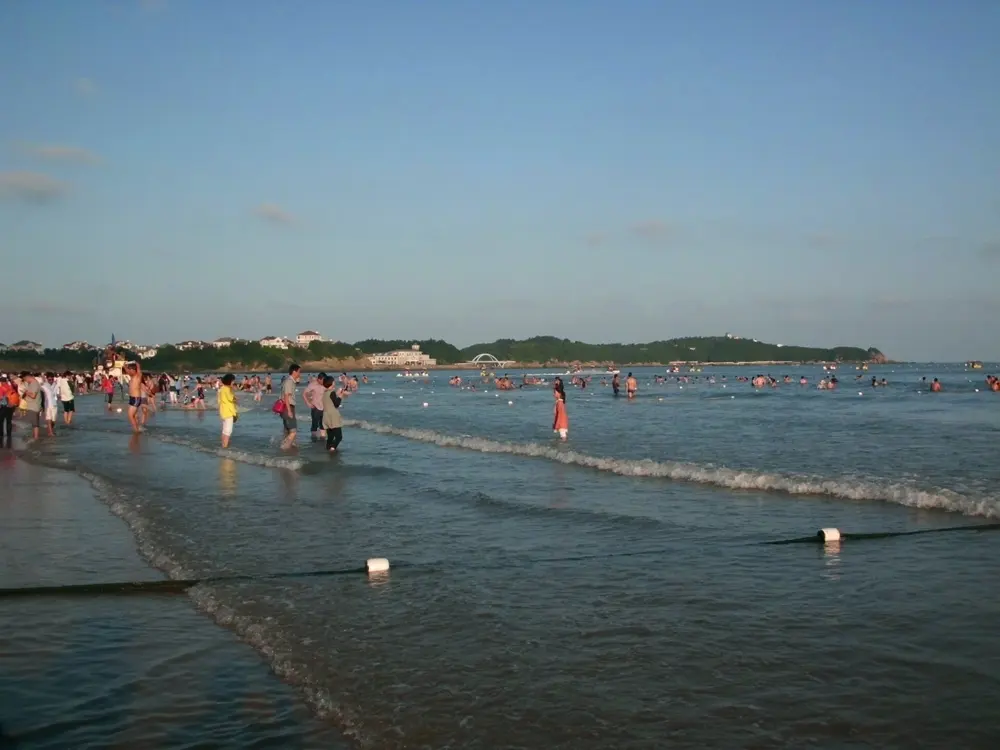
Swimmers in the shallow surf at Zhujiajian with the island's hills behind

Photos: Huandy618 (CC BY-SA 4.0), Huandy618 (CC BY-SA 4.0), Huandy618 (CC BY-SA 4.0), Huandy618 (CC BY-SA 4.0)

Distance
Five beaches, about 5 km in all
Depth
0.5 to 2 m up to 1,000 m from shore
Summer water
24 to 26 C
Capacity
Up to 20,000 people in the water

Why go

Zhujiajian, an island in Zhoushan's Putuo district off the Zhejiang coast, has five sandy bays, Nansha, Dongsha, Qiansha, Lisha and Qingsha, that together run for about 5 km along the southeast shore and are known as the Ten Li of Golden Sand. The sand is fine and the water shallow and clean, and the Nansha scenic area became a national 4A tourist attraction in December 2023.

The route

Nansha is the main swimming beach. Its water is 0.5 to 2 m deep for up to 1,000 m from the shore, so you can swim long, easy lengths parallel to the beach in water you can stand in, and there is room for 20,000 people in the sea at once. Nansha is also the site of the Zhoushan International Sand Sculpture Festival, held there every year. Dongsha, Qiansha, Lisha and Qingsha make up the rest of the chain.

When to go

Summer, when the water is 24 to 26 C. Zhujiajian was rated excellent and suitable for swimming in the national bulletins of early July, early August and late September 2026. The summer holidays bring crowds; in 2026 entry to Nansha in July and August was by timed booking.

Getting there

Zhoushan Putuoshan International Airport is on Zhujiajian itself, with flights from Beijing Daxing, Wuhan, Xiamen, Guangzhou and other cities.

Permits and booking

Nansha is a ticketed scenic area: third party sites listed adult tickets from about 70 yuan in 2026, and summer visits needed a real name booking, bound to your ID, about three days ahead through the Zhujiajian or Zhoushan tourism mini programs. Many nationalities can enter mainland China without a visa for up to 30 days to 31 December 2026.

How hard it is

Easy. The shelf is long and shallow and the swimming areas are roped off, which makes this one of the gentlest swims on the list. Stay inside the ropes.

Where to sleep

Stay on Zhujiajian, close to the beaches, and book ahead for summer weekends.

Tips

  • Book Nansha tickets as soon as booking opens for summer weekends: daily numbers are capped.
  • Late September is a good time: the beach was still rated suitable for swimming then in 2026, after the summer holidays.
06 / 10

Qingdao's bathing beaches

Qingdao, Shandong

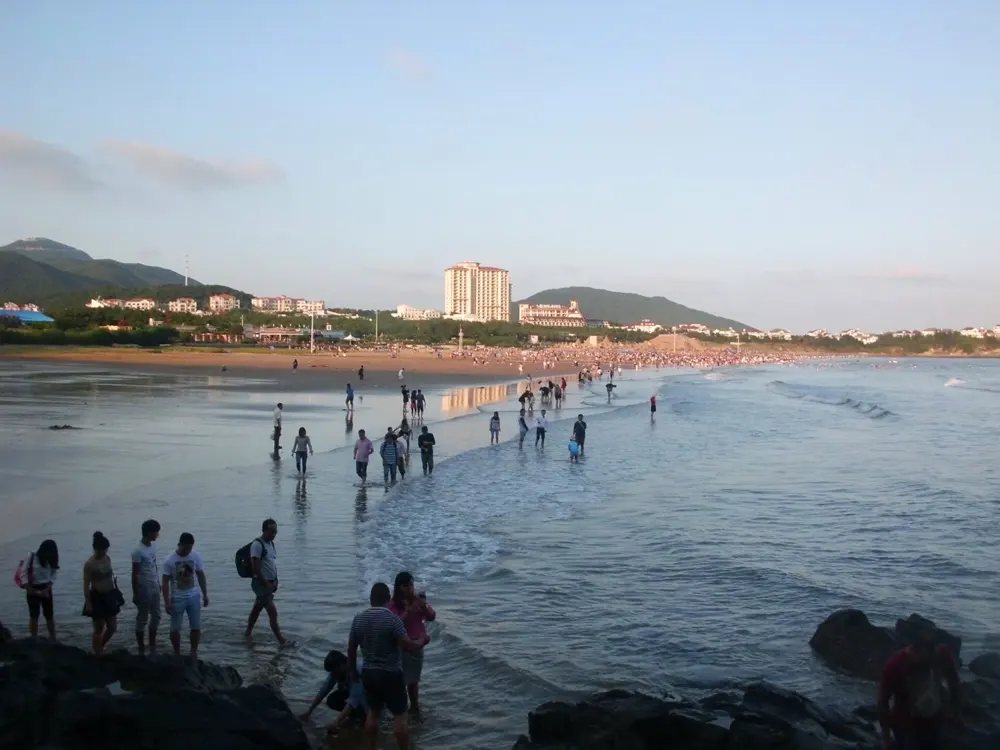
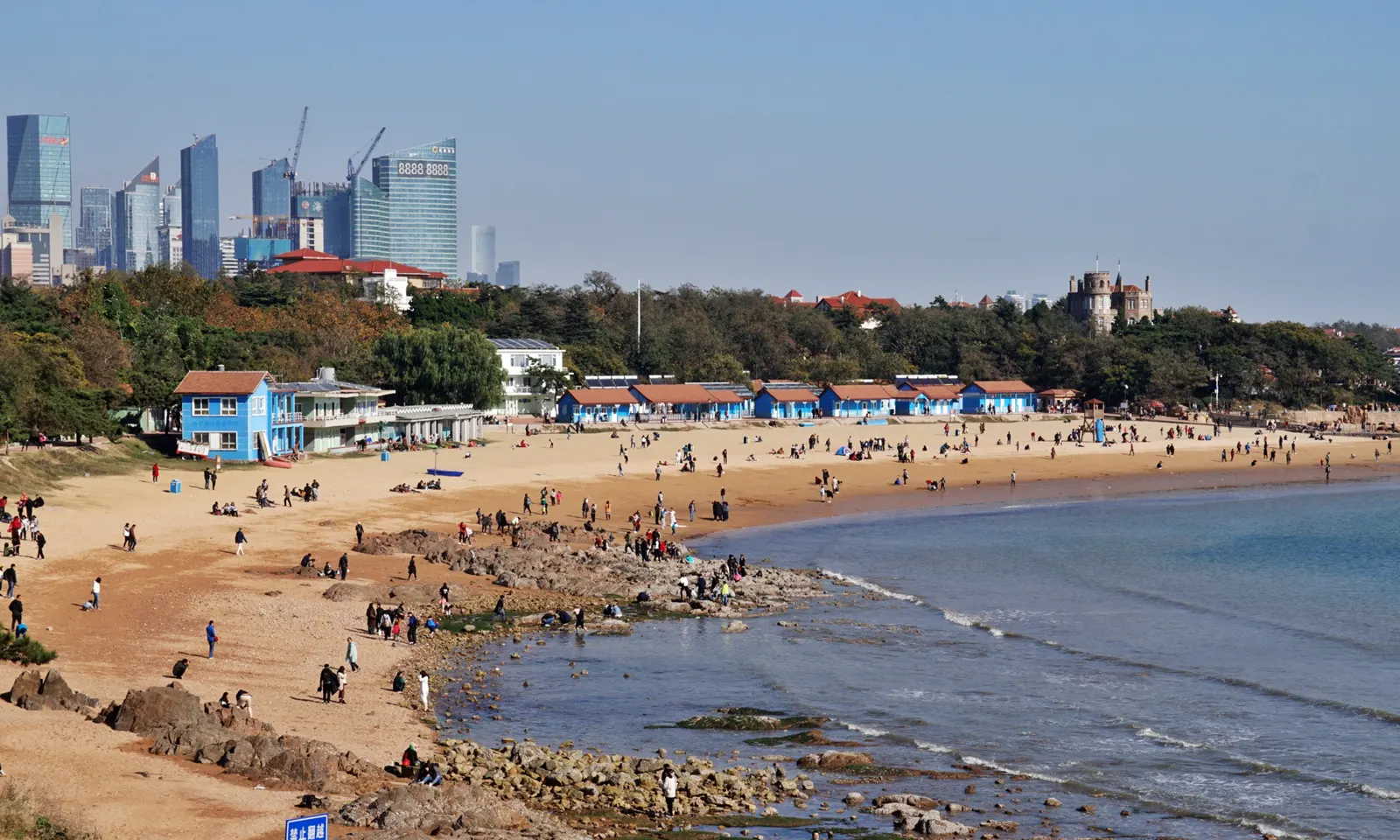
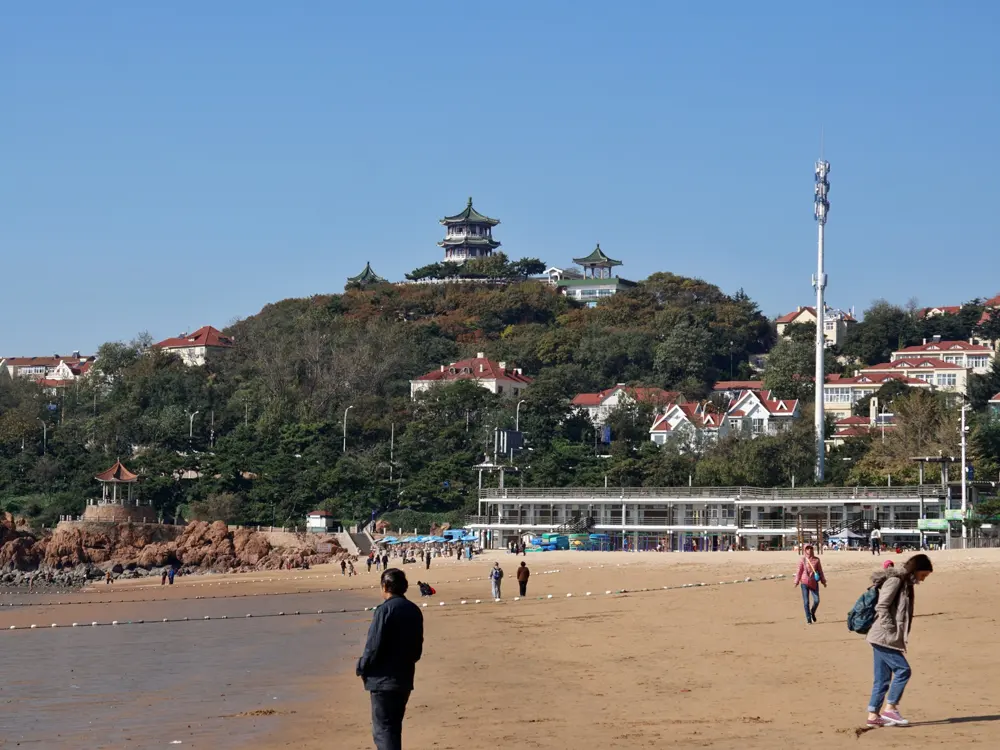
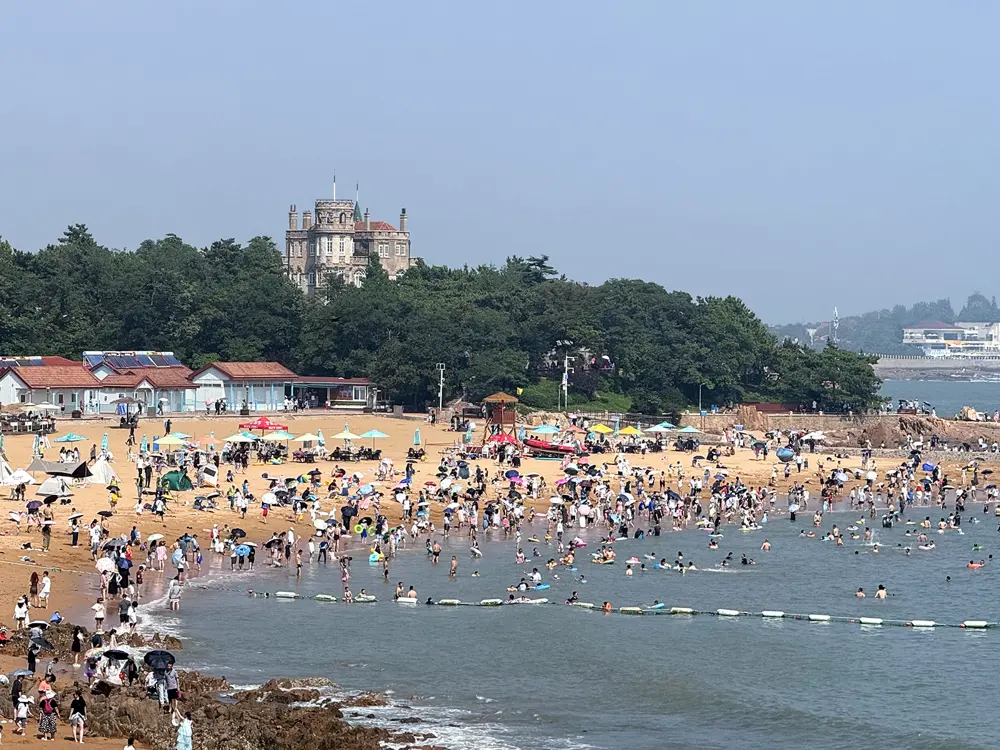
Sand, rocks and blue changing huts at Qingdao No. 2 Bathing Beach with the city behind

Photos: Lennartbj (CC BY-SA 4.0), 黄河山曲 (CC BY-SA 3.0), Lennartbj (CC BY-SA 4.0), Windmemories (CC BY-SA 4.0)

Distance
No. 1 Bathing Beach is about 580 m long
Bathing beaches
9 across the city
Lifeguarded season
1 July to 25 September (2026, reported)
Oldest
No. 1 Bathing Beach, opened in 1901

Why go

Qingdao is northern China's classic swimming city, with a chain of sandy bays along its Yellow Sea shore. Its No. 1 Bathing Beach on Huiquan Bay opened in 1901 as the Kaiser Augusta Victoria Bay bathing area, the first public sea swimming place in the city, and it has been crowded every summer since. The city now runs nine official bathing beaches, from the old town to Laoshan and the West Coast.

The route

No. 1 Bathing Beach is about 580 m long and more than 40 m wide, with gently shelving sand and changing rooms behind it, and in summer it also offers sailing, paddleboarding and surf lessons. No. 2 Bathing Beach lies next to the Badaguan villa district, and No. 3 is further along the shore. In Laoshan district are the Shilaoren and Yangkou beaches, and across the bay the West Coast New Area has Jinshatan, Yinshatan and Lingshanwan.

When to go

Reports of the 2026 season say all nine beaches opened for lifeguarded swimming on 1 July, with daily hours of 9am to 6pm until 25 September, extended in the peak of summer, and that shark nets were replaced before opening. The national water bulletins rated No. 1 Bathing Beach poor and unsuitable for swimming in early July 2026 because of faecal bacteria, then excellent and suitable in early August and late September; Shilaoren was rated excellent each time. Outside the open season there are no nets and no lifeguards.

Getting there

Qingdao railway station, on Metro Lines 1 and 3, is a five minute walk from Zhanqiao pier, and No. 1 Bathing Beach is a short walk east along the shore. Many city buses stop at the beach; check the route in a map app on the day.

Permits and booking

The bathing beaches are free. Many nationalities can enter mainland China without a visa for up to 30 days under policies that run to 31 December 2026; check whether yours is on the list.

How hard it is

Easy inside the nets in season. The beaches close at short notice when the wind and waves get up: No. 1 Bathing Beach shut for rough seas on 22 July 2024 and again on 20 July 2025. Obey the flags and stay inside the nets.

Where to sleep

Stay in the old town near Zhanqiao or in Badaguan for the No. 1 and No. 2 beaches, or in Laoshan district for Shilaoren.

Tips

  • Swim early on summer weekends: by midday No. 1 Bathing Beach is packed.
  • If the weekly bulletin rates No. 1 Bathing Beach poorly, Shilaoren was rated excellent all through 2026.
07 / 10

Beidaihe

Qinhuangdao, Hebei

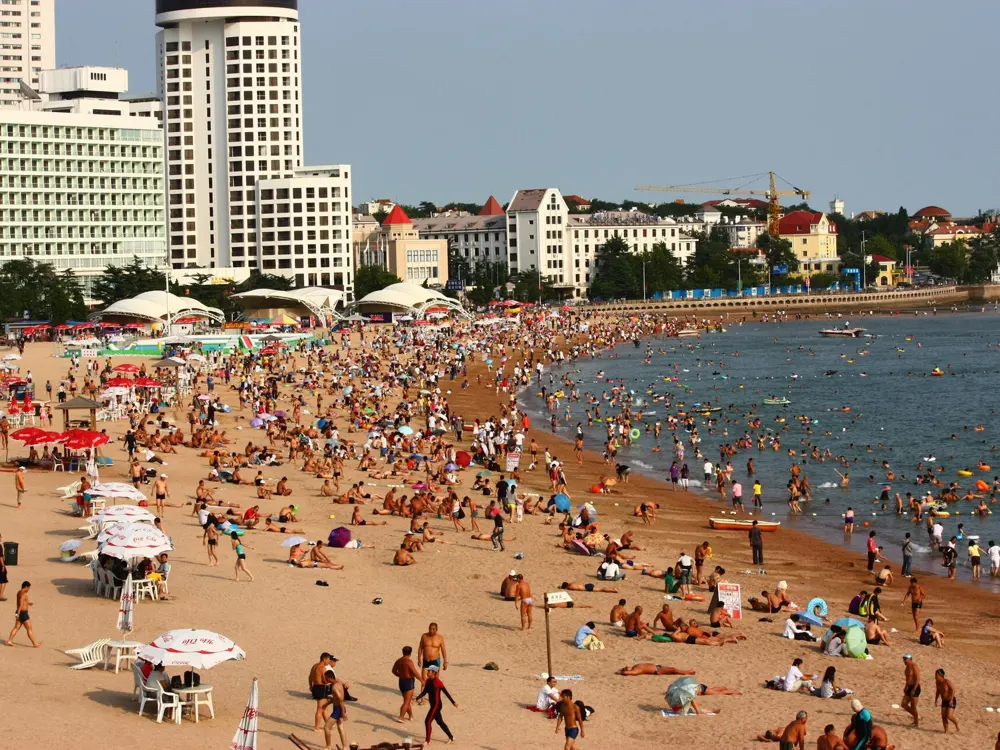
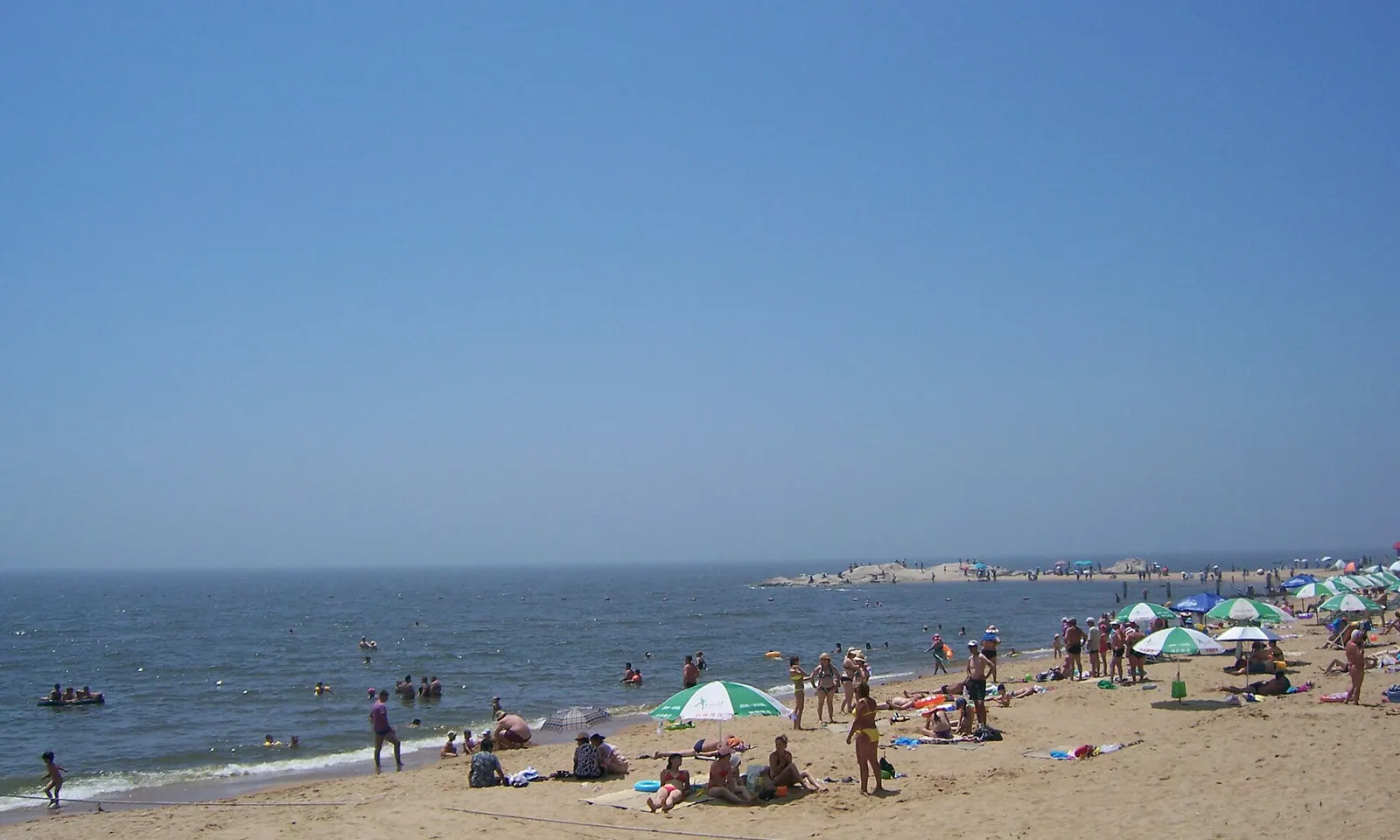
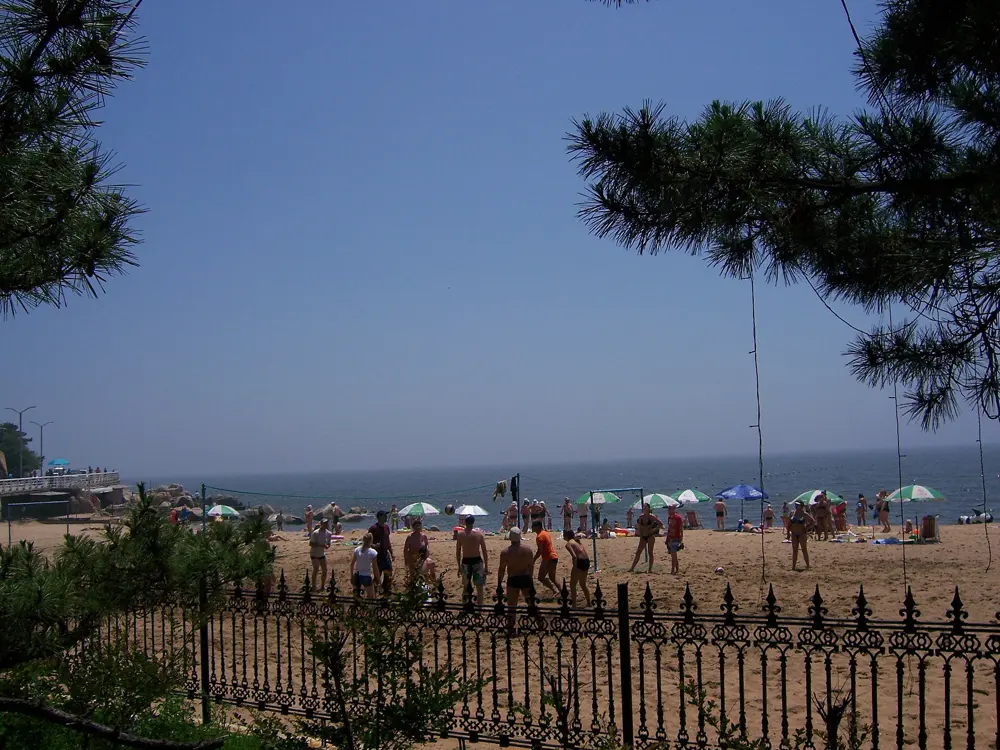
Bathers and parasols on the sand and in the shallows at Beidaihe

Photos: liyuhanrenll (CC BY 3.0), liyuhanrenll (CC BY 3.0), liyuhanrenll (CC BY 3.0), mayanming (CC BY-SA 3.0)

Distance
About 10 km of beach, Yinjiao Pavilion to the Daihe River
From Beijing
76 minutes on the fastest train from Tongzhou
July
Mean temperature 24.7 C
Resort since
1898

Why go

Beidaihe has been Beijing's seaside since 1898, when the Qing government declared it a summer resort for people of all nations and foreigners from the capital began building villas there; 719 had gone up by 1949. Mao had a summer house here and wrote a poem named after the place in 1954, and the Communist Party's leaders have long gathered here in July. For everyone else it is a long, easy beach of fine yellow sand on the Bohai Sea, the nearest real sea swimming to Beijing.

The route

The resort beach runs about 10 km from Yinjiao Pavilion to the mouth of the Daihe River, with shallow water reaching about 100 m out over sand. The centre of it is Laohushi, named after the big rocks that run into the sea like a group of tigers: a beach with more than a century of history, wide and gently sloping. Qianshuiwan has small waves and clear water and suits beginners, Jinshan has wide sand and good water quality. Most of these beaches are free.

When to go

Swim in July and August. July is the warmest month, with a mean temperature of 24.7 C, and July and August are also the wettest, with about 160 to 170 mm of rain each. The national bulletins rated the Laohushi and Qianshuiwan beaches excellent in early August and late September 2026, and suitable for swimming in late September.

Getting there

High speed trains run from Beijing to Beidaihe station. Since July 2026 Beijing Tongzhou station has run 12.5 pairs of trains on weekdays, the fastest taking 76 minutes, and in 2025 a G train from Beijing Railway Station took 1 hour 40 minutes. From the station, take a taxi or bus to the beaches.

Permits and booking

Most beaches are free. The Laohushi seaside park is ticketed, with listed hours of 8am to 5:30pm. Check your visa position: many nationalities can enter mainland China without a visa for up to 30 days to 31 December 2026.

How hard it is

Easy. The water is shallow and the slope gentle, but the beaches are crowded in high summer, so keep an eye on children.

Where to sleep

Stay near the Middle Beach (Zhonghaitan), the stretch centred on Laohushi, where most of Beidaihe's bathing beaches are.

Tips

  • The fast trains from Beijing Tongzhou run on weekdays only, so a midweek trip is easiest from east Beijing.
  • Walk up Lianfeng Hill, behind the beach, for pine woods and views over the bay.
08 / 10

Dalian's beaches

Dalian, Liaoning

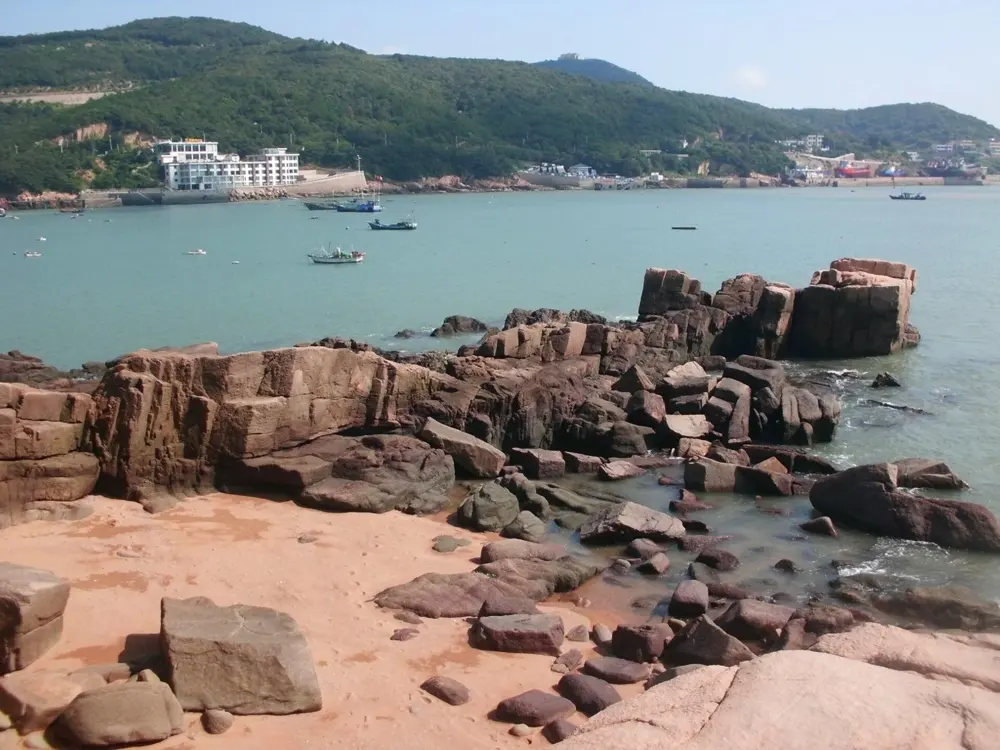
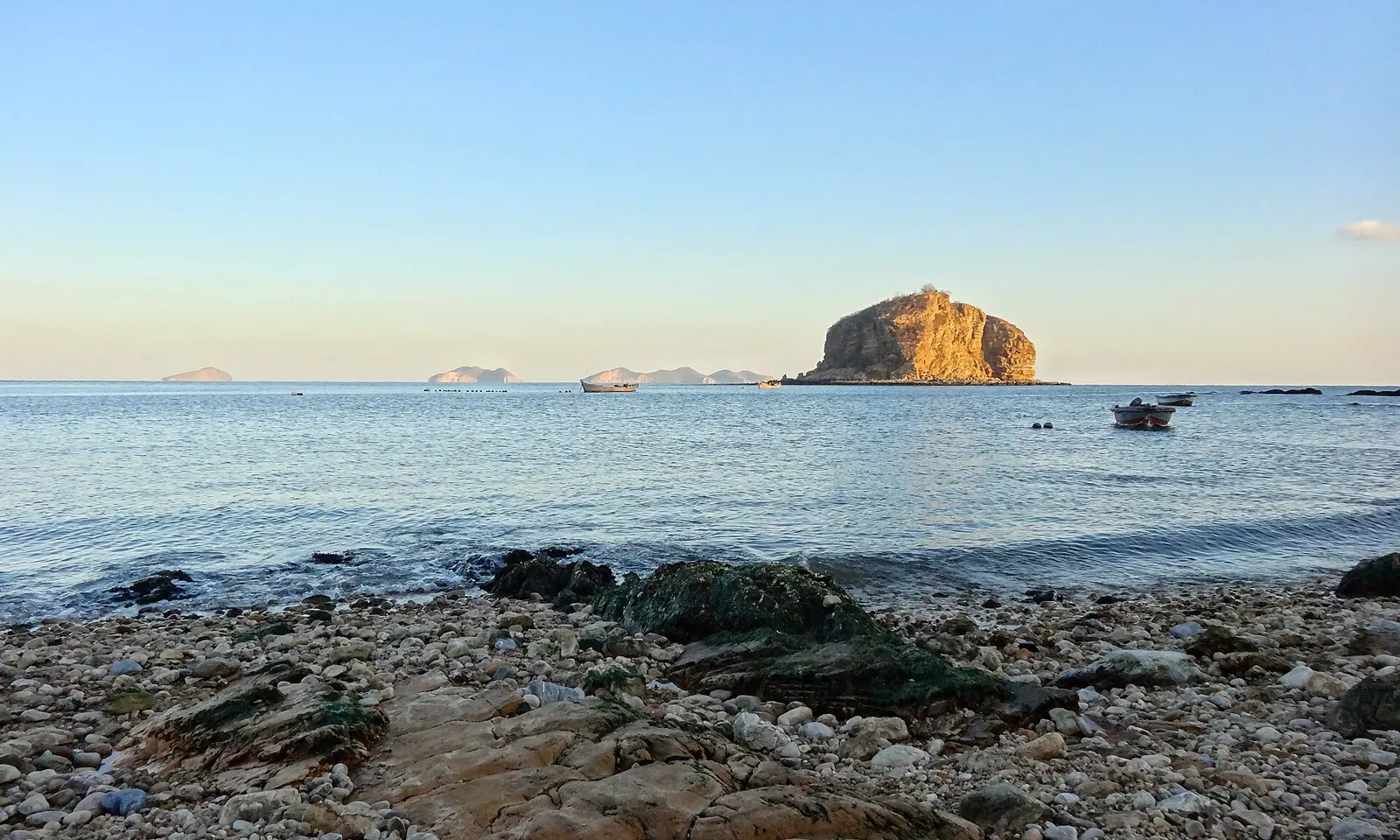
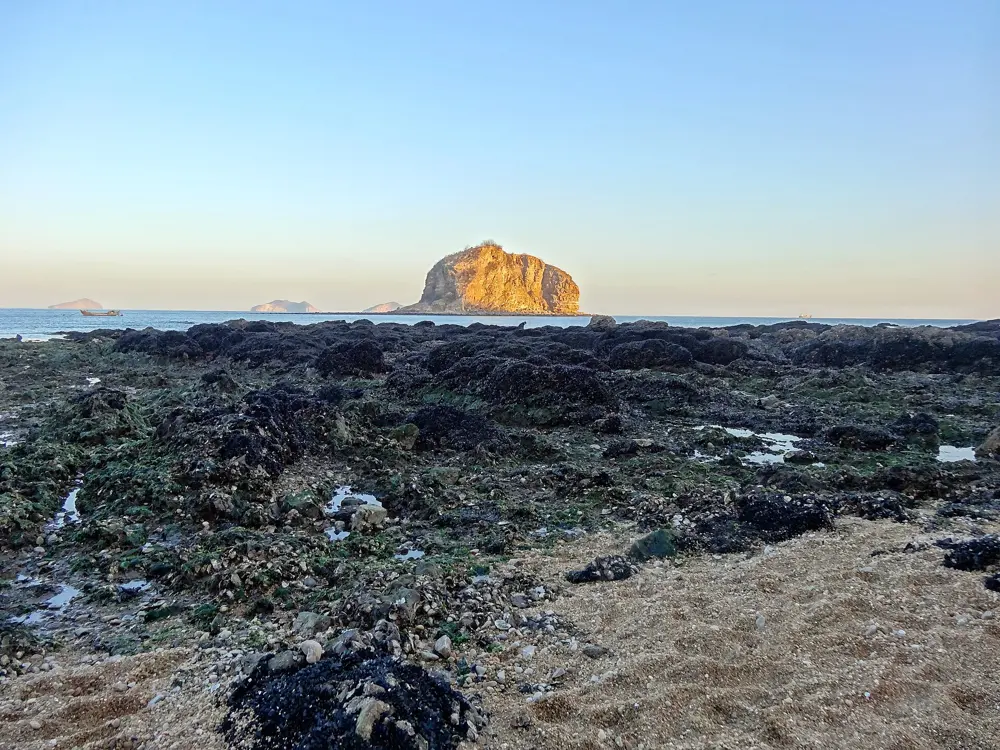
Rocky shore and the island off Bangchuidao in Dalian in low evening light

Photos: JesseW900 (CC BY-SA 4.0), Jason M. C., Han (CC BY-SA 4.0), Yoshi Canopus (CC BY-SA 4.0), JesseW900 (CC BY-SA 4.0)

Distance
Fujiazhuang is about 12 km from the city centre
Winter swimming
National events every January since 1996
Beaches monitored
7 by the national bulletin
Water
Bangchuidao at 18 C in early July 2026

Why go

Dalian, on the tip of the Liaodong Peninsula, is a port city with a coast road and a string of bays between the headlands, and its people swim in them all year. In summer the beaches at Fujiazhuang, Bangchuidao and Xinghai fill up; in winter its swimmers keep going, and the city has held national winter swimming events every January since 1996. On 11 January 2026 nearly 2,000 swimmers in 56 teams, from Russia, Latvia, Canada and Kazakhstan as well as 20 Chinese provinces, raced at Xinghai Bay in the Dalian Winter Swimming Open.

The route

Fujiazhuang, a crescent of golden sand in a sheltered bay about 12 km from the centre, has the calmest water and a sandy bottom with a gradual entry, and is the local favourite. Xinghai Bay is the big city beach, free and lit at night. Bangchuidao, a ticketed scenic area with a rocky island offshore, was rated excellent in every 2026 bulletin we checked. Further out, Jinshitan (Golden Pebble Beach) has a main beach about 3 km long, and the scenic Binhai Road runs along the coast between the city bays.

When to go

The water is cold early in summer: the national bulletin rated Bangchuidao unsuitable for swimming in early July 2026 because the sea was only 18 C, and Fujiazhuang and Xinghai Bay were rated poor that week for faecal bacteria. By early August all seven Dalian beaches monitored were excellent or good, and in late September Bangchuidao and Tahe Bay were rated excellent and suitable. Winter swimmers go in through December and January, when the sea is around 6 C and 3 C.

Getting there

Dalian Zhoushuizi airport is on Metro Line 2, and high speed trains run to Dalian and Dalian North stations; ferries run from Yantai across the Bohai Strait. Buses are frequent and cheap, and trams and the metro cover much of the city.

Permits and booking

Fujiazhuang and Xinghai Bay are free. Bangchuidao charges entry: 20 yuan in 2022, and visitors in 2025 and 2026 reported 40 yuan. Parts of Lüshunkou, at the end of the peninsula, are military zones with restrictions. Many nationalities can enter mainland China without a visa for up to 30 days to 31 December 2026.

How hard it is

Easy in summer at Fujiazhuang, where the bay is sheltered. The water is noticeably colder than further south, so early summer swims are short. Winter swimming is for those who have trained for it with a club.

Where to sleep

Stay in Zhongshan or Shahekou districts, near the coast road and Xinghai Square, or out at Jinshitan for its beaches.

Tips

  • Check the weekly national water bulletin before choosing a beach.
  • Watch the January winter swimming open at Xinghai Bay even if you do not swim: it is a festival as much as a race.
09 / 10

Longwangtou Beach, Pingtan

Pingtan Island, Fujian

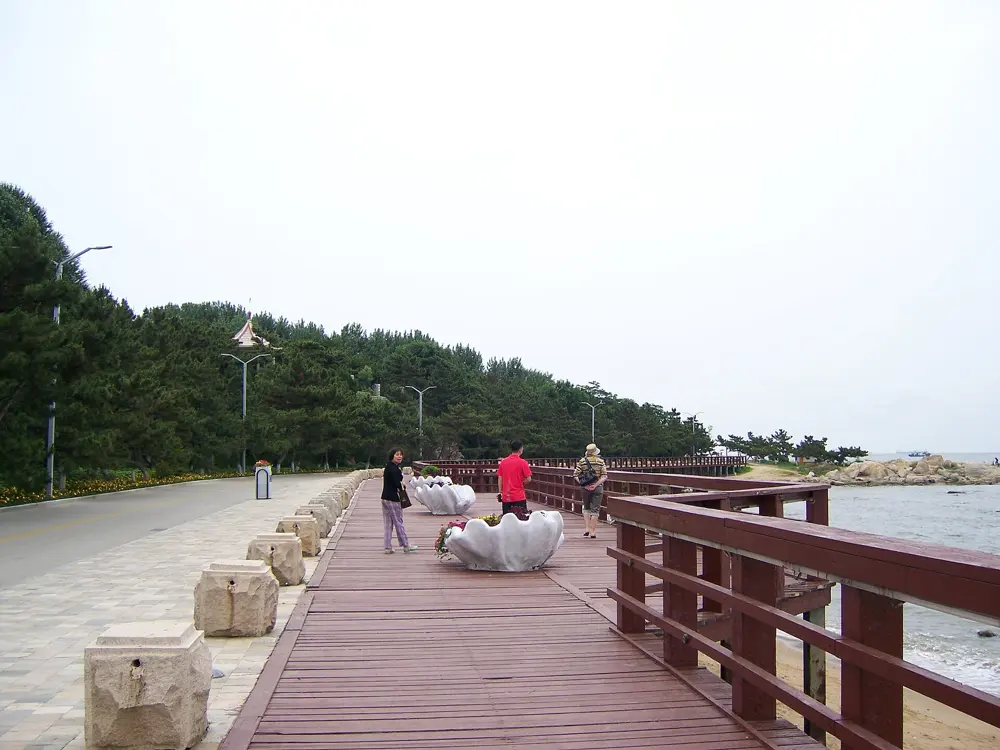
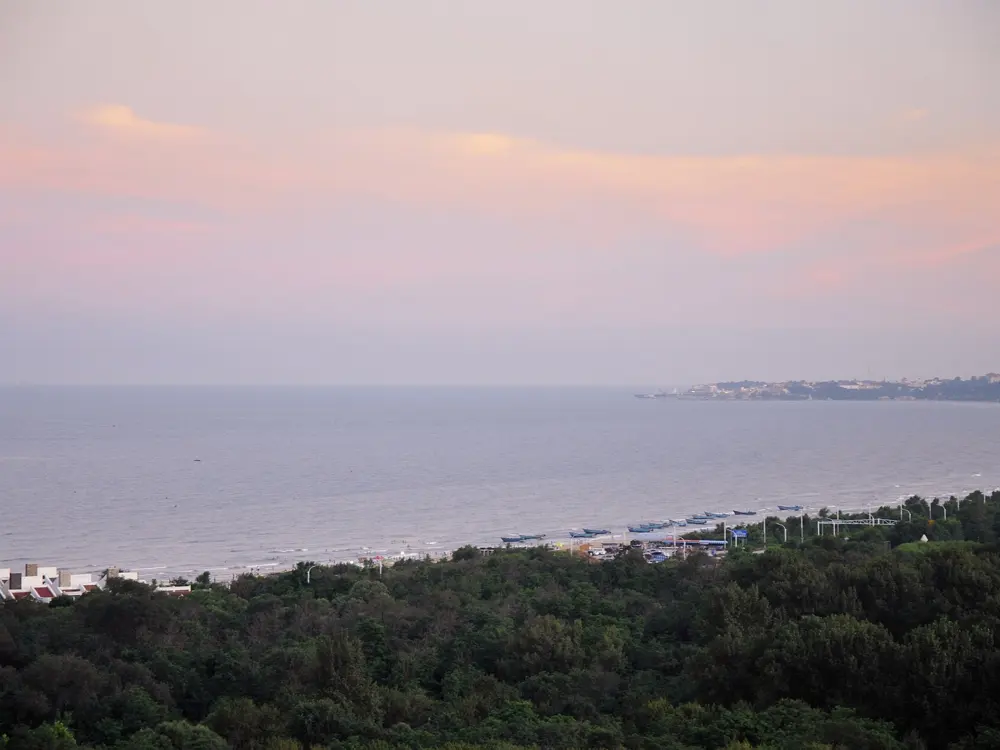
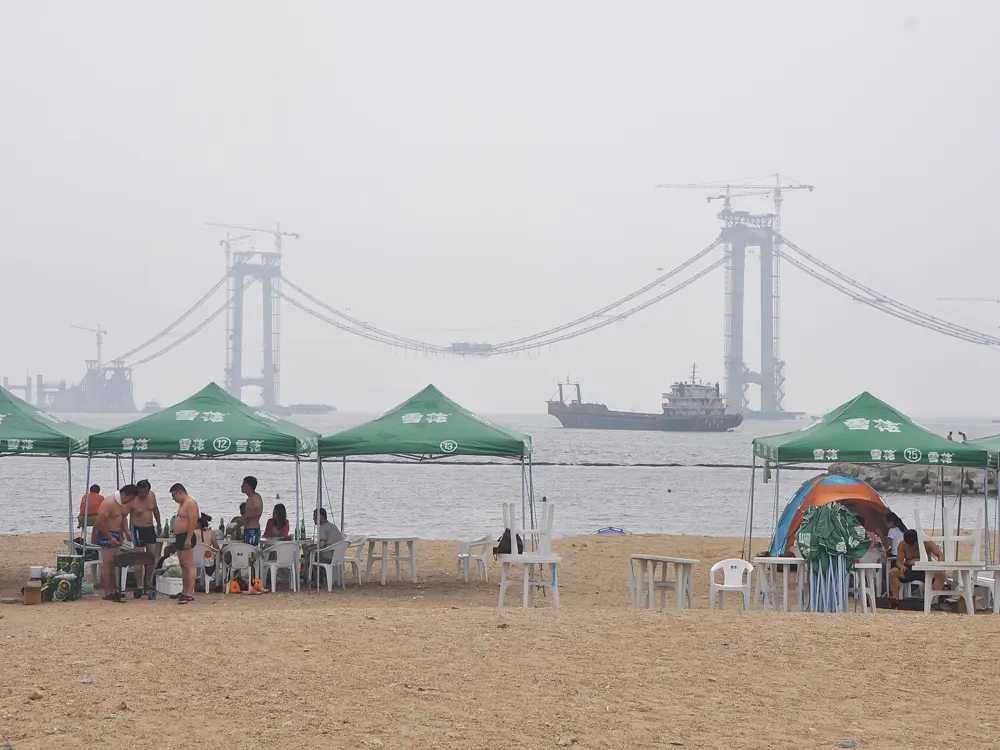
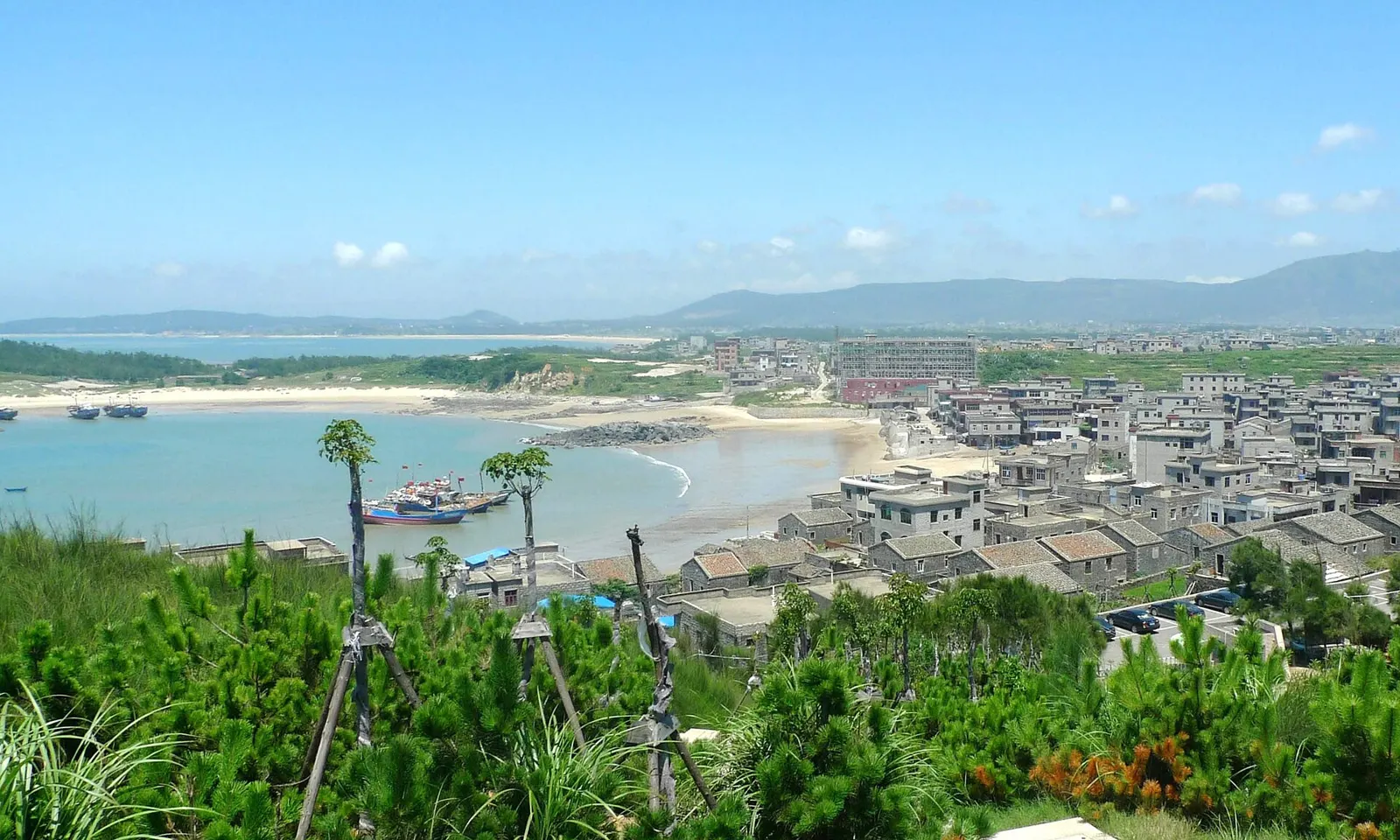
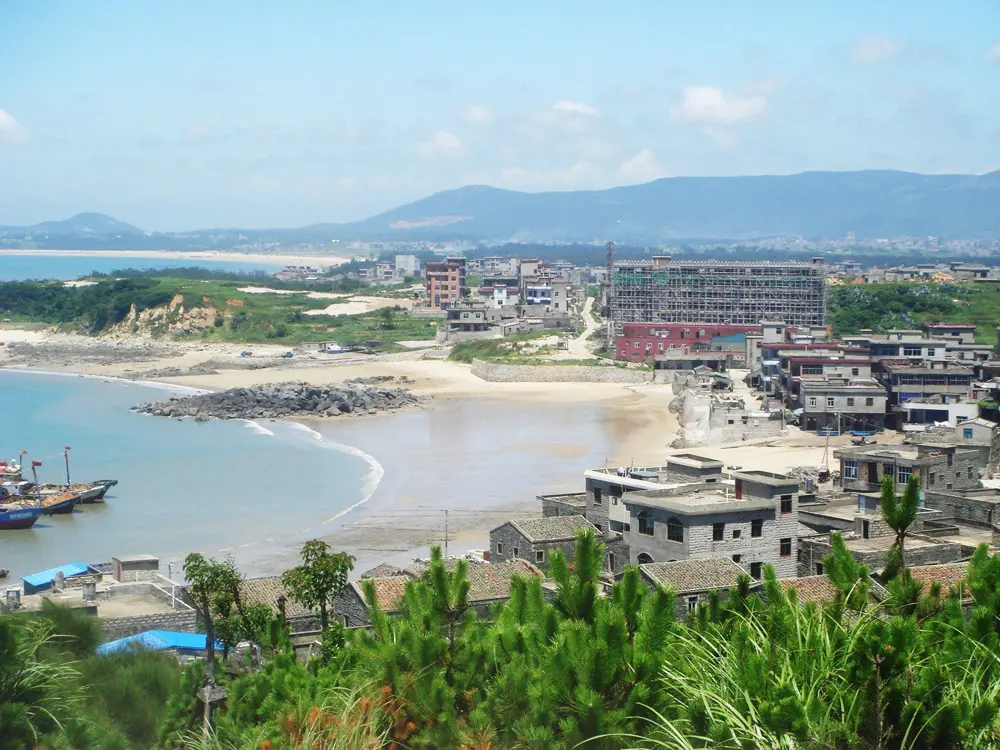
Longwangtou Beach and Haitan Bay seen from a hill on Pingtan Island

Photos: Jiaqian AirplaneFan (CC BY 3.0), Jiaqian AirplaneFan (CC BY 3.0), Jiaqian AirplaneFan (CC BY 3.0), Rui0110 (CC BY-SA 4.0)

Distance
About 9.5 km of beach
Train
About 35 minutes from Fuzhou on the fastest trains
Wind
Averages about 20 knots
Water
25.4 C at the end of June 2026

Why go

Pingtan is the largest island in Fujian, off the coast south of the Min River estuary, and its first major bridge to the mainland opened in November 2010. Its main beach, Longwangtou (also written Longfengtou), is one of the largest natural bathing beaches in China: about 9.5 km of white sand next to Haitan Bay, backed by a thick belt of casuarina trees, with water clear enough to see the bottom. On a clear day you can sometimes see Taiwan's Snow Mountain from the beach.

The route

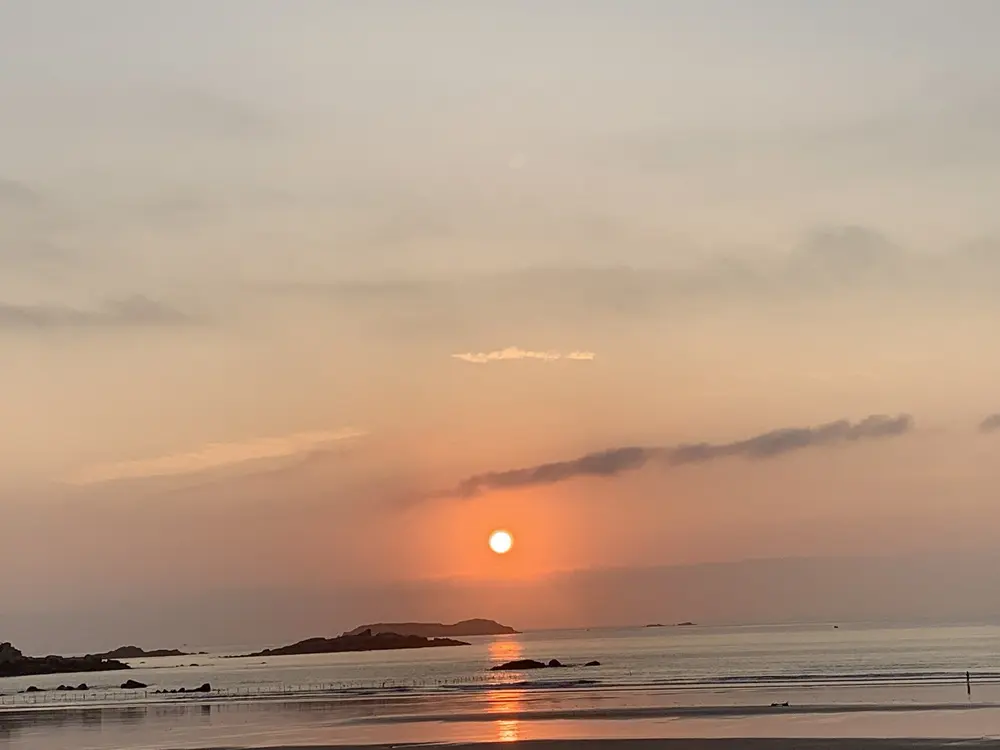
The beach faces east, so the classic swim is at sunrise, parallel to the shore in the official bathing area. It is flat and wide, with room for beach volleyball and frisbee, and in summer it hosts the Cross-Straits Sand Sculpture Festival and a stop of the Kiteboard Tour Asia. Pingtan is windy, with average winds of about 20 knots and a kiteboarding season from May to November, so pick a calm morning to swim. From April to August the island's bays can glow at night with the bioluminescent plankton known as blue tears.

When to go

Swim in summer. Longwangtou is one of the beaches on the national water bulletin: it was rated excellent in late June 2026, with the water at 25.4 C and conditions suitable for swimming, good and relatively suitable in early August, and excellent and suitable again in late September. Blue tears blooms can deplete oxygen and become a red tide, so avoid swimming in heavy blooms.

Getting there

The Fuzhou to Pingtan railway, about 88 km long, opened on 26 December 2020 and runs from Changle across the Pingtan Strait road and rail bridge to Pingtan station; the fastest trains take about 35 minutes. Fuzhou South and Fuzhou stations connect with the rest of the high speed network. From Pingtan station take a taxi to the beach, near the county town.

Permits and booking

No permit is needed to swim in the bathing area. Many nationalities can enter mainland China without a visa for up to 30 days under policies that run to 31 December 2026; check whether yours is on the list.

How hard it is

Easy to moderate. The beach is flat and long, but on windy days the sea gets rougher. Swim in the bathing area, not off the empty stretches.

Where to sleep

Stay in the county town, close to the beach, so you can be on the sand for sunrise.

Tips

  • Go at dawn for the sunrise over the sea and the calmest water.
  • Walk the shore after dark between April and August, when the blue tears are usually seen.
10 / 10

The Yangtze at Wuhan

Wuhan, Hubei

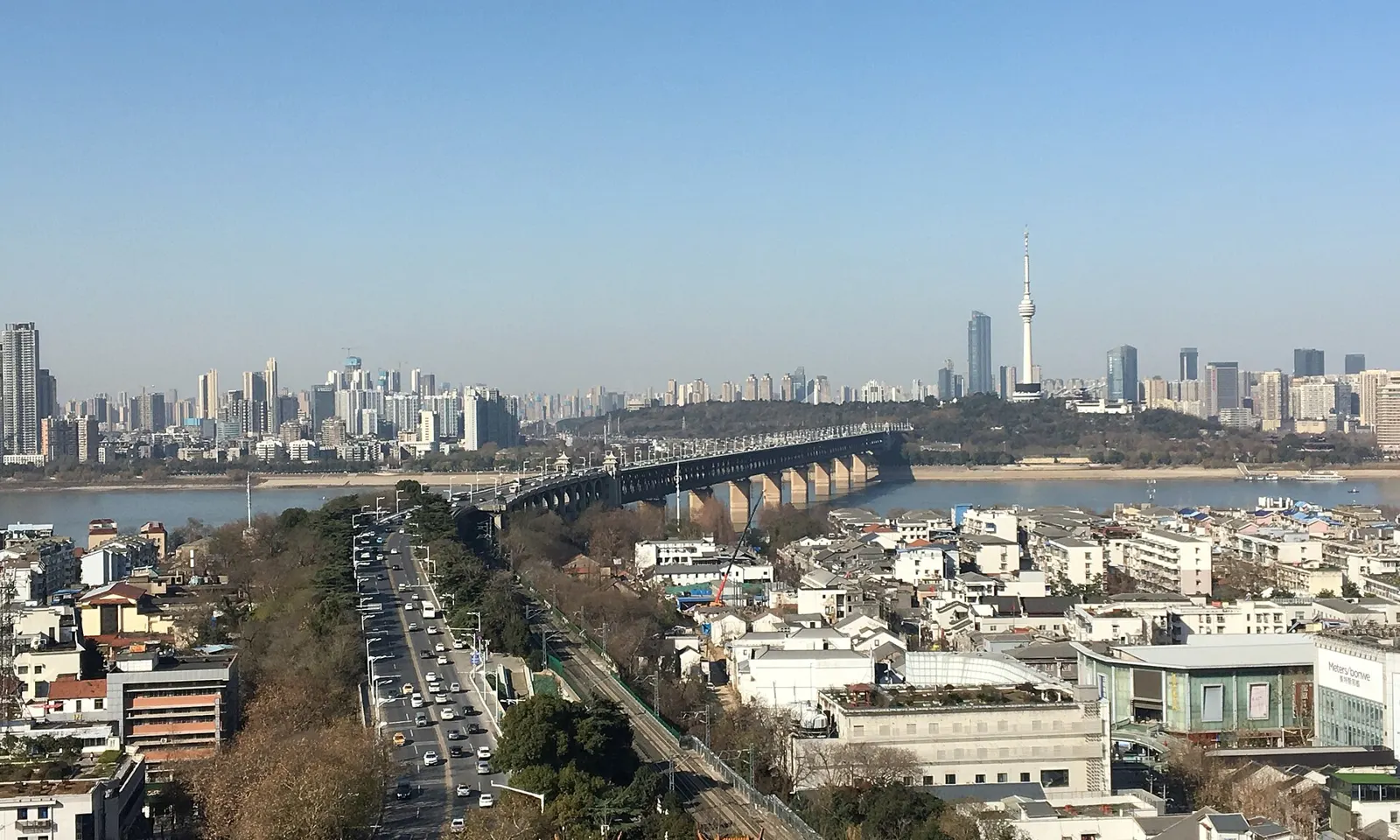
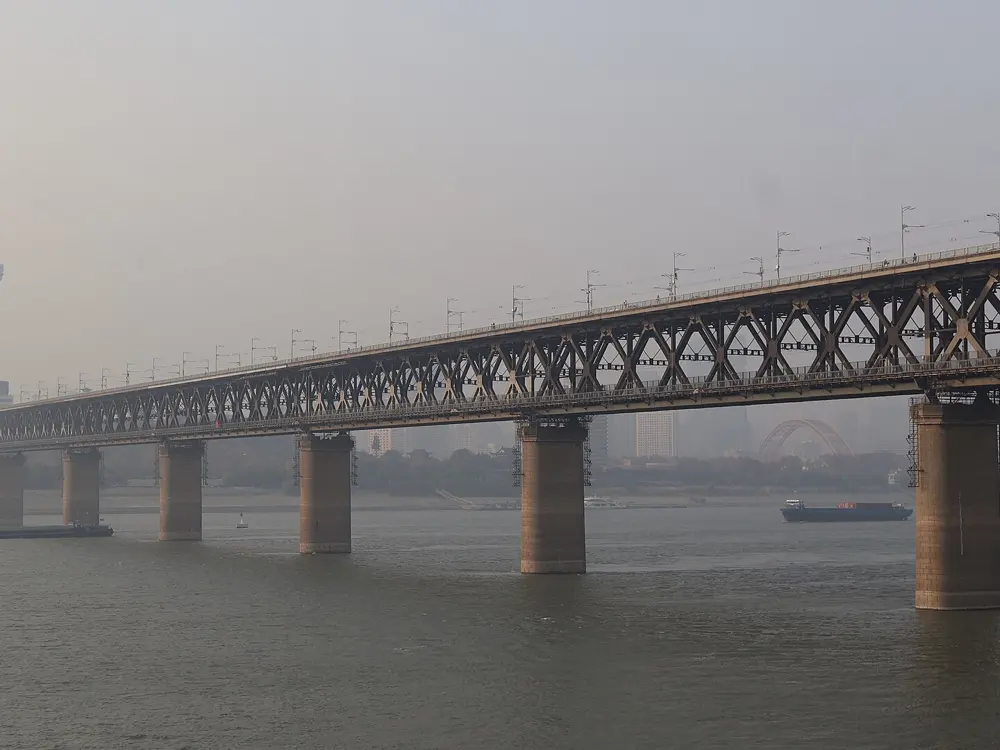
The Wuhan Yangtze River Bridge spanning the Yangtze with the city beyond

Photos: Zheng Zhou (CC BY-SA 4.0), User:Vmenkov (CC BY-SA 3.0), User:Vmenkov (CC BY-SA 3.0), S5A-0043 (CC BY 4.0)

Distance
About 1,800 m for the race across the river
Mass crossing
About 6,000 m swum (2025)
Date
16 July each year
Swimmers
Nearly 2,000 in 2026

Why go

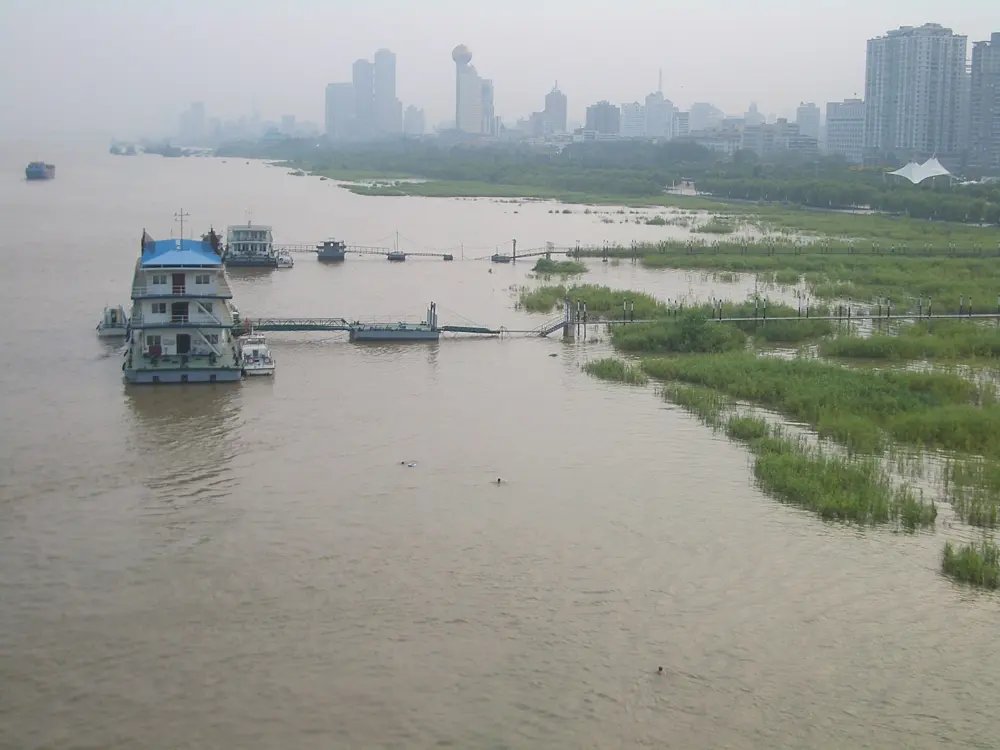
Wuhan is where China swims its greatest river. Mao Zedong swam across the Yangtze here in 1956, and every 16 July the city holds a crossing that has now run 51 times: on 16 July 2026 nearly 2,000 swimmers from China and abroad, 2,001 of them in 29 group teams, went into the river at Hanyangmen in Wuchang, watched by crowds on the Wuhan Yangtze River Bridge and the embankments.

The route

The race is about 1,800 m, from the No. 1 Mingkou wharf at Hanyangmen in Wuchang across to Nan'anzui on the Hanyang bank, swum against the current. In 2026 Zhang Ziyang won the men's race in 11 minutes 33 seconds and Xia Zixuan the women's in 12 minutes 52 seconds; Zhang's 2025 time of 11:21 is the course record. The mass teams swim much further: in 2025 it was about 6,000 m, finishing at Sanyang Square on the Hankou riverside, and in 2026 all of them reached the bank after 2 hours 15 minutes.

When to go

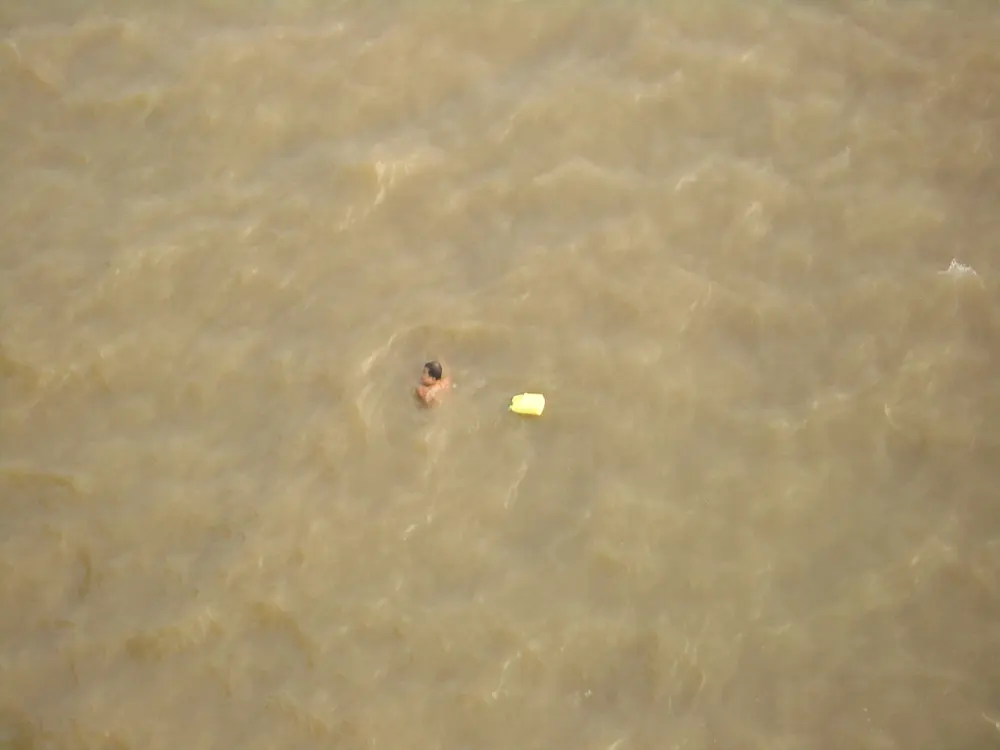
The crossing is on 16 July, in flood season, when the river is high and fast. Through the summer local people swim along the riverbank, watched by volunteers of the Yangtze rescue team, and winter swimming is a Wuhan habit too.

Getting there

Wuhan is reached by high speed train and by air. Hanyangmen, where the crossing starts, is on the Wuchang riverbank by the Wuhan Yangtze River Bridge, and the race finishes at Nan'anzui on the Hanyang side.

Permits and booking

The crossing is organised by the city, and swimmers take part in teams and by invitation; in 2025 the field included 70 invited international elite swimmers. Outside the event, the maritime authorities strictly prohibit swimming in the shipping channel, and warn swimmers to keep away from wharves, pontoons and moored boats. Many nationalities can enter mainland China without a visa for up to 30 days to 31 December 2026.

How hard it is

Hard. The Yangtze by the bridge has fast currents, whirlpools and complex water, very different from a pool, and in flood season the current is especially strong. On 18 July 2026 a visitor on her first Yangtze swim was swept into the gap between a wharf pontoon and a tour boat at Hanyangmen and had to be pulled out by maritime officers; a tour boat crewman said he had helped rescue two other swimmers in the two days before. The Yangtze Rescue Volunteer Team, founded in 2010 and now over 3,500 strong, says it has saved more than 1,200 people.

Where to sleep

Stay in Wuchang near Hanyangmen for an early start on crossing day, or across the river in Hankou near the riverside parks.

Tips

  • Come to watch on 16 July: the bridge and the embankments are the best viewpoints, and the start is soon after 6am.
  • If you swim in the river on any other day, do it with a local club, close to the bank, well away from the wharves.

Sources

Distances, heights, seasons and permit rules were checked against these pages. Rules change, so check the park or trail authority before you go.