Rungs Labs

Rungs Pilgrimage · Climbing · The world

The 10 Best Places for Rock Climbing in the World

Yosemite Valley, California, United States. Photo: Diliff (CC BY-SA 3.0)

A great climbing area gives you rock you would cross the world for, and enough of it to fill a trip. Some of these are big walls and long mountain routes where a single climb takes a day or more. Others are forests or desert hillsides full of boulders a few metres high, where a pad and a pair of shoes are all you need.

These ten cover granite, limestone, sandstone, quartzite and dolomite on six continents, and trad, sport, multi-pitch and bouldering. For each one you get the rock, the classic climbs and grades, the best season, how to get there, the permits, closures and access rules, how hard it is and where climbers stay. Every fact comes from park authorities, tourism boards, climbing bodies, guidebooks or other pages linked at the bottom.

Updated 2026-10-18

  1. 01Yosemite ValleyCalifornia, United States
  2. 02FontainebleauSeine-et-Marne, France
  3. 03KalymnosDodecanese, Greece
  4. 04The DolomitesSouth Tyrol, Trentino and Veneto, Italy
  5. 05El Potrero ChicoHidalgo, Nuevo León, Mexico
  6. 06Railay and TonsaiKrabi, Thailand
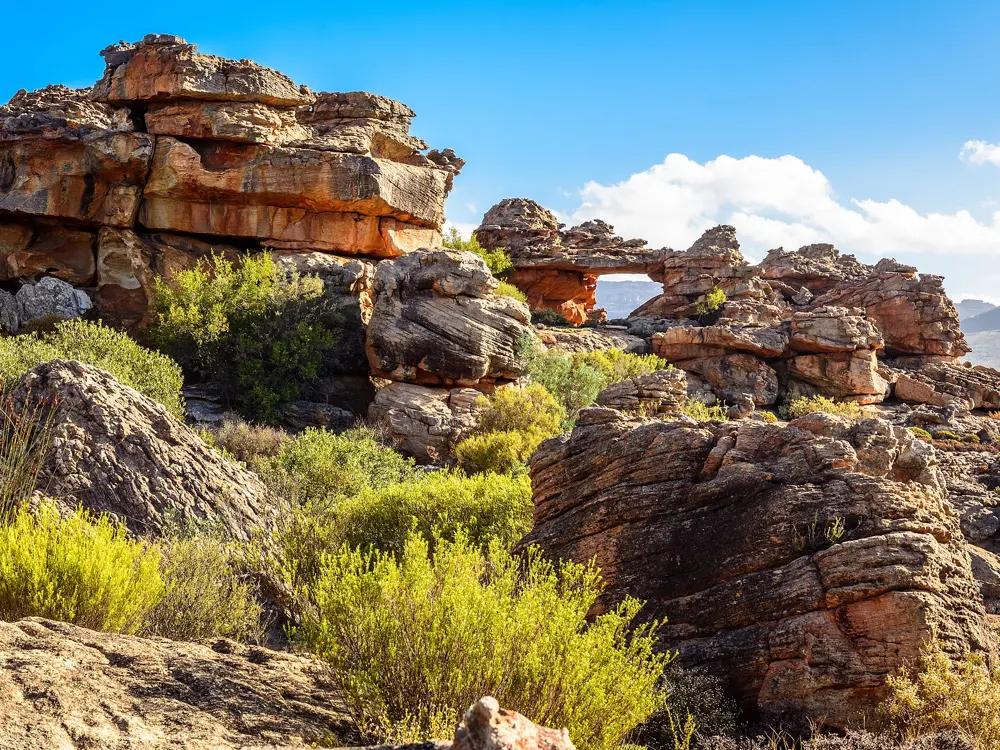
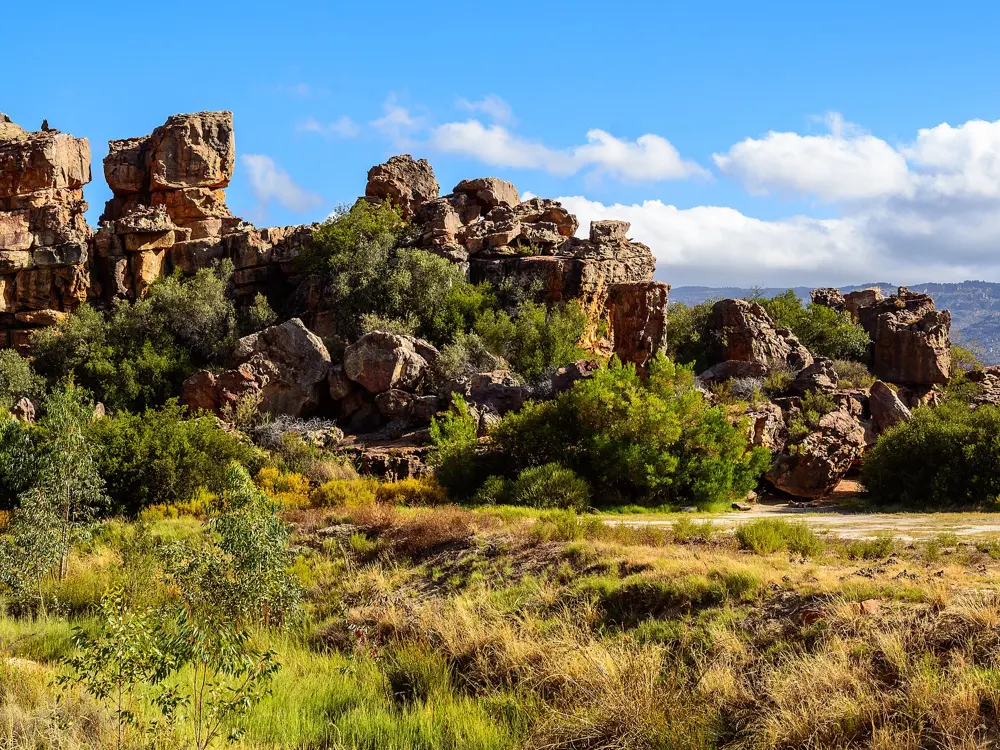
  7. 07RocklandsCederberg, Western Cape, South Africa
  8. 08Mount Arapiles (Dyurrite)Victoria, Australia
  9. 09Wadi RumAqaba Governorate, Jordan
  10. 10HampiKarnataka, India
01 / 10

Yosemite Valley

California, United States
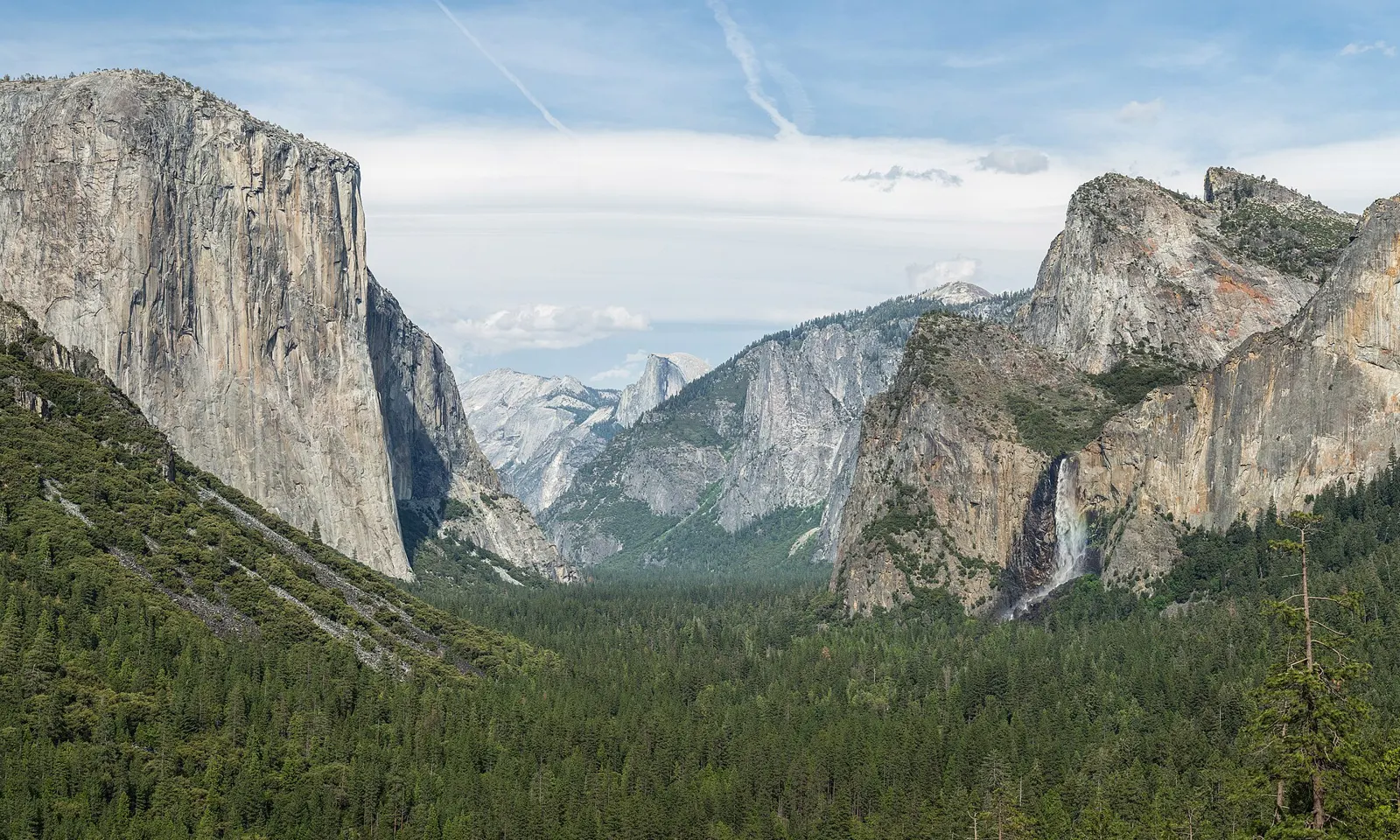
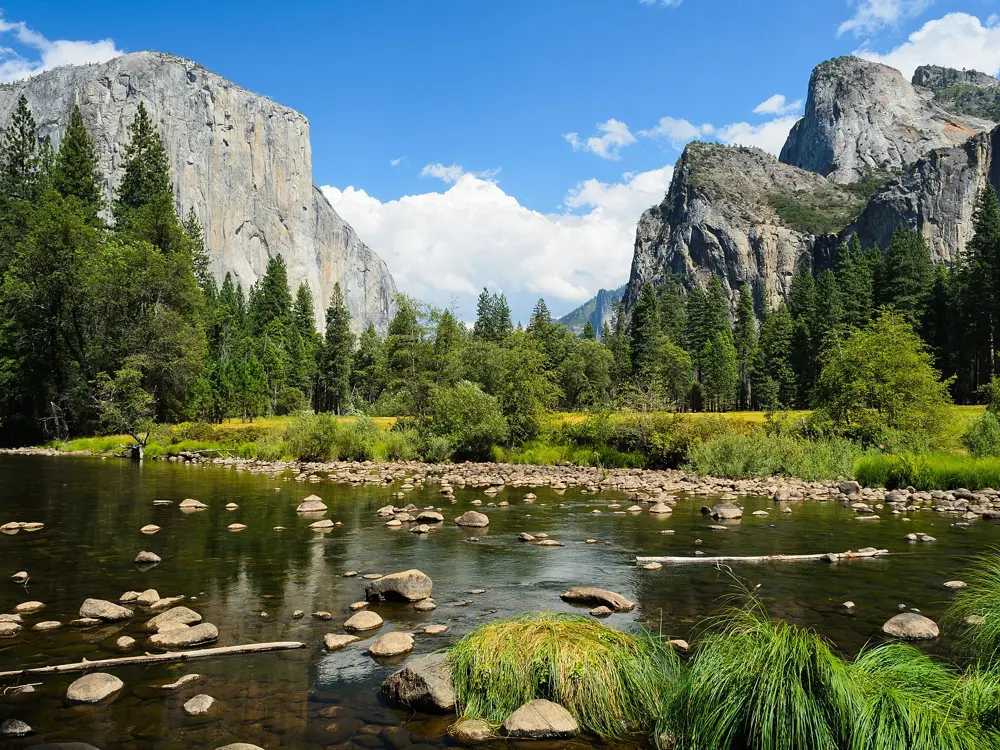
Yosemite Valley from Tunnel View, with El Capitan on the left, Half Dome in the distance and Bridalveil Fall on the right

Photos: Diliff (CC BY-SA 3.0), C-M (CC BY-SA 4.0), Martin Stiburek (CC BY-SA 4.0), King of Hearts (CC BY-SA 3.0)

Rock
Granite of the Sierra Nevada batholith
Style
Trad cracks, multi-pitch, big wall aid and bouldering
Routes
1,913 in Yosemite Valley on Mountain Project
Best season
Spring and autumn

Why go

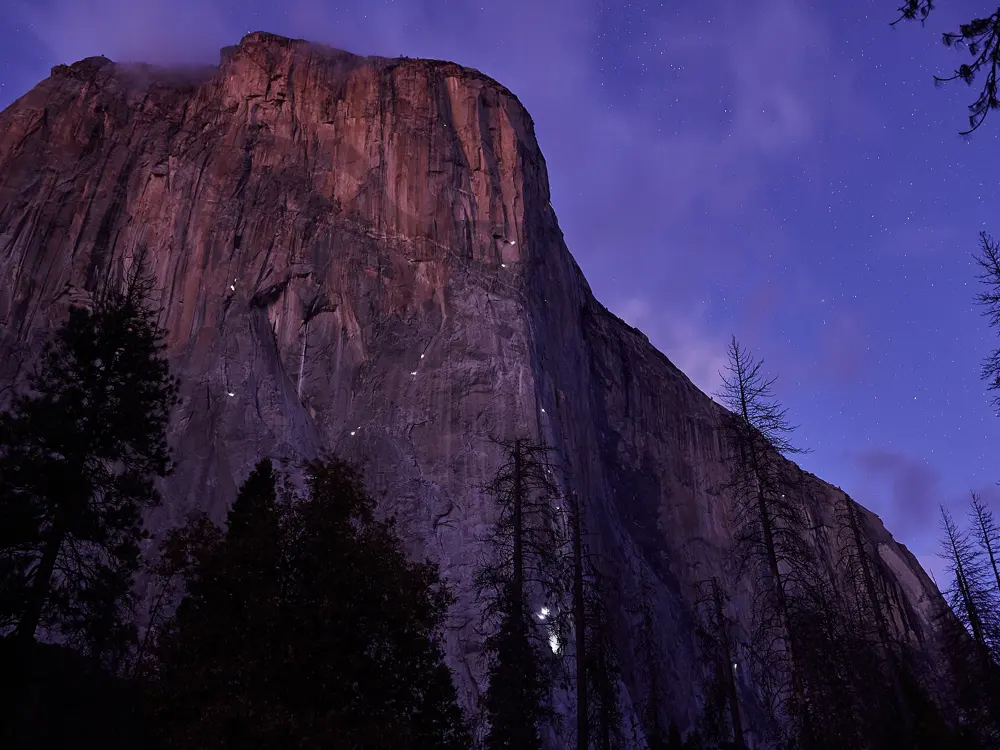
Mountain Project calls Yosemite the birthplace of American rock climbing, and big wall climbing grew up here. The southeast face of El Capitan rises about 3,000 feet, and Camp 4, at the foot of the north wall, joined the National Register of Historic Places in 2003 for that history.

The route

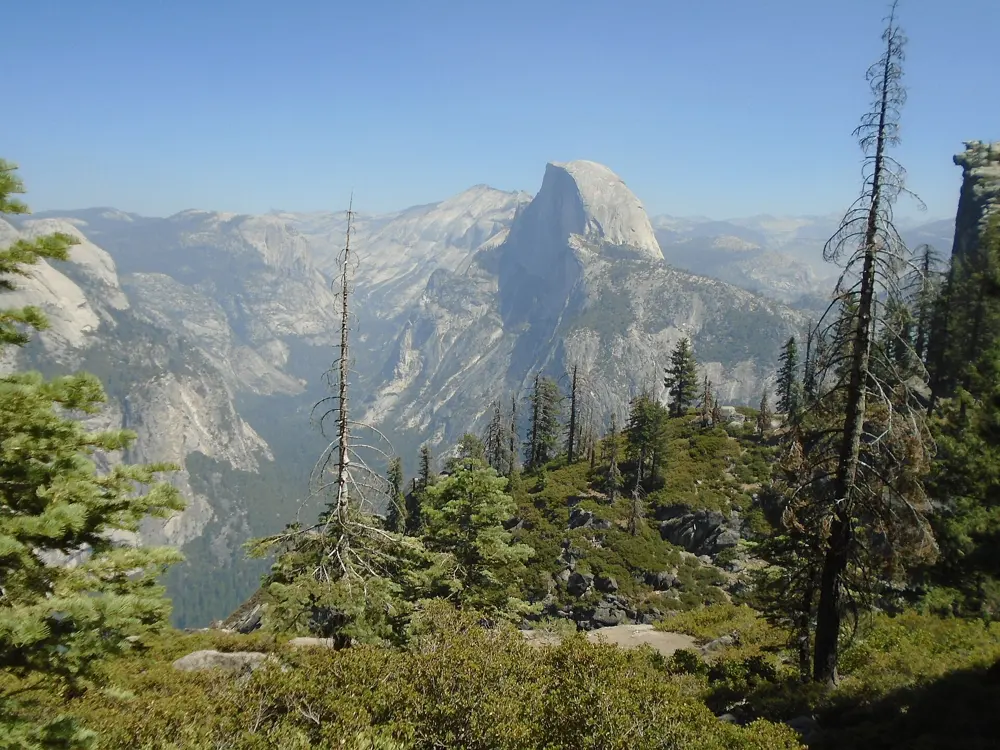
The Nose on El Capitan, first climbed in 1958 over 47 days, is 31 pitches and about 3,000 feet, rated 5.9 C2, Grade VI, on the Yosemite Decimal System. On Half Dome, Snake Dike is a 5.7 R, Grade III friction line of about 2,000 feet, followed by 1,000 feet of slab scrambling, and the Regular Northwest Face is 5.9. For valley cragging, the Nutcracker (5.8) and the Central Pillar of Frenzy (5.9, 5 pitches) on Middle Cathedral Rock are classics, and Columbia Boulder near Camp 4 holds Midnight Lightning, first climbed by Ron Kauk in 1978.

When to go

Spring, once the snow has melted and the cracks have dried, and autumn after Labor Day suit the Valley walls. In summer many climbers move up to Tuolumne Meadows, and in winter low, sunny crags such as Arch Rock and the Cookie Cliff stay climbable.

Getting there

Highways 140 from Merced, 120 from the Bay Area and 41 from Fresno reach the Valley, and YARTS buses, which connect with Amtrak, run in along them. The vehicle entrance fee is $35 for seven days, plus $100 for each non US resident aged 16 and over.

Permits and booking

Day climbs need no permit. Overnight big walls need a free wilderness climbing permit, self registered at the kiosk near El Capitan Bridge. Pack out solid human waste, and do not camp at the base of any Valley wall, except below Half Dome with a permit. Peregrine nest closures start on 1 March and usually lift by 15 July; on 16 July 2026 the park listed none in effect. There is no timed entry reservation in 2026.

How hard it is

Most Valley climbing is crack climbing on steep granite. Snake Dike has long runouts on its easy middle pitches and a six mile approach of 2.5 to 4 hours; take six slings and three or four small to medium cams. The park counts more than 100 climbing accidents a year, and rescue is not guaranteed.

Where to sleep

Camp 4 costs $10 per person per night. From 15 April to 29 November 2026 its sites were booked on Recreation.gov a week before arrival, up to six people per booking. In winter it is first come, first served.

Tips

  • Keep food out of packs you leave at the base of a climb, because of bears.
  • Snake Dike descends the Half Dome cables; when they are up, ask the park whether you need a Half Dome permit.
02 / 10

Fontainebleau

Seine-et-Marne, France

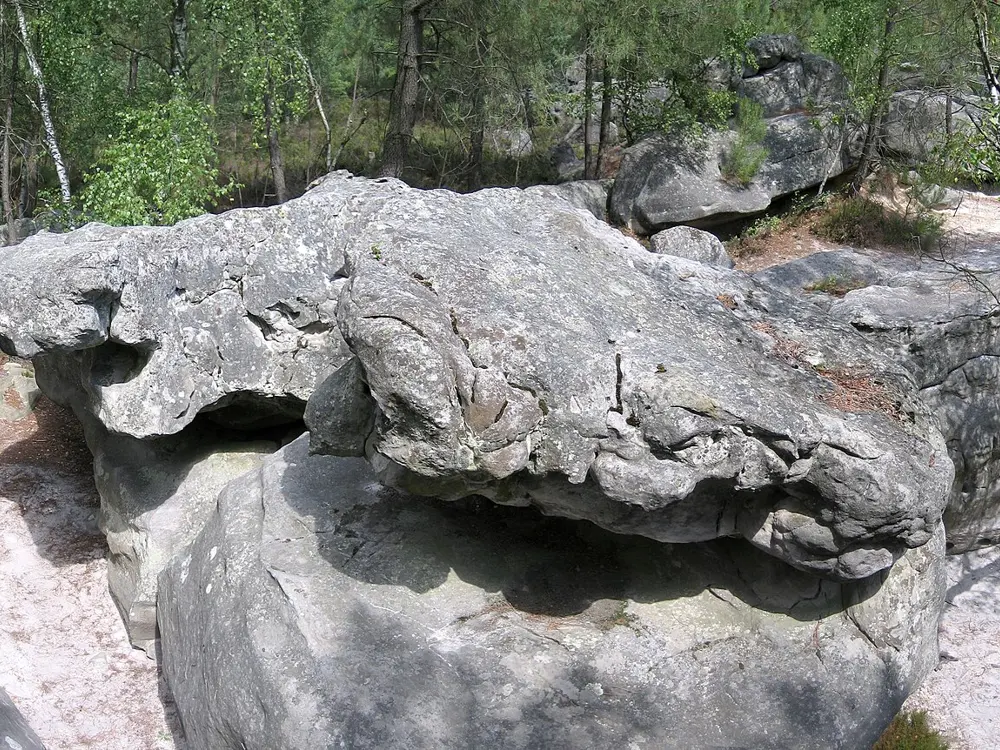
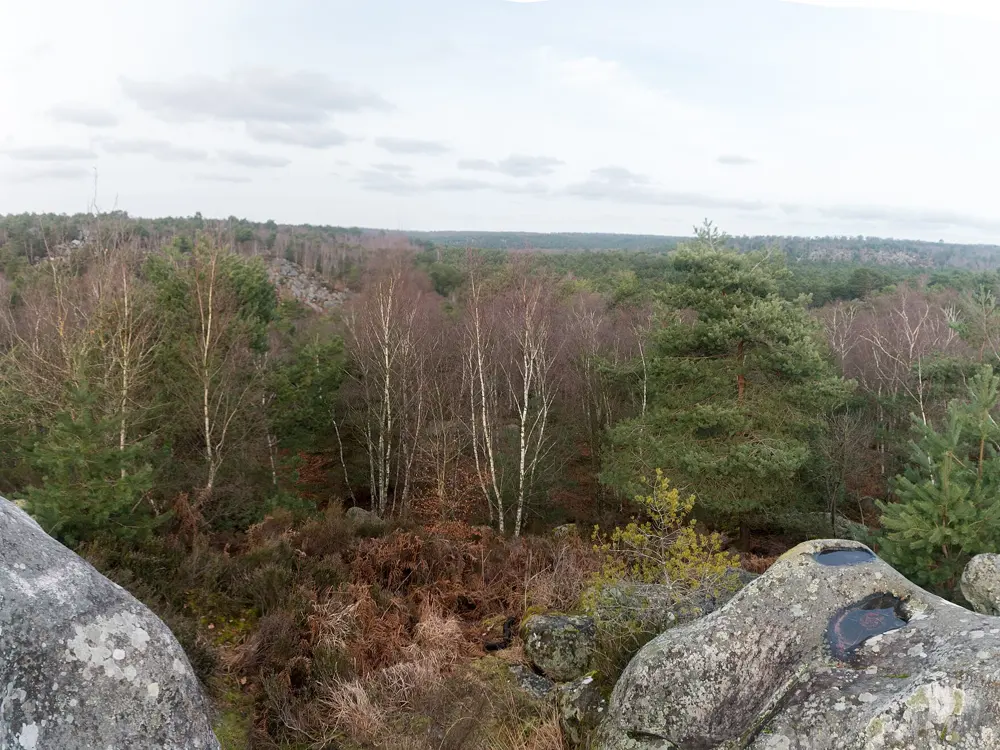
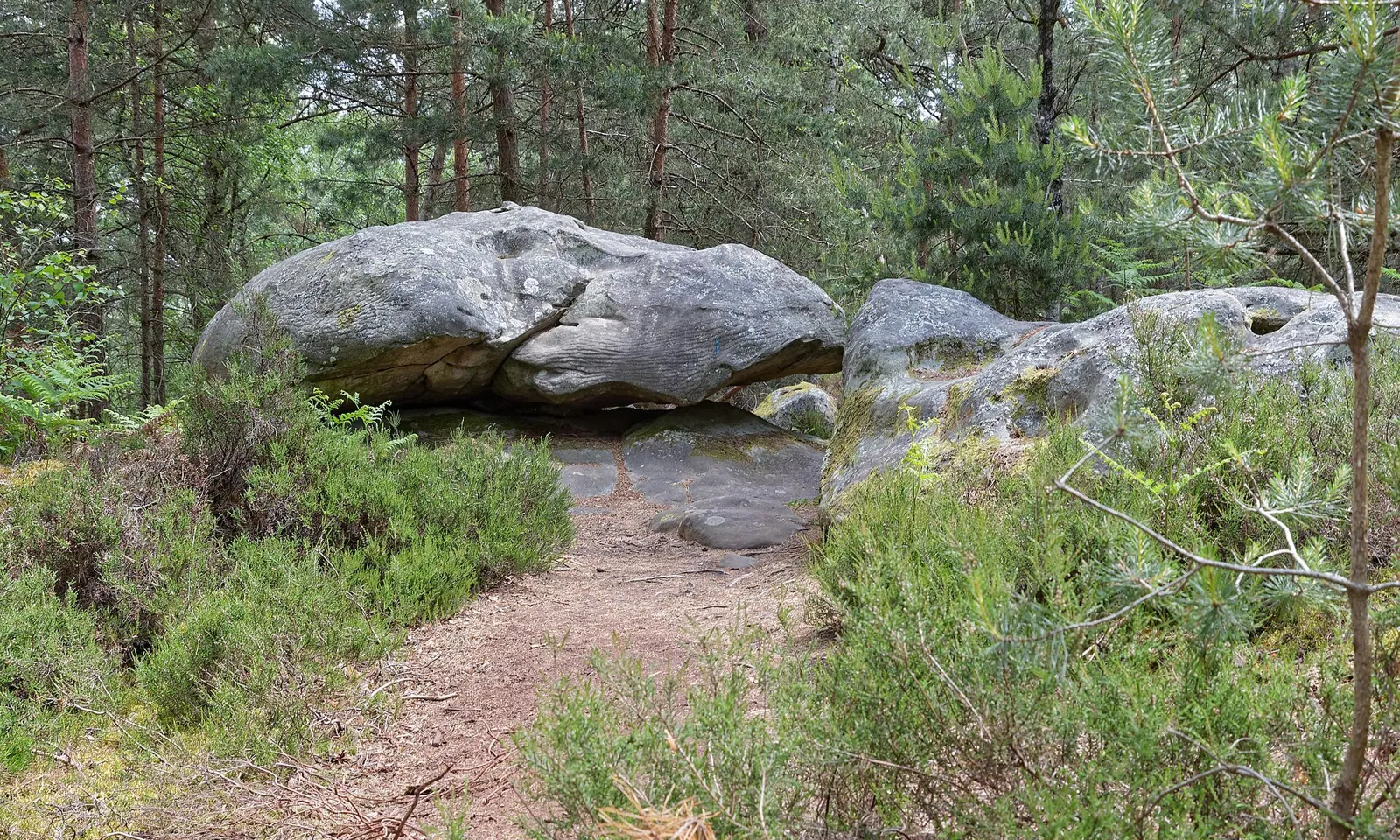
Rounded sandstone boulders beside a sandy path through heather and pines in the Gorges d'Apremont, Fontainebleau

Photos: Thesupermat (CC BY-SA 4.0), Jerome Bon from Paris, France (CC BY 2.0), Amada44 (Public domain), Daniel VILLAFRUELA. (CC BY-SA 4.0)

Rock
Oligocene sandstone, boulders rarely over 7 m
Style
Bouldering on colour-coded circuits
Circuits
180 authorised circuits on 56 sites
Best season
Cold, dry days from late October to mid-March

Why go

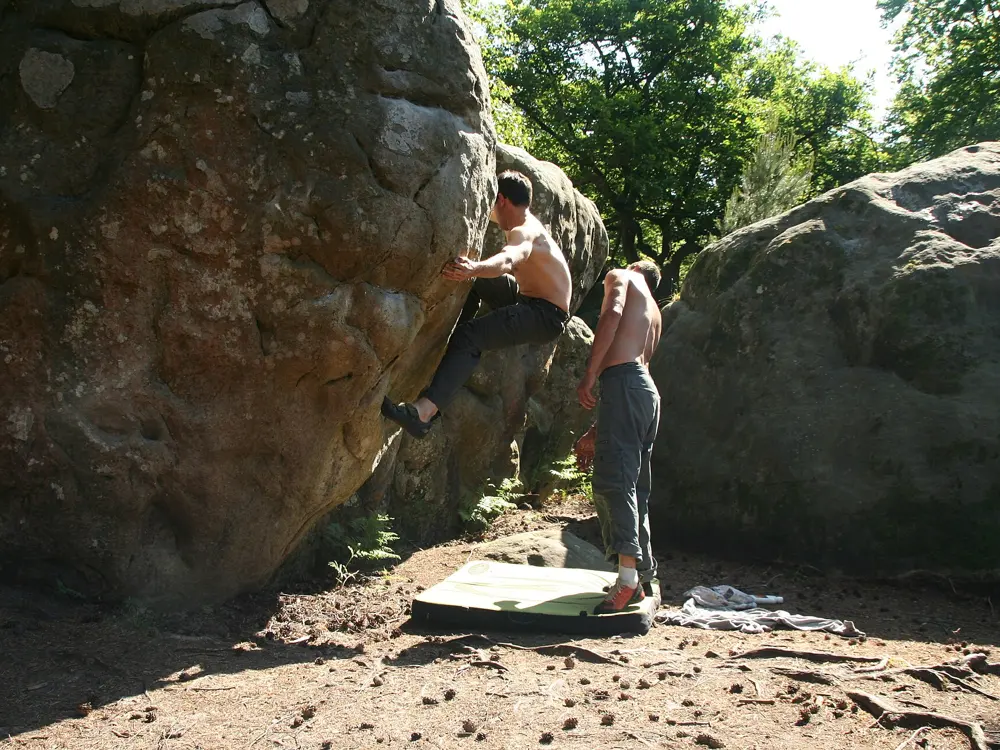
This is where bouldering grew up and where the Font grade began. The ONF counts about 30,000 sandstone boulders in the forest south of Paris and some 4 million climbing visits a year. The first painted circuit appeared at Cuvier Rempart in 1947.

The route

Bas Cuvier, between Fontainebleau and Barbizon, is the old heart of Bleau, with circuits from orange (AD+) to white (ED+). La Marie-Rose, a 6a wall on slopers first climbed by René Ferlet, is the problem everyone queues for, and Le Carnage (7b+) is the classic roof. The Gorges d'Apremont, painted from 1952, have classics such as Le Croque-Mitaine (5+) and Le Mur des Lamentations (7a). Franchard Isatis is the third great sector. Circuits follow painted numbers and arrows, and the colour gives the adjectival grade: yellow PD, orange AD, blue D, red TD, black or white ED.

When to go

Friction is best on cold, dry days, so most climbers come between late October and mid-March, with spring and autumn as the milder choice. Warm, humid weather makes the rock greasy.

Getting there

Trains on Ligne R from Paris Gare de Lyon reach Fontainebleau-Avon in about 47 minutes and Bois-le-Roi in about 42. From Fontainebleau-Avon, bus 21 runs to Barbizon Cimetière in about 20 minutes, a 20 to 25 minute walk from Bas Cuvier and 15 minutes from Apremont. Drivers park at the Carrefour de l'Épine for Bas Cuvier.

Permits and booking

No permit or fee is needed. Stay on the marked circuits, and respect ONF bans such as the 2023 climbing closure on the north side of the Restant du Long Rocher, which protects rare mosses. Fire and sleeping in the forest are not allowed. A fire that began on 12 July 2026 burned about 2,000 ha, and 80 percent of the massif reopened on 22 August. As of 1 September most of the Trois Pignons, Cul de Chien and Roche aux Sabots stayed closed, along with parts of Apremont (Envers, Est, Solitude, Sully), while Cuvier, Franchard and the Éléphant were open. Check the ONF map.

How hard it is

Font grades feel stiff, and circuits mix slab, mantel and slopers on rounded, sandy rock. Landings are sand and roots, so bring a pad and a spotter. Never climb wet sandstone: it stays weak inside after the surface dries.

Where to sleep

Fontainebleau town and Bois-le-Roi have hotels and gîtes. Fontainebl'hostel at La Chapelle-la-Reine, 12 km from Fontainebleau, opens all year and is a 35 minute walk from the Éléphant.

Tips

  • Wipe your shoes on a rag before every attempt, use little chalk, and brush it off afterwards with a soft brush, never a wire one.
  • Lift your pad rather than dragging it, since the ground around popular boulders is eroding.
03 / 10

Kalymnos

Dodecanese, Greece

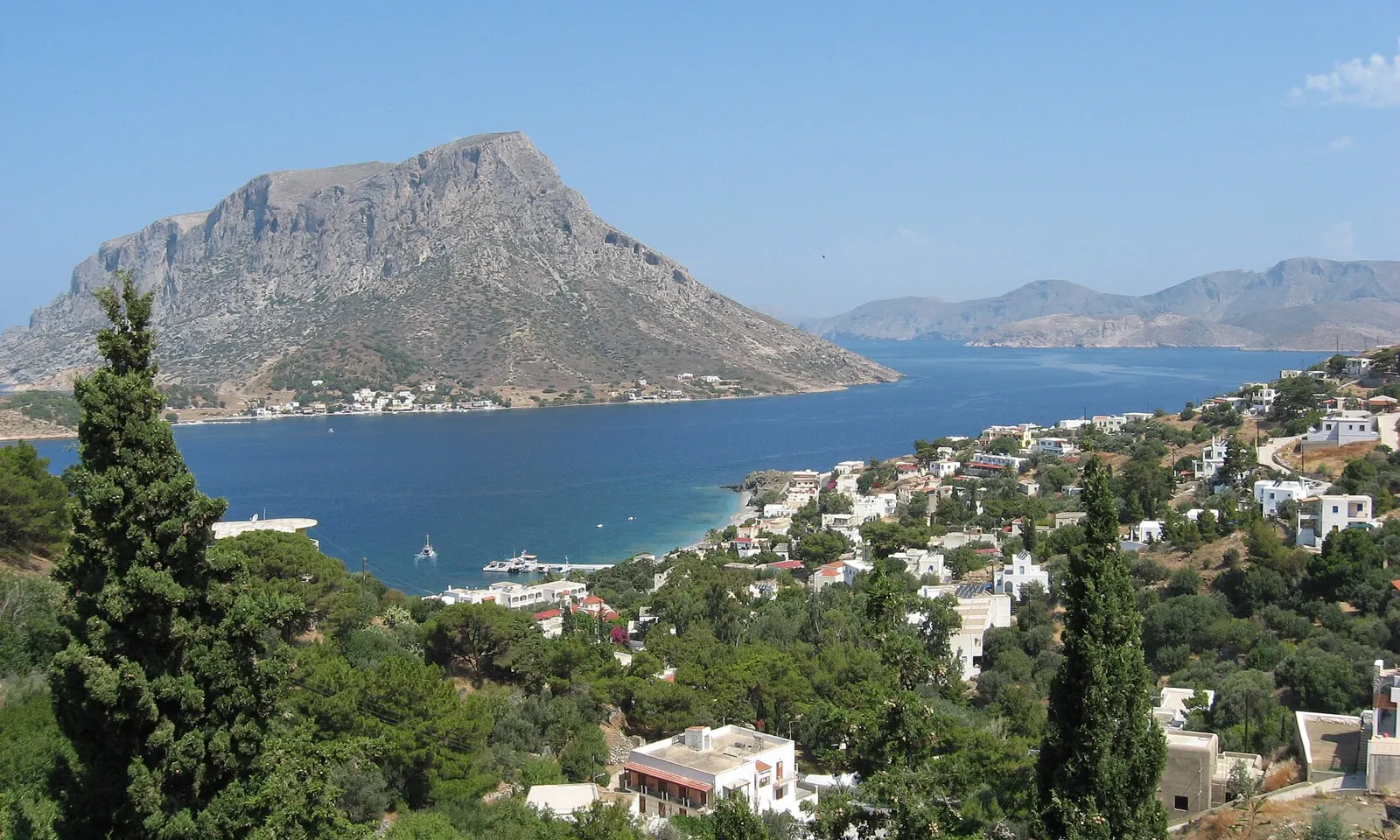
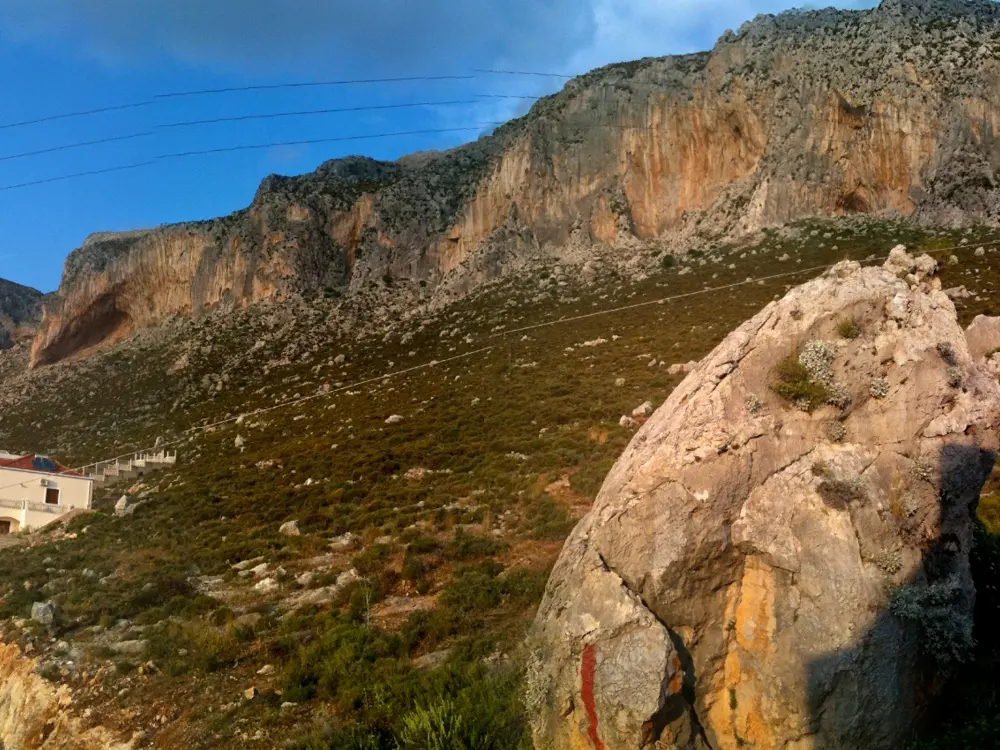
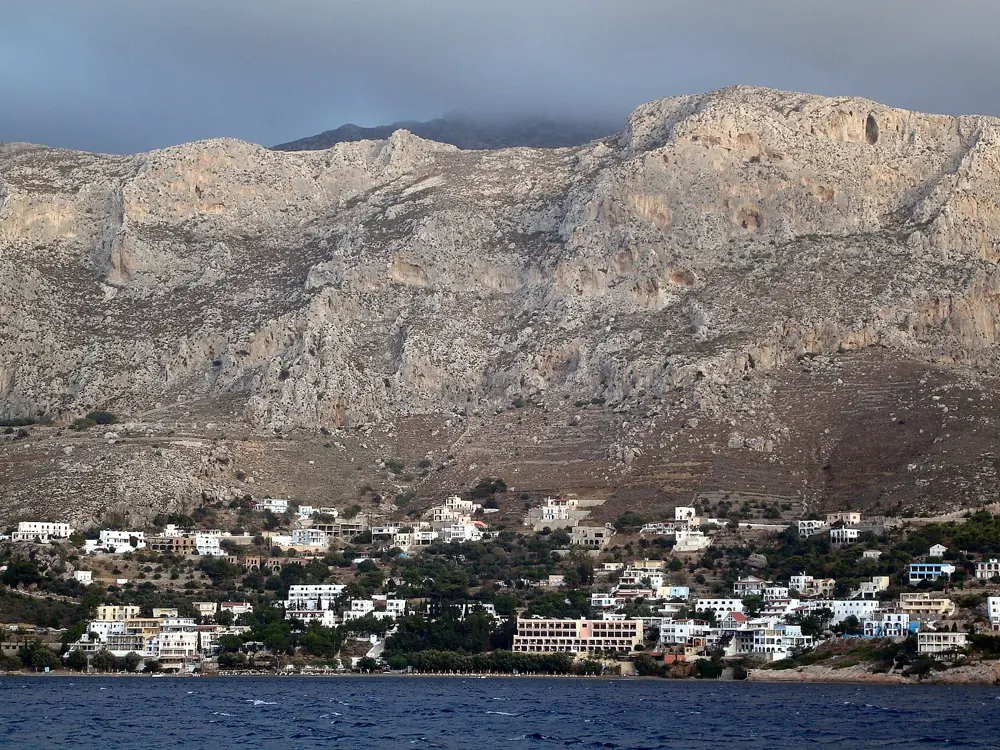
Telendos across the strait from Myrties on the west coast of Kalymnos

Photos: Robert Powell (CC BY-SA 3.0), alpguide (CC BY-SA 2.0), gertrudis2010 (CC BY-SA 3.0), mawieser (CC BY-SA 3.0)

Rock
Limestone, grey slabs and steep tufas
Style
Sport climbing, mostly single pitch
Routes
4,216 sport routes in the 2025 guidebook
Best season
October, then April and May

Why go

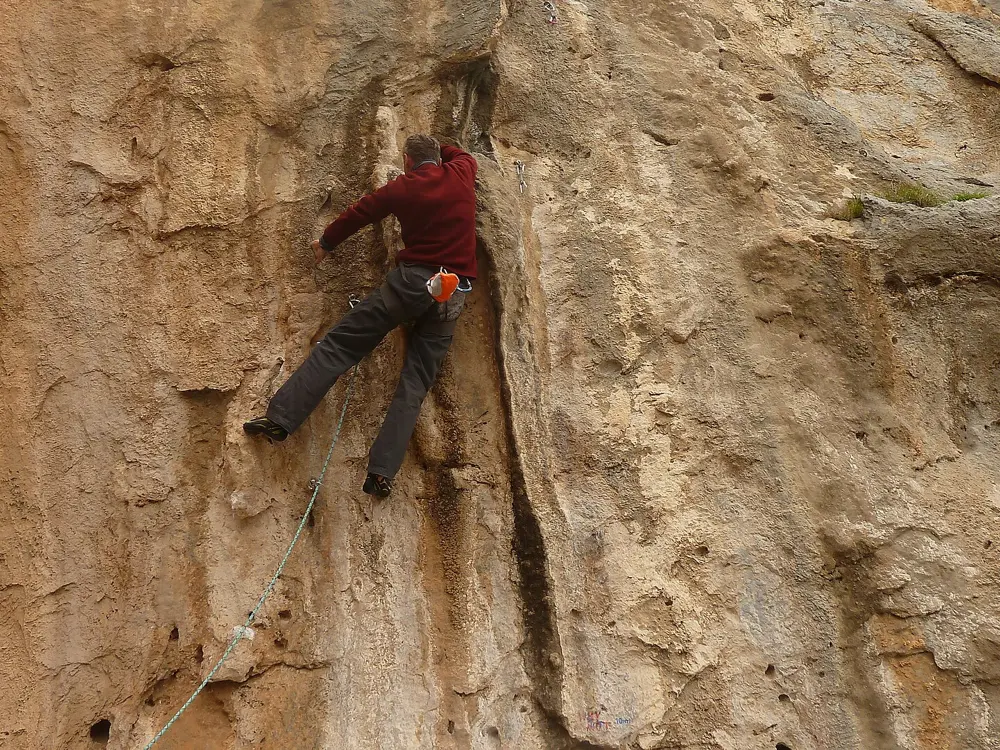
Kalymnos is a small island off Kos where the limestone above the west coast hangs in caves full of tufas. Andrea Di Bari saw its potential in 1996, and the 2025 guidebook lists 4,216 sport routes on 61 crags, most of them within walking distance of Masouri.

The route

Grande Grotta, the cave above Masouri, is about 20 minutes on foot from the Philoxenia Hotel. Aegialis (7c, French grades) climbs its tufas, with DNA (7a) and Ivi (7a+) nearby. At Odyssey, Adam Ondra made the first ascent of Los Revolucionarios (9a) in 2009, the first route of that grade in Greece. Spartacus has The Siege of Thermopylae (6c+) and Daniboy (8a), and on Telendos, across the strait, Typhoon (7c) climbs the Crystal Cave.

When to go

October is the peak month, then April and May. Tufas can seep in February and March, and much of Masouri closes from mid-November to late March. In summer, start around 6 am. The municipality's International Kalymnos Climbing Festival last ran on 16 to 19 October 2025.

Getting there

Most climbers fly to Kos, take a taxi about 7 km to Mastichari and cross to Pothia by ferry in about half an hour, then take a taxi to Masouri. High winds can cancel the crossing. Sky Express flies from Athens to the island's airport, 7.2 km from Masouri. Scooters reach the further crags, and since 2015 you need a motorbike licence to rent one.

Permits and booking

None of the guides we used mention a climbing permit or fee, but 2026 brought new rules. On 10 April the municipality temporarily closed 10 crags for rebolting, and new routes are banned for now. Close the goat fence gates on the approaches, and never top rope directly through the anchors.

How hard it is

On 27 March 2026 a climber died on St. Savvas (7b+) at Jurassic Park when the anchor bolts and the bolt below failed. Rebolt Kalymnos, a volunteer group, asks climbers to avoid unrebolted routes bolted before 2005, and had re-equipped almost 400 routes with titanium by September 2026. Grande Grotta is steep, pumpy tufa climbing, tufas can break, so wear a helmet, and humid days make everything feel harder.

Where to sleep

Masouri, Myrties and Armeos are the usual bases, with crags within walking distance.

Tips

  • Bring an 80 m rope, which reaches about 99 percent of routes, and at least 16 quickdraws. Some routes on Telendos need 100 m.
  • Check Bolt Beta before you climb to see which routes have modern bolts, and report bad ones there.
04 / 10

The Dolomites

South Tyrol, Trentino and Veneto, Italy

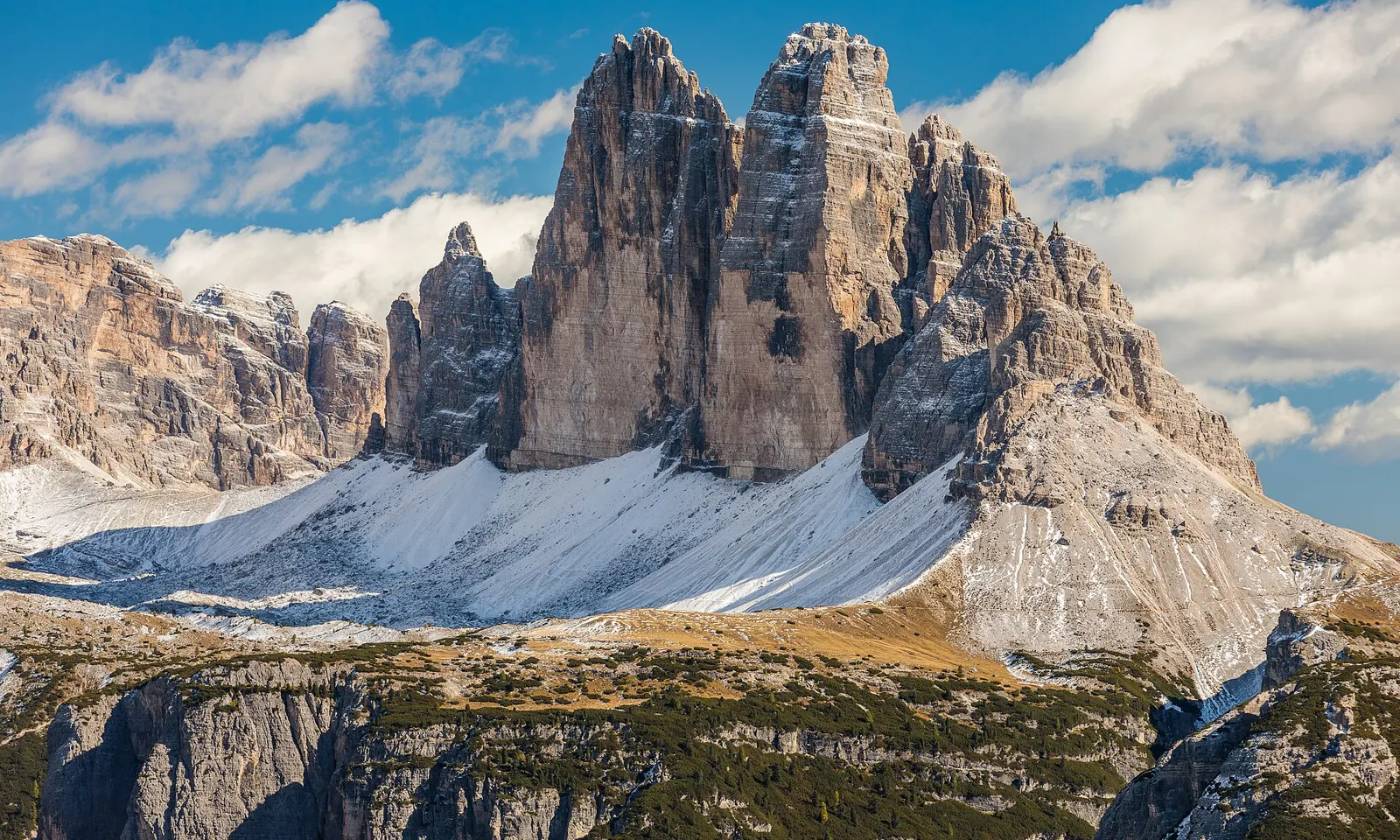
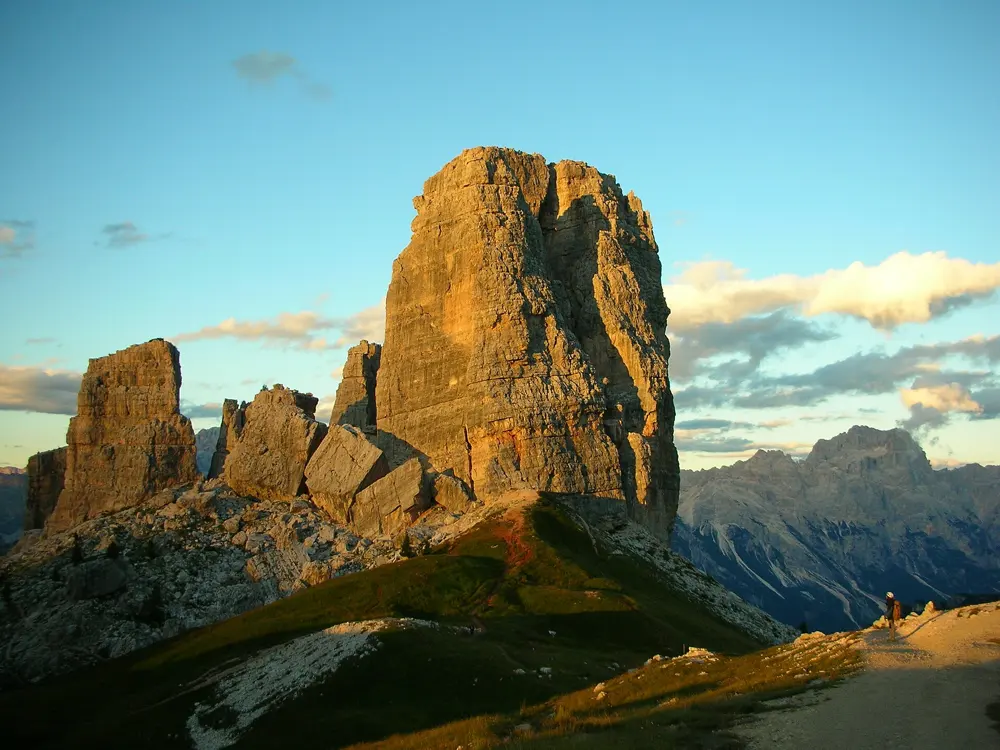
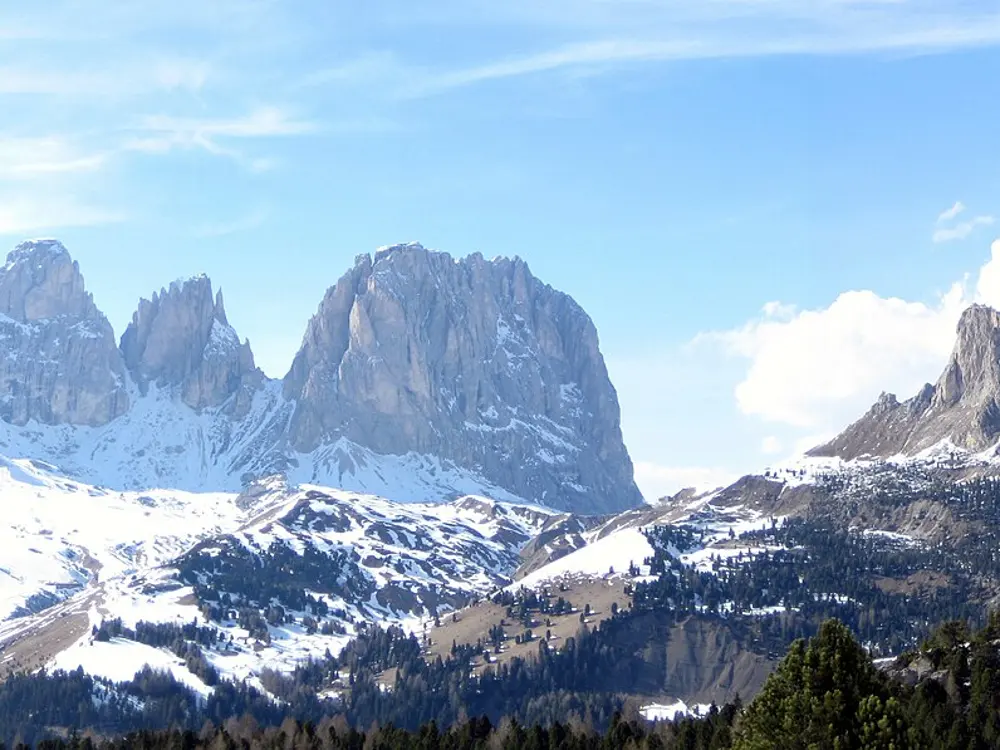
The Tre Cime di Lavaredo above early snow, seen from Monte Specie

Photos: Ximonic (Simo Räsänen) (CC BY-SA 4.0), Jon Shave (CC BY 2.0), Carlos Baquero from Porto/Braga, Portugal (CC BY-SA 2.0), Aconcagua (CC BY-SA 3.0)

Rock
Dolomite, a pale Triassic carbonate rock
Style
Long multi-pitch on fixed pegs, plus bolted cragging
Grades
UIAA, from IV+ classics to VII and harder
Best season
Mid-June to late September, while the huts are open

Why go

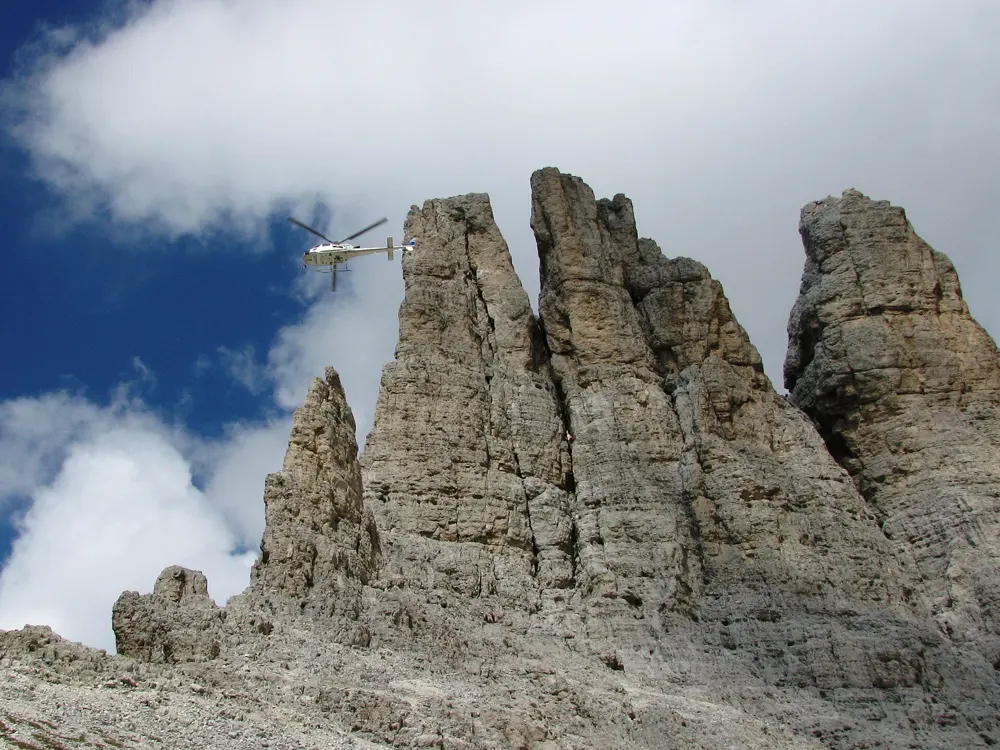
Pale dolomite towers rise straight out of high meadows here, a UNESCO World Heritage Site since 26 June 2009. Free climbing goes back to 1887, when 17-year-old Georg Winkler soloed a Vajolet tower. Roads cross the passes and huts sit under the walls, so long routes start from short approaches.

The route

On Cima Grande di Lavaredo, the Spigolo Dibona climbs about 500 m in 17 pitches at UIAA IV+. The Comici on the north face is VI with aid, VII free. Above Sella Pass, the First Sella Tower has the Steger (IV+), the Tissi (VI+, 7 pitches) and Delenda Carthago (VII, 6 pitches). The Marmolada's south face holds Don Quixote, about 750 m in 20 pitches with obligatory VI, and the Vinatzer on Punta Rocca, about 800 m in 28 pitches. On the Vajolet towers, the Piaz arete on Torre Delago is five exposed pitches at IV+. Cinque Torri, whose Torre Grande reaches 2,361 m, has routes from grade 3 to 8b.

When to go

Huts mostly open from mid-June to late September; Rifugio Re Alberto lists 20 June to 20 September. July and August are surest, though weather changes fast even then.

Getting there

The Cortina Express bus takes about 2 hours 10 minutes from Venice airport to Cortina. A chairlift rises to Cinque Torri from Bai de Dones, on the road to Passo Falzarego. Sella Pass, between Val Gardena and Val di Fassa, is under an hour from the First Tower routes. A 6 km toll road climbs to Rifugio Auronzo under the Tre Cime. For the Marmolada, path 610 leads from Malga Ciapela to Rifugio Falier in about 1 hour 15 minutes.

Permits and booking

No climbing permit is needed and guides are optional. The Tre Cime road, open since 23 May 2026, needs an online booking: 40 euros a car for 12 hours, with the plate entered by 23:59 the day before. After the July 2022 glacier collapse, Canazei closed the Marmolada's north side; in August 2022 Punta Penia reopened only by the west ridge via ferrata. No 2026 ordinance was found; check Canazei notices before going high.

How hard it is

Classic routes use the UIAA scale. Popular lines are polished, which can add a full grade. Belays are often fixed pegs, descents usually abseils, and walls reach 3,343 m on the Marmolada.

Where to sleep

Rifugio Auronzo has 99 places under the Tre Cime. Re Alberto sits at the foot of the Vajolet towers, Scoiattoli beside Cinque Torri and Falier below the Marmolada. Dorm half board runs about 50 to 60 euros.

Tips

  • Book the Tre Cime road early: July and August weekend slots sell out quickly.
  • Tap water above 2,000 m is often not drinkable, so carry your own.
05 / 10

El Potrero Chico

Hidalgo, Nuevo León, Mexico

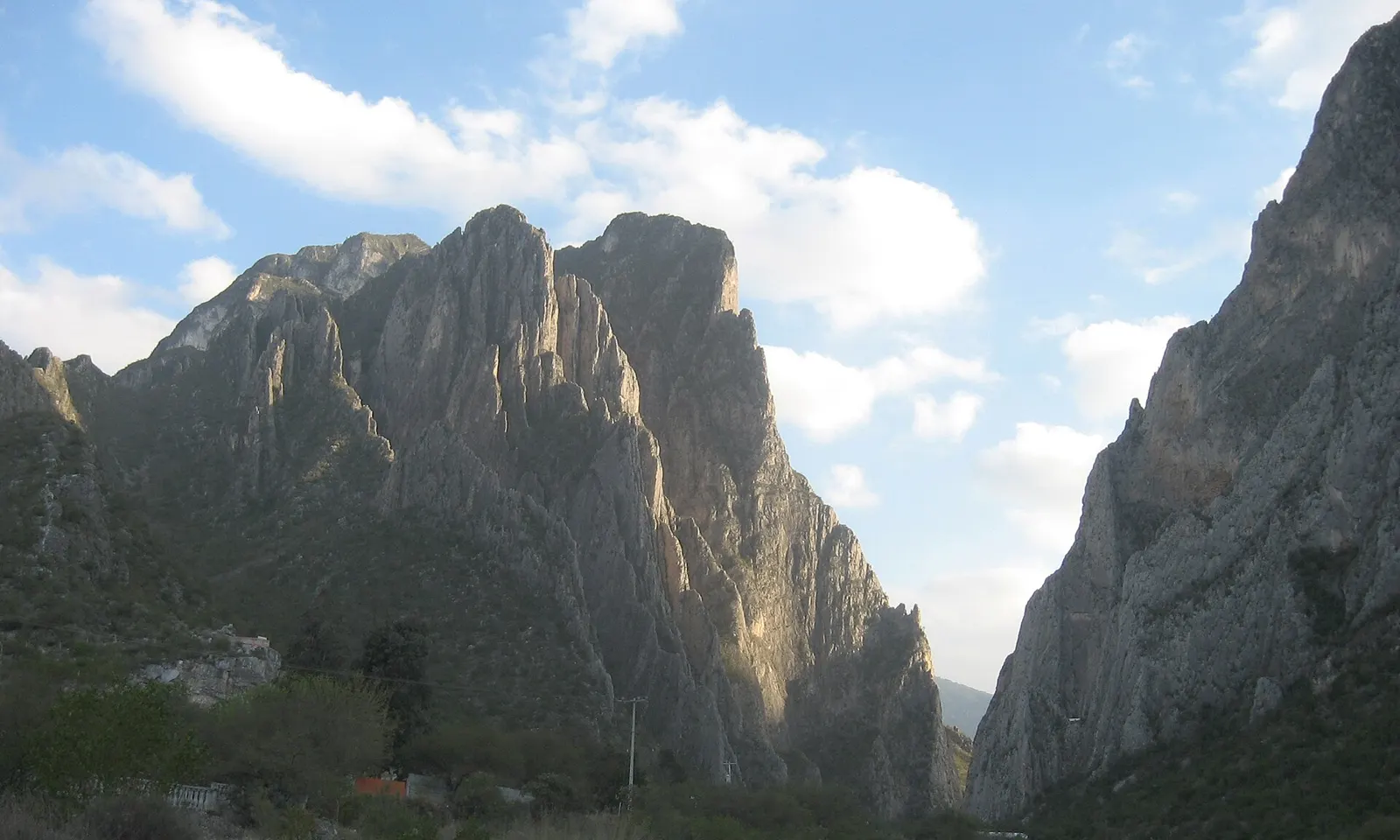
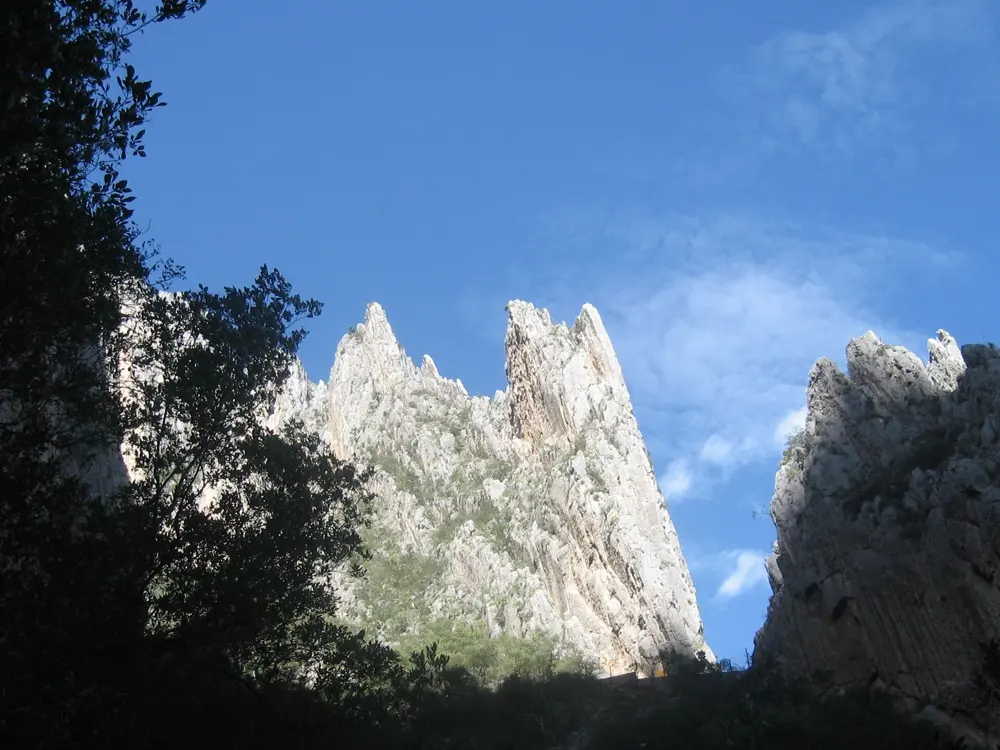
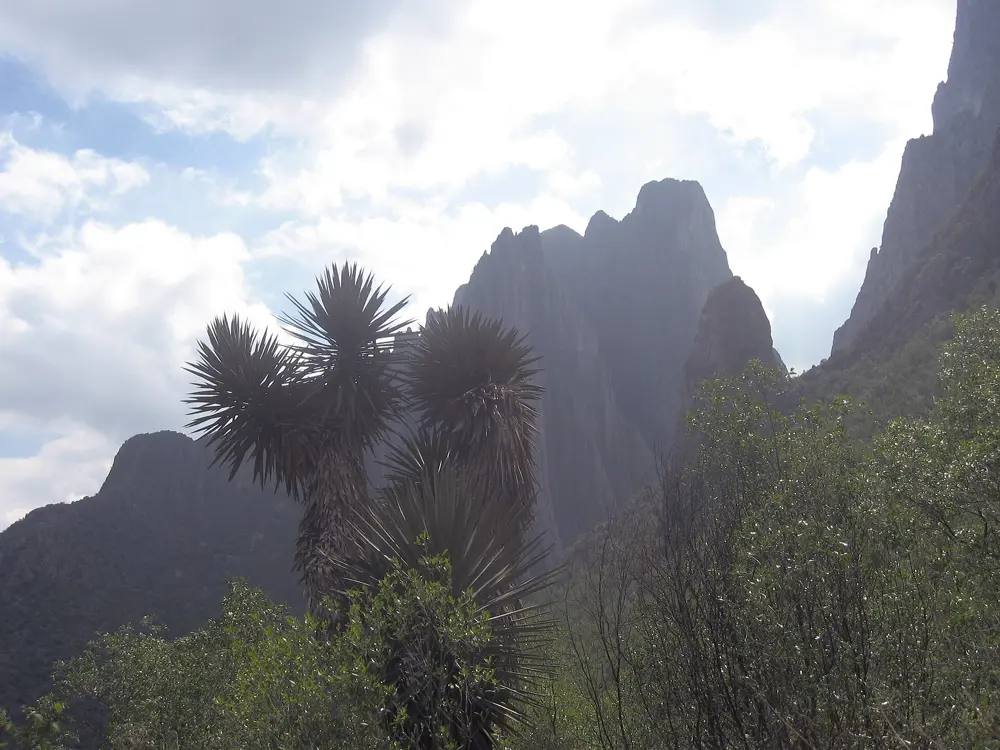
The limestone walls of El Potrero Chico rising above the dry arroyo at the canyon mouth

Photos: s_mestdagh (CC BY-SA 2.0), s_mestdagh (CC BY-SA 2.0), s_mestdagh (CC BY-SA 2.0), s_mestdagh (CC BY-SA 2.0)

Rock
Limestone
Style
Bolted sport, single and multi-pitch
Routes
681 listed on Mountain Project
Best season
October to March, busiest December to February

Why go

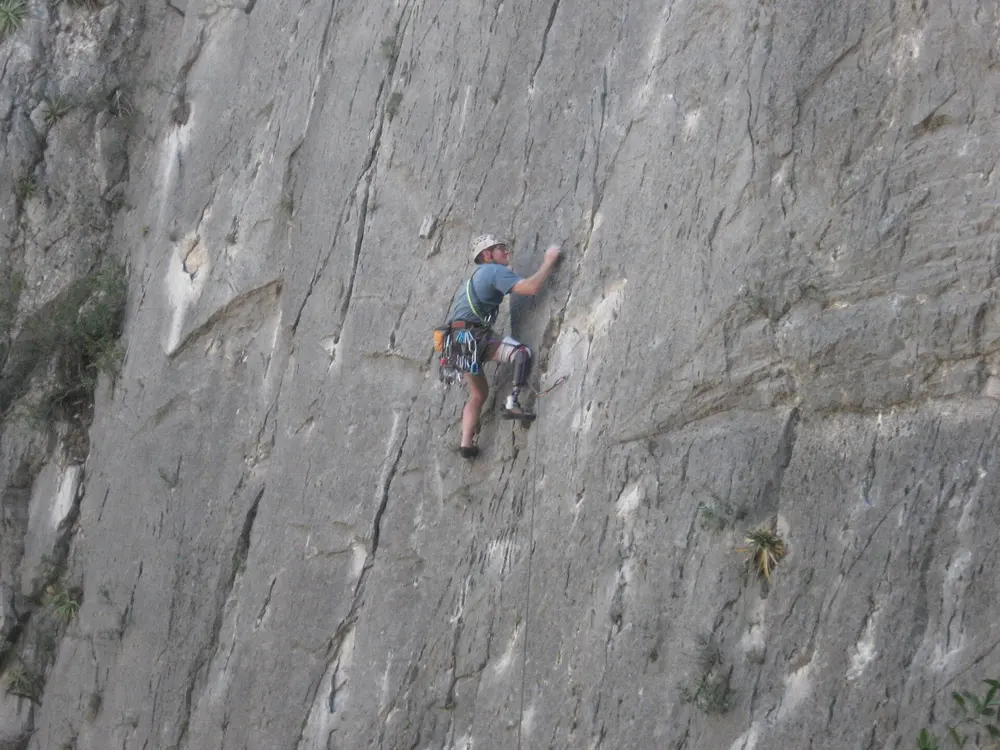
Two limestone walls rise either side of a narrow canyon in the Chihuahuan desert, about 25 miles northwest of Monterrey, and nearly everything on them is bolted. Many routes run ten pitches or more, so this is one of the few places where a sport climber with a rope and a rack of quickdraws can spend a whole day on a big wall. Nuevo León's tourism ministry says 2,000 to 2,500 climbers come each year.

The route

Time Wave Zero on the Timewave Buttress is the showpiece: 23 pitches and about 2,300 ft, graded 5.12a in the Yosemite Decimal System, though most of it is 5.7 to 5.10 slab and ledges and the single 5.12 pitch can be aided. Space Boyz on the Jungle Wall is 11 pitches, 5.10d, mostly 5.9, starting a few steps from the road. El Sendero Luminoso, 15 pitches at 5.12d, is the area's king line. Treasure of the Sierra Madre (5.10c, 7 pitches) and Yankee Clipper (15 pitches, 5.12a final pitch) are popular middle-grade outings.

When to go

The season runs roughly October to March, with the crowds from December to February. Summer is very hot, often over 35°C, with more rain. January can bring freezing days.

Getting there

Fly to Monterrey. Hidalgo is about an hour away by taxi or a driver booked through your lodging, and the canyon is about 2 miles from town. Buses via Monterrey's terminal are cheap but slow and need some Spanish: ask for Hidalgo, Nuevo León, not Hidalgo state.

Permits and booking

There is no climbing permit, but the park charges a one-time pass for the season at the gate. Climbers reported 250 pesos in 2023 and 2025. In 2026 the US State Department rates Nuevo León Level 2, exercise increased caution, and the UK Foreign Office warns of drug-related violence across the northern states. If you drive from the border at Nuevo Laredo, use toll road 85D in daylight.

How hard it is

Grades start around 5.7, but long routes demand efficient rope work and many rappels. Expect loose rock and rockfall, so wear a helmet, and watch for ropes snagging on cactus and agave. Some older routes have runouts.

Where to sleep

Campgrounds and rooms sit at the canyon mouth, most within a short walk of the walls: La Posada, Rancho El Sendero, Quinta La Pagoda, Homero's and Leo's Housing.

Tips

  • Bring a 70 m rope: Time Wave Zero and many other routes need one to rappel.
  • Carry about 14 quickdraws for single pitches and around 26 if you plan to link them.
  • Do not leave gear unattended at roadside crags such as the Jungle Wall, where petty theft is common.
06 / 10

Railay and Tonsai

Krabi, Thailand

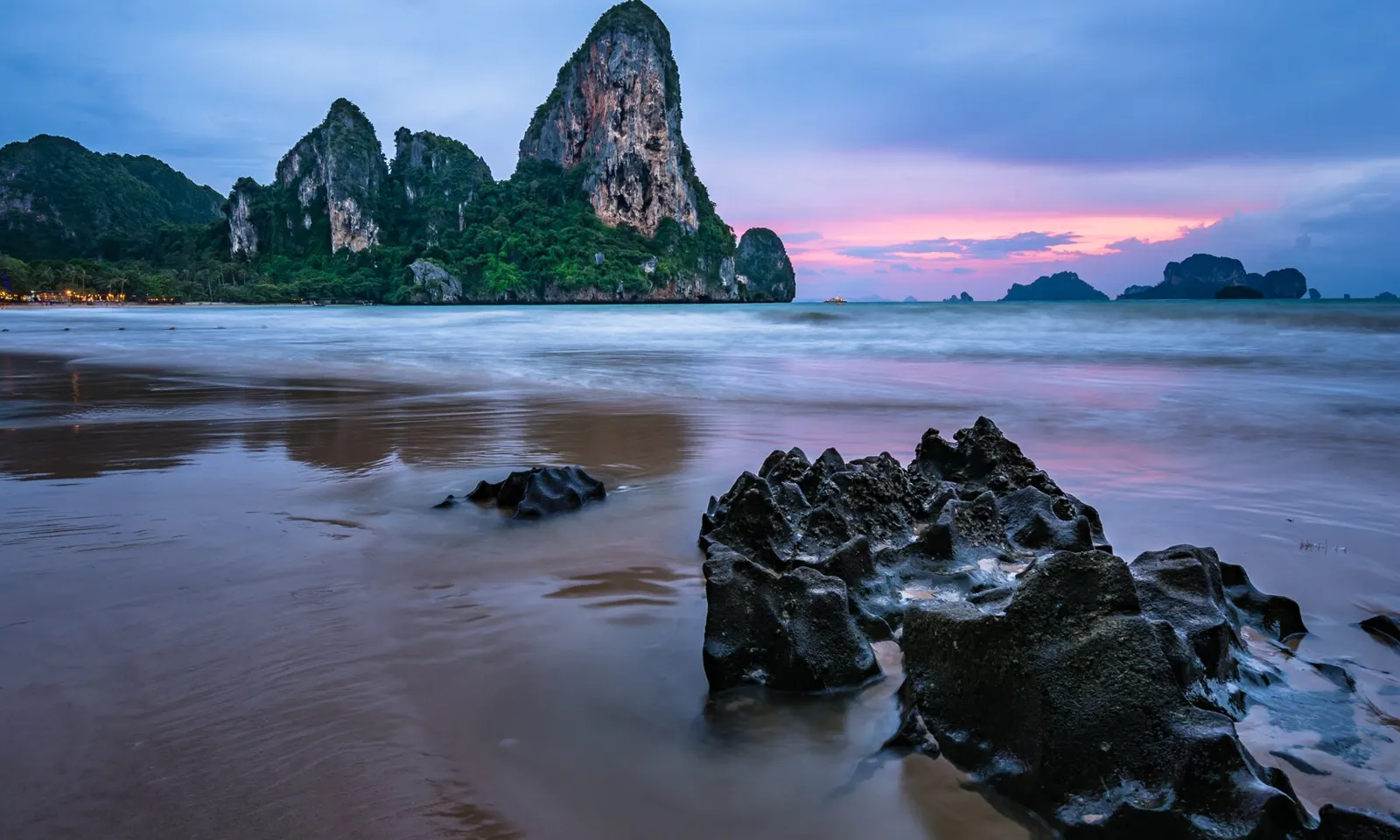
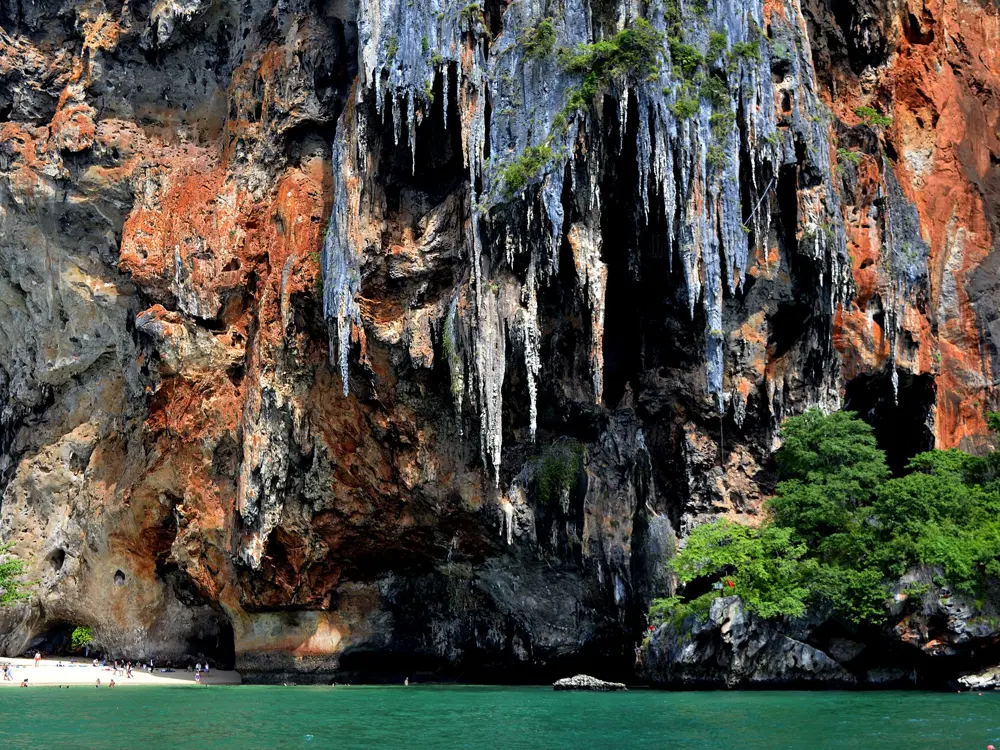
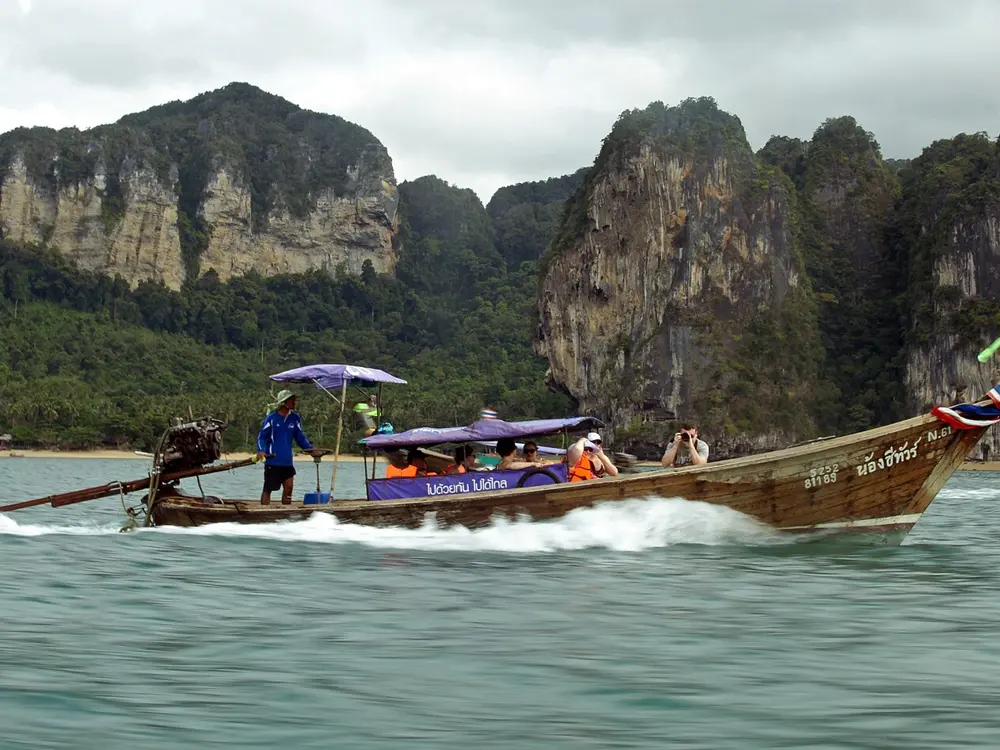
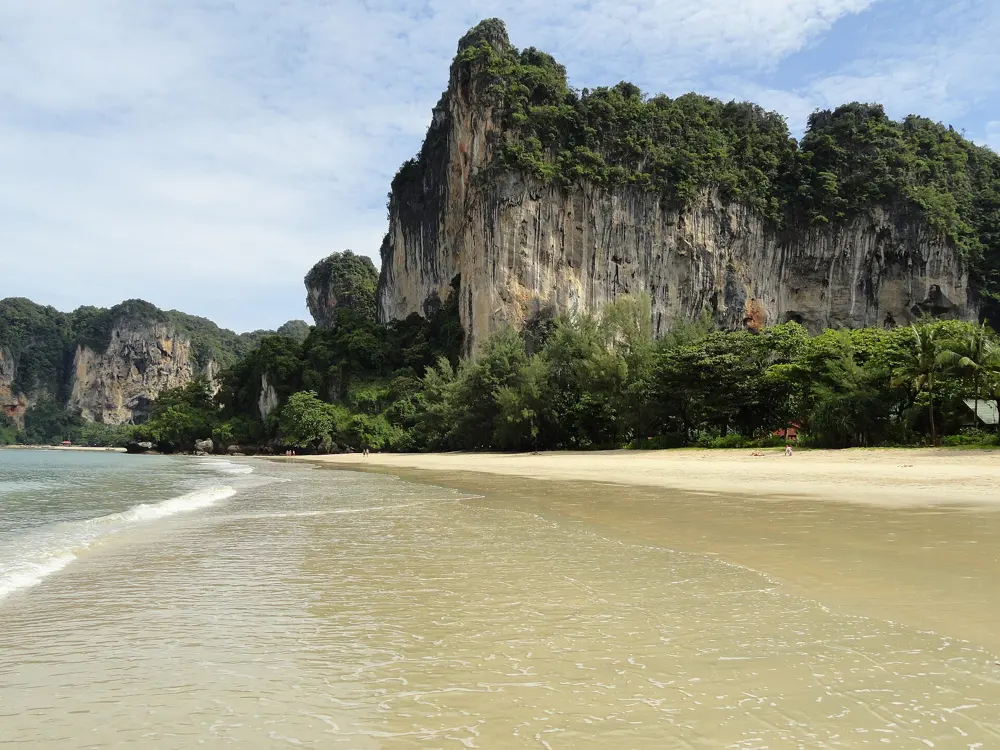
Limestone towers above Railay West beach at dusk, with dark rocks on the wet sand in front

Photos: Marco Nürnberger from Nuremberg, Germany (CC BY 2.0), Shivashanky (CC BY-SA 4.0), kallerna (CC BY-SA 3.0), Fabio Achilli from Milano, Italy (CC BY 2.0)

Rock
Limestone with tufas, pockets and jugs
Style
Bolted sport, multi-pitch and deep water soloing
Routes
More than 700 on some 49 walls
Best season
November to March

Why go

Railay is a small peninsula between Krabi town and Ao Nang, cut off from the mainland by limestone cliffs, so every climber arrives by boat. The steep limestone is hung with tufas, pockets and jugs, and the crags rise straight from the sand. UKClimbing counts some 49 walls and more than 700 routes across Tonsai, Railay West and Railay East, nearly all bolted sport climbs.

The route

Thaiwand Wall, the spire at the end of the peninsula, holds the multi-pitch lines, about 15 minutes from the beach. Lord of the Thais, French 7b over five pitches, is the one most visitors come for. On Tonsai's main wall, Humanality goes at 6b+ over five pitches. Single-pitch favourites include Burnt Offerings, 7a+, on Tonsai's Fire Wall and No Good Deed Goes Unpunished, 6b+, on Wee's Present Wall. Deep water soloing is done from a longtail boat moored under the sea cliffs.

When to go

November to March is cooler and steadier. The hot dry season runs February to May and the rains June to October, but climbing goes on all year. Deep water solo trips run most days from November to April; in the low season, wind and waves can keep boats in for weeks. In rain, The Defile, Phra Nang Beach and Muay Thai stay climbable.

Getting there

Fly to Krabi, about 40 minutes by car from Ao Nang, or take a ferry from Phuket. From Ao Nang's main pier a longtail reaches Tonsai in about 15 minutes, usually for 200 baht. No roads reach the peninsula.

Permits and booking

No climbing permit is needed, and we found no climbing fee. Camping is not allowed in Tonsai bay. Happy Island is closed to climbers under local police rules. Profits from the King Climbers guidebook go to the rebolting fund.

How hard it is

Grades run from French 5c warm-ups such as Ling Noi on the 1-2-3 Wall to steep 7s and harder at Tonsai. The bolts are the real hazard. Salt air corrodes stainless steel fast: some Thai routes were rebolted five times in 20 years, and climbers have broken both belay bolts at once with body weight alone. The Thaitanium Project has rebolted most popular routes with titanium glue-ins, but old stainless bolts remain, so check a current guide. Several crags, including The Defile, need low tide.

Where to sleep

Tonsai is the climbers' bay, simpler than Railay West with its resorts. Tonsai Bay Resort has air-conditioned rooms, and Chill Out Bar and Bungalows has dorms, with power only at night.

Tips

  • A 60 m rope does most routes; take a 70 m for longer ones, with 12 quickdraws and two long slings.
  • Book deep water solo at the Basecamp Tonsai shop a day or two ahead: 1,500 baht with lunch and old shoes, minimum four climbers.
07 / 10

Rocklands

Cederberg, Western Cape, South Africa

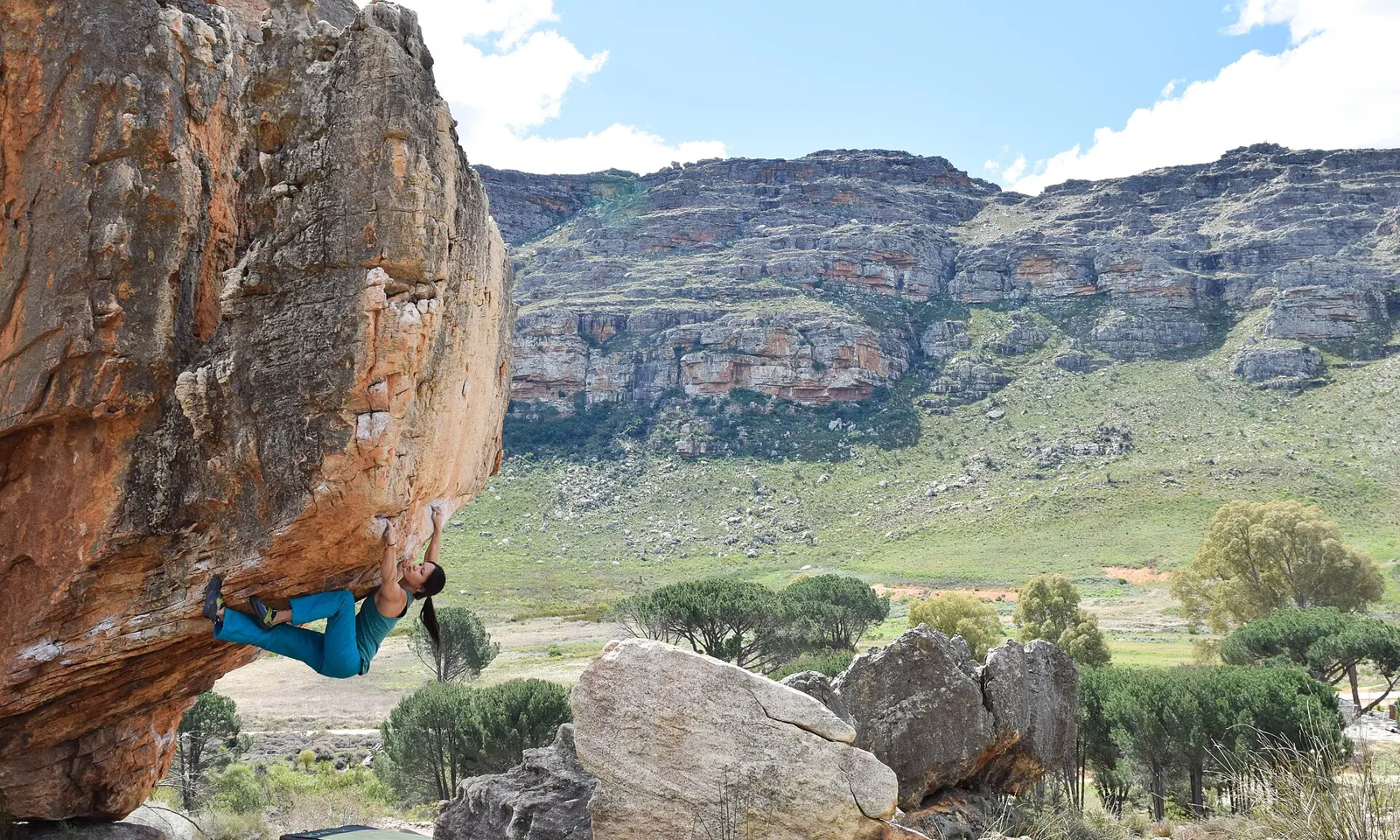
A climber on Tea Time, a 7C+ boulder at Rocklands, with the Pakhuis valley and sandstone cliffs behind

Photos: Dana Rader (CC BY 2.0), dconvertini (CC BY-SA 2.0), dconvertini (CC BY-SA 2.0), dconvertini (CC BY-SA 2.0)

Rock
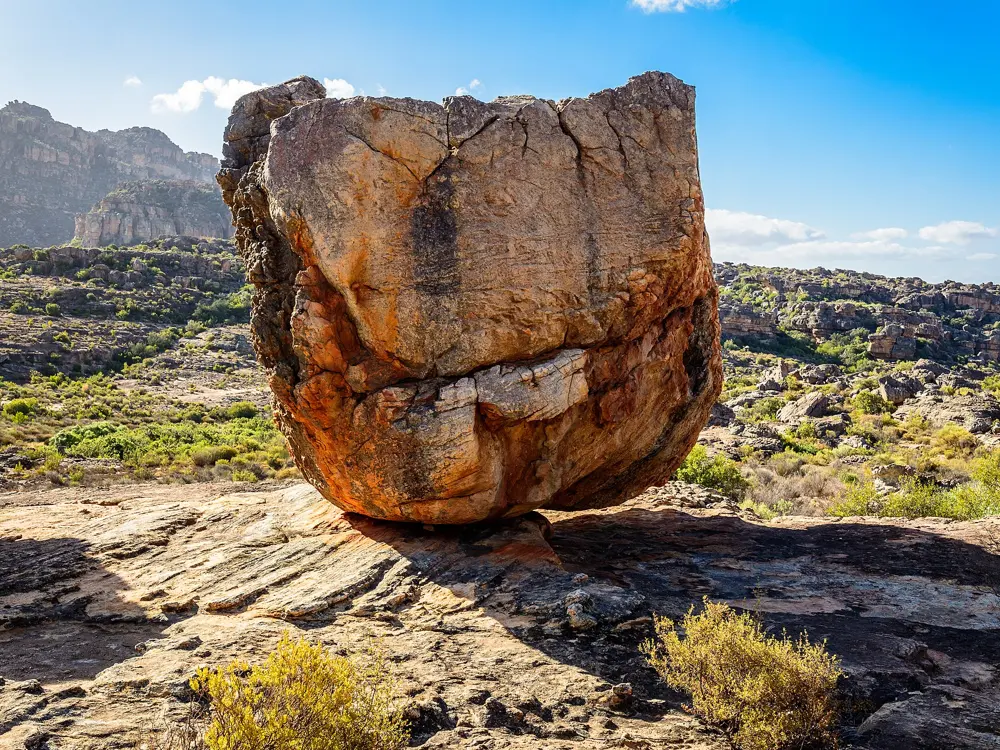
Coarse, orange sandstone
Style
Bouldering, with some sport and trad
Problems
More than 1,500
Best season
30 April to 1 October

Why go

Rocklands sits at the northern tip of the Cederberg, on the Pakhuis Pass and in the Agter-Pakhuis valley beyond it. Boulderers have come since 1996, when Todd Skinner, Fred Nicole and others began recording problems on the orange sandstone. Local partners have since developed more than 1,500 problems across CapeNature's Kliphuis and the neighbouring farms.

The route

Grades here use the Font scale. The Rhino, a roof on a sandstone prow first climbed by Fred Nicole, goes at 7B+ over a poor landing. Tea Time is a 7C+ under a big overhang facing the valley wall. Hole in One is 7C+, Maniac and Minki are 7B, Vanity is 7A+ and Orange Heart is 6C. The main sectors are de Pakhuys, the Pass, 8 Day Rain, Kliphuis Campground and the Sassies.

When to go

CapeNature's season runs from 30 April to 1 October. Late June to early August is best and busiest, though late July and August bring rain and frost.

Getting there

From Cape Town, take the N7 north to Clanwilliam, then the R364 for about 17 km to Kliphuis: about 280 km and three hours. De Pakhuys is 24 to 25 km past Clanwilliam, where you pay at the gate and collect a key. The sectors spread along the road, so you need a car.

Permits and booking

Every climber needs a Rocklands bouldering permit, carried at all times on any land. One permit covers Kliphuis, de Pakhuys, Traveller's Rest and the other partner farms. CapeNature lists R80 a day, R260 a week and R950 for 30 days, a little more on Quicket. Buy online or at de Pakhuys, Kliphuis or Traveller's Rest. No dogs; carry out all litter and stay on marked paths. After the March 2025 fire, CapeNature capped access at 100 a day, and its bouldering page still states the cap. At the Tea Garden, greet the owners at the house first.

How hard it is

Hard problems run to 8B+ and 8C, but most lie between 6C+ and 7C+. The coarse grain tears skin in the first week. Many problems are tall but landings are mostly flat, so bring big pads. Nights can freeze, and light snow has fallen on the Pass. Baboons are common.

Where to sleep

CapeNature's Kliphuis has a campsite and cottages, reopened on 25 May 2026 after the floods. De Pakhuys has Camp Sallie, with hot showers and a kitchen, plus five cottages. Traveller's Rest, nearest 8 Day Rain, has cabins and cottages but no tent camping.

Tips

  • The May 2026 floods closed roads and sites in the southern Cederberg, but CapeNature's notice listed no closure on the Pakhuis side. Check its latest update before driving.
  • The road over the pass is very dark at night and the de Pakhuys turn hides behind scrub, so arrive in daylight.
08 / 10

Mount Arapiles (Dyurrite)

Victoria, Australia

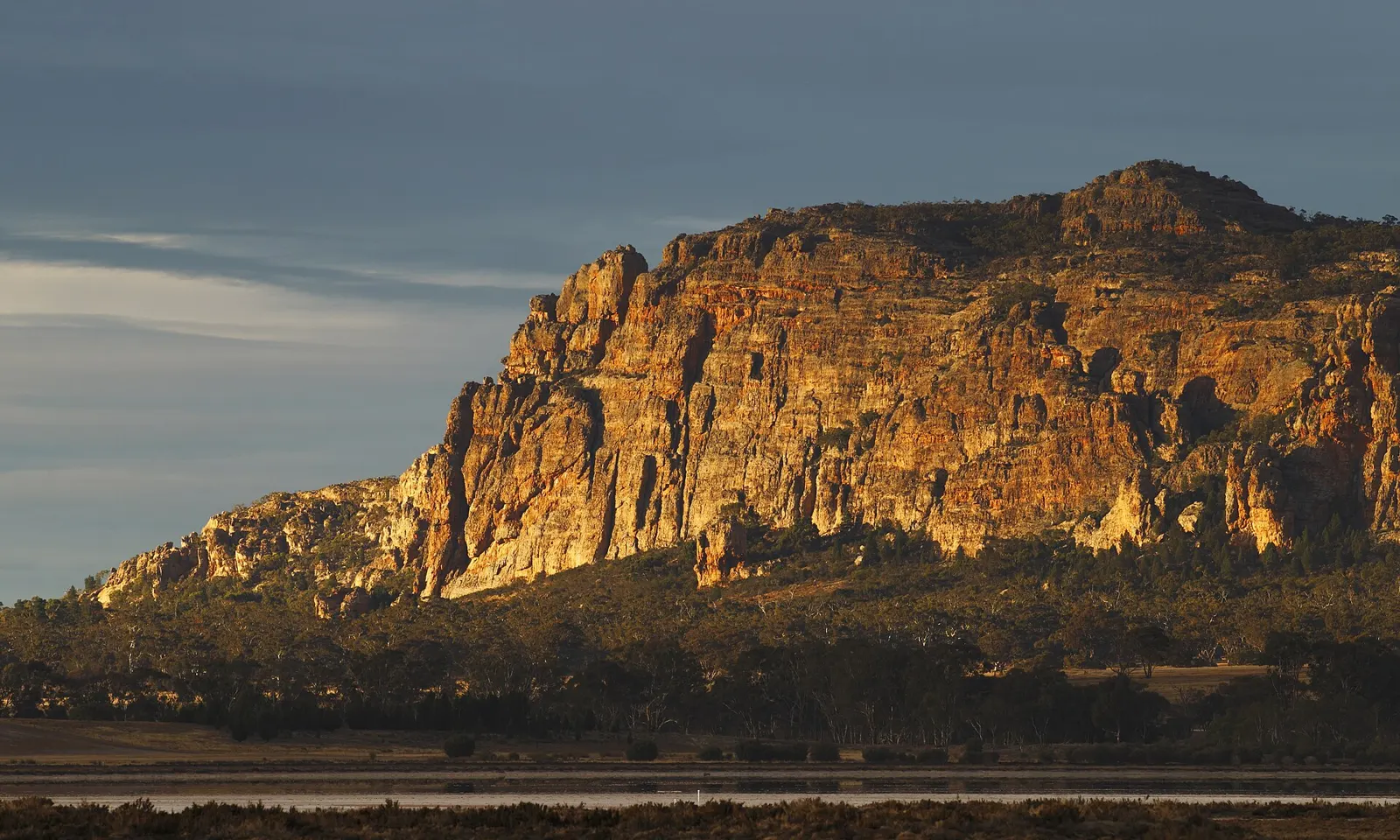
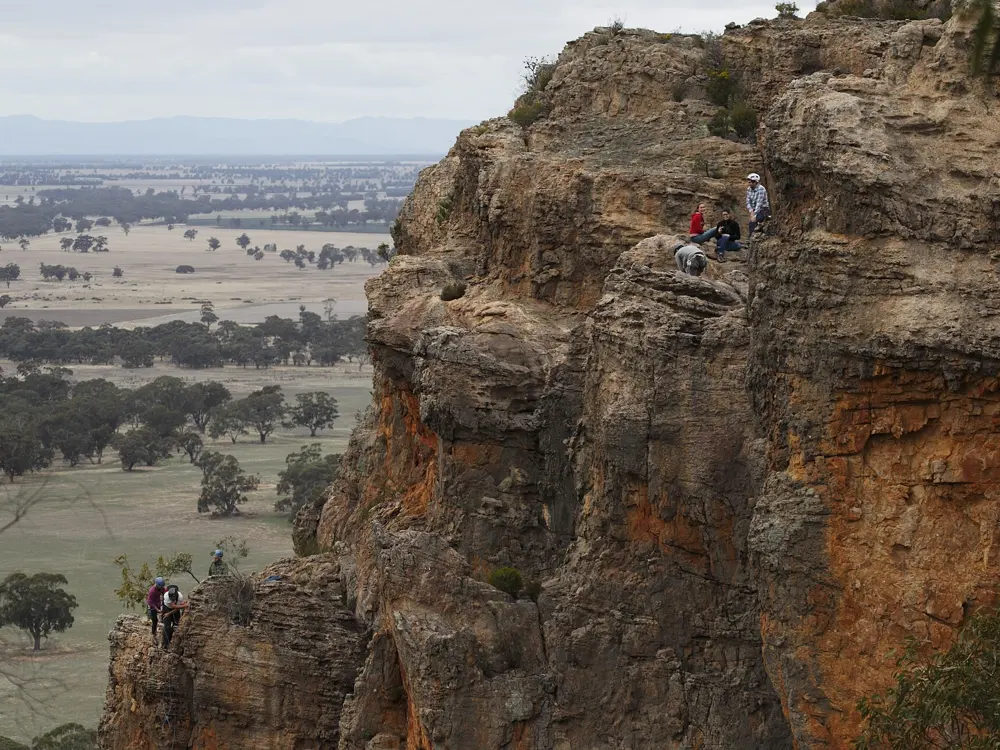
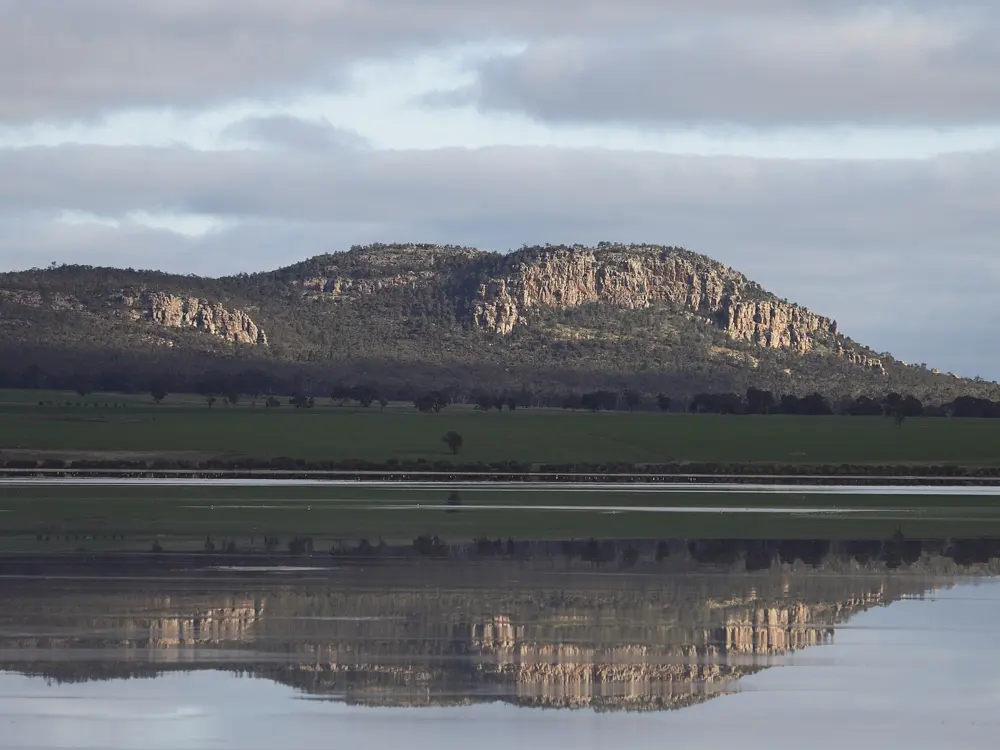
The orange quartzite cliffs of Mount Arapiles lit by low sun, seen across Mitre Lake

Photos: Ed Dunens (CC BY 2.0), Ed Dunens (CC BY 2.0), Ed Dunens (CC BY 2.0), Ed Dunens (CC BY 2.0)

Rock
Quartzite, about 140 m above the Wimmera plains
Style
Trad, single and multi-pitch, some sport from about grade 23
Routes
More than 3,300, about 98% open from October 2026
Best season
Autumn and spring

Why go

Dyurrite, the Wotjobaluk name for Mount Arapiles, is a ridge of hard orange quartzite rising about 140 m out of the Wimmera farmland, 10 km west of Natimuk. Since 1963 climbers have recorded more than 3,300 climbs on its buttresses and pinnacles, almost all trad. In 1985 Wolfgang Güllich climbed Punks in the Gym (32) on the Pharos, then the hardest climb in the world.

The route

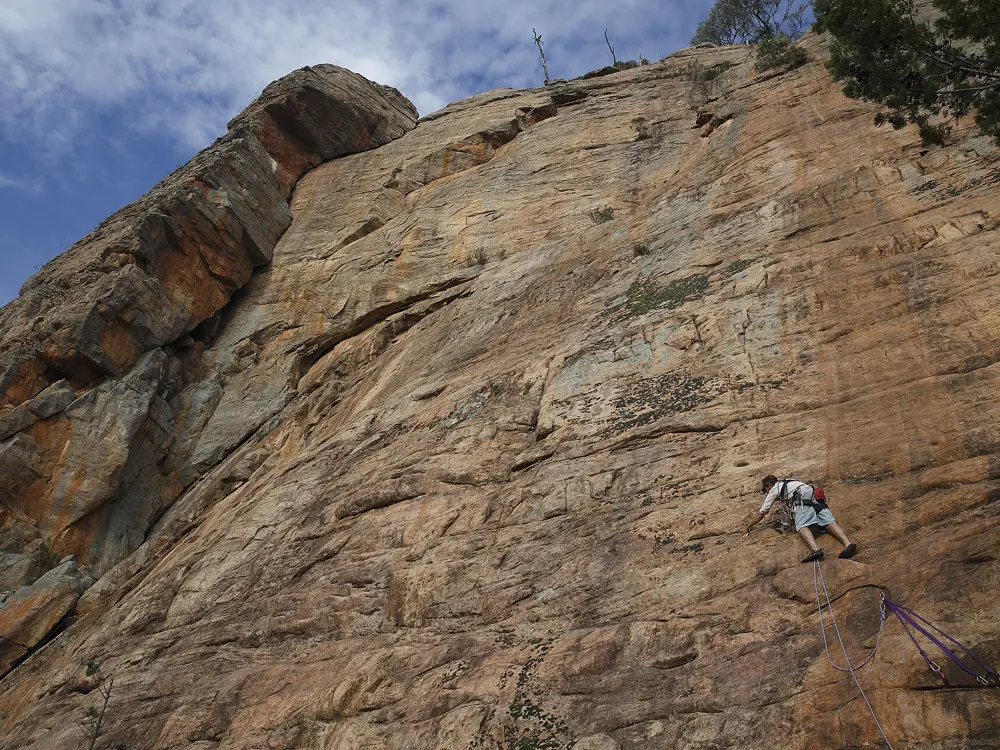
Grades are Australian (Ewbank). Start with Tiptoe Ridge (5) on the Pinnacle Face and The Bard (12), five pitches up Bard Buttress. Watchtower Crack (16) follows a clean crack on the Watchtower Faces, and Kachoong (21), in the Northern Group, is the famous roof. The Organ Pipes, near camp, hold many easier classics, and Castle Crag concentrates routes from 20 to 26.

When to go

Autumn and spring are best. In summer the sunny faces, the Watchtower above all, get very hot and climbers retreat to shady gullies. Winter is possible. Easter is the busiest week.

Getting there

The park is 334 km northwest of Melbourne by the Wimmera Highway, about four hours by car. Natimuk has supplies. V/Line coaches reach Horsham from Ballarat, but we found no bus to the park, so drive.

Permits and booking

No permit is needed, but the rules changed in October 2026, when the government approved a revised plan after a 2024 draft that would have closed over 60 per cent of the climbing. Mapped areas protecting Aboriginal cultural heritage are now closed to everyone, walkers included. About 80 climbs are closed and 46 rerouted, and about 98 per cent stay open. Closed outright are Brain Death Boulder, the Islamabad bouldering area and four Pharos boulders, plus listed routes on walls such as Pilot Error Wall and the Pharos. The old voluntary closures are gone. Temporary closures for peregrine falcon nesting still apply.

How hard it is

Nearly everything is trad, so bring a full rack with small wires. Many routes have abseil chains, and the Pharos has a 50 m free-hanging abseil. Australian grades are known for sandbagging, so start below your usual level. Heat is the main summer hazard.

Where to sleep

Centenary Park campground, below the cliffs, is the only camping in the park. Of its three areas, the Pines, under tall pine trees, is the most popular and fills on long weekends. Book through Parks Victoria. Dogs and caravans are not allowed, and wood fires are banned from 1 November to 30 April.

Tips

  • Download Parks Victoria's October 2026 Access Changes Summary. Its maps, not the route names, decide what is closed.
  • Bring drinking water, as the campground bore water tastes poor.
09 / 10

Wadi Rum

Aqaba Governorate, Jordan

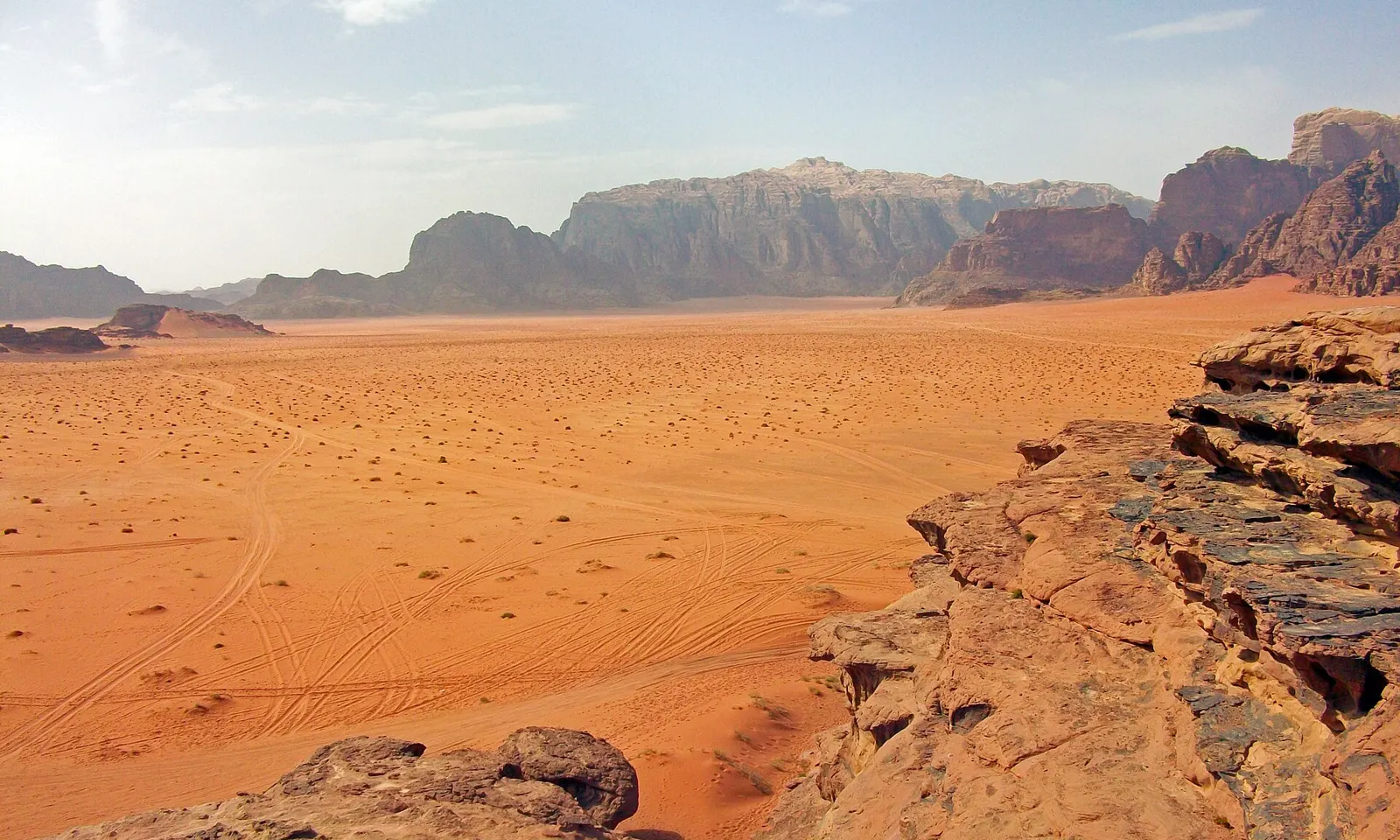
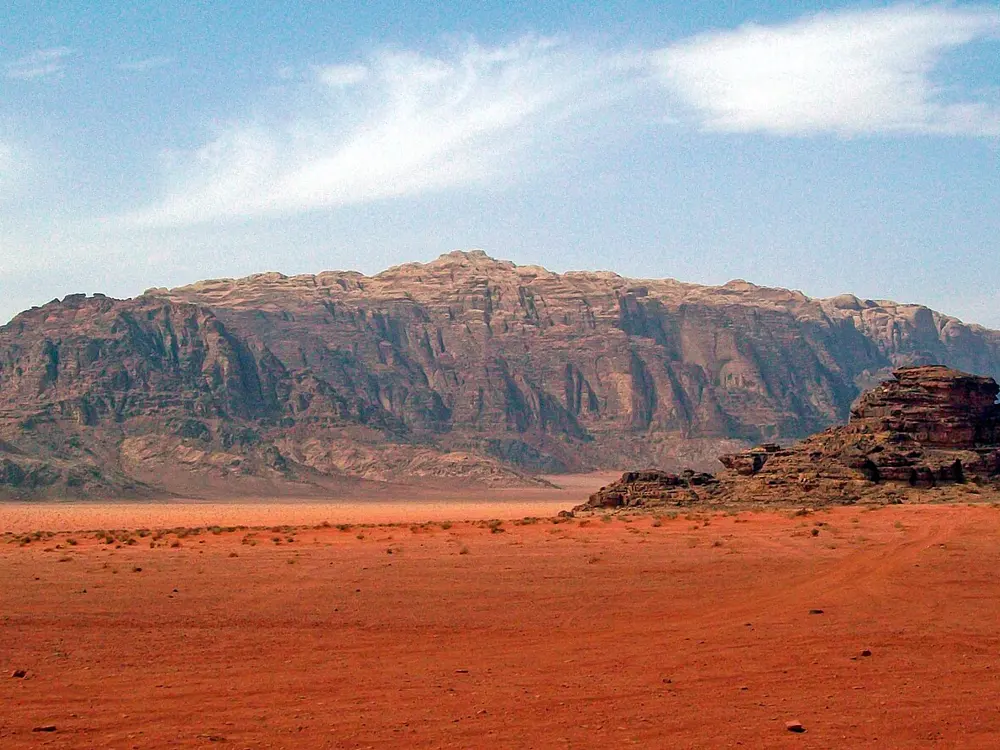
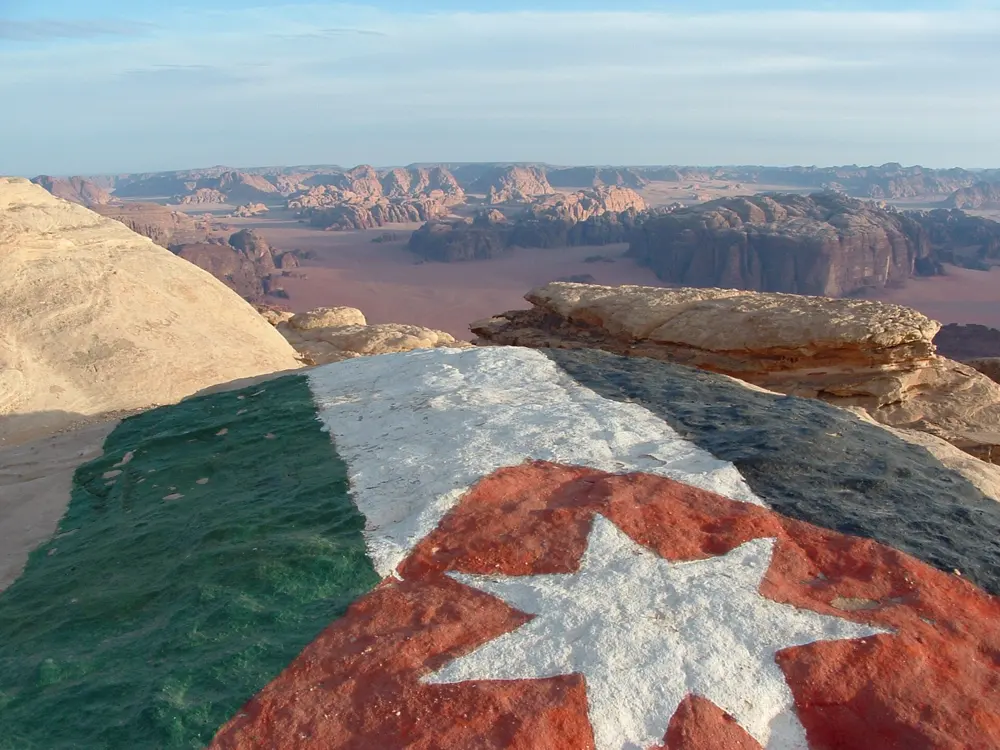
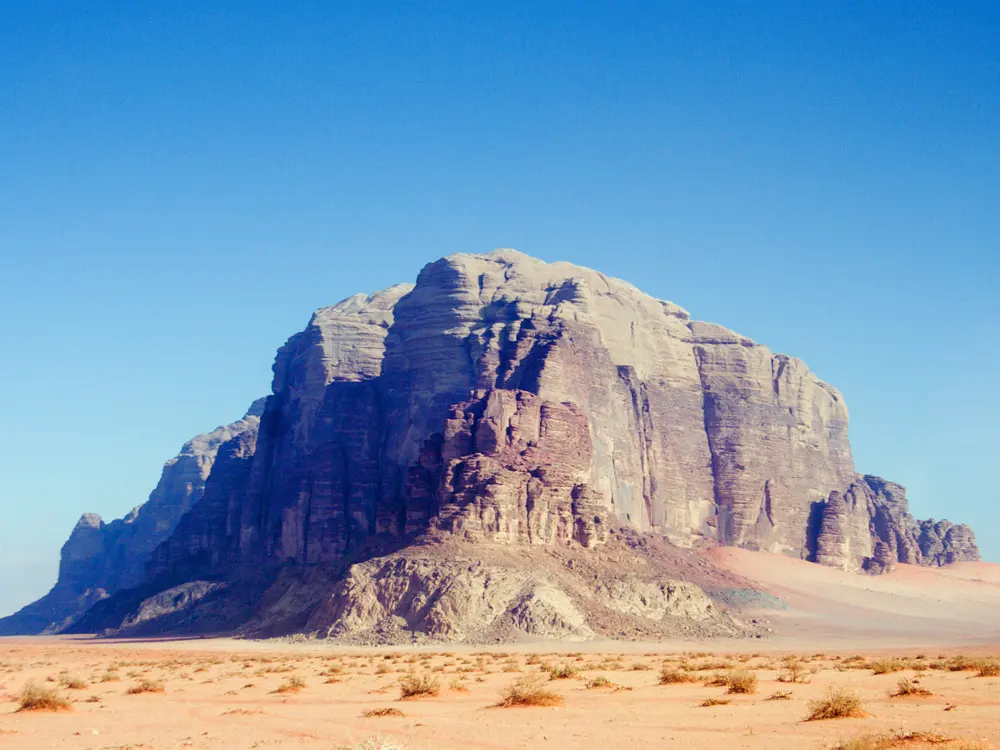
The orange sand of Wadi Rum and the long wall of Jebel Rum seen from a sandstone outcrop

Photos: Daniel Case (CC BY-SA 3.0), Daniel Case (CC BY-SA 3.0), Tatapcku at English Wikipedia (CC BY-SA 3.0), David Bjorgen (CC BY-SA 3.0)

Rock
Desert sandstone
Style
Trad multi-pitch, Bedouin routes, a few bolted lines
Classic
Pillar of Wisdom, Jebel Rum, 350 m, 6b
Best season
October to April

Why go

Wadi Rum is a protected desert in southern Jordan, about 60 km east of Aqaba, where tall sandstone mountains stand over flat sand valleys. Local Bedouin climbed these walls for generations, and climbers have since documented their Bedouin Roads. Recorded rock climbing began in 1984 with English climbers including Tony Howard, whose guidebook followed in 1987.

The route

Jebel Rum rises straight above Rum village and holds the best known lines. The Pillar of Wisdom climbs 350 m in 11 pitches, staying at French 5+ until the 6b exit onto the summit. Lionheart gives crack and corner climbing at 6b, and Black Magic, at 5c, is the usual warm-up. Out in the desert, Merlin's Wand in Barrah Canyon is five pitches at 6a, and Orange Sunshine on Burdah is about 300 m of 5c, with an abseil down to the rock bridge. La Guerre Sainte on Jebel Nassarani, bolted in 2000, is 450 m at 7b.
When to go

October to April is the season, with daytime highs of about 18 to 25 C. From May to September afternoons often pass 40 C, far too hot for sunny walls.

Getting there

Fly to Aqaba or Amman. From Aqaba the drive takes about 50 to 55 minutes. Minibuses leave from outside Aqaba Police Station when full, for about 3 JD, and a taxi costs around 20 JD. Visitors may not drive alone in the desert, so a Bedouin guide drives you to the outlying crags.

Permits and booking

Entry is 5 JD at the visitor centre, or free with a Jordan Pass. The area's climbing rules require a registration form at the visitor centre and a local climbing guide licensed by the Wadi Rum management. Climbing is allowed only in designated areas, which can be closed to protect wildlife or climbers. Power drills are banned and no gear may be left fixed. Climbers should also register with the Tourism Police at the entrance. In September 2026 the UK Foreign Office reported attacks and interceptions around Aqaba and warned that airspace could close at short notice.

How hard it is

Most routes are trad on soft sandstone with loose rock, so wear a helmet. Fixed slings bake in the sun and lose strength, so back them up. Descents are often long Bedouin routes: Hammad's Route off Jebel Rum winds over domes before its abseils.

Where to sleep

Rum village has simple concrete guesthouses and the Rest House, where the Pillar of Wisdom descent ends. Climbers may camp at their crags with prior permission, away from bird nests and Bedouin grazing, cooking on gas.

Tips

  • Bring a spare passport photocopy for the Tourism Police, who have no photocopier.
  • Pack cord or webbing to replace sun-baked anchor slings, and protect your rope from the abrasive rock.
10 / 10

Hampi

Karnataka, India

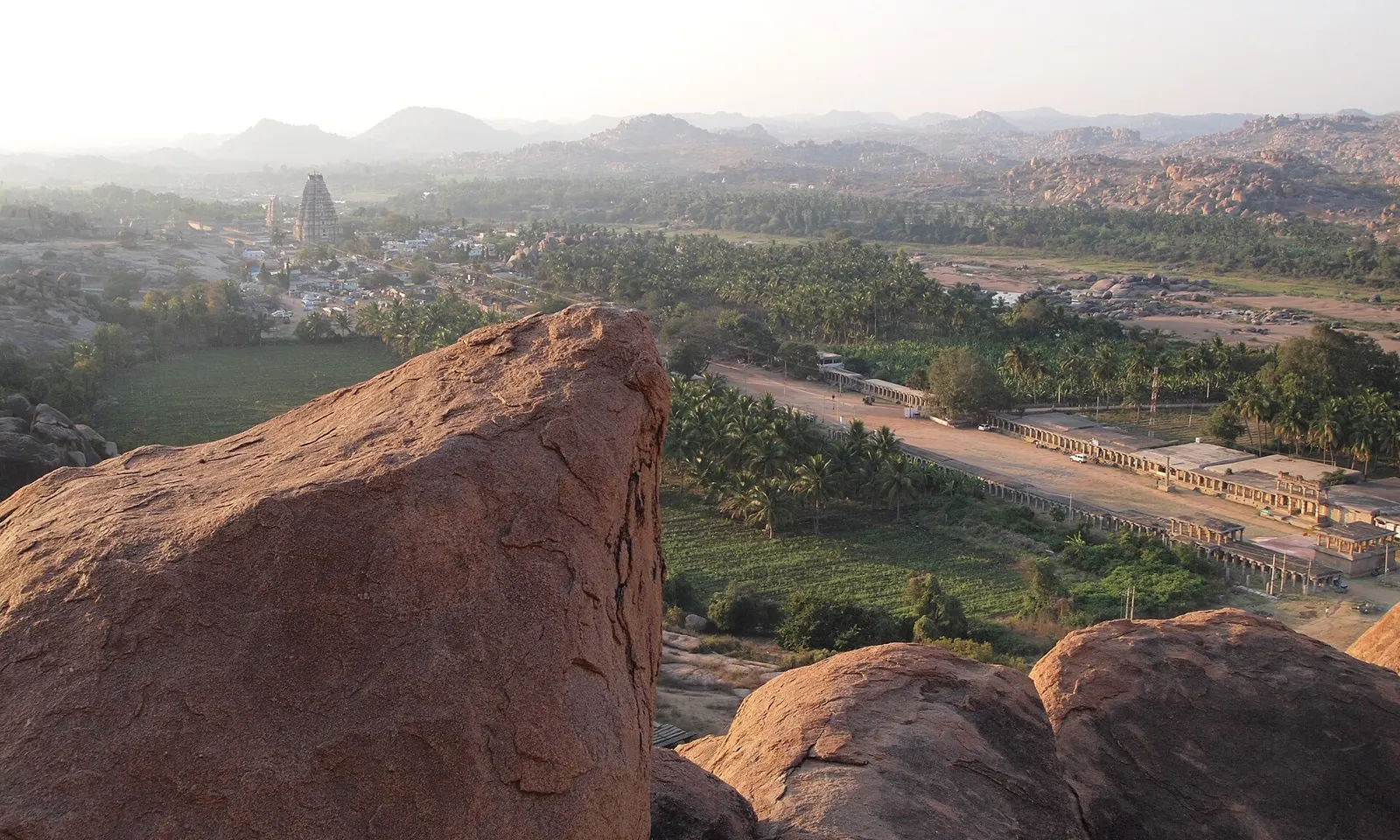
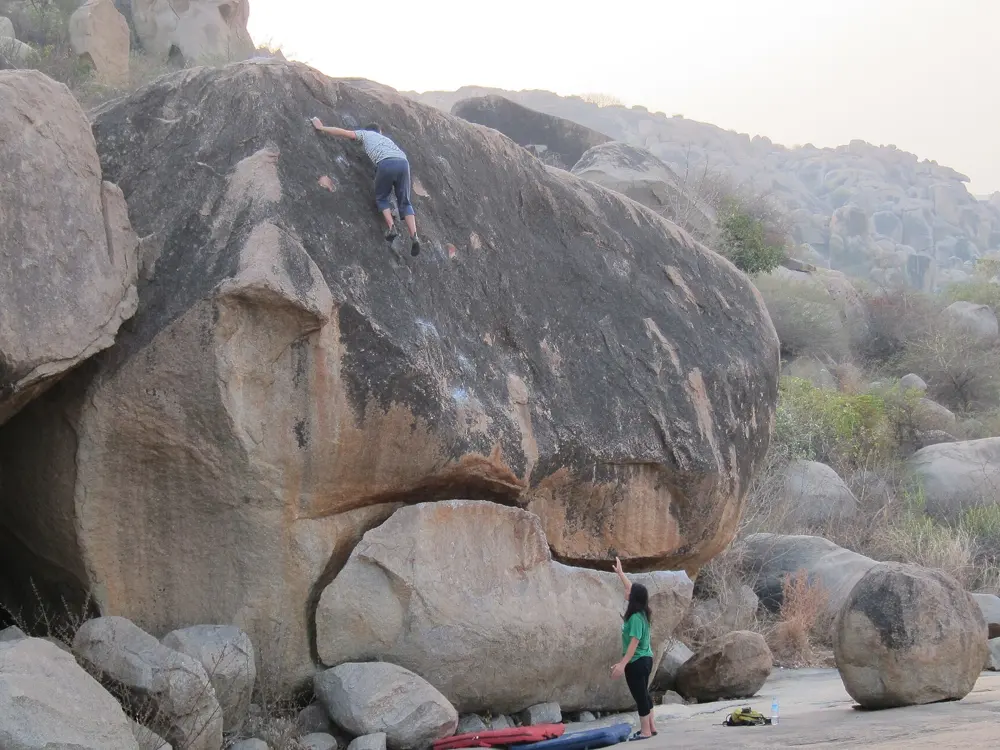
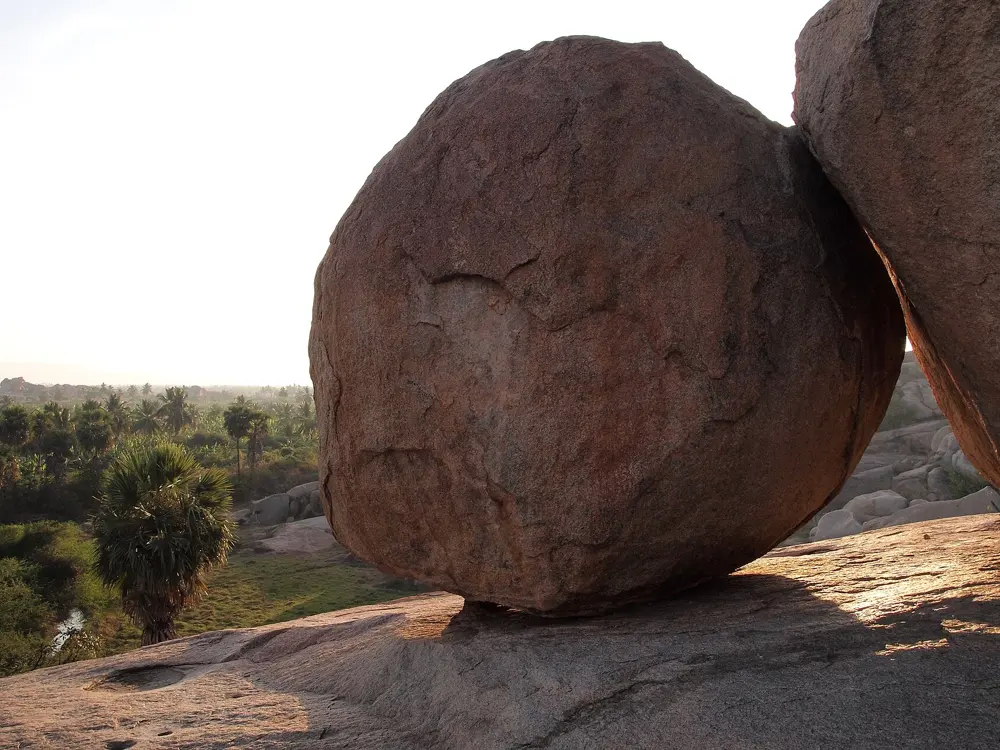
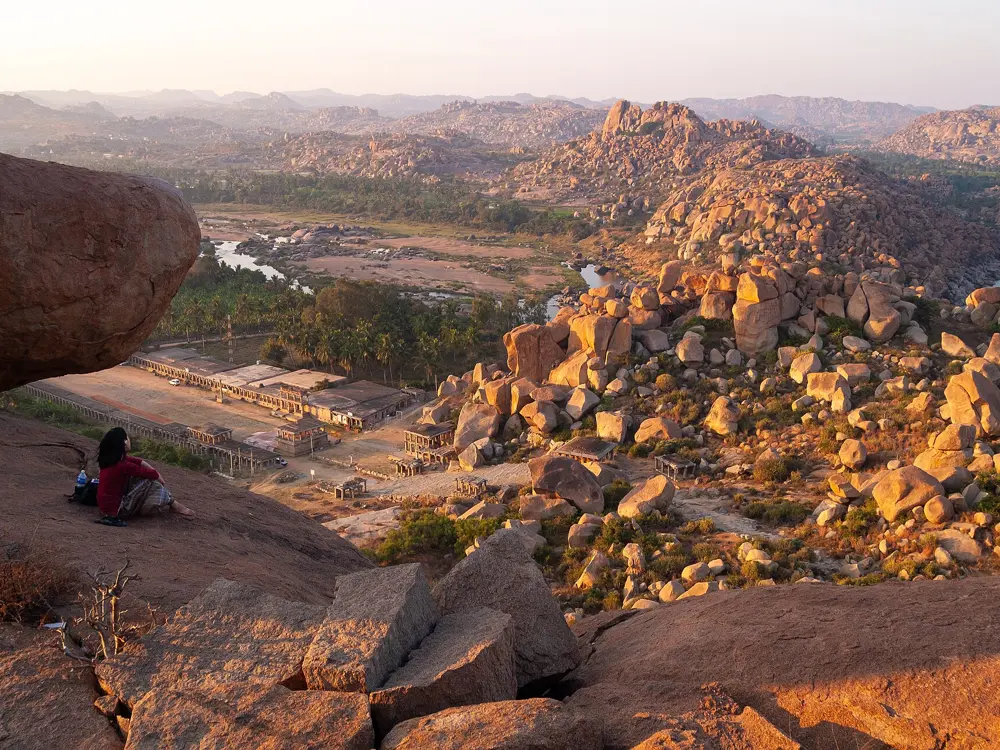
Granite boulders on Matanga Hill above Hampi, with the Virupaksha temple tower and the old bazaar below

Photos: Vyacheslav Argenberg (CC BY 4.0), ryguywy (CC BY 2.0), Vyacheslav Argenberg (CC BY 4.0), Vyacheslav Argenberg (CC BY 4.0)

Rock
Granite boulders
Style
Bouldering, a few bolted mixed lines
Grades
Font 3b to 7c at the main areas, harder projects
Best season
October to March

Why go

Hampi was the capital of the Vijayanagara empire and has been a UNESCO World Heritage Site since 1986. Its temples stand among piled granite boulders on the Tungabhadra river, and the Golden Boulders guidebook lists more than 1,000 problems, many with the ruins in view.

The route

Most climbers cross to the north bank. On the Island plateau above Virupapur Gaddi, Lands End has 50 to 100 problems from Font 3c to 7c, and Hot Slapper has 25 to 50 from 3b to 7b. Island Dream, Font 7a+, is at Eagle Rock, and Jambavan (V10) is a hard test piece. The Rishimukh spires carry a few bolted mixed lines from 5.7 to 5.11 on the American scale. Near Sanapur, the Setuwe plateau gym has 25 to 50 problems from 3b to 7a, a 10 to 15 minute walk in, and Baba Café at Hanumanahalli runs from 4c to 7c over flat landings.

When to go

The season runs from about October to March, and peak season from mid October to late January. November and December are the best months. Prices rise sharply over Christmas and New Year. From February to June the heat can pass 40°C, and the monsoon leaves the rock wet and the river crossing harder.

Getting there

Hosapete Junction (HPT), 13 km from Hampi, has trains from Bengaluru, which is about 340 km or 6 to 7 hours by road. Jindal Vijaynagar Airport is about 40 km away. An auto rickshaw from Hosapete takes about 20 minutes. Hire a scooter or bicycle to move between boulder fields.

Permits and booking

No permit is needed to boulder. Under Archaeological Survey of India and Hampi World Heritage Area Management Authority rules, climbing on any monument is banned and punishable. The Hemakuta Hill boulders by the temples have been off limits since 2017. The Island and the north bank have no known access issues; ask local climbers before climbing south of the river. Virupapura Gaddi has been a protected area since 1988, and in February 2020 the Supreme Court upheld the demolition of its guesthouses and restaurants.

How hard it is

Problems run from easy slabs to V10, on rough granite that strips fingertip skin within a couple of days. Climb early and late, rest at midday, and follow the shade: west faces in the morning, east faces in the afternoon.

Where to sleep

With no guesthouses or cafes left on the Island, climbers stay in Sanapur or Hanumanahalli on the north bank. Karnataka made homestay registration mandatory and notified new guidelines in April 2026, so choose a registered place.

Tips

  • Pads, shoes and other gear can be hired from Thimmaclimb in Sanapur and Golden Boulders in Hanumanahalli.
  • Little food is served before 6:30 or 7 am, so buy breakfast the night before an early session.

Sources

Distances, heights, seasons and permit rules were checked against these pages. Rules change, so check the park or trail authority before you go.