Rungs Labs

Rungs Pilgrimage · Climbing · Russia

The 10 Best Places for Rock Climbing in Russia

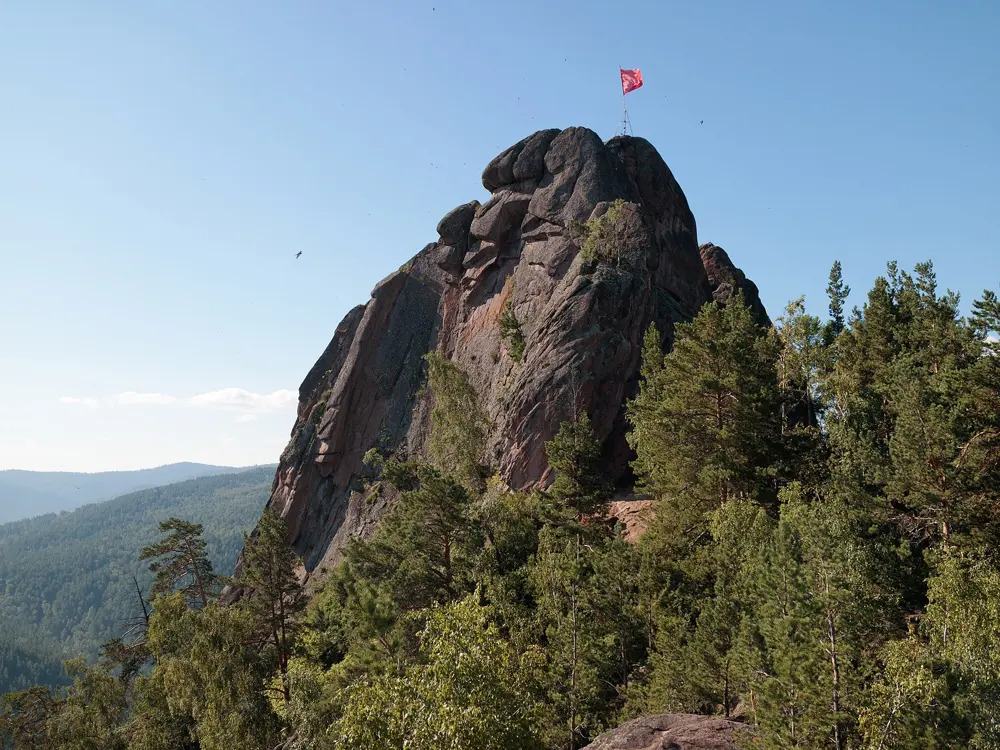
The Krasnoyarsk Stolby, Krasnoyarsk, Krasnoyarsk Krai. Photo: Vyacheslav Argenberg (CC BY 4.0)

Russia's rock runs from the syenite pillars of the Krasnoyarsk Stolby and the granite walls of Ergaki in Siberia to the Caucasus, where Dzhan-Tugan has granite boulders under Elbrus, Dombay has long alpine routes, and Guam Gorge and Kislovodsk have bolted limestone and sandstone cliffs. Near St Petersburg there is granite around the lakes of the Karelian Isthmus and on the shore of Lake Ladoga, and in central Russia there are short limestone crags at Vorgol and in the Dyukinsky quarries.

Getting there is harder than it was. The UK advises against all travel to Russia and warns that drone attacks can close airports at short notice, and the Russian e-visa list of 64 countries leaves out the UK, the US, Canada and Australia. Several of these areas sit in national parks or border zones with their own rules, and the Stolby are closed to everyone until at least 10 November 2026 because of bears. For each place you get the rock, the classic climbs and grades, the best season, how to get there, the access rules, how hard it is and where climbers stay. Every fact comes from park directorates, news reports, the American Alpine Journal, climbing sites and the other pages linked at the bottom.

Updated 2026-10-19

  1. 01The Krasnoyarsk StolbyKrasnoyarsk, Krasnoyarsk Krai
  2. 02Dzhan-Tugan and the Adyl-Su valleyElbrus region, Kabardino-Balkaria
  3. 03Guam GorgeApsheronsky district, Krasnodar Krai
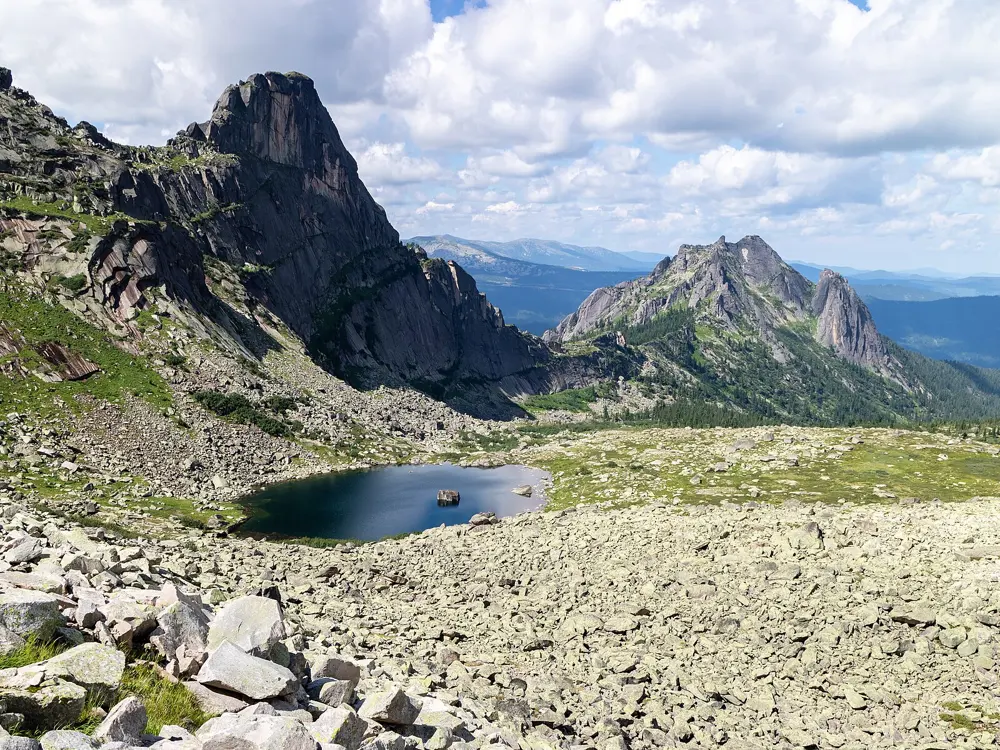
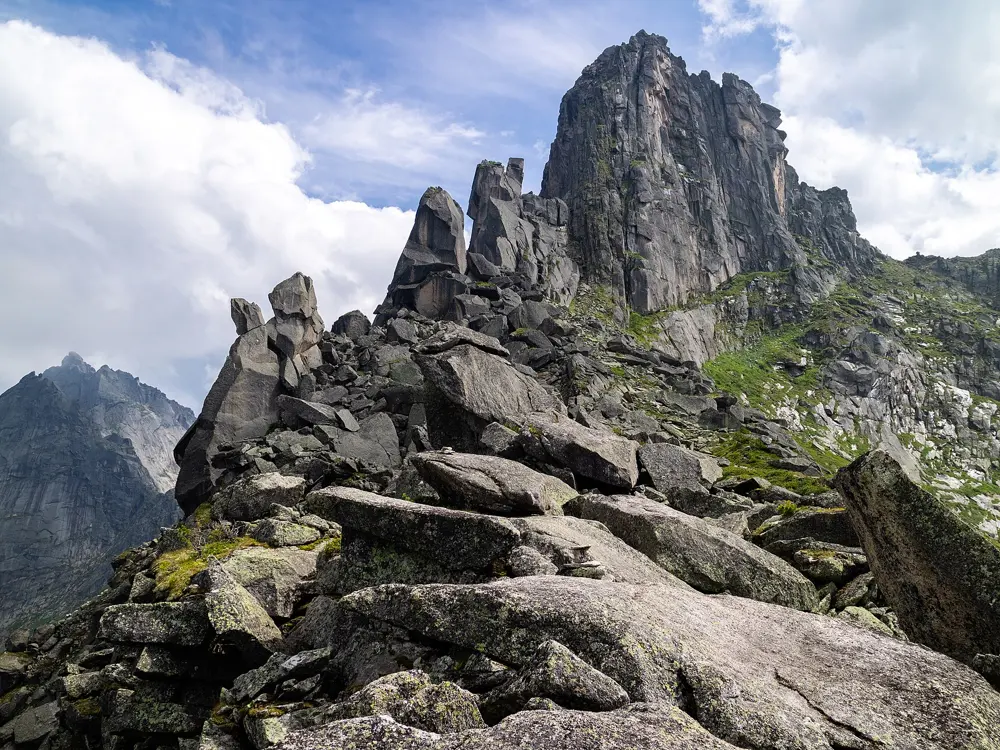
  4. 04ErgakiWestern Sayan, Krasnoyarsk Krai
  5. 05Kuznechnoye and Lake YastrebinoyePriozersky district, Leningrad Oblast
  6. 06Zmeinaya Gora on Lake LadogaLakhdenpokhya, Karelia
  7. 07Berezovsky GorgeKislovodsk, Stavropol Krai
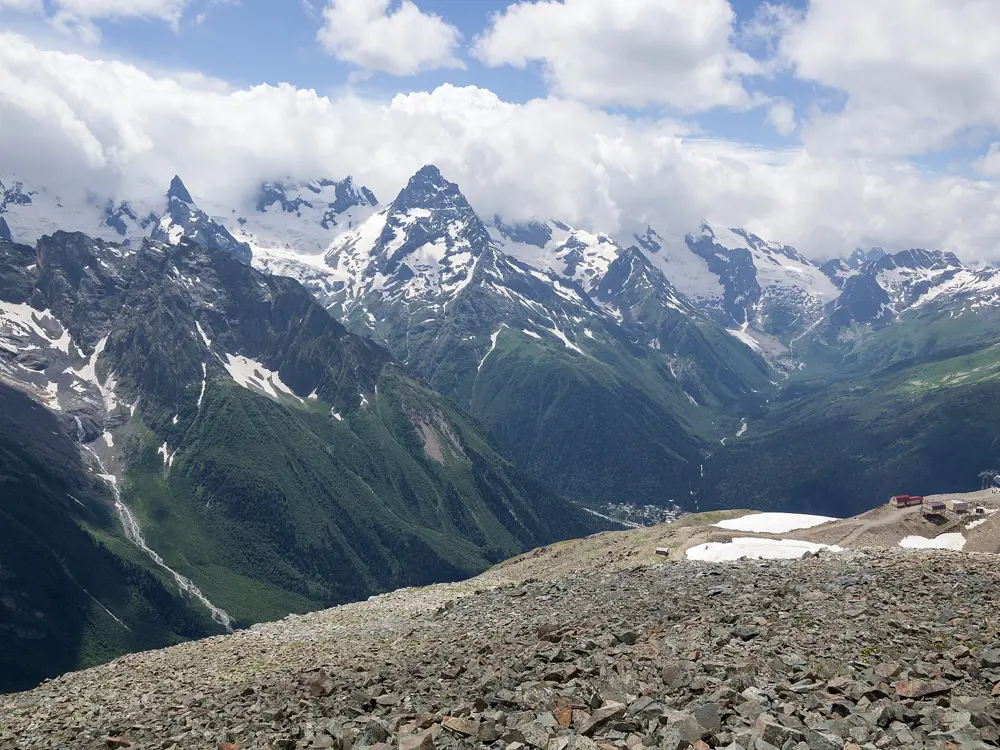
  8. 08DombayTeberda National Park, Karachay-Cherkessia
  9. 09The Vorgol RocksYelets district, Lipetsk Oblast
  10. 10The Dyukinsky QuarriesVladimir Oblast
01 / 10

The Krasnoyarsk Stolby

Krasnoyarsk, Krasnoyarsk Krai
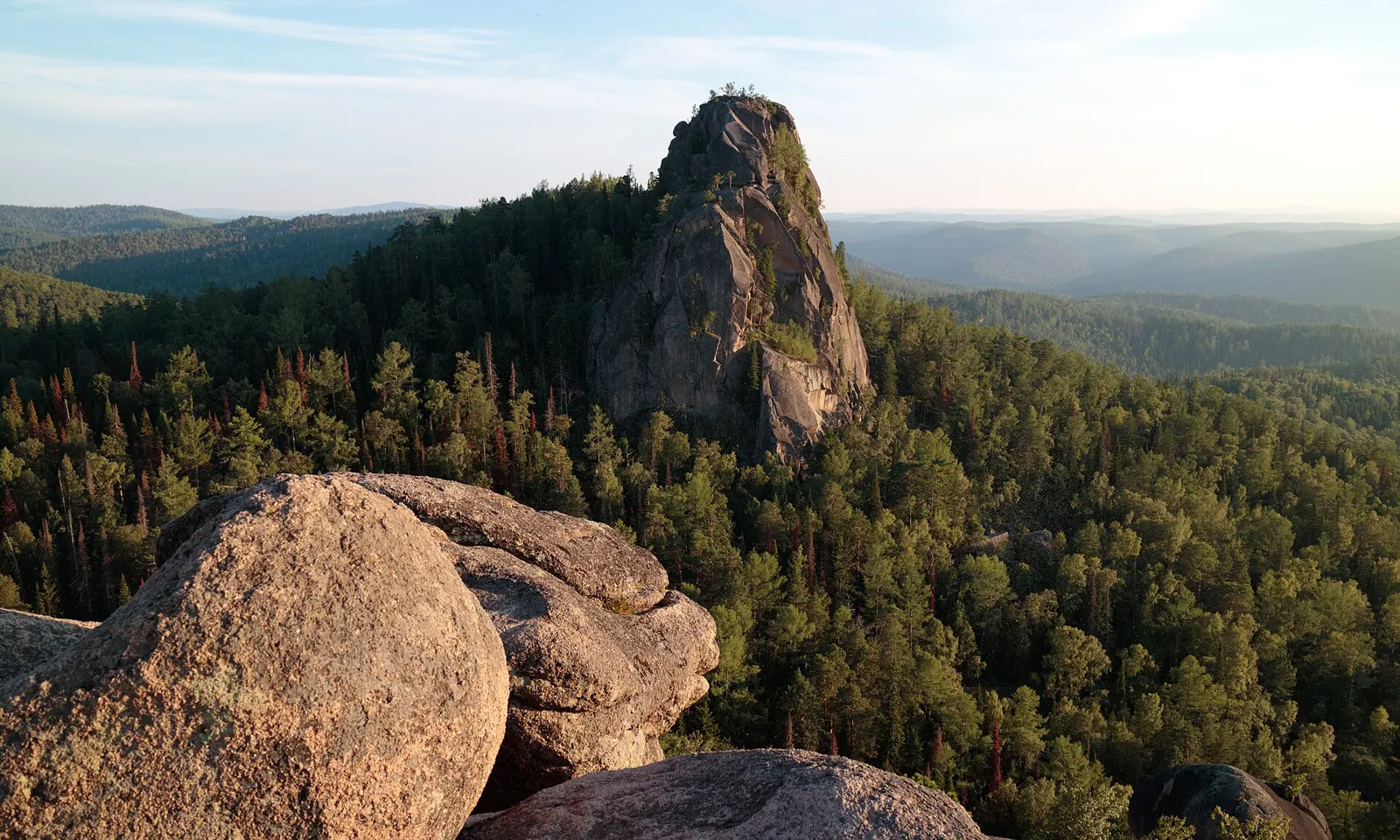
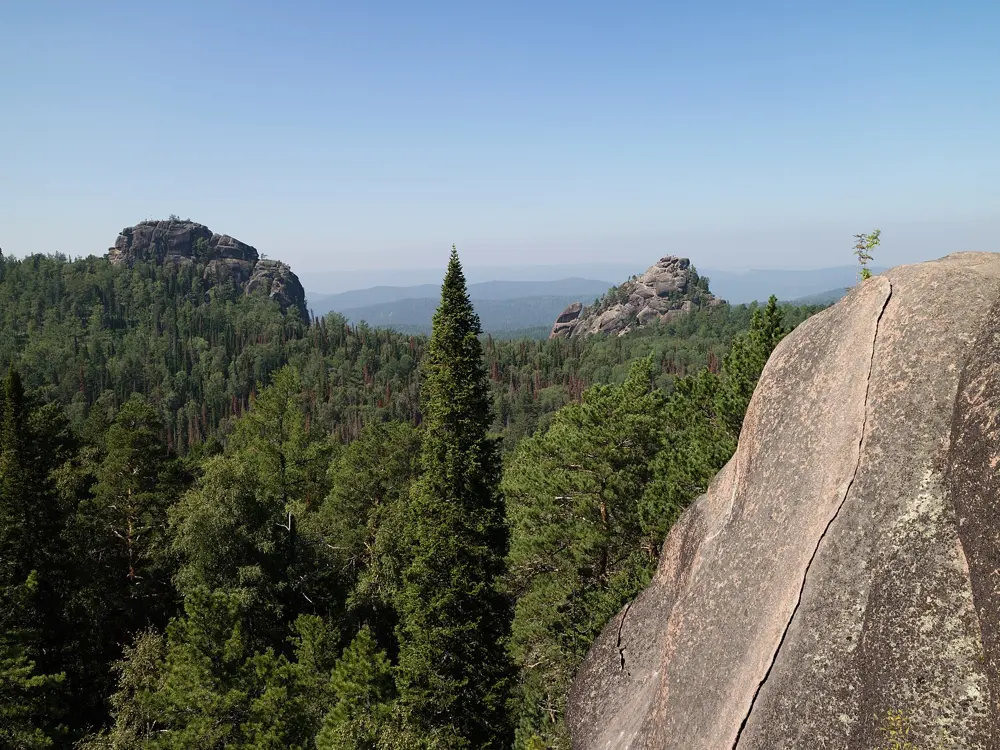
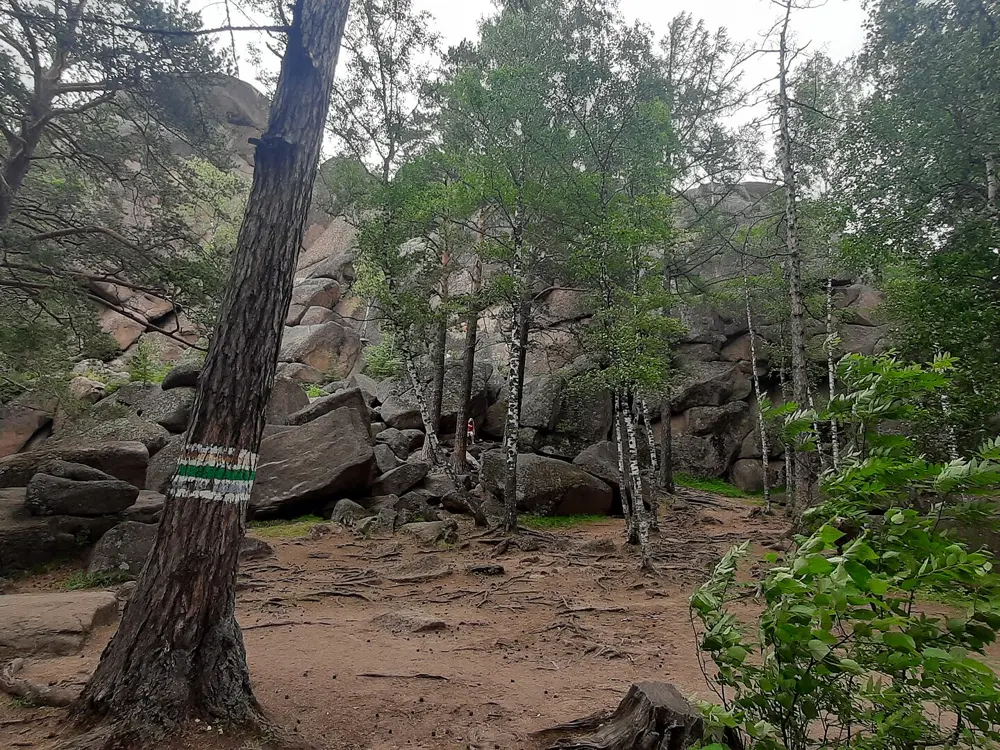
A syenite pillar of the Krasnoyarsk Stolby rising above the taiga, with boulders in the foreground

Photos: Vyacheslav Argenberg (CC BY 4.0), Vyacheslav Argenberg (CC BY 4.0), Vyacheslav Argenberg (CC BY 4.0), MBH (CC BY 4.0)

Rock
Syenite pillars
Style
Bouldering, roped routes and a soloing tradition
Routes
About 200, 5a to 8b+
Season
May to September

Why go

The Stolby are where Russian rock climbing began. Syenite pillars stand out of the taiga on the edge of Krasnoyarsk, and people from the city have come here to climb and walk for more than 150 years. The local tradition, called stolbism, is to climb the pillars without a rope, but roped climbing and bouldering are just as much a part of the place today. The park, first protected in 1925 and a national park since 2019, covers 47,219 hectares, and it records hundreds of thousands of visitors a year.

The route

Most climbing is in the Central Pillars, about 5 km from the park boundary, where Pillars I to IV, the Feathers, Grandfather and the Lion's Gate stand close together. The most popular ways to the tops of the Central Pillars are the Blue Coils (Golubye Katushki) and the Stovepipe (Dymokhod), and the route to the top of the Second Pillar is known as a hard one. Takmak is reached from the eastern entrance. A climbing guide counts about 200 routes for lead climbing and bouldering, graded 5a to 8b+.

When to go

The climbing season is May to September. Check the park's website before you travel: in October 2026 the park was closed to all visitors, at first until 15 October and then extended to 10 November, because bears keep appearing in the recreation zone, in dacha plots and around tourist sites.

Getting there

City buses run from Krasnoyarsk to the park boundary; bus 50 serves the central entrance, from where it is a long walk up. The approved Laletinsky route from the central entrance is 9.6 km, and the 6 km Legends of Takmak route starts at the eastern entrance.

Permits and booking

Since 1 December 2025 the park allows visits only on three approved tourist routes and four eco-trails, and its website lists routes that include climbs onto rocks among those closed. Wild Stolby, in the special protection zone, needs a permit from the park. In January 2026 Novaya Gazeta reported fines of 3,000 to 4,000 roubles for breaking the park's rules and said climbing was to be limited to members of climbing federations in training. In February 2026 the park's director said climbing the rocks was still allowed and that nobody planned to fine people for leaving the routes, while organised groups must keep to the approved trails.

How hard it is

Grades run from 5a to 8b+. The traditional unroped ascents are serious, and visitors are better off climbing with a rope or with a local who knows the lines.

Where to sleep

Stay in Krasnoyarsk and go out for the day. The park does not list places to sleep inside it.

Tips

  • Rules here changed in December 2025 and again in the 2026 bear season, so read the park's news page the week you go.
  • Bring a rope even if you see locals soloing; the polished classic lines are not the place to learn.
02 / 10

Dzhan-Tugan and the Adyl-Su valley

Elbrus region, Kabardino-Balkaria

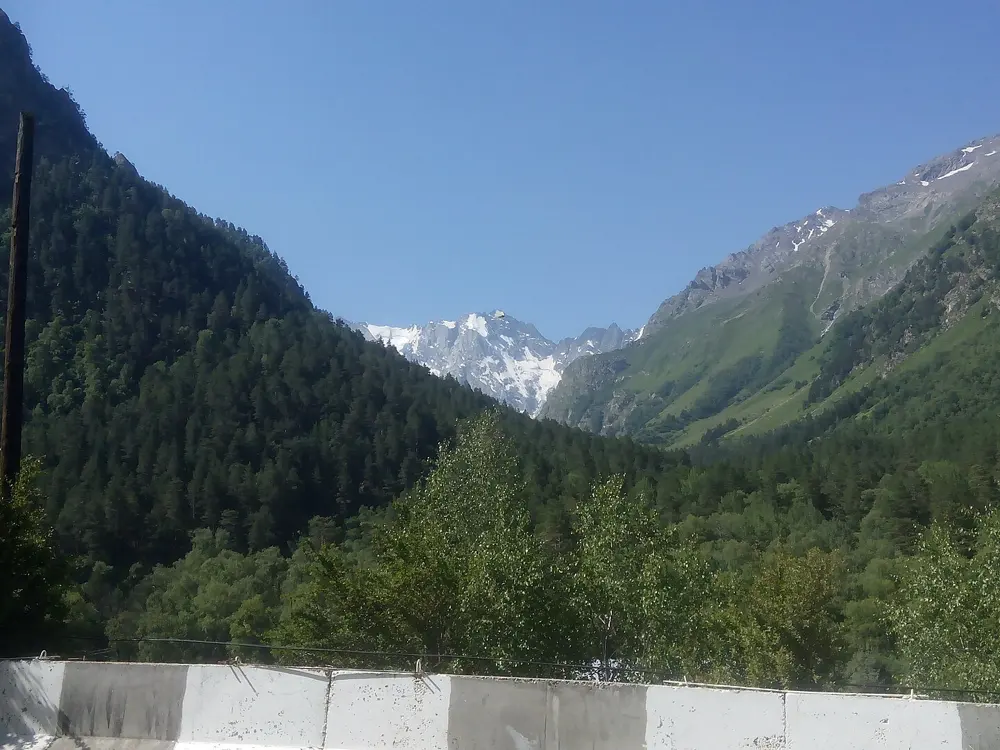
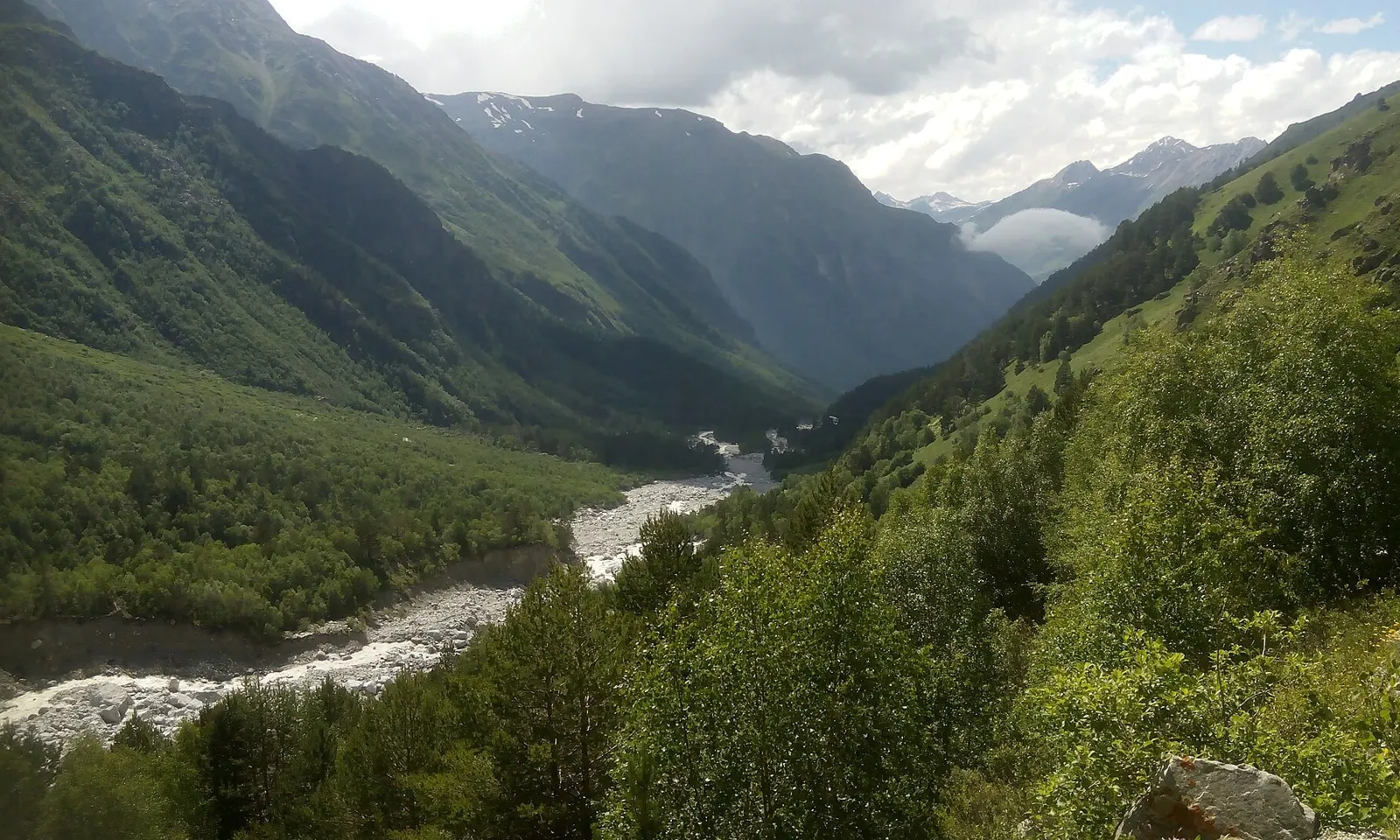
The forested Adyl-Su valley with the river below the peaks of the Caucasus

Photos: Barbariandeagle (CC0), Barbariandeagle (CC0), Temukuev (CC BY-SA 4.0), Александр Байдуков (CC BY-SA 4.0)

Rock
Granite
Style
Mostly bouldering, some sport walls
Problems
Over 450, 5a to 8c
Season
April to November

Why go

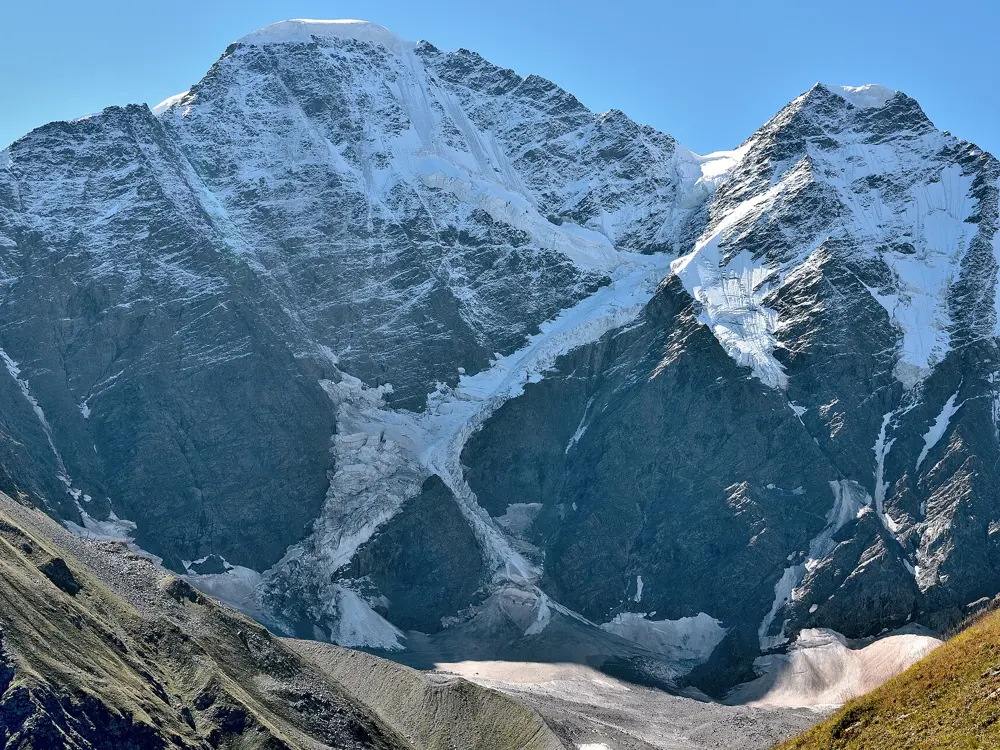
Dzhan-Tugan is one of the best bouldering areas in Russia. Granite blocks lie along the Adyl-Su, a 12 km river that runs off the Dzhankuat glacier into the Baksan valley below Elbrus, and the climbing starts at about 2,200 m. The former world bouldering champion Alexey Rubtsov called it a world-class area in 2020, after putting up about 30 problems up to 8B+, and guessed that only 5 to 10 per cent of it had been explored. Vadim Timonov's Low Priora (8C) here has been called the hardest boulder in Russia, and he said a mudslide in 2017 cleared many of the blocks.

The route

The boulders spread along the valley floor, with the river sector giving a view of Elbrus on a clear day, and some walls are bolted for sport climbing. A climbing guide now counts more than 450 problems from 5a to 8c, and an annual festival, Bouldermania, is held here. The valley is also an old centre of Russian mountaineering: Adyl-Su, Shkhelda, Elbrus and Dzhan-Tugan are all alpine camps in this gorge, and the peaks above, such as Bashkara, have long rock routes.

When to go

The season runs from April to November. The valley floor lies between about 2,250 and 2,770 m, so pack for cold mornings at either end of the season.

Getting there

The nearest airport is Nalchik, about 120 km away. Drive up the Baksan valley towards Elbrus and turn into the Adyl-Su gorge; a dirt road continues above the tarmac to the Dzhan-Tugan camp.

Permits and booking

The UK advises against all travel to Russia and says its help is especially limited in the North Caucasus, and the Russian e-visa is not open to UK, US, Canadian or Australian citizens. The Georgian border runs along the main Caucasus ridge at the head of the valley, so carry your passport.

How hard it is

There are problems for every level, from 5a up to 8c. The landings are uneven and rocky, so bring a crash pad and a spotter.

Where to sleep

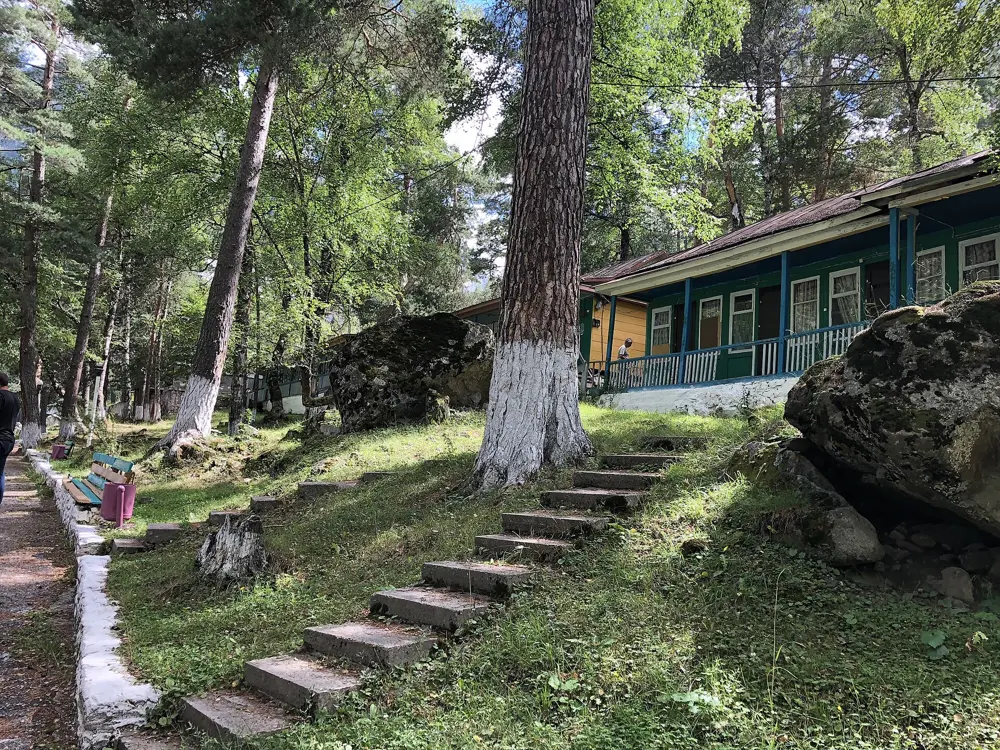
There are campsites next to the boulders, and hotels about 10 to 15 km lower down, in a valley that grew up as a ski resort, with cafés and shops.

Tips

  • Bring more than one pad; the landings are uneven and rocky.
  • Check the snow line before an early or late season trip; the valley sits above 2,200 m.
03 / 10

Guam Gorge

Apsheronsky district, Krasnodar Krai

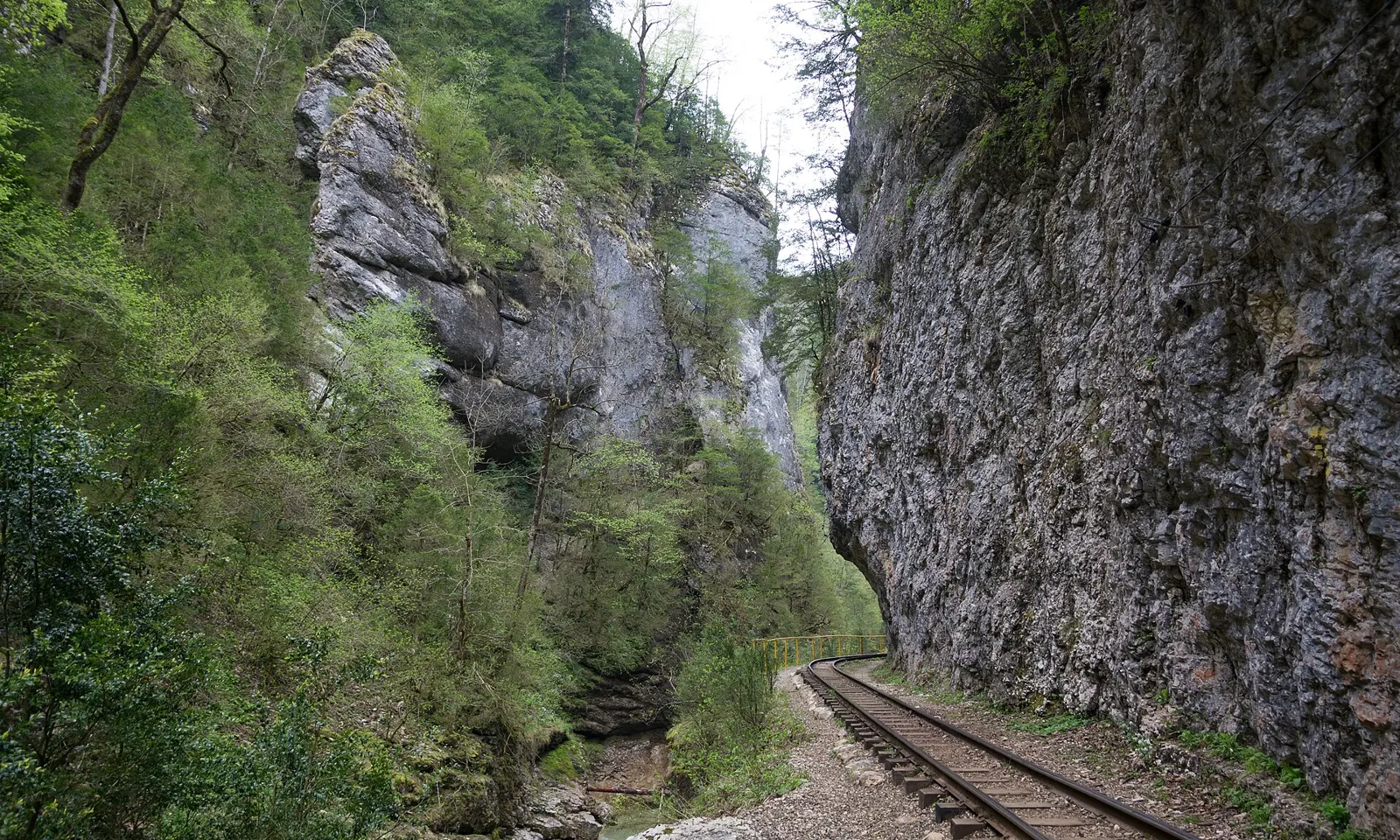
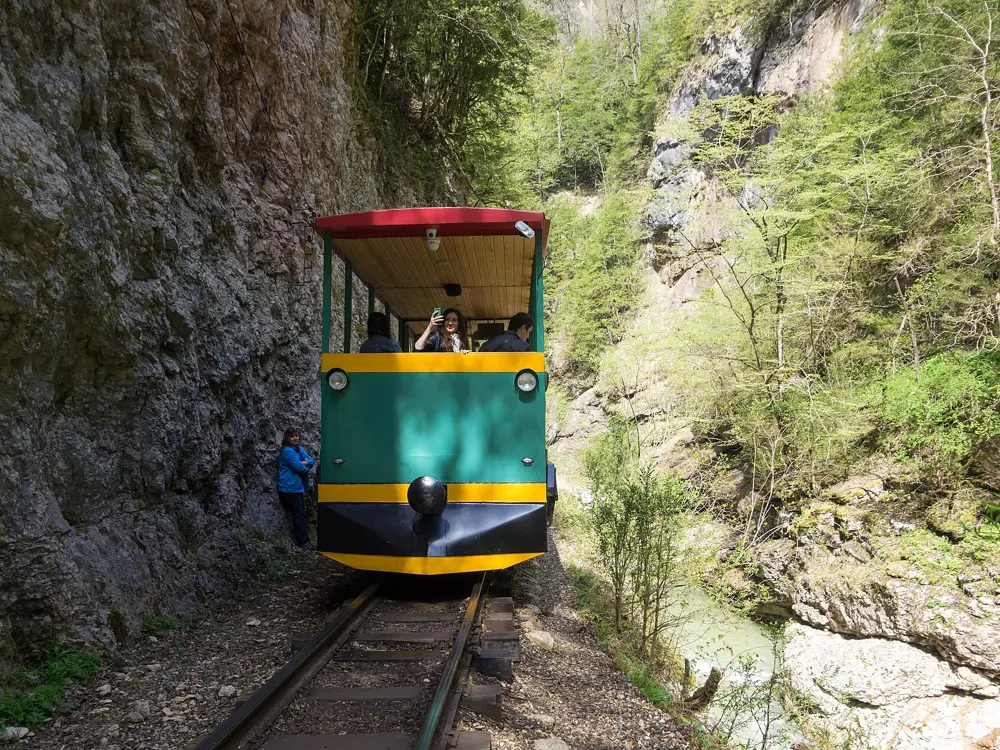
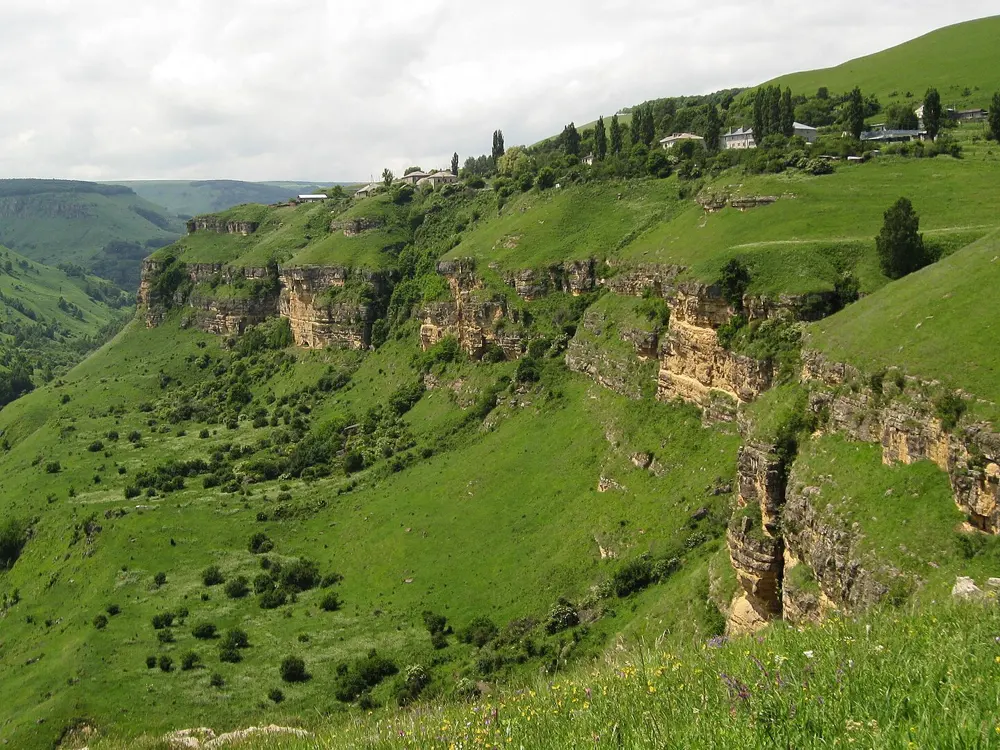
Limestone walls of Guam Gorge with the narrow gauge railway running along their foot

Photos: Vyacheslav Argenberg (CC BY 4.0), Vyacheslav Argenberg (CC BY 4.0), Vyacheslav Argenberg (CC BY 4.0), Alexey Komarov (CC BY 3.0)

Rock
Limestone
Style
Sport
Routes
290, 5a to 9a+
Height
Routes up to 35 m

Why go

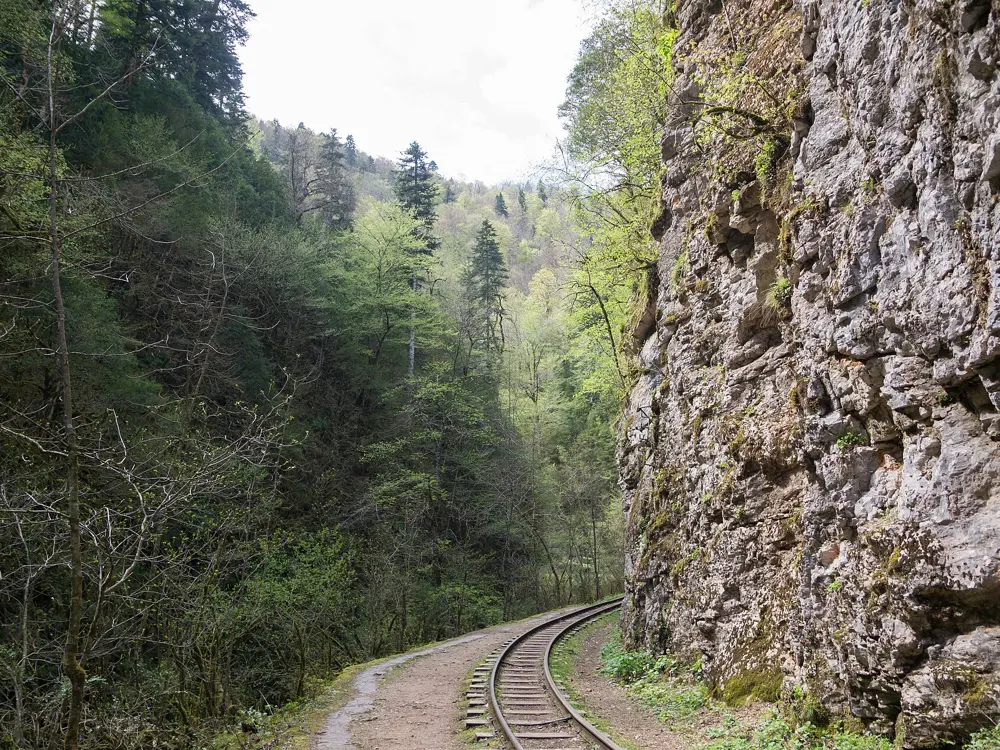
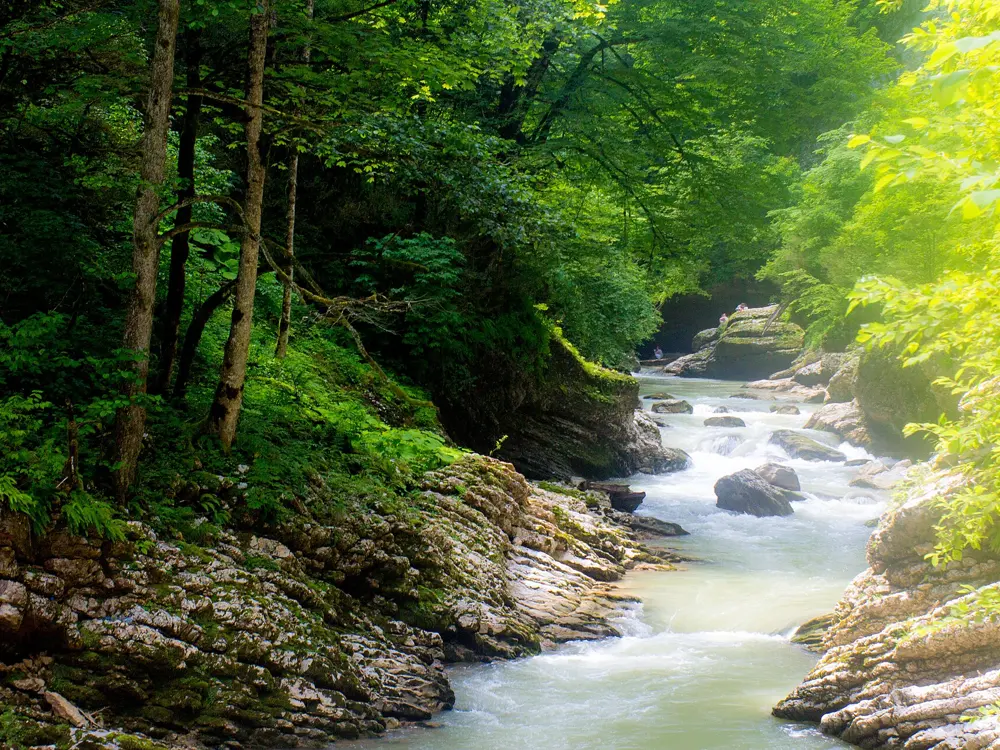
Guam Gorge is the sport climbing centre of southern Russia. The Kurdzhips river has cut a narrow canyon between the Guama and Lago-Naki ridges, with limestone walls rising up to 400 m above the water and closing in to about 2 m wide in places. A narrow gauge railway, laid to carry timber, still runs along the bottom. The Climbing Federation of Russia held an international festival here in 2009 with 117 routes in nine sectors, and the count has more than doubled since: a climbing guide now lists 290 routes, and the Guamka festival is held every year.

The route

The routes are bolted and up to 35 m long, from 5a for beginners to 9a+. The gorge is about 3 km of cliffs along the river, and the main path follows the railway for about 3 km one way. A rock training ground called Vertikal has routes for beginners and experienced climbers, and gear can be rented in the gorge.

When to go

A climbing guide gives the season as July to September. A tourism guide says summer is hot, crowded and expensive and that September to November brings mild days and fewer people; in winter the railway stops and some paths close.

Getting there

Guamka village is 9 km from Apsheronsk, 65 km from Maykop and 175 km from Krasnodar. Take a bus from Krasnodar to Apsheronsk, about 3 hours, then the local bus to Guamka, about 40 minutes; buses to Guamka run two or three times a day. By car there is paid parking at the gorge entrance.

Permits and booking

No climbing permit is needed. A tourism guide gives the entrance to the gorge as about 100 to 150 roubles, and the railway, which runs from May to October, as about 500 to 700 roubles return; check current prices on arrival.

How hard it is

There are routes from 5a to 9a+, and the beginner area makes it a good place to learn.
Where to sleep

Guamka has hotels, including the Hotel Guamka with thermal pools, guest houses and campsites; Mezmay, at the top of the gorge, has cheaper guest houses. At the 2009 festival climbers camped on the bank of the Kurdzhips.

Tips

  • The railway does not run in winter, so plan on walking the 3 km path then.
  • The Vodoley thermal springs, open all year at 37 to 40°C, are a good rest day.
04 / 10

Ergaki

Western Sayan, Krasnoyarsk Krai

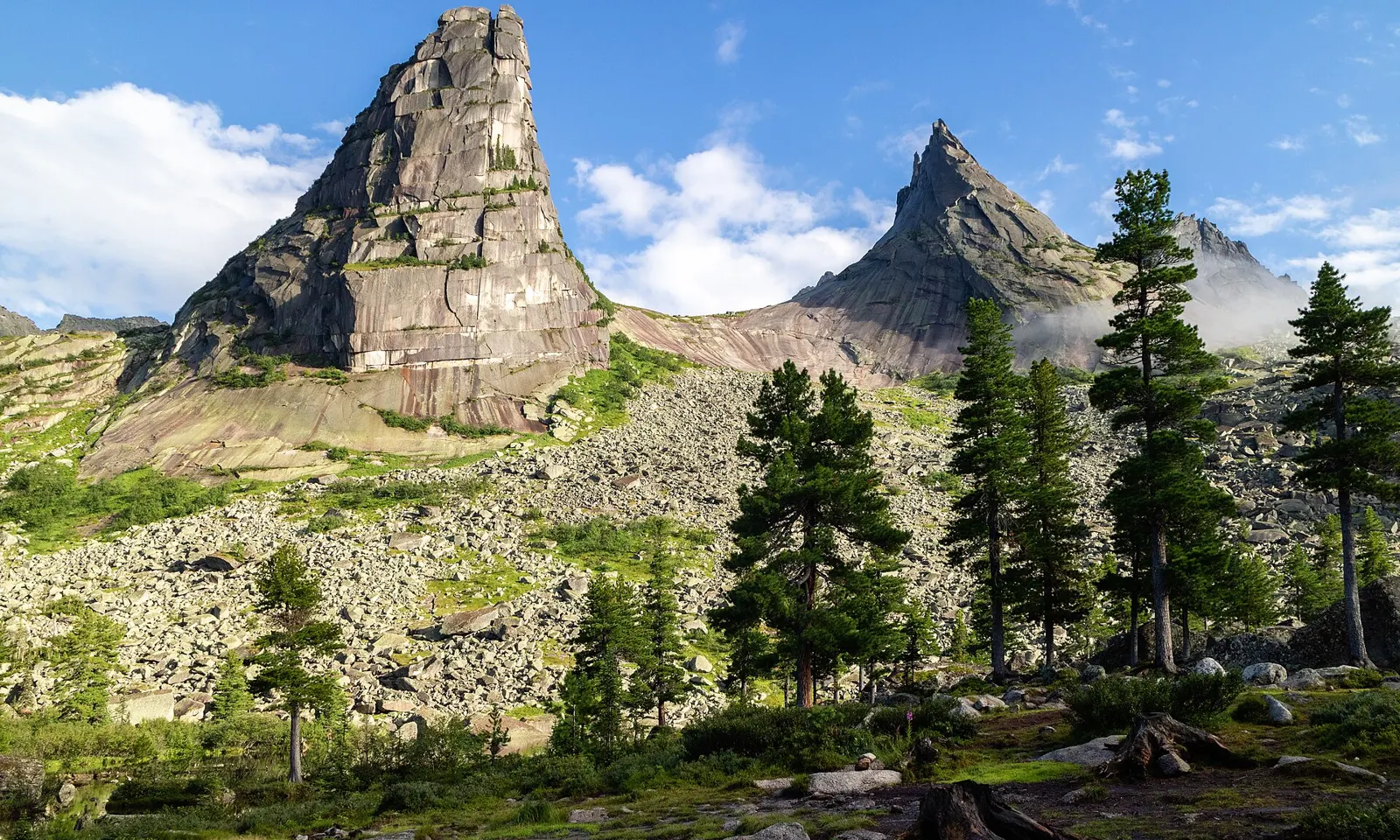
The Parabola granite formation in Ergaki above Siberian cedars

Photos: Vyacheslav Argenberg (CC BY 4.0), Vyacheslav Argenberg (CC BY 4.0), Vyacheslav Argenberg (CC BY 4.0), Vyacheslav Argenberg (CC BY 4.0)

Rock
Granite
Style
Big walls and alpine rock
Classic wall
Zvezdny northeast face, 570 m
Season
July and August

Why go

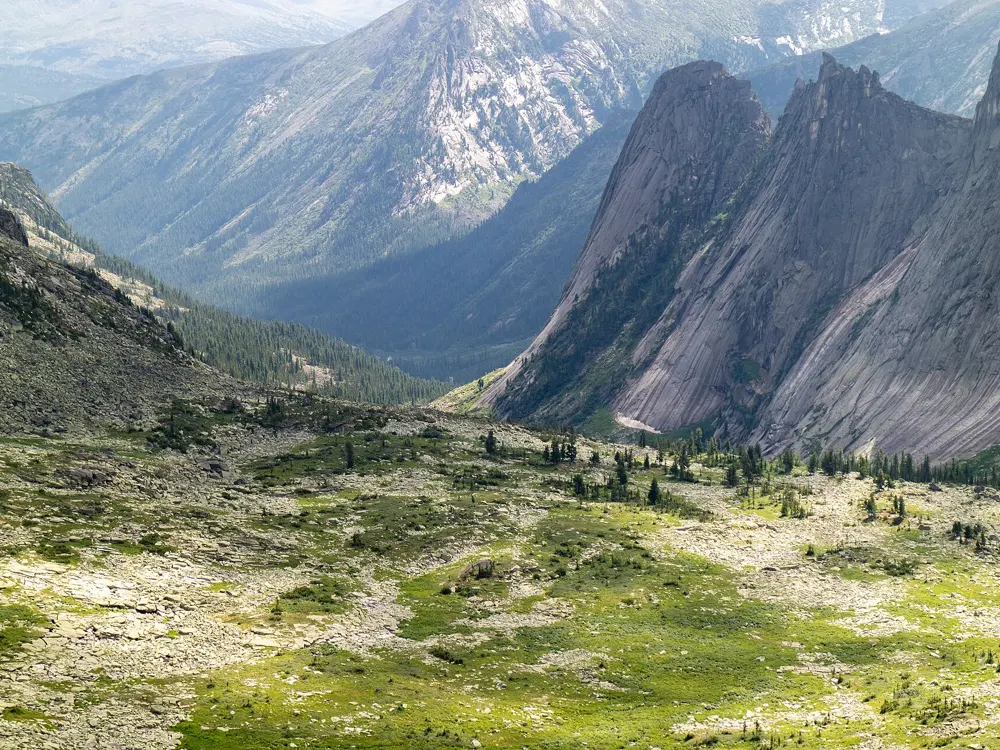
Ergaki is a range of granite spires and walls in the Western Sayan, in the far south of Krasnoyarsk Krai, inside a nature park of more than 342,000 hectares. Where the Stolby are short, Ergaki is big: its walls take routes of 20 to 30 pitches, the park rises to about 2,500 m, and the views take in hanging valleys, lakes and the rock shapes the park is known for, such as the Parabola and the Sleeping Sayan.

The route

The great wall is the northeast face of Zvezdny, 2,265 m, which carries at least six routes graded from 5B to 6A on the Russian scale, among them Balezin (1997, 5B), Hvostenko (2001, 6A), long called the hardest route in Ergaki, and Temerev (2013, 6A). Kosinusoyda (5B, 2015) is 570 m and 29 pitches, with free climbing up to about F5a/b and aid to A3+. Ptitsa has routes up to grade 5, Zub Drakona, the Dragon's Tooth, about 2,021 m, is another big granite objective, and there are easier summits for alpine climbers starting out, such as the 3B route on Zvezdny.

When to go

July and August are the main season. Early September is quieter, and in April, May, October and November some routes in the park may be closed. Local teams climb the big faces in winter too, in deep snow and at temperatures down to -25°C.

Getting there

The park lies along the R-257 Yenisei highway (M-54) between Krasnoyarsk and Kyzyl. Krasnoyarsk is about 600 km away, 7 to 8 hours by road, and Abakan about 200 km, 2.5 to 3 hours. Buses run to Ermakovskoye or Tanzybey, and in high season tourist buses go to the visitor centre at kilometre 614.

Permits and booking

Entry to the park is free, but you must register at the visitor centre. The park warns about bears and publishes advice on meeting them.

How hard it is

This is serious alpine climbing. The big routes take several days, need aid gear and bivouac kit, and the approach takes a day or two with heavy packs. Weather changes quickly and rain can stop a trip for days.

Where to sleep

The Ergaki base is the best known in the park; the Zvezdny base and Volny Gorod have cabins, and there are tent camps along the routes. For the walls themselves, climbers carry tents and bivouac on ledges.

Tips

  • Register at the visitor centre on the way in; it is also where you hear about bears.
  • Bring bivouac gear for the big faces; teams spend several nights on the wall.
05 / 10

Kuznechnoye and Lake Yastrebinoye

Priozersky district, Leningrad Oblast

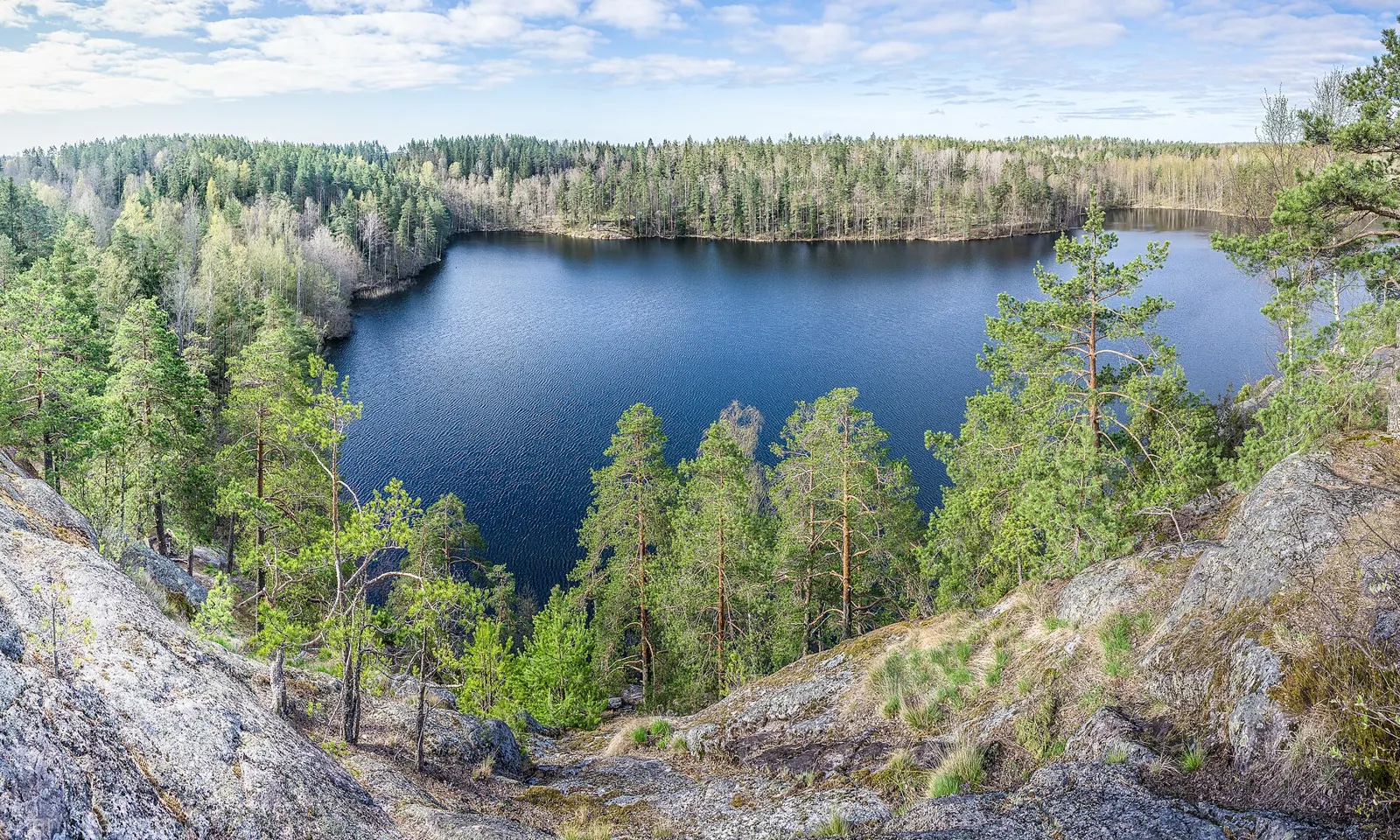
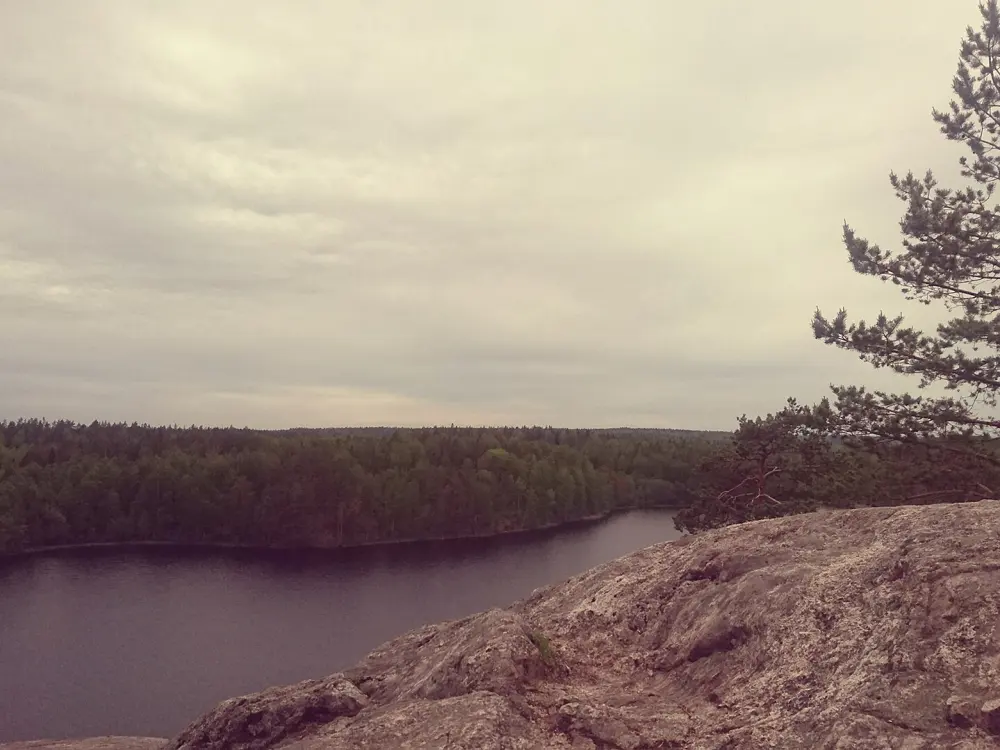
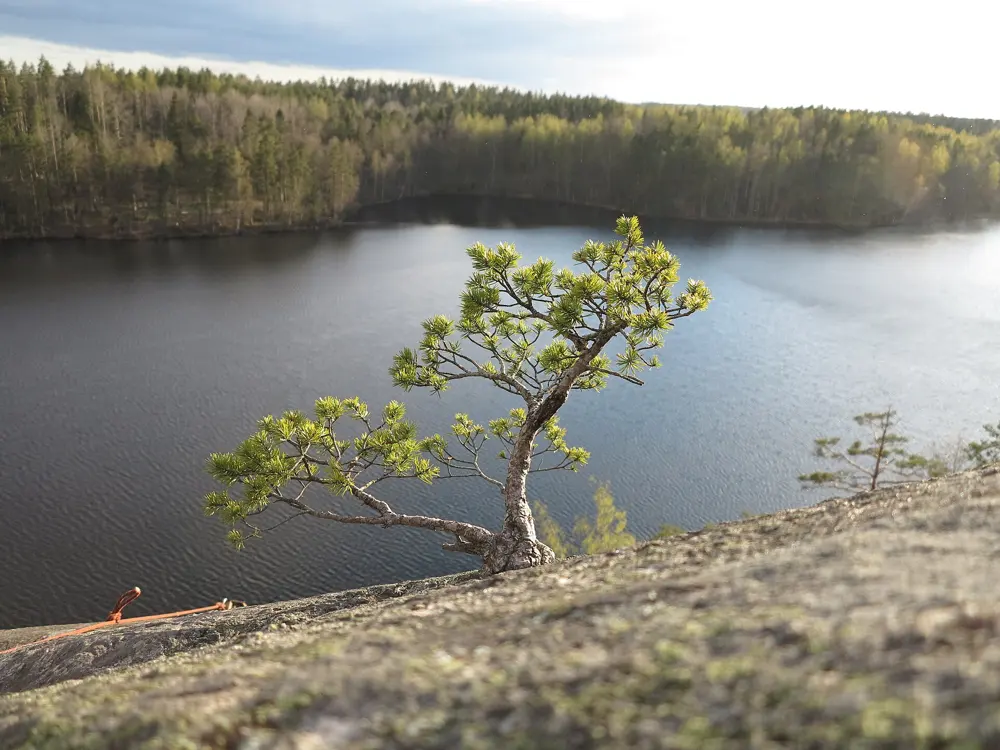
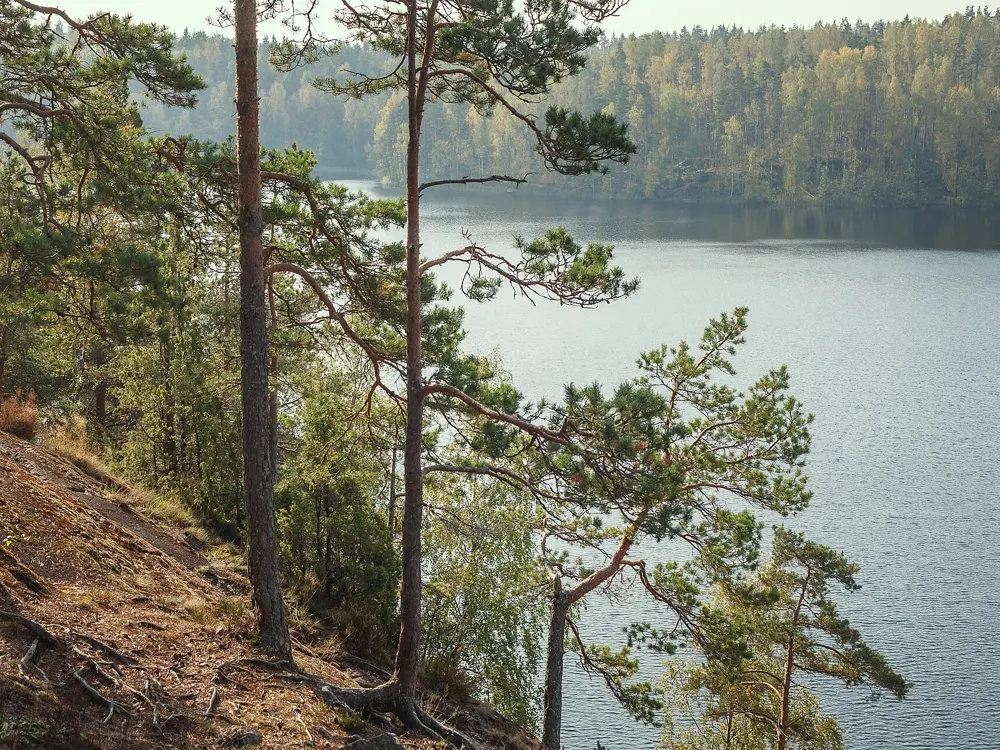
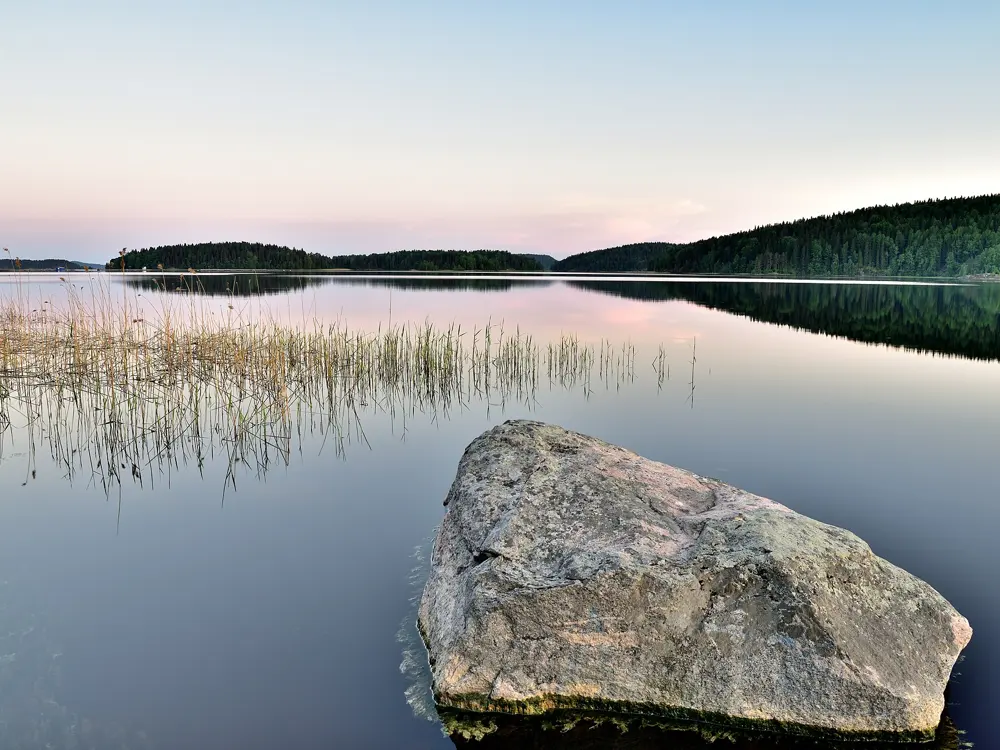
Lake Yastrebinoye seen from the rocks among the pines near Kuznechnoye

Photos: anjstray (CC BY-SA 4.0), Anton Etmanov (CC BY-SA 4.0), Trueman (CC BY-SA 4.0), Georgy Gerasimov (CC BY-SA 4.0)

Highest crag
Parnas, about 50 m
Nearby
Lake Treugolnoye, 200+ routes
Access
Train to Kuznechnoye, then 3 km on foot
Entry
Free

Why go

The rocks around Lake Yastrebinoye, near Kuznechnoye on the border of Leningrad Oblast and Karelia, are a training ground for St Petersburg climbers. Cliffs rise out of the lakes and pine forest, and the highest of them, Parnas, officially Yastrebinaya Gora, stands about 50 m above the water. The crags host climbing competitions, training camps and a rock festival, and the area is a protected nature site, the Yastrebinoye reserve.

The route

The massifs are spread around several lakes: Parnas over Lake Yastrebinoye, and walls named Spartak, Zmeinye Skaly, Zerkalo, Trudovskaya Stenka and Entsiklopediya, with more around Lakes Svetloye, Loshadinoye and Klyukvennoye. Further west, Lake Treugolnoye is one of the largest rock areas in northwestern Russia, with more than 200 routes up to 30 m from 5a to 8c+ and as many boulder problems, and nearby Lietlahti has about 30 routes and over 500 boulder problems, up to 9b.

When to go

A climbing guide gives May to October as the season for the granite of this region.

Getting there

Take the train from Finlyandsky station in St Petersburg to Kuznechnoye; it is 3 km from the station to the start of the trail, and the Ho Chi Minh Trail runs about 8 km from the quarries to the south end of Lake Yastrebinoye. By car, drive via Kulikovo on the old Sortavala road. For Lake Treugolnoye, allow about 3 hours by car, or take a bus from Vyborg towards Svetogorsk.

Permits and booking

The rocks around Yastrebinoye are free to visit, day and night. Lake Treugolnoye and Lietlahti are in the border zone and you need a pass arranged in advance; Lietlahti is also private land.

How hard it is

There is something for every level. One St Petersburg trainer calls Lake Treugolnoye the best climbing in the northwest and recommends it to beginners; trainers also warn that climbing here without preparation and a coach is risky; the clubs from St Petersburg that run group trips with gear are the safer start.

Where to sleep

Most climbers camp in tents by the lakes. At Lake Treugolnoye there is a guesthouse at the Lietlahti farm, about 1.5 km from the rocks, booked through its Telegram chat.

Tips

  • Apply for the border zone pass well before a trip to Treugolnoye or Lietlahti; it must be arranged in advance.
  • Take the early train; the walk in from Kuznechnoye is 3 km before the climbing starts.
06 / 10

Zmeinaya Gora on Lake Ladoga

Lakhdenpokhya, Karelia

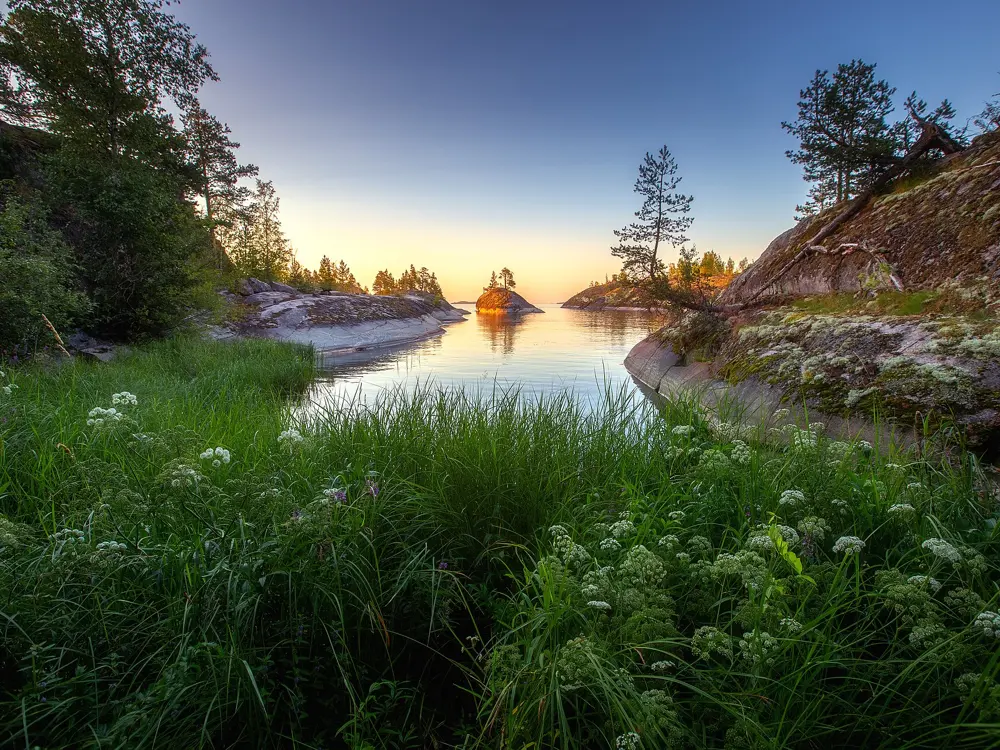
Islands and inlets of the Ladoga Skerries near Lakhdenpokhya

Photos: Александр Байдуков (CC BY-SA 4.0), Александр Байдуков (CC BY-SA 4.0), Yuriy Stolypin (CC BY 4.0), Александр Байдуков (CC BY-SA 4.0)

Rock
Granite
Routes
About 100, plus 50 boulder problems
Grades
5a to 8b
Season
May to October

Why go

Zmeinaya Gora, Snake Hill, is a granite rock park on the shore of Lake Ladoga, about 4 km from Lakhdenpokhya, in the Ladoga Skerries, the maze of rocky islands and inlets along the lake's northern shore. The routes climb granite above the water, and it suits climbers of all levels.

The route

There are about 100 roped routes and more than 50 boulder problems, graded 5a to 8b. Route lengths run from 10 to 50 m, and one climbing guide gives the cliffs as up to 60 m. The hill itself is about 80 m high, and from the top you look out over the skerries.

When to go

The season is May to October.

Getting there

Take the St Petersburg to Sortavala train from Finlyandsky station and get off at Yakkima, near Lakhdenpokhya. By car, drive to Lakhdenpokhya.

Permits and booking

Mapping sites place Zmeinaya Gora inside Ladoga Skerries National Park. The park has been protected since 2017 and its current rules have applied since 2023. It charges for entry: 350 roubles a day for citizens of Russia and the Eurasian Economic Union and 600 roubles for other foreign visitors, paid online for a QR code. Camping needs a separate permit and payment, fires are allowed only at equipped sites, and reserve zones are closed to free access. Berry picking, mushrooms and fishing are allowed only in the recreation zones, and fines for breaking the rules are 3,000 to 4,000 roubles.

How hard it is

Grades start at 5a, so beginners can climb here, and the hardest routes reach 8b. Climbing clubs from St Petersburg run trips here with all the gear; in 2022 one club charged 20,000 roubles for a six day children's camp.

Where to sleep

You can camp at designated sites or rent a cottage. The Sorola village park hotel is nearby, with showers.

Tips

  • Buy the national park ticket online before you arrive; it is checked by QR code.
  • Check whether you need the separate camping permit before you pitch a tent.
07 / 10

Berezovsky Gorge

Kislovodsk, Stavropol Krai

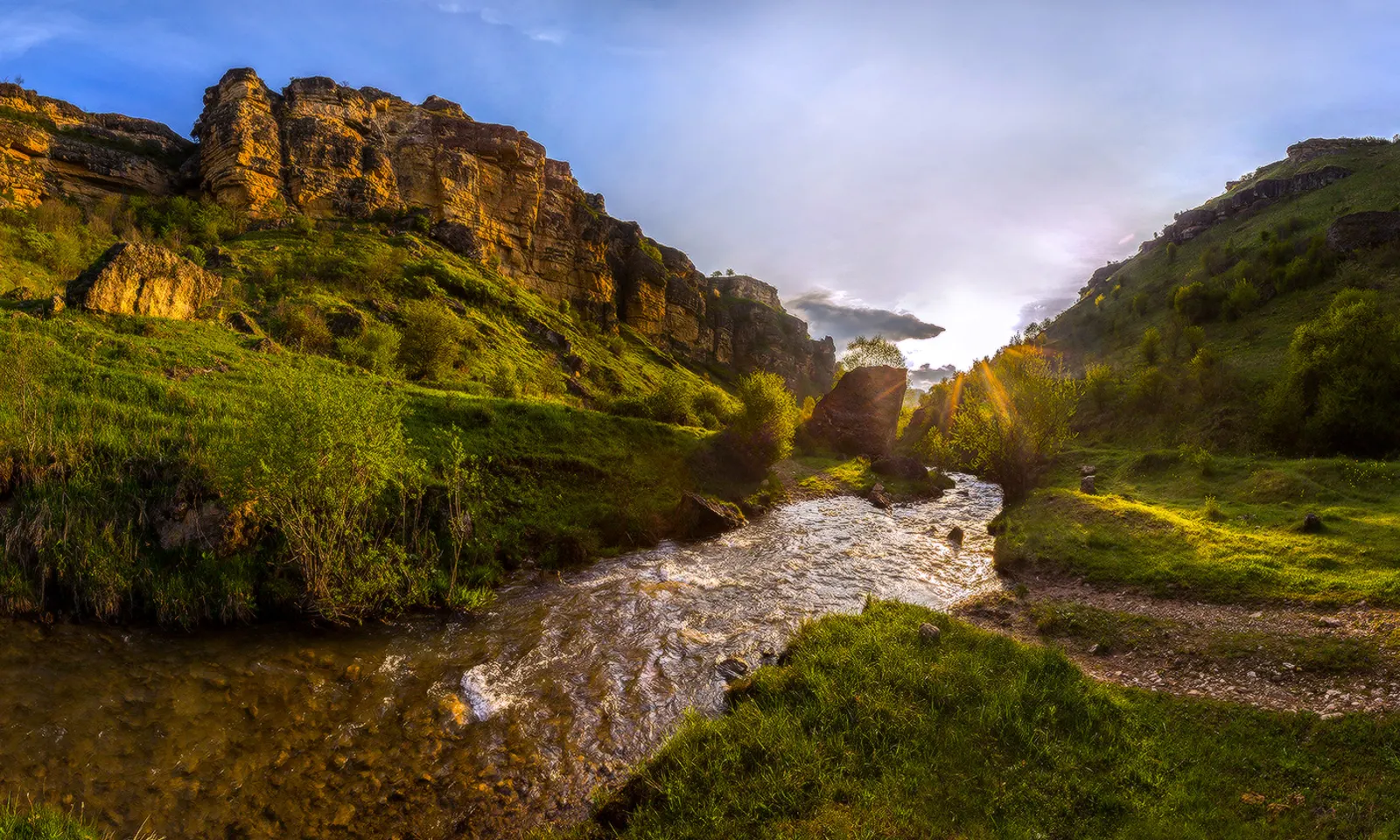
Golden cliffs above the Berezovka river in spring

Photos: Фёдор Лашков (CC BY-SA 4.0), Alexander Roumega (CC0), Alvarets (CC BY-SA 4.0), Балабин Максим (CC BY-SA 4.0)

Style
Sport and bouldering
Routes
338, 4a to 8c
Height
Up to 25 m
Season
All year

Why go

Berezovsky Gorge starts on the southwest edge of Kislovodsk, the old spa town of the Caucasus Mineral Waters, and runs about 18 km up the Berezovka river with a drop of about 300 m. Its cliffs carry more than 300 routes a short walk from the town, and you can climb here in every season.

The route

A climbing guide lists 338 routes, for bouldering and lead climbing, from 4a to 8c, on cliffs up to 25 m. The festival crag is the Glazki massif: for the In Memory of Friends festival in 2011, routesetters bolted five new routes there with 12 bolts each, graded 6a to 7c. That festival drew 67 climbers from a dozen cities across the south of Russia, aged 14 to 63, who camped about 150 strong above the rocks. Sources disagree on the rock: the climbing guide calls it limestone, a tourism guide sandstone.

When to go

Climbing goes on all year. A tourism guide gives May to September as the most comfortable months, with early mornings or evenings best in the heat of summer, and September and October bring golden birches and fewer people.

Getting there

Fly to Mineralnye Vody and go on to Kislovodsk, about 60 km, by bus or taxi. From the town centre it is a 30 to 40 minute walk through the Resort Park, or take city bus 3, 4 or 22 to the Lomonosova stop and walk about 5 minutes. Driving into the resort zone may be restricted.

Permits and booking

The gorge is part of Kislovodsk National Park, which covers about 966 hectares, and is free to enter at any hour. The park bans extreme sports without permission and training. The UK advises against all travel to Russia.

How hard it is

From 4a to 8c, so it suits a mixed group. The main walking route up the gorge is about 10 km one way, and a circular route that climbs to the upper viewpoints takes 5 to 6 hours.

Where to sleep

Kislovodsk has hotels, guest houses and sanatoriums, among them the Piket, Krepost and Viktoriya near the gorge. Book early for May to September.

Tips

  • Stay in town and walk in; driving into the resort zone may be restricted.
  • In summer, climb before 11:00 or after 17:00, as the tourism guide suggests.
08 / 10

Dombay

Teberda National Park, Karachay-Cherkessia

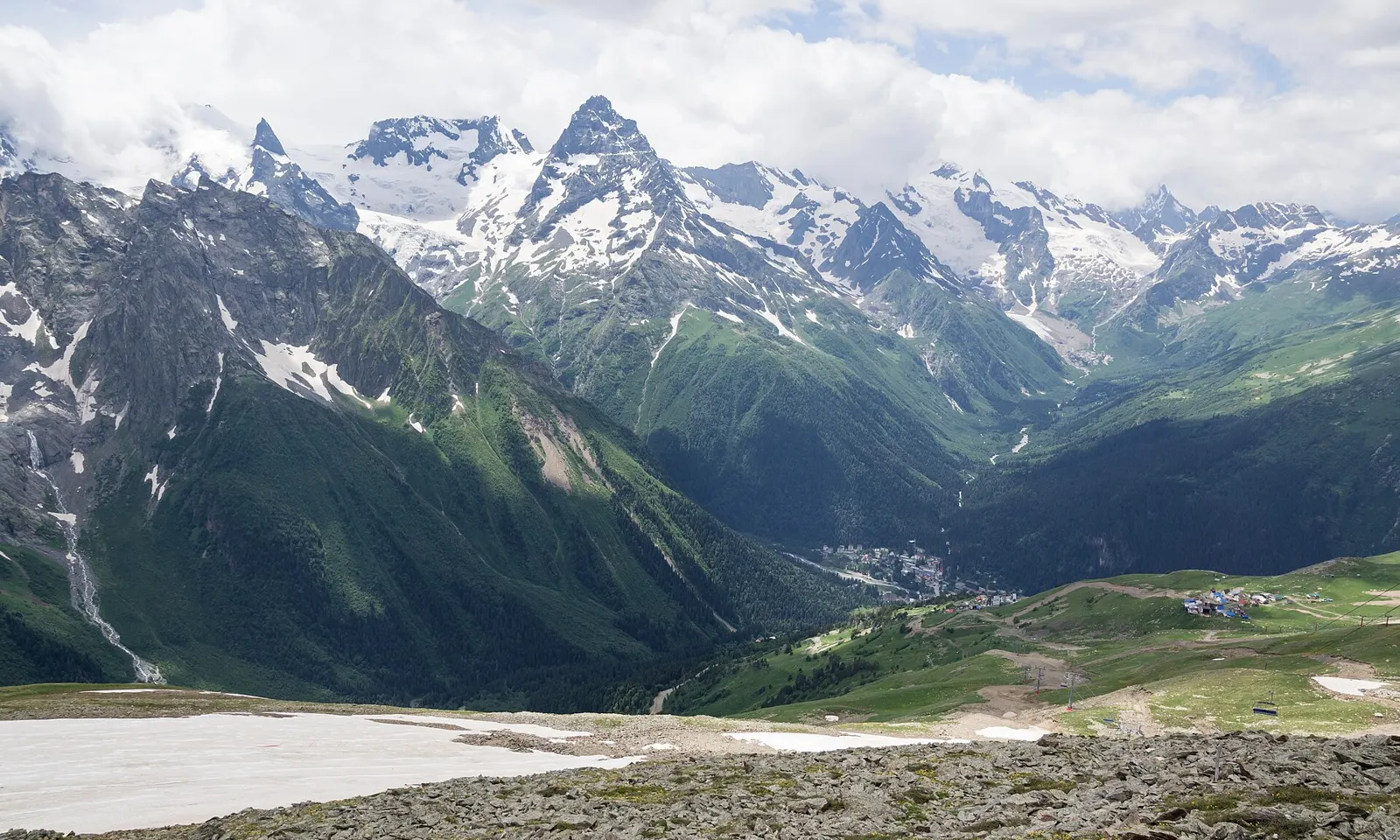
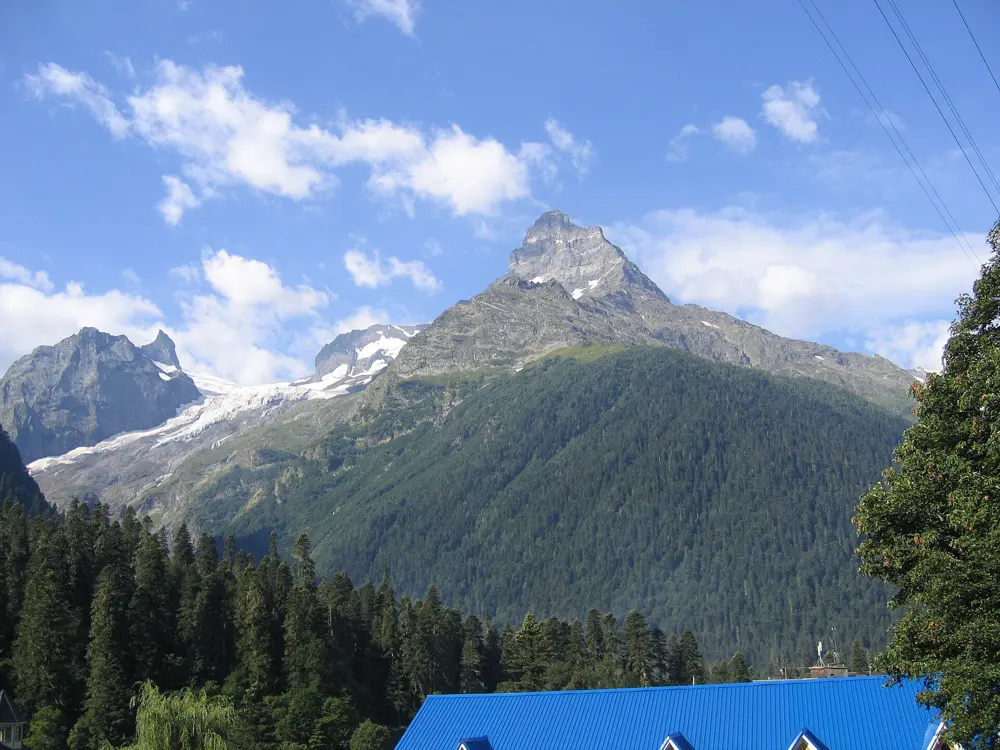
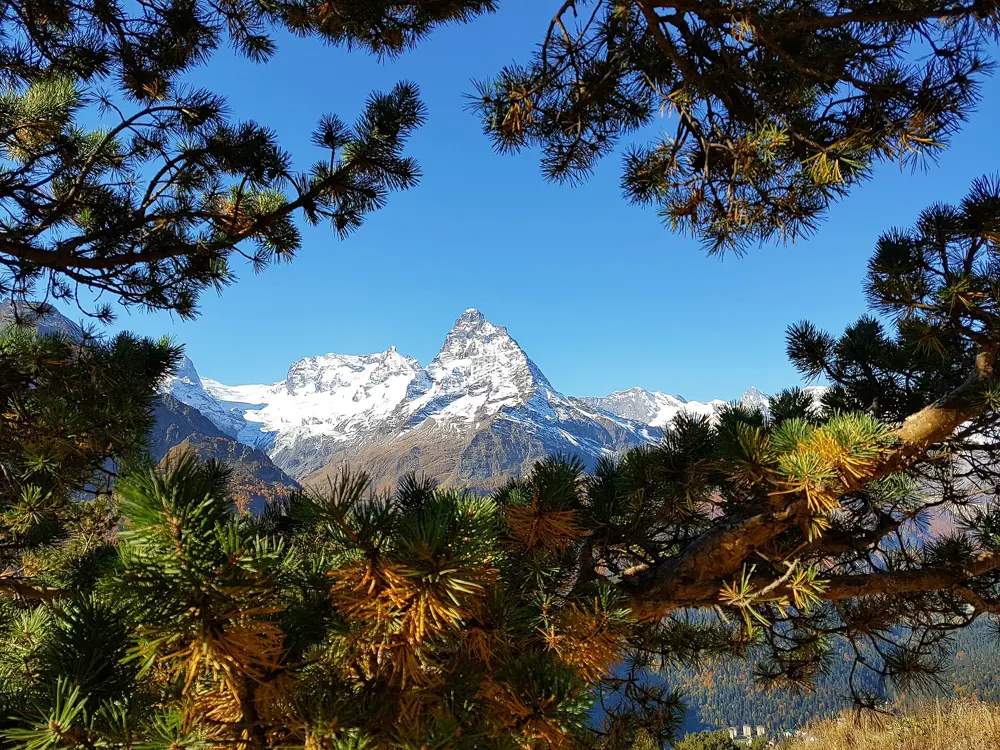
Dombay-Ulgen, Amanauz, Sofrudzhu and Belalakaya above the Dombay valley

Photos: Vyacheslav Argenberg (CC BY 4.0), Grag at Russian Wikipedia (CC BY-SA 3.0), Alex Svirkin (CC BY-SA 4.0), Vyacheslav Argenberg (CC BY 4.0)

Style
Alpine rock routes
Highest peak
Dombay-Ulgen, 4,046 m
Classic
Belalakaya, 3,861 m
Season
June to August

Why go

Dombay is one of the old homes of Soviet mountaineering, a ring of sharp peaks in the Western Caucasus above a small resort. The Alibek camp opened here in 1936 under the name Nauka and still works today. The rock routes here are long and alpine, on peaks like Belalakaya, the Striped Rock, named for the bands of white quartz that cross it, and Sofrudzhu, 3,785 m.

The route

Belalakaya is the classic. Its south ridge, a 3A, is the standard rock route and takes 15 to 18 hours. The approach is about 3 hours from Dombay up the Amanauz valley to the Medvezhye bivouac, and 4 to 5 hours in all to the Verkhne-Sofrudzhinsky bivouac below the face. Harder lines climb its walls: a 2018 first ascent up the southeast spur was given 5A, 850 m long with 650 m of height gain, on slabs and walls with some aid. Zub Sofrudzhu by its couloir is a 2B, with rockfall risk. Dombay-Ulgen, the highest peak, usually takes 2 to 3 days and needs good alpine training.

When to go

June to August is the season for alpine climbing, with daytime temperatures of about 15 to 25°C in the valley. In winter the area is a ski resort, and passes can close for snow and avalanches.

Getting there

Fly to Mineralnye Vody, about 200 km away; the transfer takes 3 to 4 hours. Buses from Cherkessk, about 120 km, take 2.5 to 3 hours. Kislovodsk is about 150 km away.

Permits and booking

Dombay is inside Teberda National Park, a reserve until 2021. Each trail is paid separately at its checkpoint. The Alibek, Amanauz and Ptysh valleys run close to the border with Abkhazia and need a border pass, issued free at the park checkpoint on the day or through Gosuslugi or the FSB Border Service website. Carry your passport. The UK advises against all travel to Russia.

How hard it is

Russian grades from 2A to 5A and above, on mixed rock, snow and ice. The routes are long, rockfall is common in the couloirs, and the descents take hours. Climb with a guide or a club from an alpine camp unless you know the Caucasus.

Where to sleep

The Alibek alpine camp is in the valley, and the Dombay resort has hotels. On the mountains there are bivouac sites; the one under Belalakaya has more than ten platforms.

Tips

  • Get the border pass at the checkpoint before you head up the Amanauz or Alibek valleys.
  • Start the Belalakaya ridge before dawn; the round trip from the bivouac takes most of a day.
09 / 10

The Vorgol Rocks

Yelets district, Lipetsk Oblast

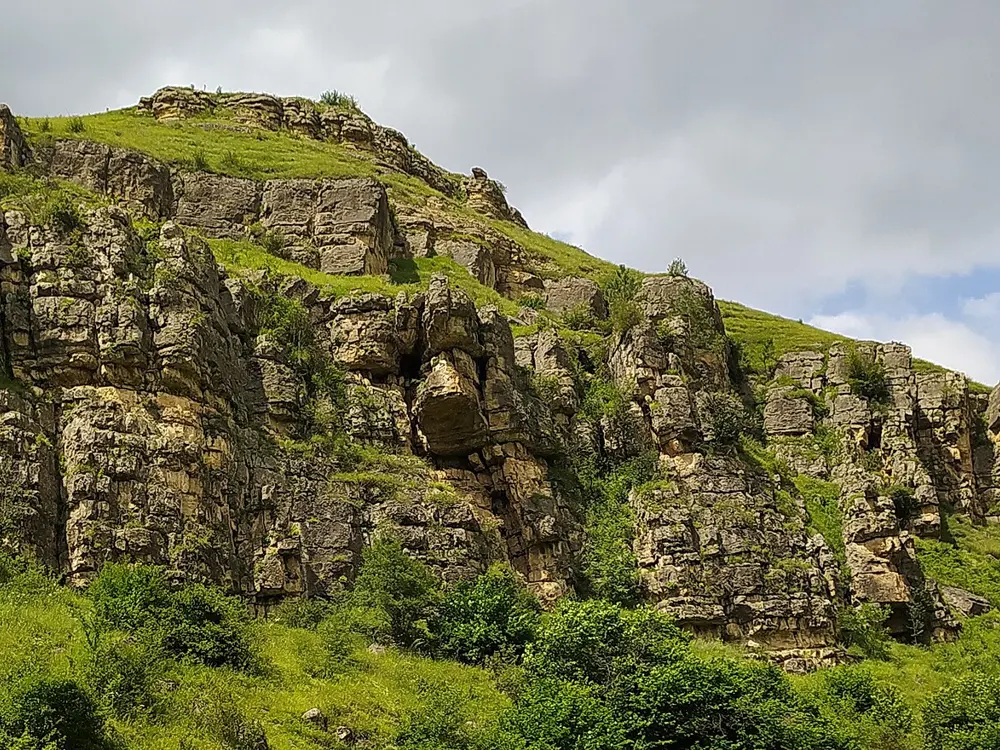
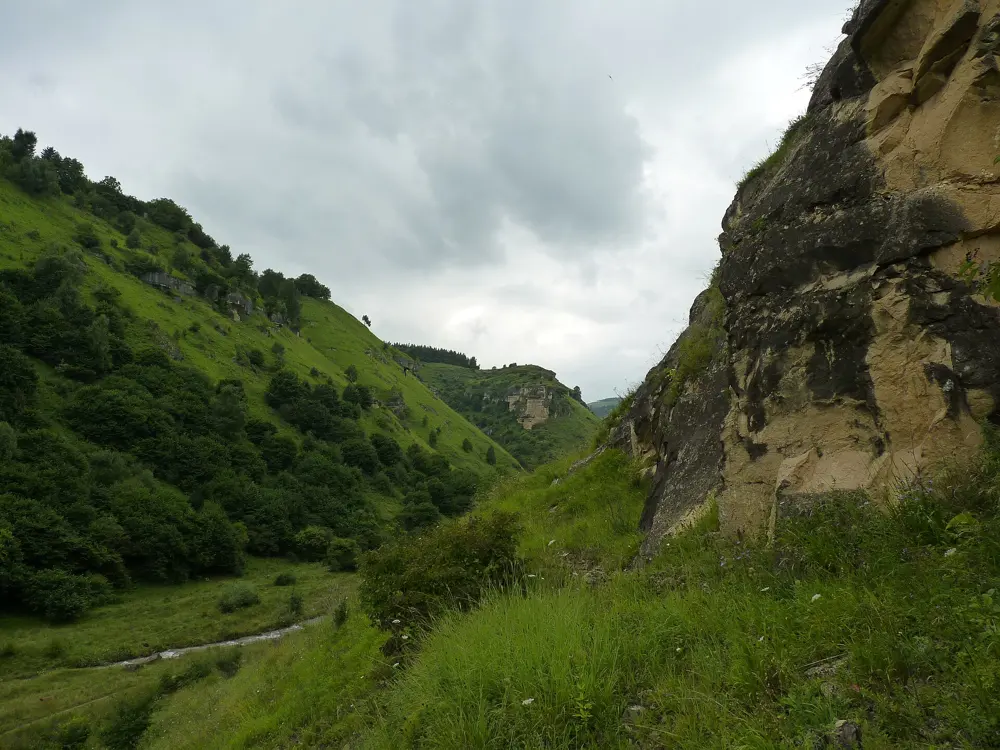
The Vorgol valley with a limestone outcrop above the river

Photos: Софья Стрелкова (CC BY-SA 4.0), Софья Стрелкова (CC BY-SA 4.0), EuguenyIr (CC BY 3.0), Андрей Лапшин (Public domain)

Rock
Devonian limestone
Routes
46 roped, 36 boulder problems
Grades
5a to 8a+
Season
April to October

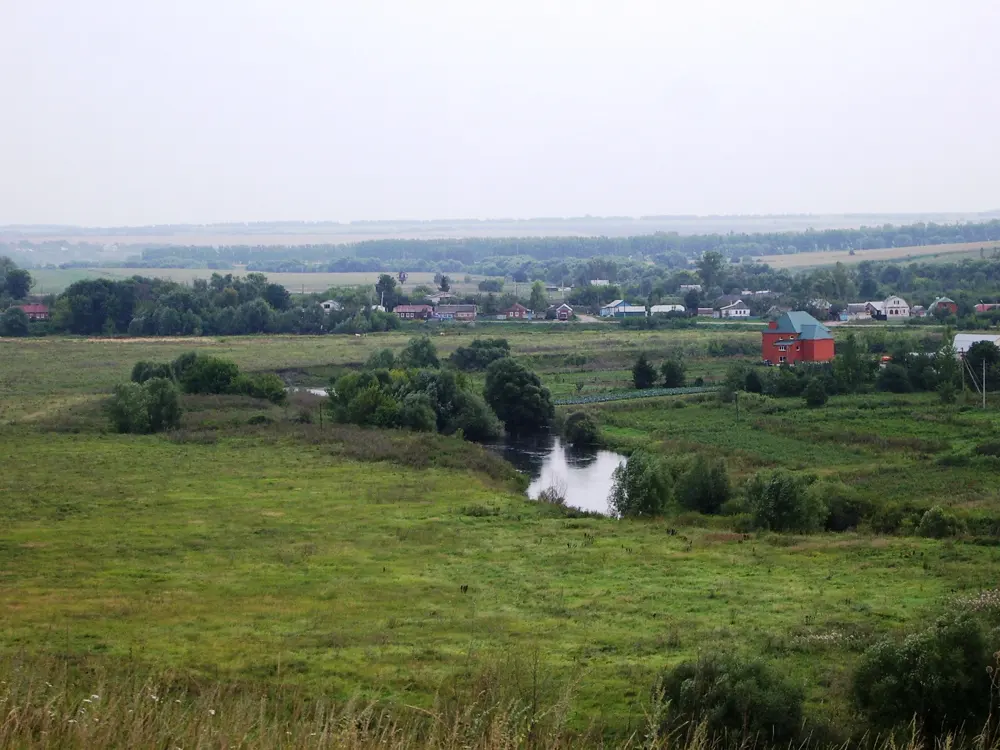
Why go

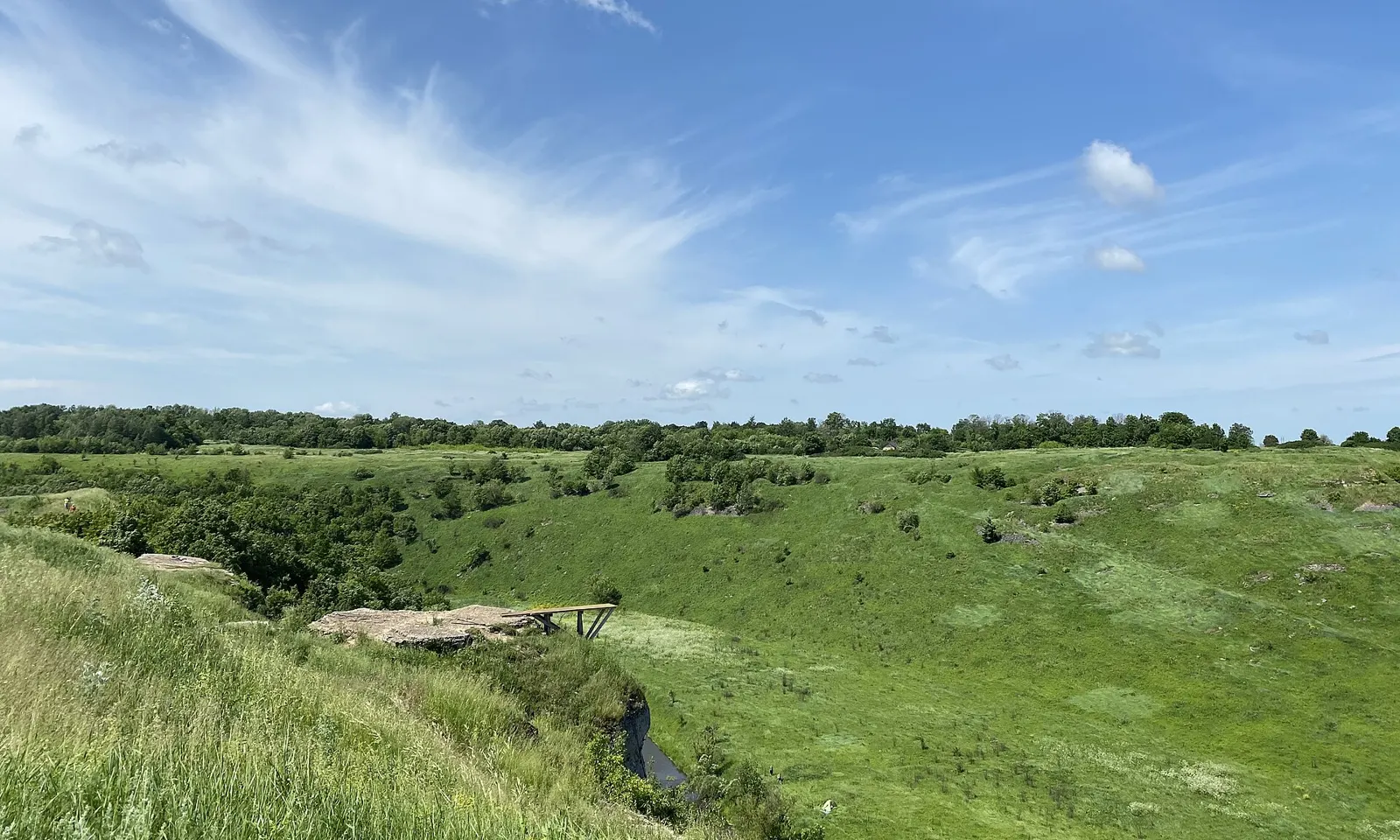
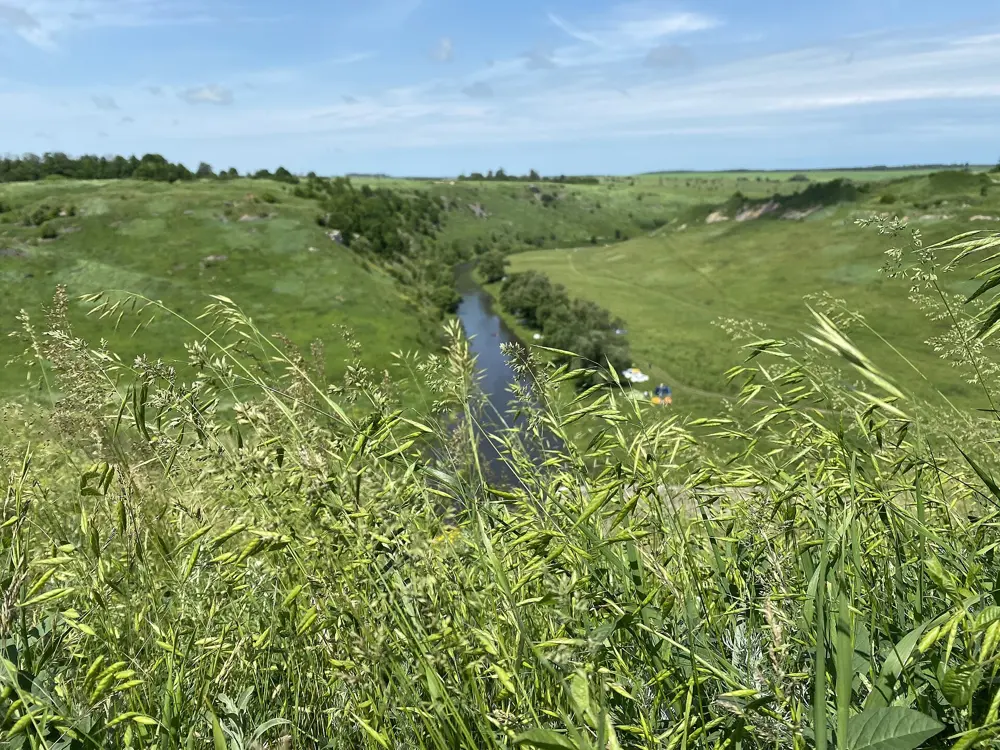
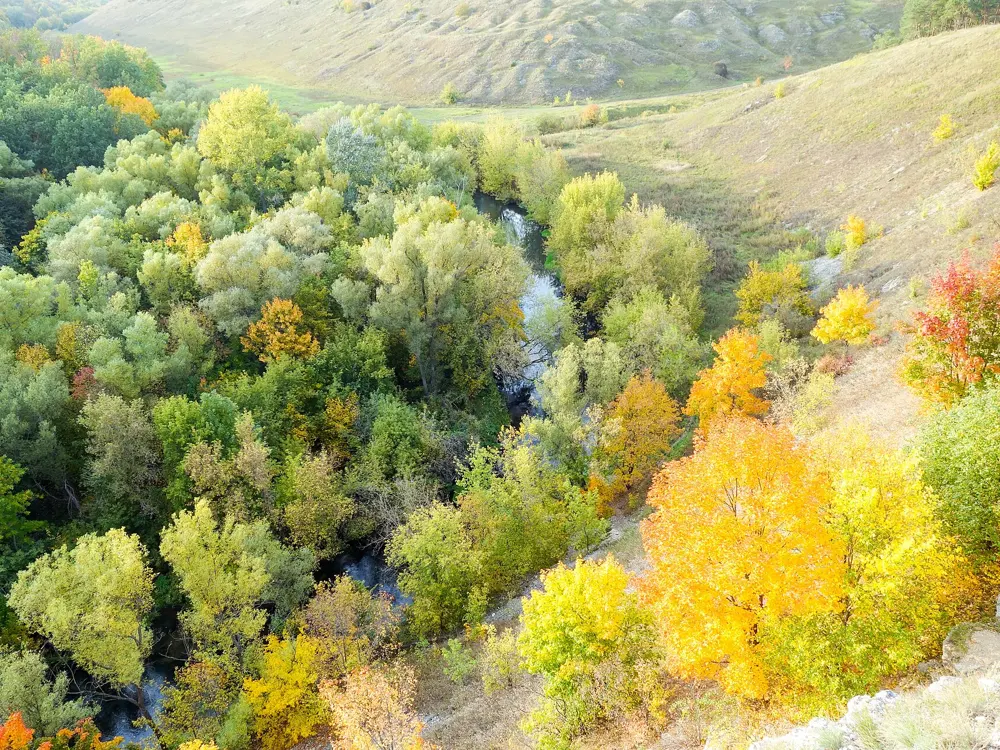
Limestone cliffs 20 to 25 m high line the lower Vorgol, a small river near Yelets, inside the Vorgolskoye section of the Galichya Gora reserve, founded in 1963, and two of their massifs are popular with climbers. The rocks are a protected nature monument in a relict botanical area.

The route

Two massifs carry the climbing. Zvonari is the main one, with routes up to 20 m, and Kopchyony Kamen is a little lower. Other named rocks along the valley include Voronov Kamen, Lisiy Kamen and Bolshie Kichi, and a tourism guide gives route heights from 6 to 20 m. Zvonari also has a zip line, with a jump point at 60 m. Altogether, a climbing guide counts 46 roped routes and 36 boulder problems from 5a to 8a+. Counts vary between sources, from 19 routes in a 2015 survey to 30 in a tourism guide.

When to go

The season runs from April to October. Nights are cool, even in summer.

Getting there

The rocks are near Nizhny Vorgol, about 15 km and 25 minutes from Yelets: cross the Sosna bridge and follow the signs. Lipetsk is about 90 km, around 2 hours by the R-119, and Voronezh about 134 km. Park by the quarry, past the turn, with the rocks in view.

Permits and booking

Some parts of the reserve are under special state protection: visitors may not go there and tent camping is banned in them. Hunting is banned across the reserve, and driving is allowed only on the roads.

How hard it is

Grades run from 5a to 8a+, with plenty for beginners. Operators from Yelets and Lipetsk run climbing trips with gear and belaying.

Where to sleep

There are no hotels or bases at the rocks. Stay in Yelets, or camp outside the protected sections.

Tips

  • Ask locally which sections are closed before you pitch a tent.
  • Combine the rocks with a day in Yelets; it is a 25 minute drive.
10 / 10

The Dyukinsky Quarries

Vladimir Oblast

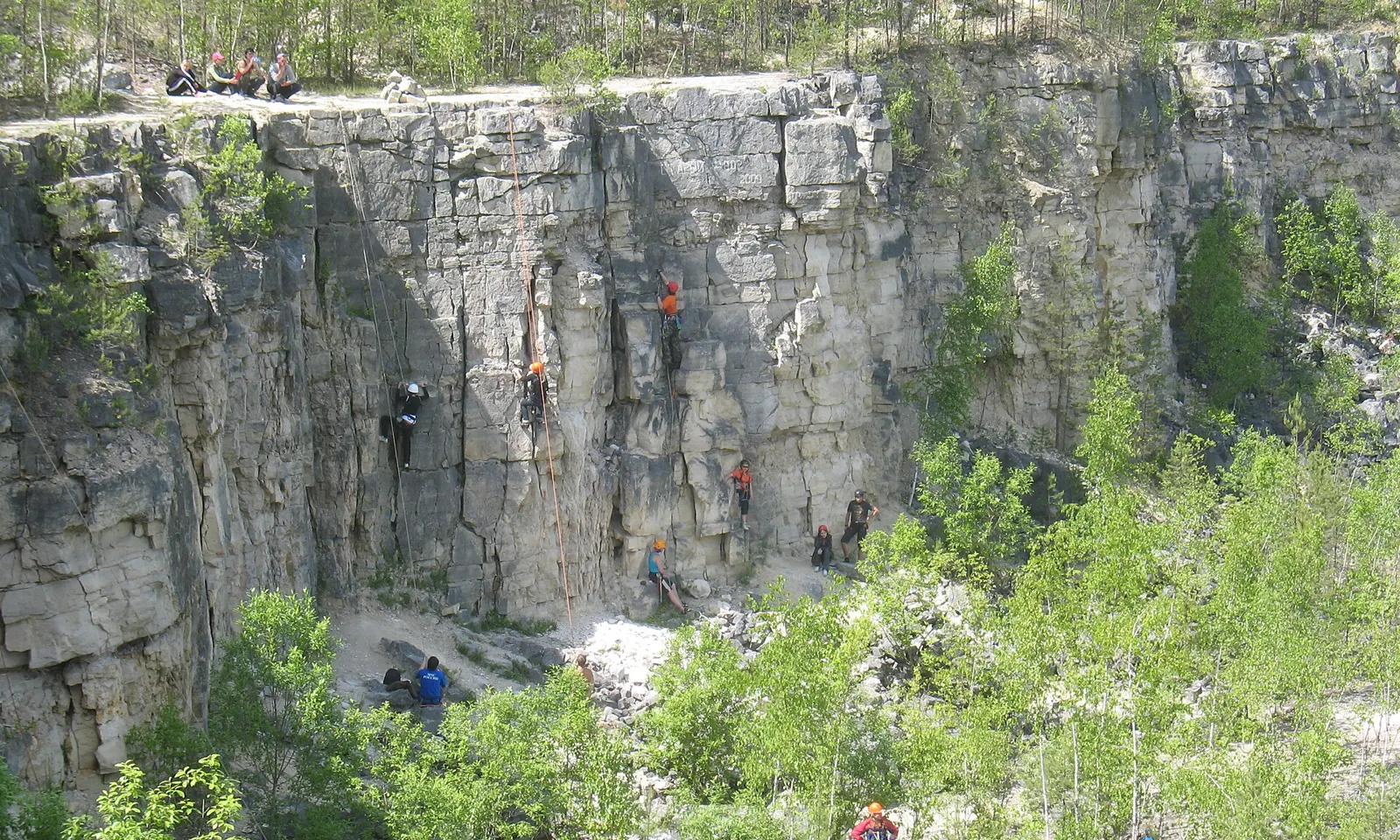
Climbers on the pale limestone wall of a Dyukinsky quarry

Photos: Ирина Мит (CC BY-SA 4.0), Чръный человек (CC BY-SA 4.0), Чръный человек (CC BY-SA 4.0), Чръный человек (CC BY-SA 4.0)

Rock
Limestone
Routes
About 30, 4a to 7c
Height
Up to 13 m
Season
All year

Why go

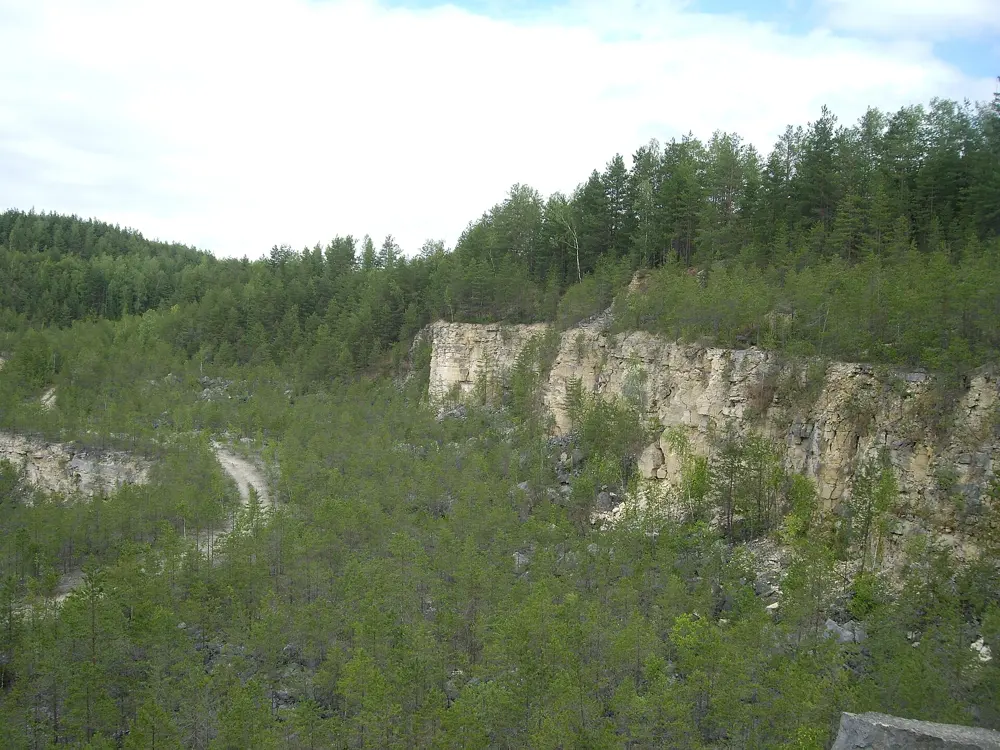
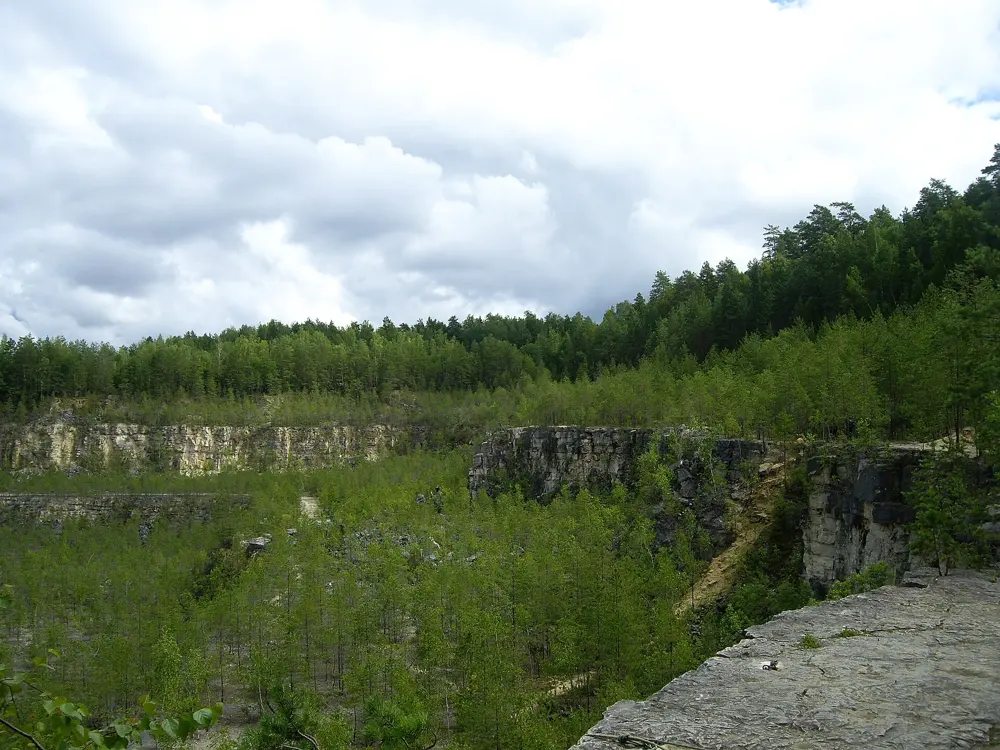
The Dyukinsky quarries are old limestone workings in the pine forests of Vladimir Oblast, about 70 km from Vladimir. Sheer pale walls stand over the quarry floors, a landscape unusual for central Russia, and the quarries are now part of the Dyukinsky nature reserve, known for its rare orchids and for fossil ammonites in the rock.

The route

Limestone was dug here in the last century, and the quarries left behind deep pits with vertical walls. The walls are short, up to 13 m, with about 30 bolted routes from 4a to 7c. The routes were re-equipped in 2022, when a Moscow university club counted 25 routes, and their group climbed from about 5a to 6c+.

When to go

The routes can be climbed all year. Summer brings insects in the forest, so bring repellent.

Getting there

The quarries are about 70 km from Vladimir; tours from Moscow visit them on long day trips through Murometsevo and Sudogda.

Permits and booking

The quarries lie inside the Dyukinsky reserve, a protected area of regional importance, and overnight stays near them are not allowed. Guided walks follow a forest trail through the reserve among the pines and cliffs. Rare orchids such as the lady's slipper grow in the reserve, and picking or damaging protected plants can bring fines.

How hard it is

Grades run from 4a to 7c. The limestone is old quarry rock, so test holds and check the bolts.

Where to sleep

Because you cannot stay overnight in the reserve, sleep in Vladimir or in towns nearby and drive in for the day.

Tips

  • Leave the fossils where they are; this is a reserve.
  • Wear shoes with grip for the walk in; the quarry paths are loose.

Sources

Distances, heights, seasons and permit rules were checked against these pages. Rules change, so check the park or trail authority before you go.