Rungs Labs

Rungs Pilgrimage · Climbing · South Africa

The 10 Best Places for Rock Climbing in South Africa

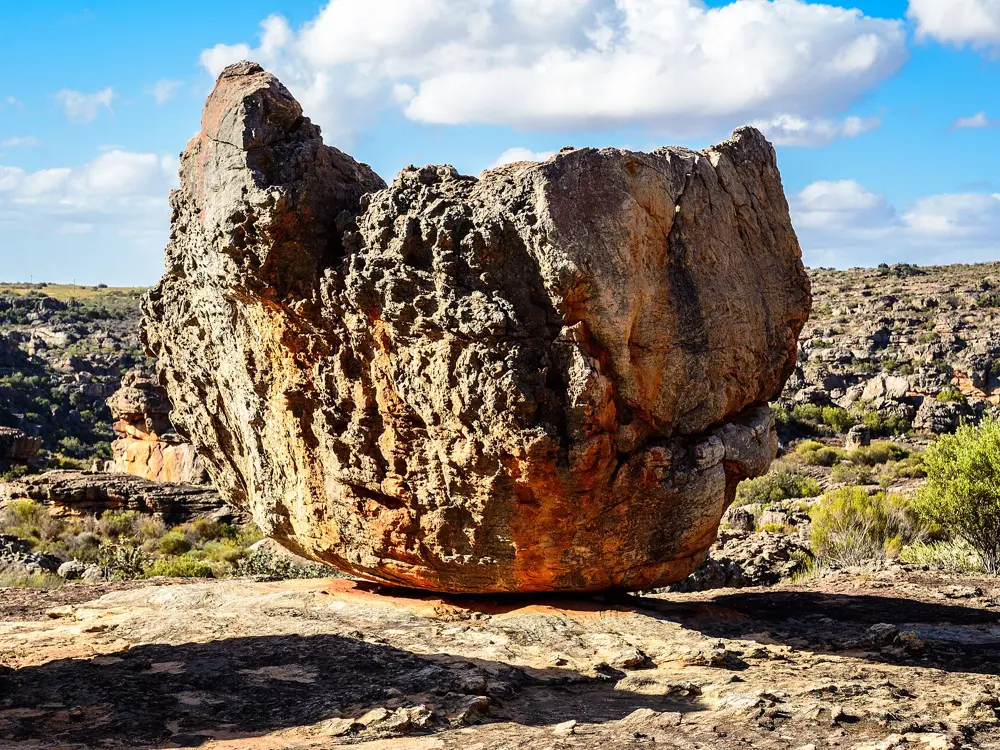
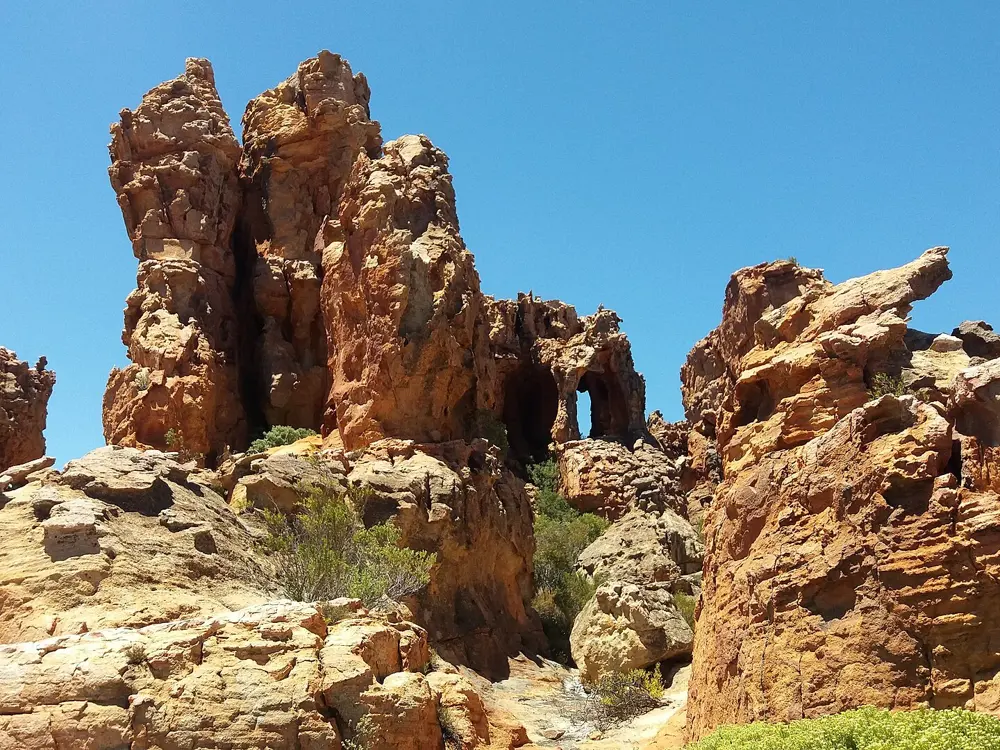
Rocklands, Cederberg, Western Cape. Photo: Dana Rader (CC BY 2.0)

Most of South Africa's climbing is on hard, old rock: the sandstone of the Cape Fold Mountains around Cape Town, Montagu and the Cederberg, the quartzite of Waterval Boven and the Magaliesberg, and the granite domes of Paarl. Rocklands draws boulderers from around the world, Waterval Boven is the sport climbing capital, and the Drakensberg offers long, loose mountaineering on basalt. Grades are South African numbers, which run from the single figures to the mid thirties.

Much of the rock is on private land, club property or nature reserves, so most crags need a permit, and some have been closed and reopened after disputes or floods. For each place you get the rock, the classic climbs and grades, the best season, how to get there, the access rules, how hard it is and where climbers stay. Every fact comes from park agencies, the Mountain Club of South Africa, guidebook sites and the other pages linked at the bottom.

Updated 2026-10-19

  1. 01RocklandsCederberg, Western Cape
  2. 02Table MountainCape Town, Western Cape
  3. 03Waterval BovenEmgwenya, Mpumalanga
  4. 04MontaguKlein Karoo, Western Cape
  5. 05The Cederberg: Wolfberg and TruitjieskraalCederberg Wilderness, Western Cape
  6. 06The Magaliesberg kloofsGauteng and North West
  7. 07The DrakensbergMaloti-Drakensberg Park, KwaZulu-Natal
  8. 08Paarl RocksPaarl Mountain Nature Reserve, Western Cape
  9. 09Silvermine and the Peninsula sport cragsTable Mountain National Park, Cape Town
  10. 10Du Toit's Kloof and HellfireDu Toitskloof Mountains, Western Cape
01 / 10

Rocklands

Cederberg, Western Cape
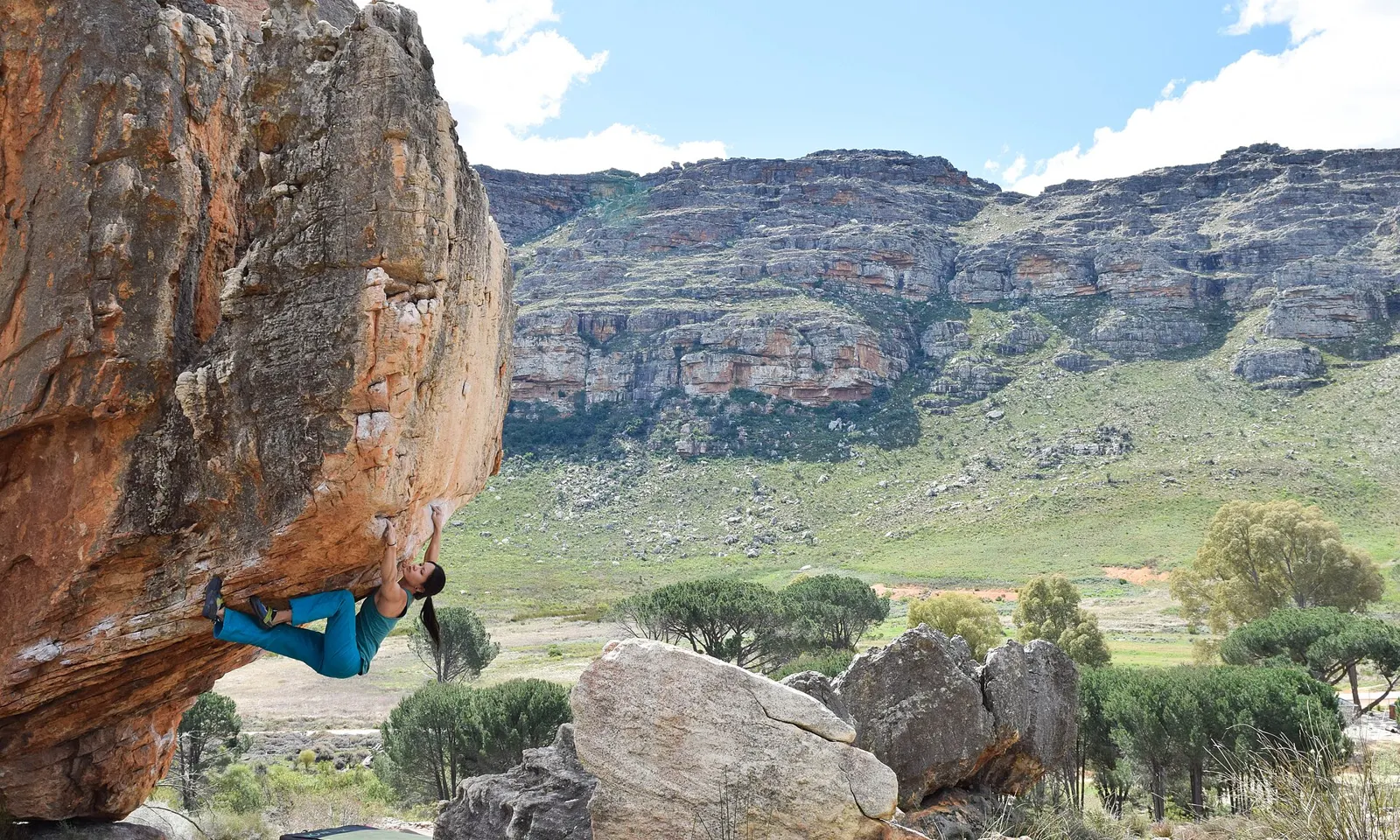
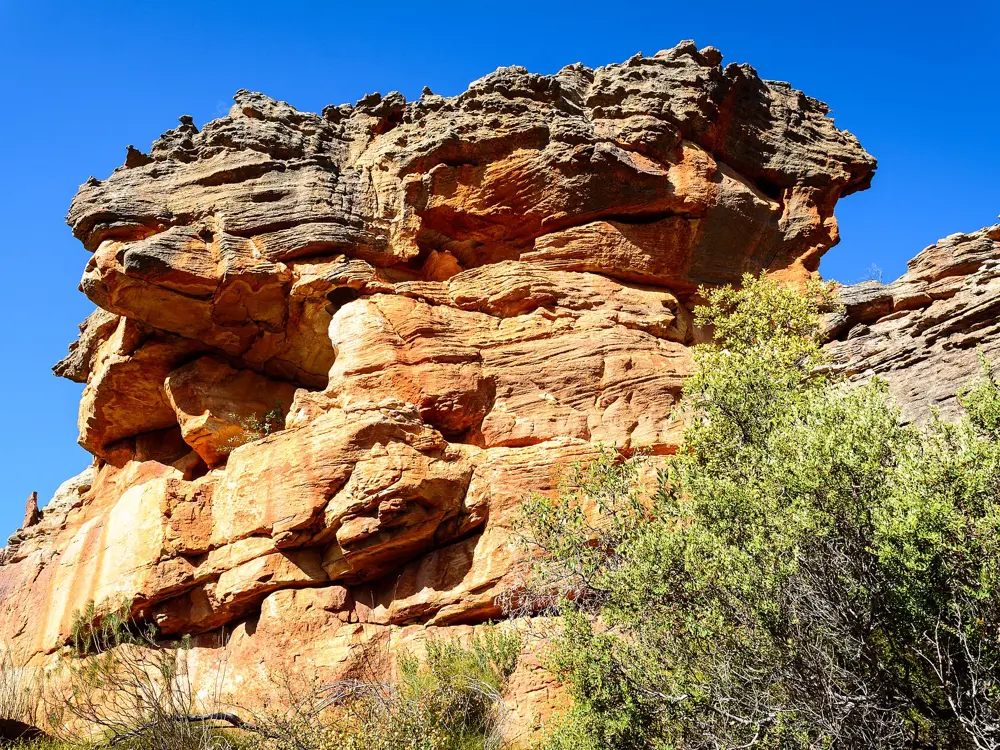
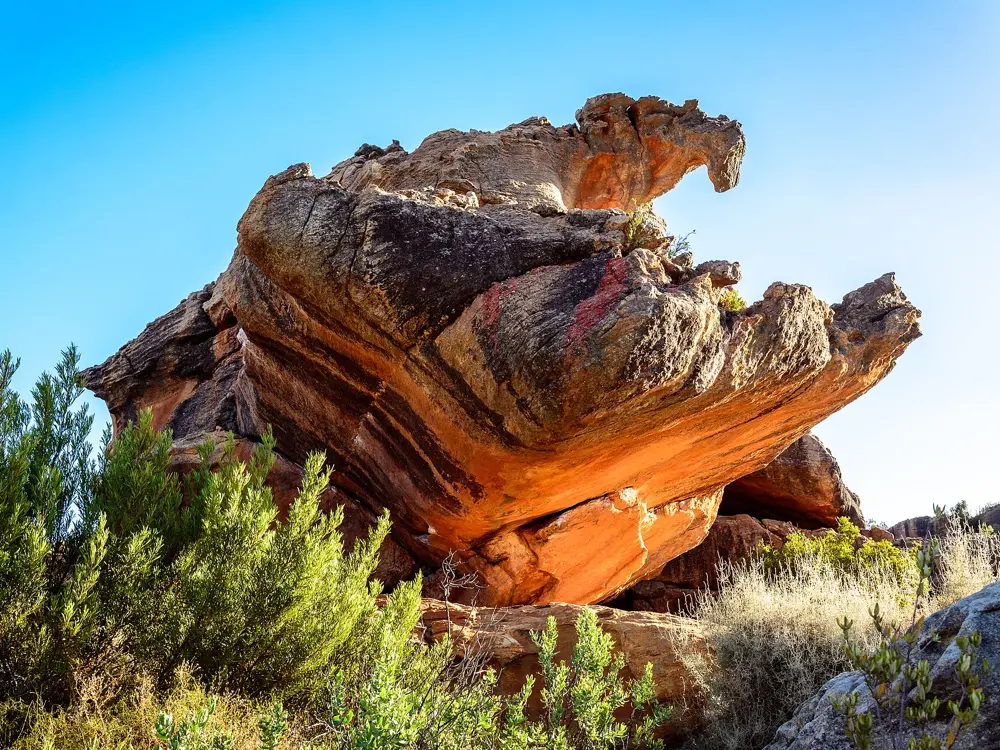
A climber on Tea Time, a 7C+ boulder at Rocklands, with the Pakhuis valley and sandstone cliffs behind

Photos: Dana Rader (CC BY 2.0), dconvertini (CC BY-SA 2.0), dconvertini (CC BY-SA 2.0), dconvertini (CC BY-SA 2.0)

Rock
Coarse, orange sandstone
Style
Bouldering, with some sport and trad
Problems
More than 1,500
Best season
30 April to 1 October

Why go

Rocklands sits at the northern tip of the Cederberg, on the Pakhuis Pass and in the Agter-Pakhuis valley beyond it. Boulderers have come since 1996, when Todd Skinner, Fred Nicole and others began recording problems on the orange sandstone. Local partners have since developed more than 1,500 problems across CapeNature's Kliphuis and the neighbouring farms. The rock also holds routes: in 2019 Giuliano Cameroni and Fred Nicole shared the first ascent of Legacy in the Roadside sector, a wall Nicole found in 2014, and at 9a it is the hardest route in South Africa.

The route

Grades here use the Font scale. The Rhino, a roof on a sandstone prow first climbed by Fred Nicole, goes at 7B+ over a poor landing. Tea Time is a 7C+ under a big overhang facing the valley wall. Hole in One is 7C+, Maniac and Minki are 7B, Vanity is 7A+ and Orange Heart is 6C. The main sectors are de Pakhuys, the Pass, 8 Day Rain, Kliphuis Campground and the Sassies.

When to go

CapeNature's season runs from 30 April to 1 October. Late June to early August is best and busiest, though late July and August bring rain and frost.

Getting there

From Cape Town, take the N7 north to Clanwilliam, then the R364 for about 17 km to Kliphuis: about 280 km and three hours. De Pakhuys is 24 to 25 km past Clanwilliam, where you pay at the gate and collect a key. The sectors spread along the road, so you need a car.

Permits and booking

Every climber needs a Rocklands bouldering permit, carried at all times on any land. One permit covers Kliphuis, de Pakhuys, Traveller's Rest and the other partner farms. CapeNature lists R80 a day, R260 a week and R950 for 30 days, a little more on Quicket. Buy online or at de Pakhuys, Kliphuis or Traveller's Rest. No dogs; carry out all litter and stay on marked paths. After the March 2025 fire, CapeNature capped access at 100 a day, and its bouldering page still states the cap. At the Tea Garden, greet the owners at the house first.

How hard it is

Hard problems run to 8B+ and 8C, but most lie between 6C+ and 7C+. The coarse grain tears skin in the first week. Many problems are tall but landings are mostly flat, so bring big pads. Nights can freeze, and light snow has fallen on the Pass. Baboons are common.

Where to sleep

CapeNature's Kliphuis, on the Kliphuis River in the Pakhuis Pass, has 14 basic campsites with hot showers and three self-catering cottages, all reopened on 25 May 2026 after the floods. No firewood is allowed, because of the shothole borer beetle. De Pakhuys has Camp Sallie, with hot showers and a kitchen, plus five cottages. Traveller's Rest, nearest 8 Day Rain, has cabins and cottages but no tent camping.

Tips

  • The May 2026 floods closed roads and sites in the southern Cederberg, but CapeNature's notice listed no closure on the Pakhuis side. Check its latest update before driving.
  • Kliphuis gates and office keep 07:30 to 16:00, seven days a week, so arrive in daylight to collect your permit.
02 / 10

Table Mountain

Cape Town, Western Cape

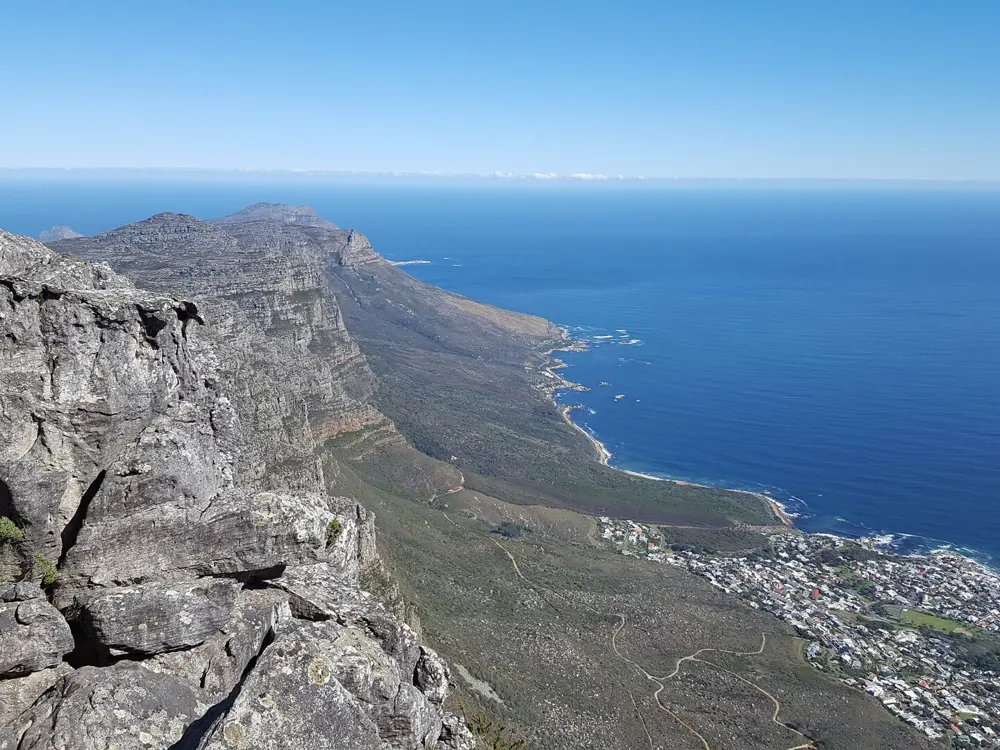
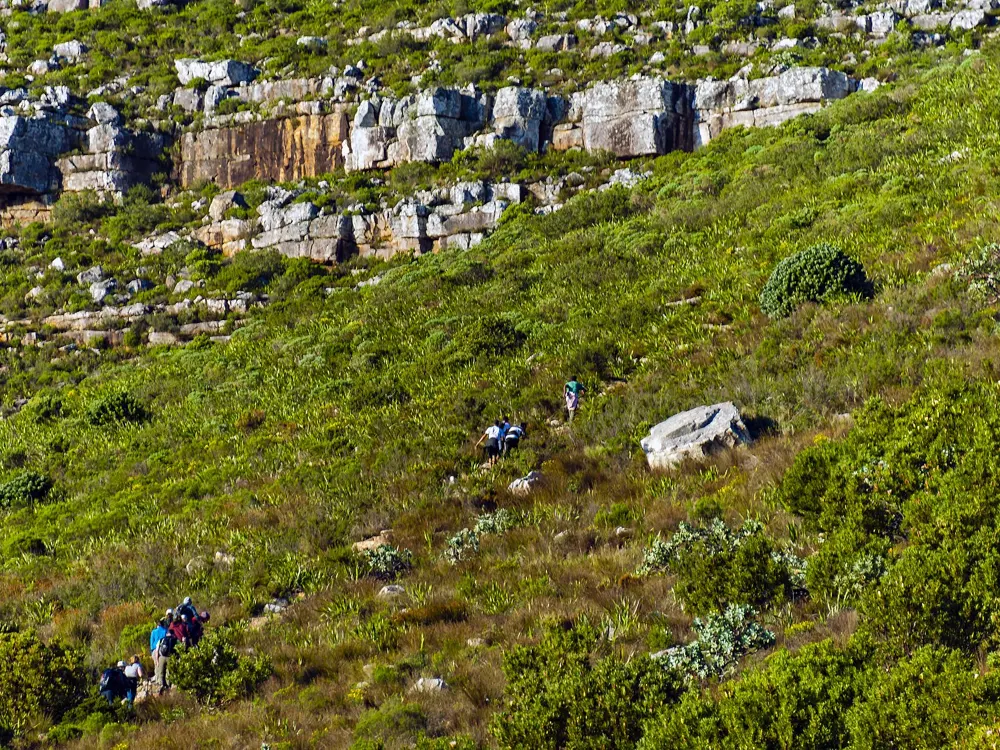
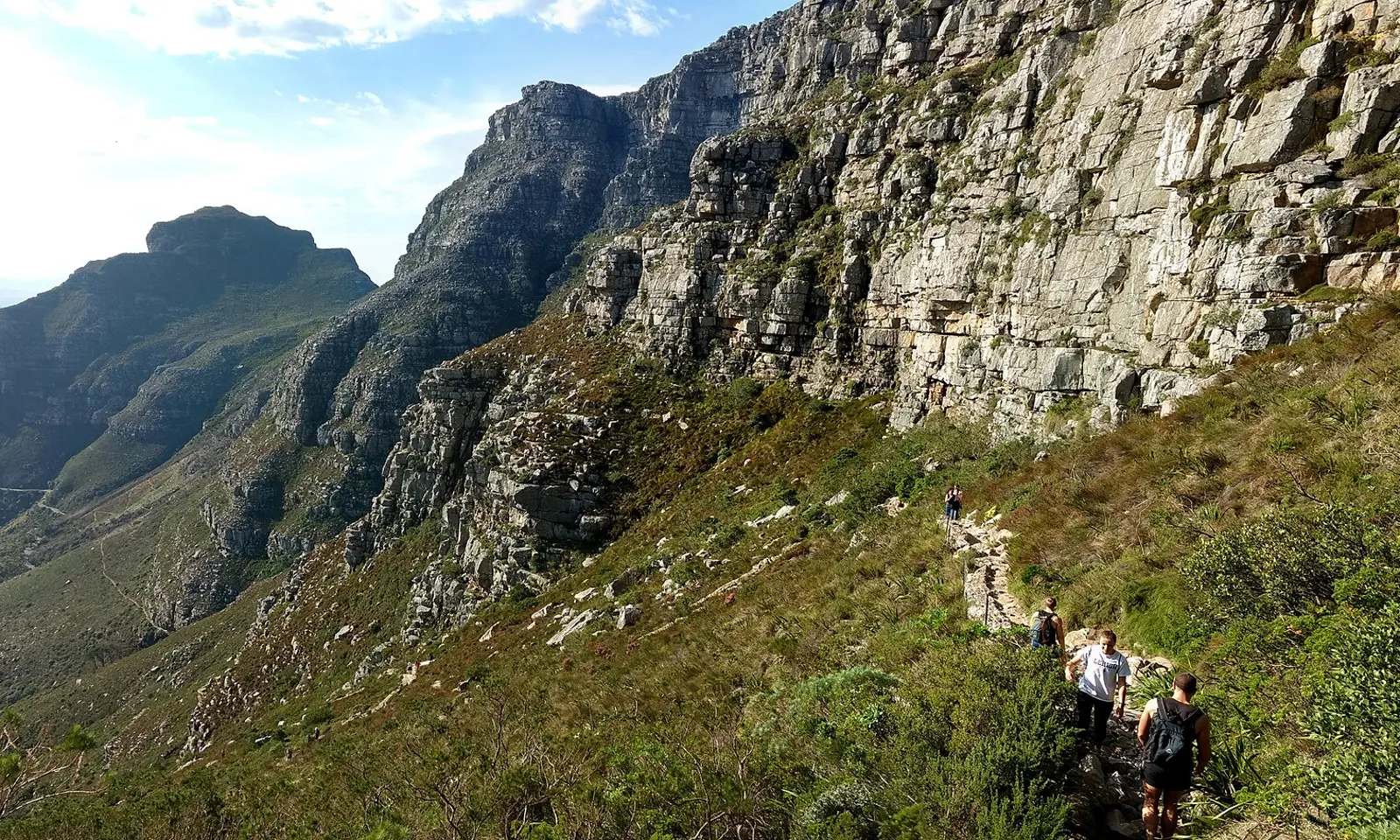
Walkers on the path below the grey sandstone cliffs of Table Mountain

Photos: Shyamal L. (CC BY-SA 4.0), Elber Rafael Unquaker (CC0), Daniel Case (CC BY-SA 3.0), Romaine (CC0)

Rock
Hard quartzitic sandstone over granite
Style
Multi-pitch trad, no bolting
Height
About 1,085 m at the top
Best season
All year, choosing the sunny or shady ledge

Why go

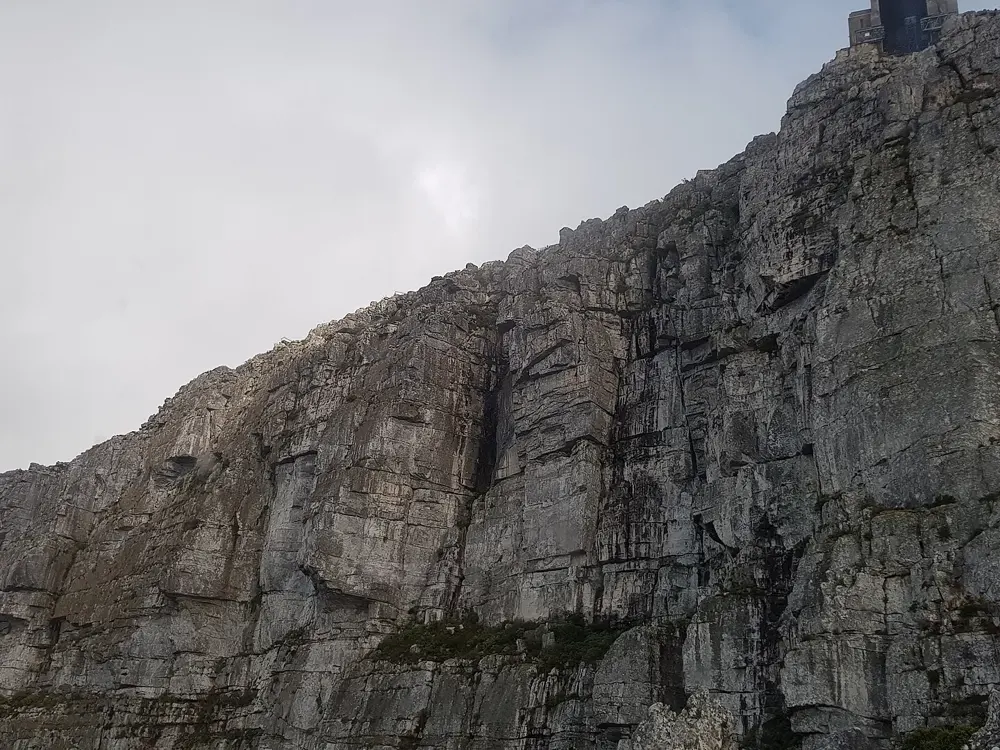
Table Mountain rises straight out of Cape Town, and its top layer of hard quartzitic sandstone forms the cliffs that climbers come for. The main climbing is on the ledges below the upper cable station: Africa Ledge on the left, which gets the morning sun, and Fountain Ledge on the right, which gets the afternoon. The rock is compact, with regular horizontal breaks that locals call rails and big juggy chickenheads, and the routes hang above the city and the Atlantic.

The route

Grades are South African numbers. On Africa Ledge, Africa Crag is the classic easy route, graded 12 by one guide and 14 by another, with Atlantic Crag (18), African Lunch (23) and Africa Arete (25) above it. On Fountain Ledge, Jacob's Ladder (16) traverses out on huge holds above a big roof, and The Dream (21), Roulette (20/21) and Arms Race (23) are favourites. Arrow Final, an easy climb on the narrow face below the top cable station, can be linked with Frasers Variation on the lower buttresses to break up the walk in. The testpieces include Jeopardy (29), Double Jeopardy (30) and Mary Poppins and her Umbrella (32).

When to go

You can climb here all year, depending on the weather. When the south-easter blows and the tablecloth of cloud pours over the top, Fountain Ledge is usually the most sheltered place to climb on the Peninsula.

Getting there

The mountain is in the middle of the city. A steep walk of about an hour and a half leads to the ledges. Platteklip Gorge, the easiest direct way to the summit, takes about two and a half hours and has almost no shade. The cableway, open since 1929, runs from about 302 m to the plateau at about 1,067 m; a 2026 guide puts an adult return ticket at about R450 to R490, and it usually opens at 08:00.

Permits and booking

SANParks requires an annual My Activity Permit at Level 2, which covers rock and sport climbing, and climbing is allowed only in the areas set out in the park's climbing management plan. The permit is bought online and needs two ID photos; in mid 2024 Level 2 cost R530 for 12 months, and park rates rise each year on 1 November. Holders do not pay entrance fees at park pay points while climbing. Bolting is not permitted, so every route is trad.

How hard it is

Routes run from easy multi-pitch outings to grade 32, and all of them take natural gear, with plenty of cams for the rails. The rock is hard and the friction good. Weather changes fast on the mountain, so carry a warm jacket and water. Chacma baboons, puff adders and Cape cobras live in the park.

Where to sleep

Cape Town has accommodation of every kind, including cheap backpackers, and the city sits at the foot of the climbs, so you sleep in town and walk up each morning.

Tips

  • Guides disagree on several grades here (Africa Crag is given as 12 and as 14), so treat numbers as approximate and carry a current guide.
  • Leonhard Rust's The Ledge is the dedicated Table Mountain guide; Tony Lourens's Table Mountain Classics covers the easy rock climbs and scrambles.
03 / 10

Waterval Boven

Emgwenya, Mpumalanga

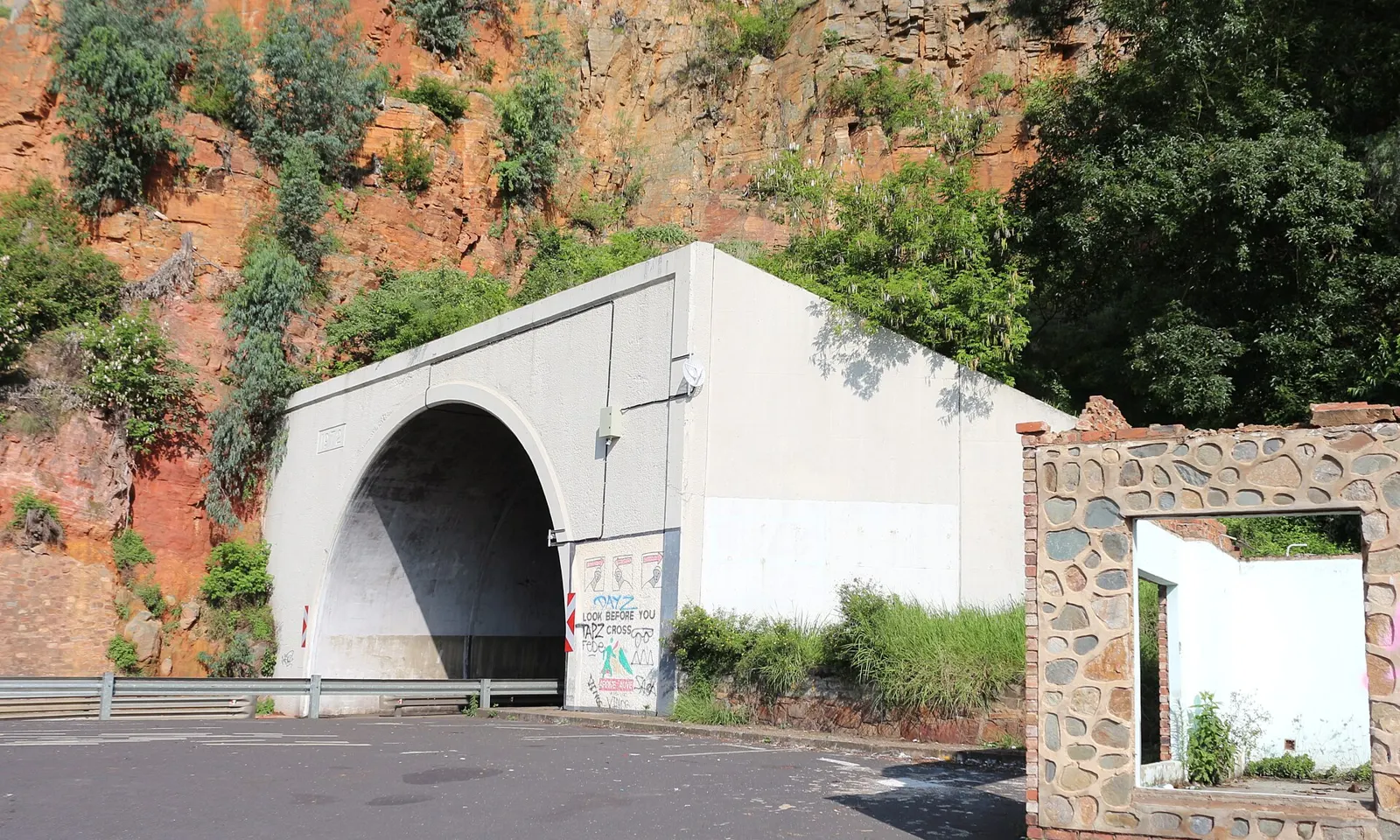
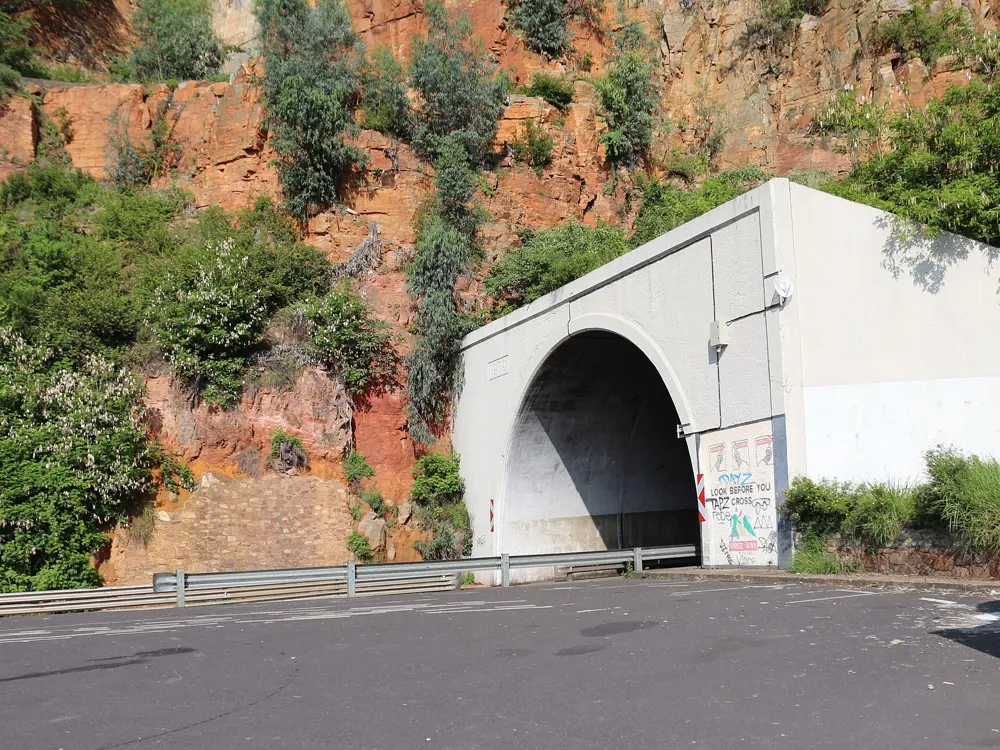
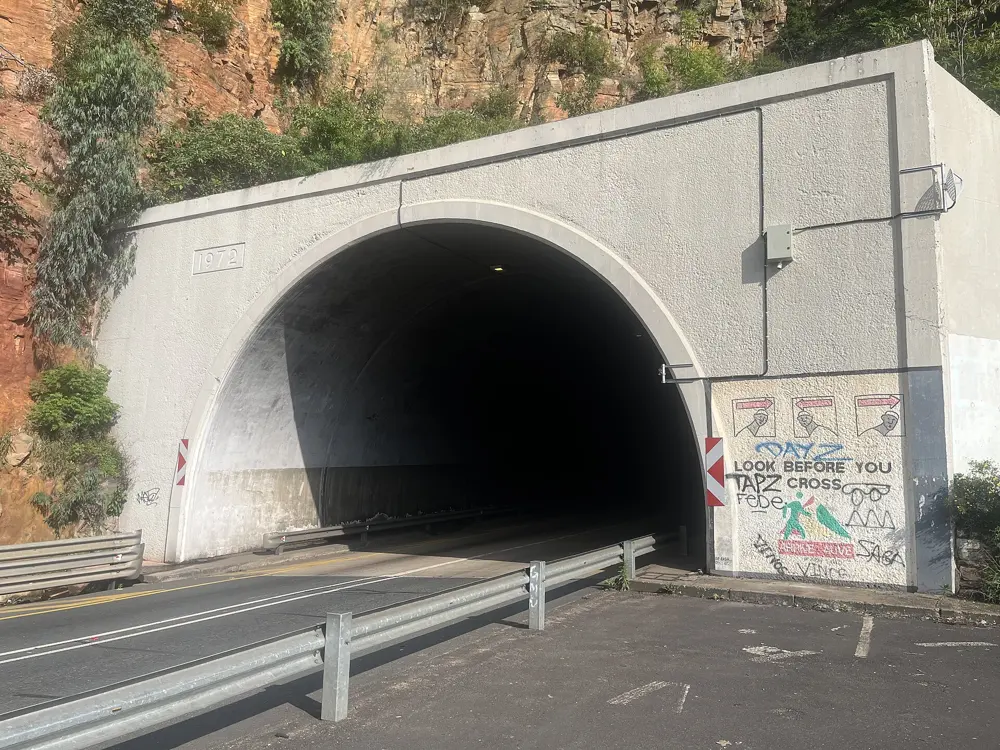
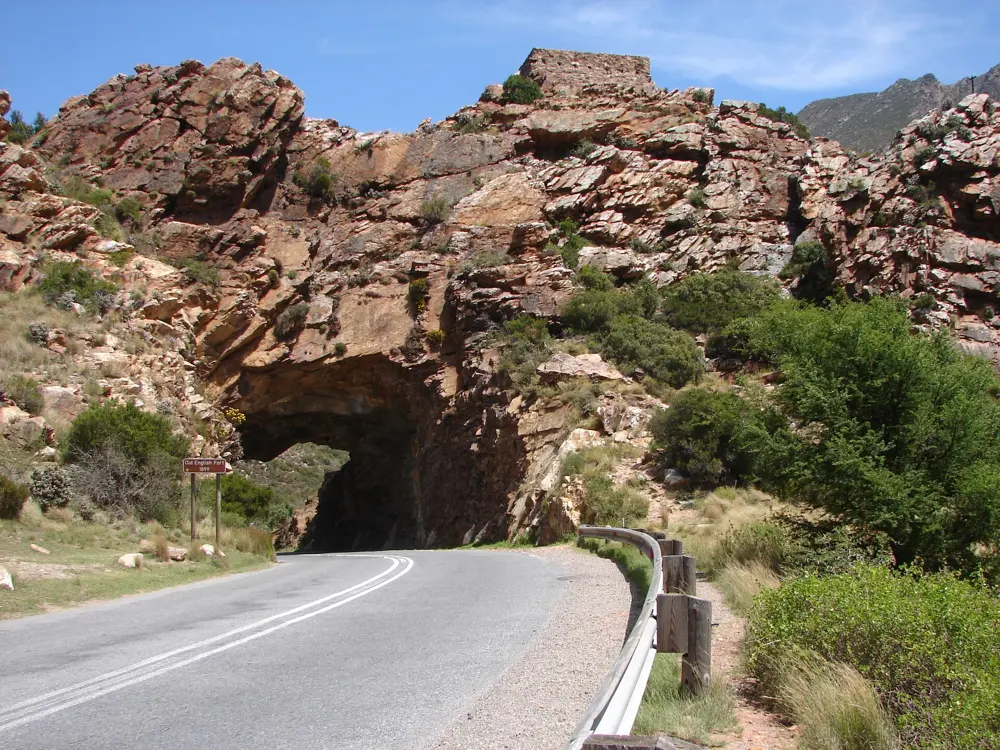
The road tunnel at Waterval Boven cut through red rock walls covered in green bush

Photos: WikiMzansi (CC BY-SA 4.0), WikiMzansi (CC BY-SA 4.0), WikiMzansi (CC BY-SA 4.0), WikiMzansi (CC BY-SA 4.0)

Rock
Orange quartzite, about 2.3 billion years old
Style
Sport, some trad
Routes
More than 700, all within 8 km of town
Best season
September to early November, late February to May

Why go

Emgwenya, still called Waterval Boven by climbers, was founded in 1895 as a supply town on the railway from Pretoria to Delagoa Bay, on the edge of the escarpment where the Elands River drops about 75 m over a waterfall. The Mountain Club of South Africa calls it the country's prime sport climbing destination: more than 700 bolted routes, mostly single pitches of 12 to 35 m on orange quartzite, on crags spread within an 8 km radius of town.

The route

The Wonderland crags, beside Tranquilitas farm, hold the biggest concentration, with walls such as Hallucinogen Wall, where Cenotaph Corner (5.9) and Task Saturated (25) are listed, and Disciple Wall, where Lucy (5.9+) is the usual warm-up. The Waterfall crags above Elands Falls have short classics: Madiba Magic (6a), Who's Your Dady (6a+), Endless Summer (6c) and Superfly (6c+). Grades run from beginner climbs of 9 to 14 up to projects above 30. The climbing is mostly vertical or gently overhanging, on crimps and edges that reward precise footwork.

When to go

Winter, April to October, is dry, with mild days and nights that can drop below freezing. Summer brings afternoon thundershowers from late November to early February, but the rock dries fast, and most crags go into shade around 11:00. In winter Tranquilitas gives shade all day. September to early November and late February to the end of May are the most reliable.

Getting there

The town is about two and a half hours from Johannesburg on the N4; watch for speed traps. Turn off the N4 into town, where the Roc 'n Rope shop and lodge are on the main road. Without a car, the Lowveld Link shuttle runs once a day by reservation and drops passengers where the N4 meets the town road, about a mile from the lodge. Most crags are an easy walk from parking.

Permits and booking

The Mountain Club says no permit is needed, only respect for the area: no litter or graffiti. A climbing guide site describes a permit for the Wonderland crags, which lie on several private properties including club land, Mayhem and Tranquilitas, at R60 a day or R100 a weekend. Ask at Roc 'n Rope which applies when you arrive. Mountain biking on the local single track also needs a permit.
How hard it is

Every level is covered, and the route guide by Andrew Pedley and Gustav Janse van Rensburg is online or sold at Roc 'n Rope. There have been periodic muggings at the crags closer to town; the Wonderland and Tranquilitas areas are considered safe. At the Waterfall crags leave nothing in the car. Town water varies in quality, so use bottled water or fill up at Tranquilitas.

Where to sleep

Roc 'n Rope runs a backpacker-style climbers' lodge in town with dorms, doubles and a shared kitchen. Tranquilitas Adventure Farm, about 8 km out and walking distance from Wonderland, has four self-catering chalets, six safari tents and plenty of camping space, with hot showers, a pool and spring water.

Tips

  • Bring a down jacket in any season, and a raincoat in midsummer.
  • Kruger National Park is about an hour and a half away, and Nelspruit, an hour away, is the nearest big town for shopping.
04 / 10

Montagu

Klein Karoo, Western Cape

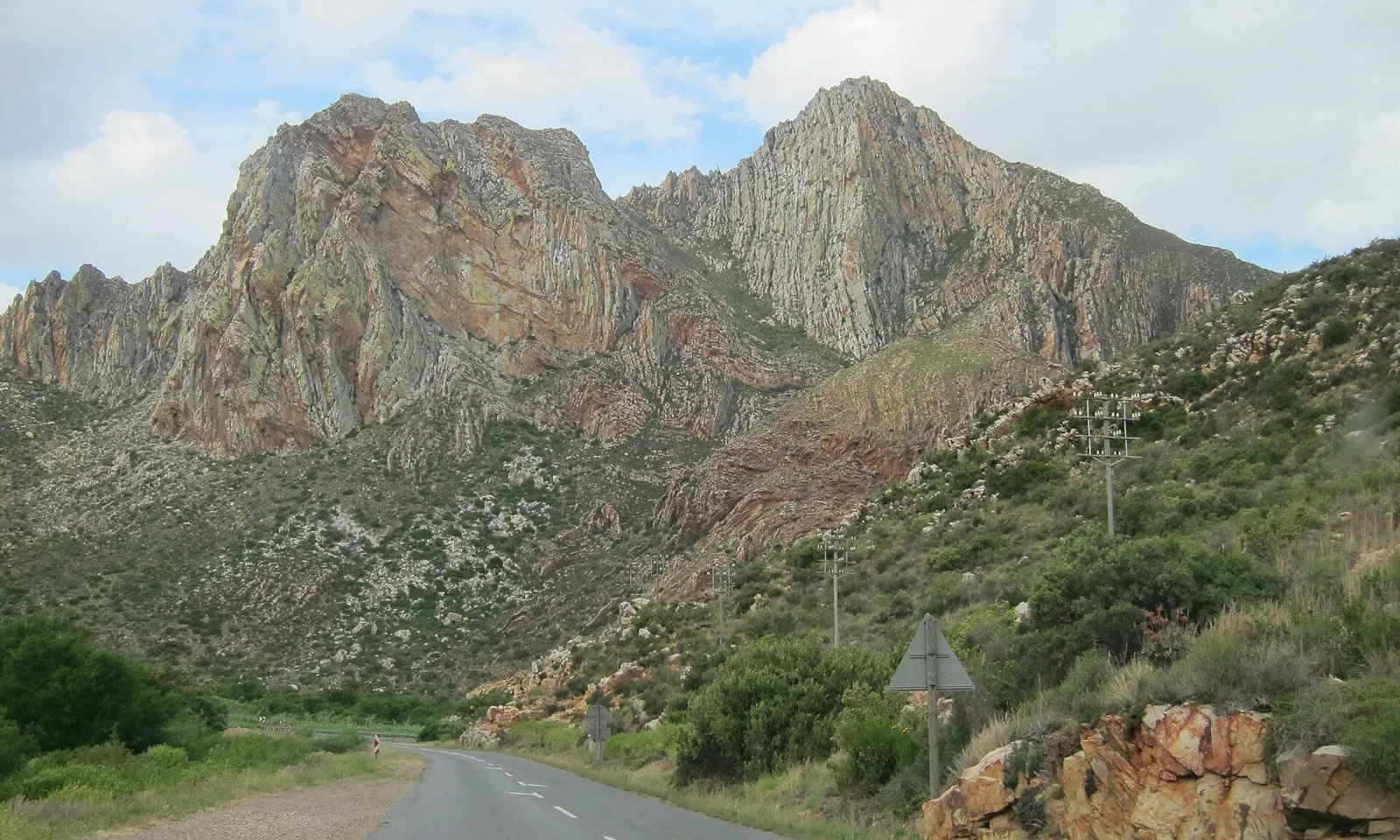
Folded red and grey quartzite peaks above the road through Cogmans Kloof near Montagu

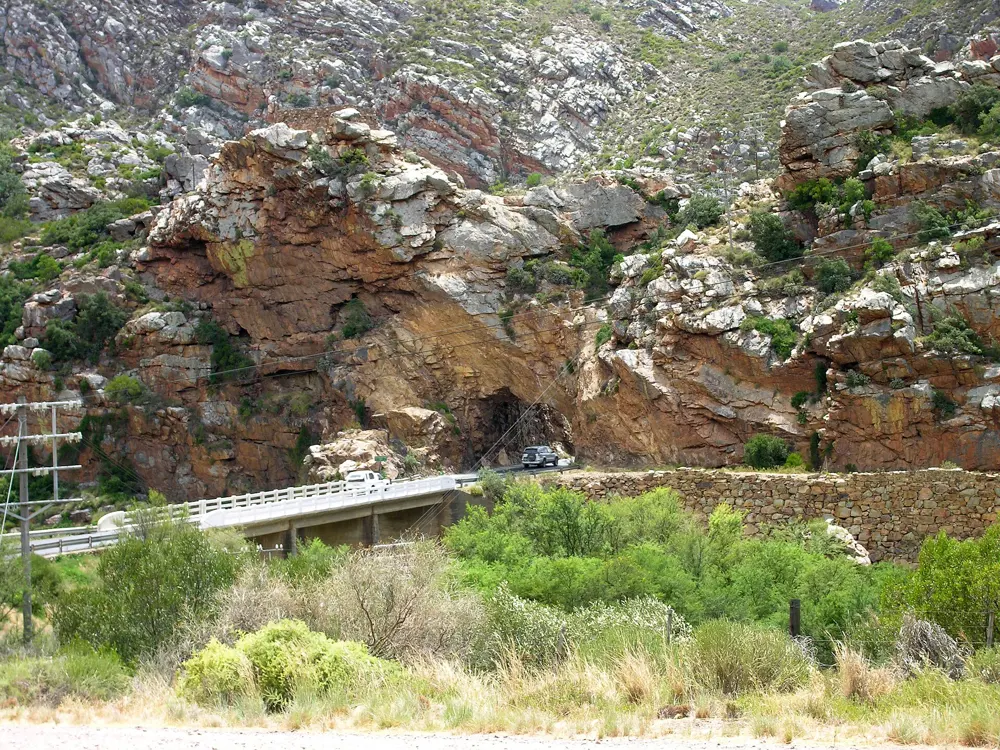
Photos: fabulousfabs (CC BY 2.0), Chris Eason from London (CC BY 2.0), Col André Kritzinger (CC BY-SA 3.0), Graham Bawden (CC BY-SA 4.0)

Rock
Quartzite in the kloofs of the Cape Fold Mountains
Style
Sport, mostly single pitch, some trad and multi-pitch
Grades
10 to 33 (about F4 to F8b+)
Best season
Winter, when Cape Town is wet

Why go

Montagu is a small town in the semi-desert Klein Karoo, on the east side of the Langeberg, reached through Cogmans Kloof and the tunnel Thomas Bain blasted for the pass. The first recorded climb, Eagle's Folly, a seven-pitch 17, went up in 1971 beside Cogmans Buttress. Sport climbing grew from the 1980s and 1990s in Oorlogskloof, Cogmanskloof and Bad Kloof, and in 1991 Jono Fischer's L'Abraxas (30) in Oorlogskloof was the hardest route in the country. Today the kloofs hold routes at every grade.

The route

Bosch Kloof is the favourite for grades 17 to 22: Bosch Crag has some of the best 21s, Skull Crag has long routes on a high wall at the head of the kloof, and Ramset Crag suits beginners, with double-pitch routes such as Master of Rings. Look for Latin Lessons (21), Partners in Crime (24) and Never Say Goodbye (27). At the Riverside crags, the Steeple has the long slab of Gospel Express (17) and the short, steep Church of Frederico (23). Bad Kloof's sectors include the Scoop, Sloth Crag, Supertubes, the Palace and Berlin Wall, with The Vision Thing (23), Thruster (26) and Cool Like That (29). On Cogmans Buttress, Another Day in Paradise and Magical Mystery Tour are bolted multi-pitch routes.

When to go

Rainfall is low, so Montagu is a winter venue: it is often sunny and warm here when Cape Town is cold and wet. Summer is hotter, but shade can usually be found, and Ramset Crag is good on summer mornings.

Getting there

Montagu is about 180 km and two and a half hours from Cape Town airport. Take the N1, through the Huguenot Tunnel (a toll) or over the Du Toitskloof Pass, to Worcester, then the R60 through Robertson and the R62 through Ashton and Cogmans Kloof. Traffic police often check speeds in the 60 km/h towns. For Bosch Kloof, park at the Legoland parking and follow the cairned path into the kloof.

Permits and booking

Bosch Kloof is private land. Its owner closed it in 2010, saying climbers had polluted his drinking water, and it reopened in March 2015 under a permit system. Everyone entering, hikers included, needs a day or multi-day permit, bought online through Montagu Climbing; groups are capped at 10, every person must carry ID, and no pets, fires, stoves or smoking are allowed. Bad Kloof needs a permit if you walk in from the bottom; climbers entering from the Avalon Springs side tell gate security and go in free. New bolting needs prior approval from the Montagu Mountain Committee.

How hard it is

There is something at every grade, from easy slabs to 33. Many routes at Bosch are close to 30 m and some nearly 40 m, so check your rope before lowering off. Floods have reshaped Bad Kloof, washing away the bases of Waterworld and Lionsaid crags in 2011 and again in 2014. The Lost World crags have been closed since 2006 to anyone not staying at Les Hauts de Montagu.

Where to sleep

Montagu has many places to stay for any budget, and when the town is full, Pat Busch Nature Reserve just outside it is the usual fallback. The Spar on Long Street is open every day until 8 pm.

Tips

  • Bottle stores close on Sundays and at 5 pm on Saturdays; the Platform 62 farm stall in Ashton sells wine on Sunday until 5 pm.
  • Free online topos for the Montagu crags are on the Montagu Climbing site, and theTopo carries Blue Mountain Publishers topos for Bosch and Oorlogs Kloof.
05 / 10

The Cederberg: Wolfberg and Truitjieskraal

Cederberg Wilderness, Western Cape

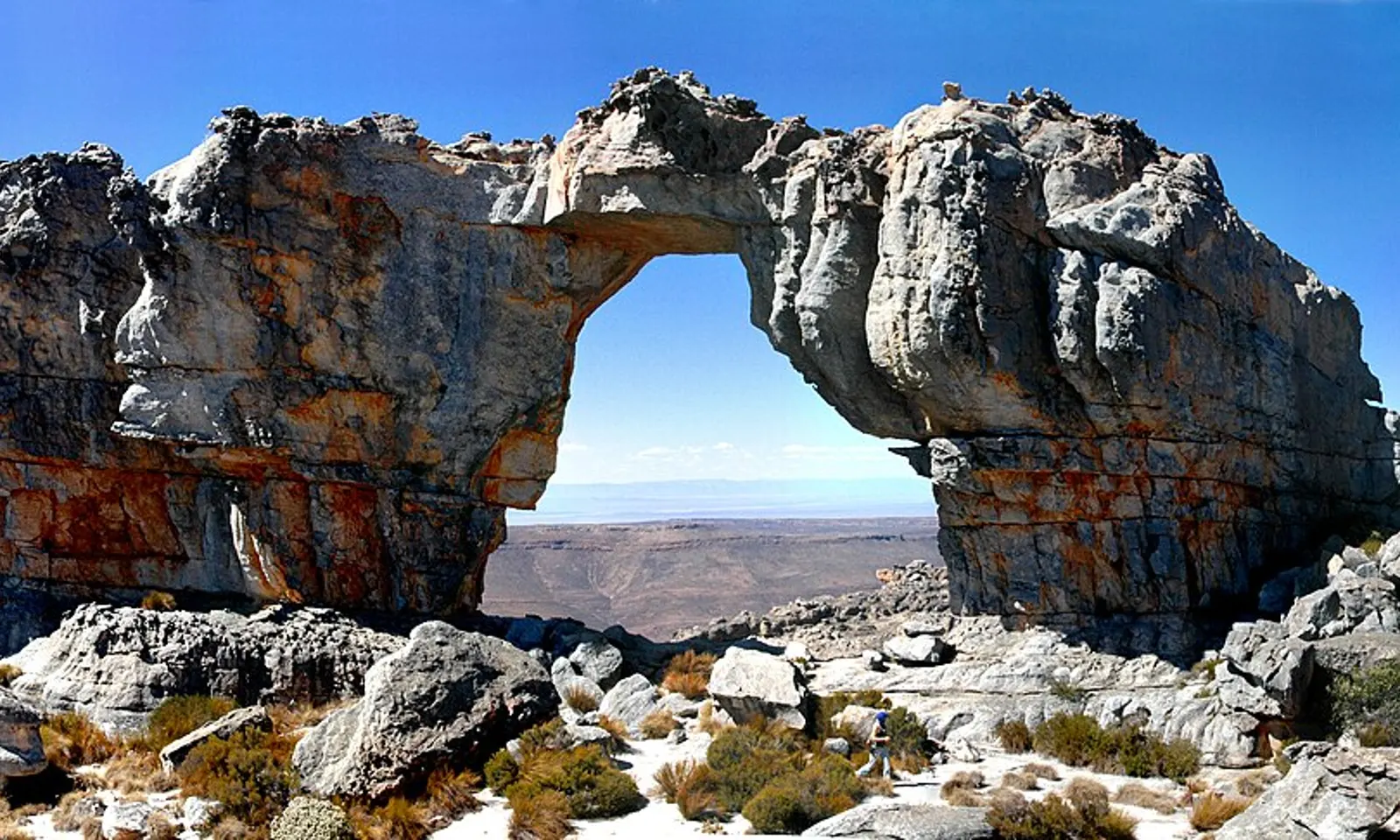
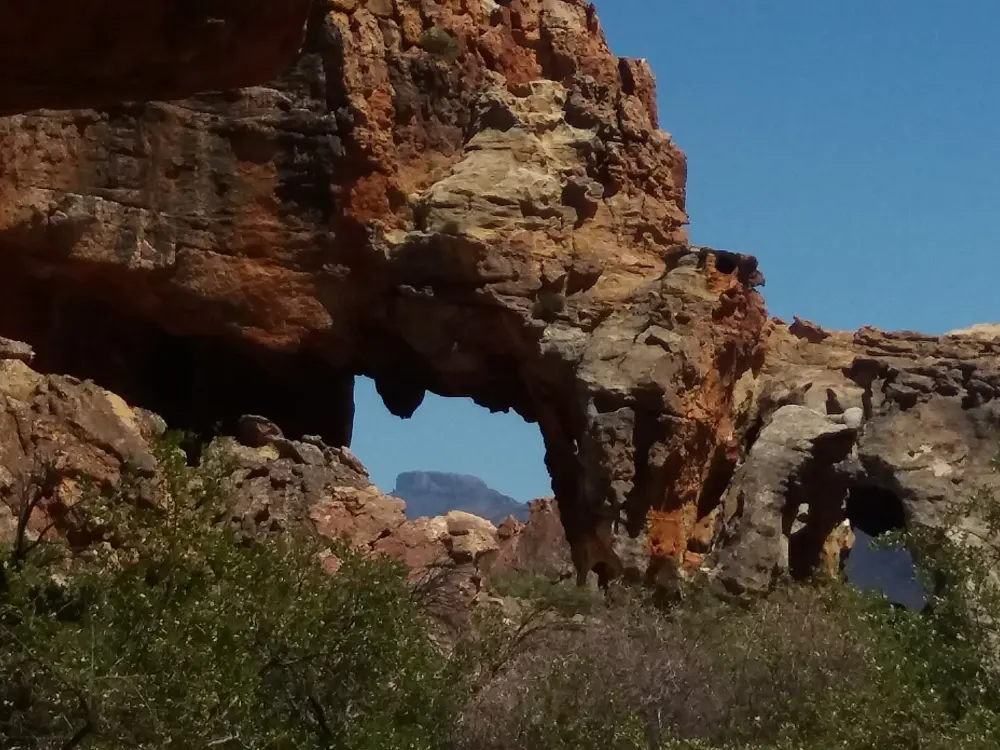
The Wolfberg Arch of weathered sandstone with the plains of the Cederberg seen through it

Photos: Amada44 (Public domain), JonRichfield (CC BY-SA 3.0), Zaian (CC0), Zaian (CC0)

Rock
Hard, compact sandstone
Style
Multi-pitch trad at Wolfberg, sport at Truitjieskraal
Sport routes
436 in the 2023 guide, F4b to F9a
Best season
Autumn and spring

Why go

South of Rocklands, the central Cederberg is the Western Cape's big adventure climbing ground. The sandstone is very hard and compact, and routes follow cracks, chimneys and horizontal rails. Wolfberg, above Sanddrif, is the most accessible of the mountain crags, with routes of four to seven pitches; Truitjieskraal, among the rock formations near Kromrivier, is the best-known sport area. Farther in, Tafelberg and Krakadouw need a walk of two to three hours and a few nights out.

The route

Grades are South African. At Wolfberg Cracks the classics are Celestial Journey (22), Alone in Space (22), Energy Crisis (20) and Little Red Rooster (15), and the East Face holds many of the best lines. Truitjieskraal's sectors include Dragon's Cleft, Ken's Block, Red Turret and Twin Columns. At Krakadouw, King Kone (20) runs ten pitches on the big crag, and Icthyasaurus (21), Juggernaut (22) and Valhalla (26) take about five pitches each on the smaller one. Tafelberg Frontal (12) is the easy classic on Tafelberg. Tony Lourens's Cederberg Rock (2023) covers the sport routes.

When to go

Summer is very hot, but most Wolfberg routes are in shade if you do the walk in early; autumn and spring are better. Tafelberg is a summer crag, shady and often cold. Krakadouw gets plenty of sun and is climbable from spring to autumn.

Getting there

The Cederberg starts about 250 km north of Cape Town. Floods in 2026 changed the roads: CapeNature's May 2026 notice says the Uitkyk Pass collapsed and the Ou Kaapse Weg is closed between the Algeria community and the Algeria office, so Wolfberg, Truitjieskraal and Stadsaal are reached only by the Ceres and the Citrusdal or Op-die-Berg roads to Matjiesrivier, which have damaged sections. From Sanddrif, the walk to Wolfberg's walls takes 30 to 60 minutes. Truitjieskraal is behind a locked gate; the permit gives you the access.

Permits and booking

Wolfberg is on private land. Buy a permit at Sanddrif reception on Dwarsrivier farm or through the Mountain Club in Cape Town; bolting is strictly forbidden. CapeNature sells Truitjieskraal day permits at Algeria, Driehoek, Sanddrif, Kromrivier, Nuwerus and Oasis. Krakadouw needs a CapeNature permit, with no bolting and no fires. In May 2026 CapeNature closed Wolfberg Arch, Truitjieskraal, Stadsaal and the Maltese Cross after the floods, planning to reopen them on 1 July; we found no later notice confirming the reopening, so check first. Areas B and C of the wilderness are closed to hikers until December 2026.

How hard it is

Protection is usually good, but the routes are often steep and burly and need a confident approach. Bolting is limited and many lines are long, so carry a full trad rack. At Krakadouw and Tafelberg water is scarce: fill bottles on the walk in.

Where to sleep

Sanddrif has a campsite close to the Wolfberg climbing. There is no camping at Truitjieskraal, but Cederberg Park at Kromrivier is nearby. Climbers bivouac below Krakadouw and Tafelberg. CapeNature's Algeria campsite is closed indefinitely after the floods.

Tips

  • Older trad guides, Julian Fisher's Cape Rock (1999) and Jayson Orton's Wolfberg Cracks (2000), still describe the routes.
  • Phone CapeNature's Cederberg office on 087 087 3066 for current road and site status.
06 / 10

The Magaliesberg kloofs

Gauteng and North West

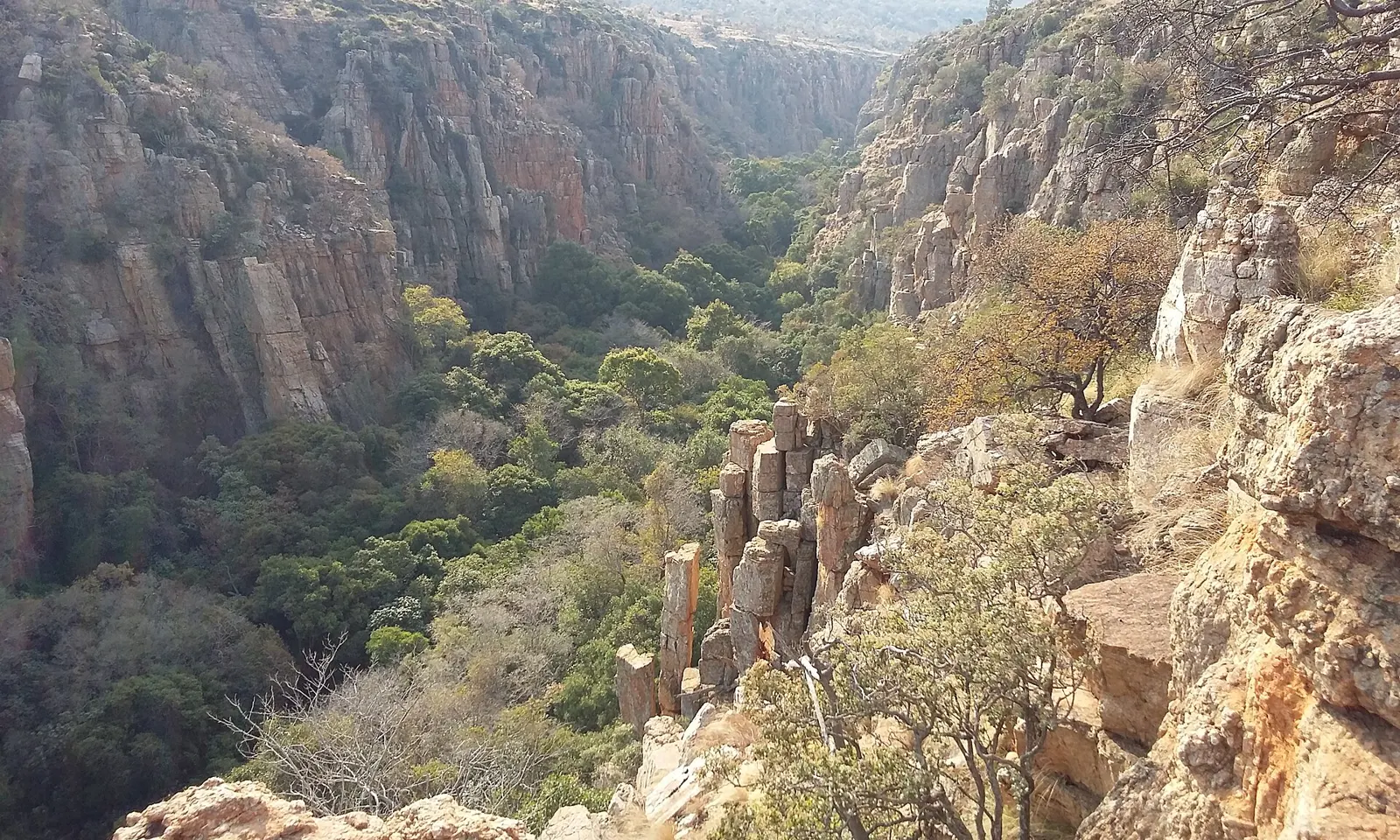
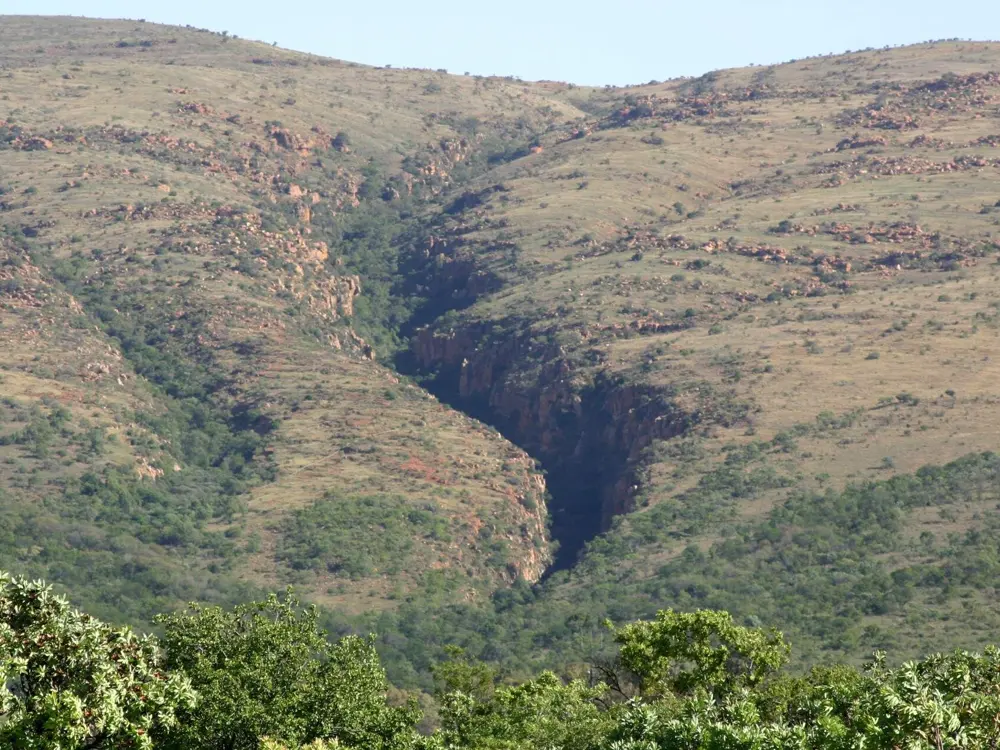
Tall quartzite cliffs and pillars lining a wooded kloof in the Magaliesberg

Photos: Tracy Robb (CC BY-SA 3.0), Rotational (Public domain), Paul venter at en.wikipedia (Public domain), StormSignal from Magaliesburg, South Africa (CC BY-SA 2.0)

Rock
Quartzite, about 2.3 billion years old
Style
Mostly multi-pitch trad in gorges
Routes
About 50 to 150 in each kloof
Best season
All year

Why go

The Magaliesberg, a range of mostly quartzite that cuts through suburban Pretoria, and was declared a UNESCO biosphere reserve in 2015. Its kloofs, steep gorges cut into the range, hold cliffs, waterfalls and clear pools an hour or so from Johannesburg. The Mountain Club of South Africa owns several of them and manages climbing there. Upper Tonquani, with its soaring cliffs, is considered by many the most beautiful of all.

The route

Grades are South African. Upper Tonquani has more than 150 trad climbs, many of them multi-pitch: Red Corner (17) gets the guide's five stars, Hawk's Eye (13) four, and Tonquani Crack (15) is another favourite. Lower Tonquani has more than 120 trad routes from 7 to 26, with climbs of 90 m and more where Cedarberg Kloof meets it. Cedarberg Kloof has over 100 routes, most between 17 and 20, and Boulder Kloof about 60 single pitches from 8 to 27. Mhlabatini, a narrow crack-climbing kloof, has about 140 routes, many from 19 up. Fernkloof adds hard, steep sport routes.

When to go

You can climb all year. Upper Tonquani is wide and sunny, so it stays warm on cold winter days, while most kloofs are shaded and cool. Avoid summer thunderstorms; heavy rain makes the kloofs dangerous.

Getting there

Upper Tonquani's southern access, about 60 minutes from Johannesburg with a few kilometres of dirt, is through Askari Game Reserve and open to members only; others walk in from Calabash or Utopia in about an hour. Lower Tonquani takes about 90 minutes via Breedtsnek, where a 4x4 is strongly recommended, or 120 minutes via Buffelspoort Dam. Mhlabatini is 60 to 90 minutes away; parking there is R60 a car a day in an honesty box, and you should not arrive or leave in the dark.

Permits and booking

The club's kloofs are open to members; non-members and members' guests need permits from the Mountain Club's Johannesburg section, for a nominal charge. Parking at Askari costs R40 a car. Most kloofs have a moratorium on bolting, and fires are strictly forbidden.

How hard it is

Walk-ins are long and strenuous, and the rock is excellent. Descents are by gullies or abseils from trees. The traverse above the Help-Help Pools between Upper and Lower Tonquani is polished and very slippery. Grades in the club's guides were converted from an older system and may be out by a grade or two.

Where to sleep

Wild camping without facilities is allowed on the cliffs above Upper Tonquani, at the top of Cedarberg Kloof and at the top of Mhlabatini, but not in the kloofs. Water in Tonquani runs all year and is safe to drink. For Fernkloof, Bergheim resort has camping and a few chalets.

Tips

  • The club's route guides, sold by the Johannesburg section, and Fran Hunziker's selected classics guide cover the kloofs.
  • Upper Tonquani has superb birdlife, including black eagles, and pools to swim in.
07 / 10

The Drakensberg

Maloti-Drakensberg Park, KwaZulu-Natal

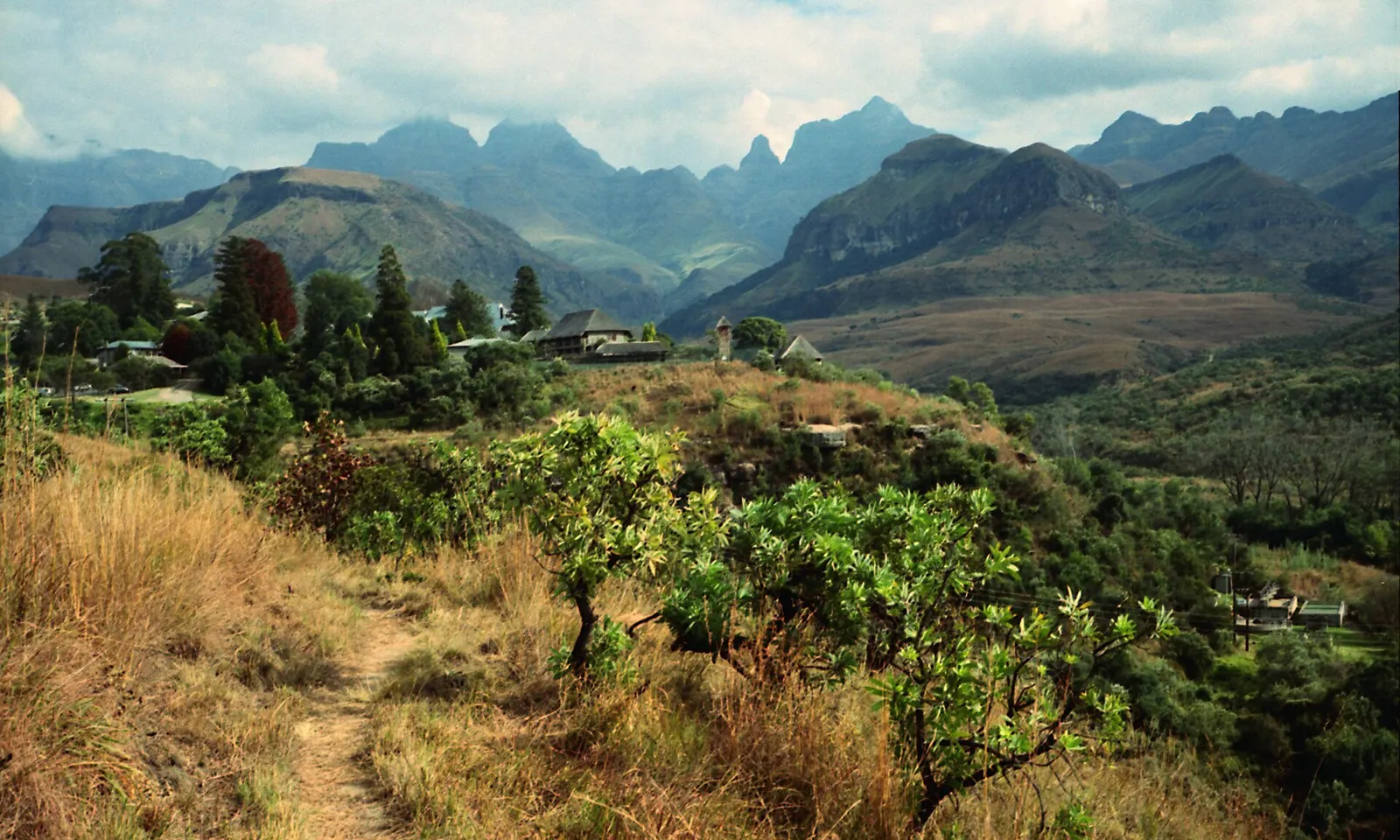
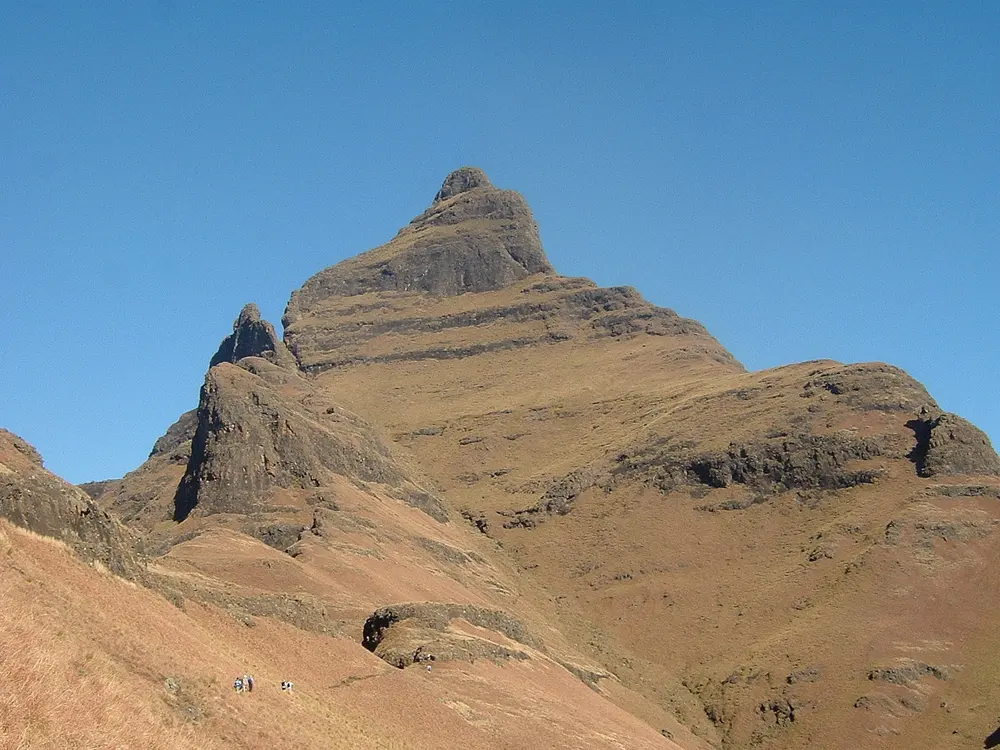
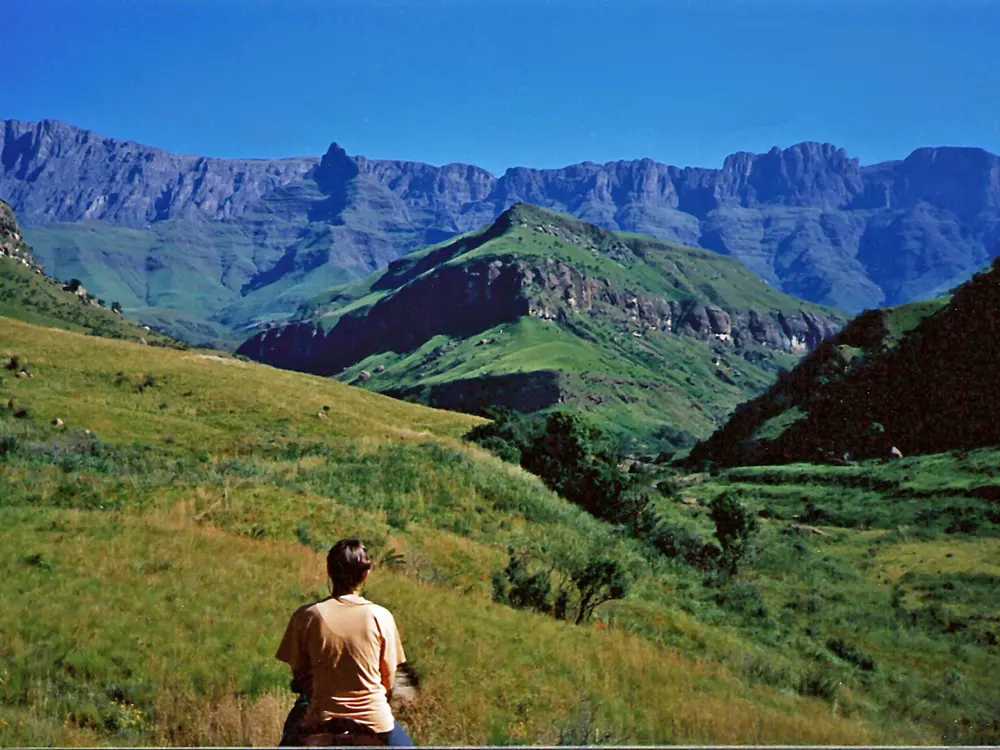
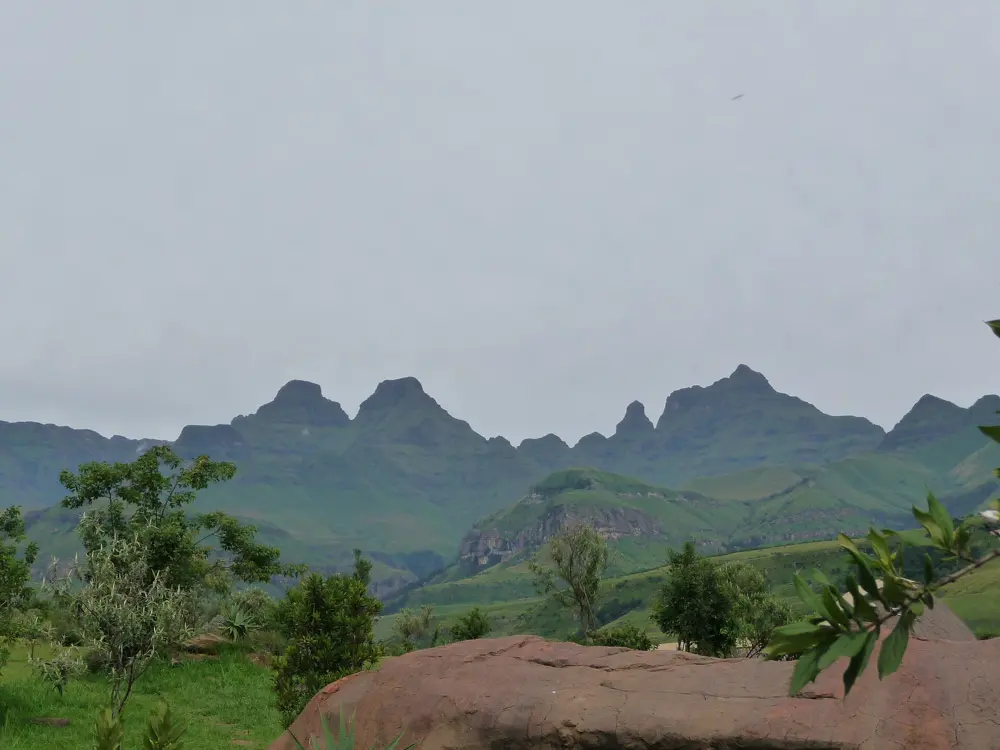
The jagged peaks of the Cathedral range in the Drakensberg above green foothills

Photos: Chris Bloom from Durban, South Africa (CC BY-SA 2.0), Sara Atkins from San Francisco Bay Area (CC BY 2.0), Gareth Williams from Redhill, England (CC BY 2.0), Paul IJpelaar (CC BY 3.0)

Rock
Basalt, often crumbly
Style
Trad to summits, alpine in character
Cathedral Peak
3,004 m
Best season
April and May

Why go

The Drakensberg is South Africa's highest range, part of a World Heritage site listed in 2000 that also holds the world's greatest gallery of San rock art. Climbing here is different: the aim is a summit, and the climb is often the last 5% of the effort after a long walk up. The Devil's Tooth was thought unclimbable until 11 August 1950, when three Johannesburg students, E. Scholes, D. Bell and P. Campbell, reached the top.

The route

The Mountain Club lists ten classic Berg routes: the North Face (Angus-Leppan) Route on the Sentinel, the Devil's Tooth, the standard route on Mponjwana, Hooper's Route on the Bell, the standard route on the Pyramid, the Escarpment Arete on the Column, the standard and Barry's routes on the Monk's Cowl, the north-west ridge of the Injasuti Western Triplet, Schole's Route on Giant's Castle, and two winter ice routes on Giant's Castle. Cathedral Peak, first climbed in 1917 by a gully, is a long day's hike rather than a rock climb.

When to go

April and May are the best months in the mountains. June to September also works, but expect cold and possibly heavy snow. Conditions can turn dangerous quickly at any time of year.

Getting there

The Berg is four to five hours' drive from Johannesburg. You enter through a KwaZulu-Natal parks gate and park at the reception areas, which are reasonably safe; the cost is part of the entry fee. A typical walk to one of the popular peaks takes three to eight hours, carrying climbing and overnight gear.

Permits and booking

Entry and permits are handled at Ezemvelo KZN Wildlife gates. Climbs do not need booking, but caves do, well in advance, through Ezemvelo's central reservations on +27 (0)33 845 1000. Fill in the mountain rescue register before you start and sign out when you return. Sleeping in caves with San paintings is forbidden. The Mnweni area is a community conservation area outside Ezemvelo's control, with its own fees.

How hard it is

Rock quality is generally bad, worse on north faces than south. Climbing is strictly trad, apart from a couple of bolted routes, and gear placements are poor or sometimes missing. Grades start at about 13, and most popular peaks have fixed abseil anchors. You need mountaineering sense: carry warm clothes, a helmet and a torch. Gear left lying around may be stolen, so hide it away from paths.

Where to sleep

Climbers usually sleep in caves, which hold from two to twelve people, and carry a tent or bivvy bag in case. Water is generally available and drinkable but scarce near some caves. Fires are allowed only low down, never in caves.

Tips

  • The KwaZulu-Natal section of the Mountain Club publishes Rock and Ice Climbs of Drakensberg, the route guide.
  • Leave No Trace guidance for the Berg asks for groups of four to eight, and never more than 12 in the wilderness area.
08 / 10

Paarl Rocks

Paarl Mountain Nature Reserve, Western Cape

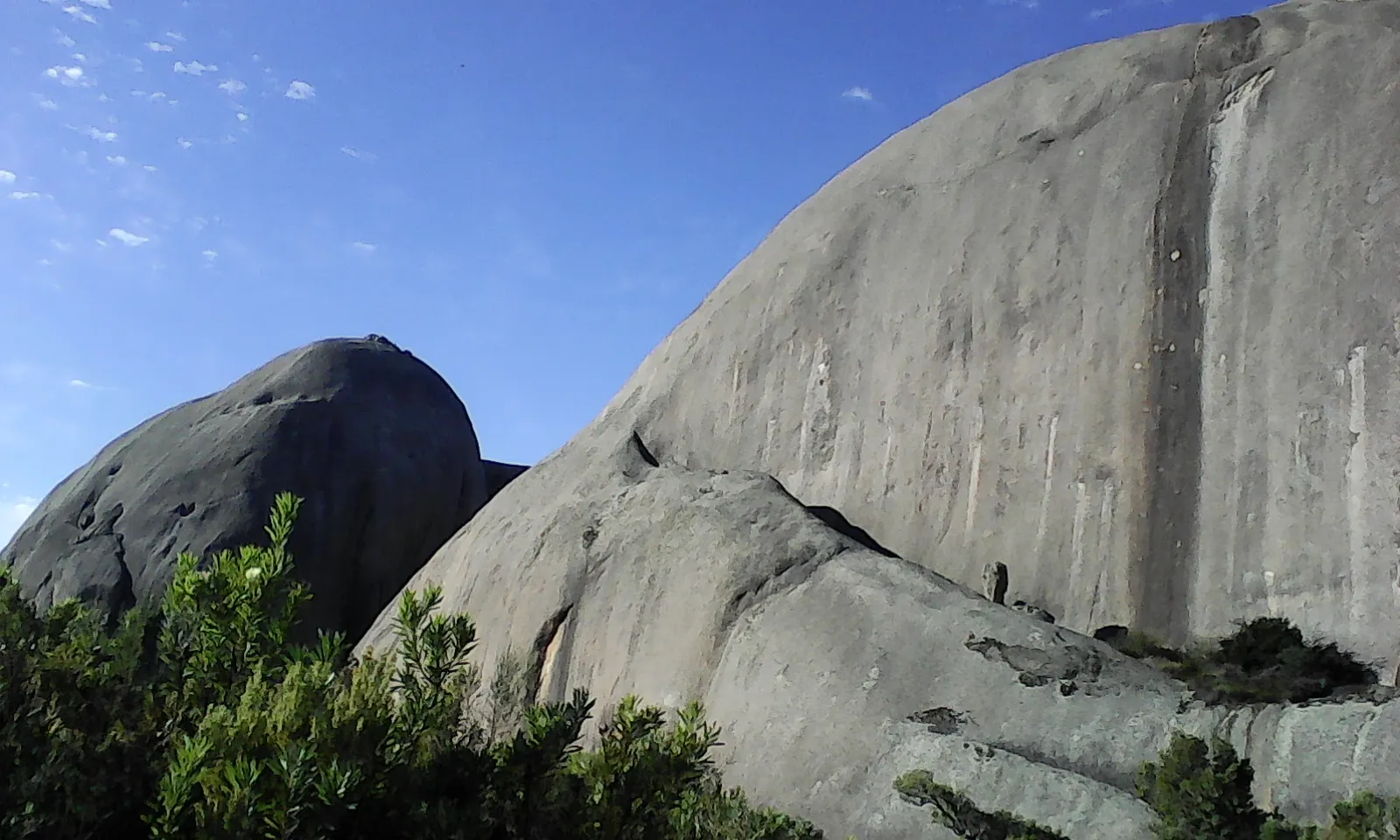
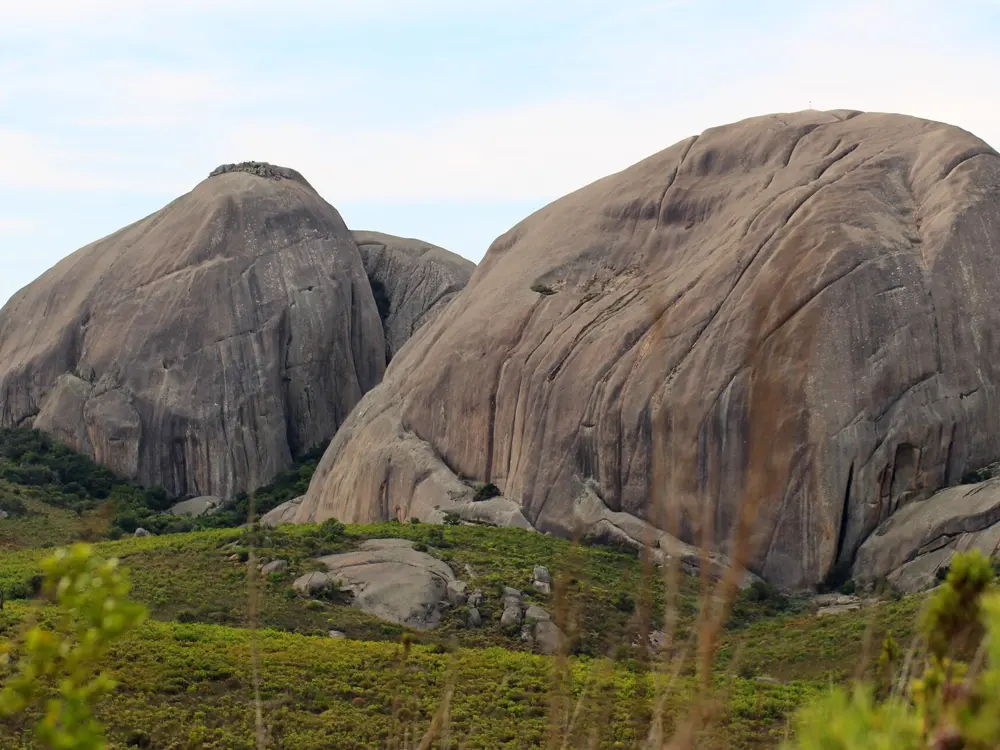
A huge grey granite dome at Paarl Rock with a dark water streak down its face

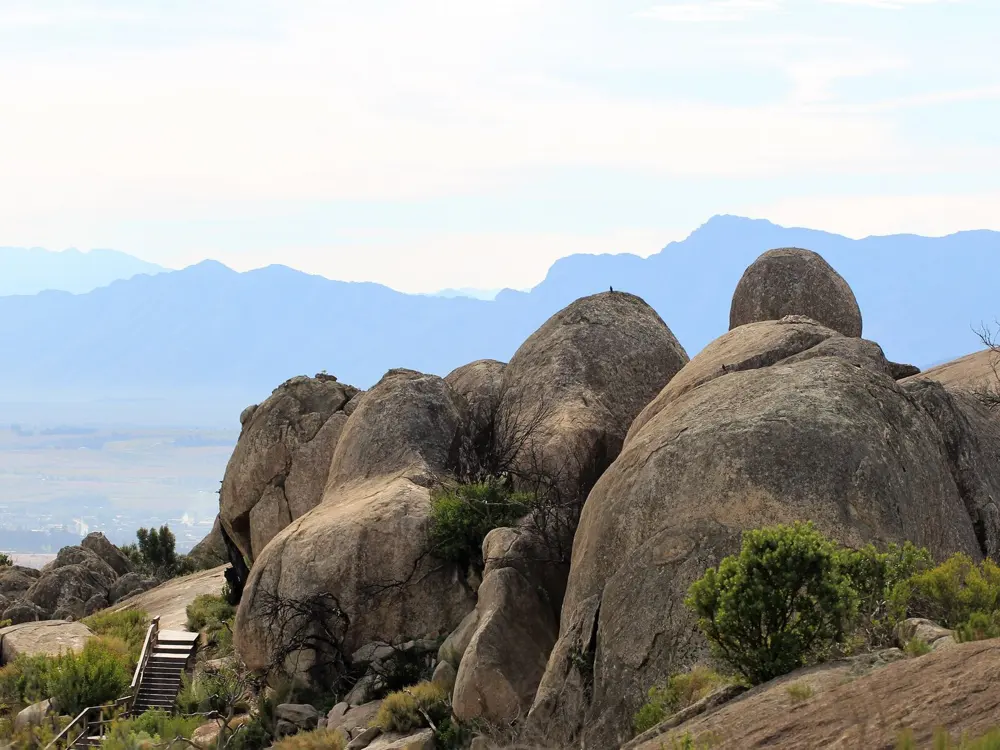
Photos: Mechelle83 (CC BY-SA 4.0), Karen Pagel (CC BY-SA 4.0), Karen Pagel (CC BY-SA 4.0), Andres de Wet (CC BY-SA 3.0)

Rock
Granite domes and slabs
Style
Slab sport and trad, bouldering
Routes
93 sport, 74 trad and 170 boulder problems listed
From Cape Town
About 60 km by the N1

Why go

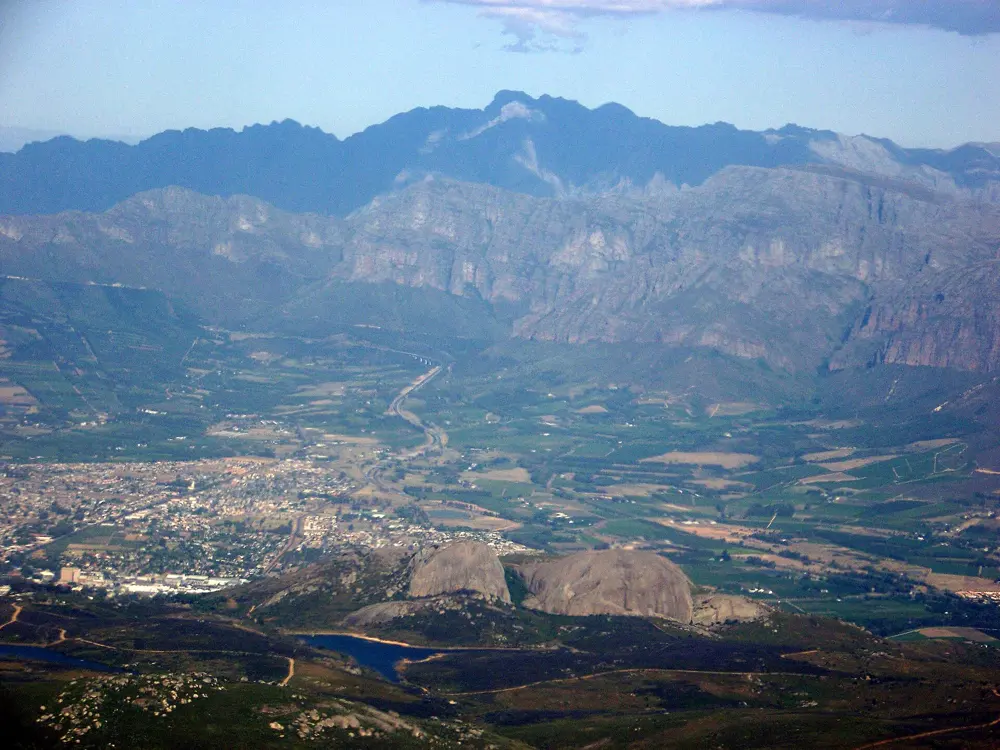
Paarl Rocks are the big grey granite domes above the town of Paarl, whose name means pearl; after rain, with the sun on them, you can see why. Climbing here is on and around three large domes and their boulders, with a mix of trad, sport and, more recently, bouldering. Since Scott and Stewart Noy published the first comprehensive guide in 2006, climbers have kept opening new single-pitch, multi-pitch and boulder lines.

The route

Grades are South African. Children of the Lesser God (22) is protected mostly by slings over the rock's knobs, with a couple of bolts on blank sections. Children of the Corn (25) is a sustained slab, and Parklife (27/28) follows a black water streak for 40 m on small edges. Little Dutch Boy (20) and Wonderland (22) are well bolted. Sectors include Paarl Rock, Gordon's Rock, Bretagne Rock, Two Cents Slab and Gladde Rock, and the boulders start by the lower parking.

When to go

The reserve is open all year. From 1 October to 31 March the gates are open 07:00 to 19:00, and from 1 April to 30 September 07:00 to 18:00. Local climbers recommend sunscreen.

Getting there

Take the N1 for about 60 km from Cape Town to the Paarl (R45) off-ramp, turn left onto Main Road for about 1.5 km to the reserve sign, then follow Jan Phillips Mountain Drive, which turns to dirt, up to the pay booth. Separate parking areas serve Gladde Rock, Two Cents Slab, the lower boulders, the upper crags and the rear walls by Nante's Dam.

Permits and booking

Entry is free on weekdays. On weekends and public holidays the climbing guide lists R48 a vehicle plus R16 a person, and a permit is needed to drive through the gates; you can also park at the pay booth and walk up. No one may enter in the last hour, and anyone still inside at closing is fined, because a second gate before the boom also locks. Climbers are asked to leave well before closing: access is sensitive.

How hard it is

The routes are mostly slabs with small holds and intricate, balancey moves. Older climbs can be run out between old bolts and need some trad gear; newer bolted routes are well equipped.

Where to sleep

Most climbers come for the day from Cape Town, under an hour's drive away. Paarl town is directly below the reserve.

Tips

  • Fees on climbing sites differ (R48 and R16 on one, R40 and R15 on another), so carry a little extra cash at weekends.
  • A local guide suggests dynamic stretches before the first route.
09 / 10

Silvermine and the Peninsula sport crags

Table Mountain National Park, Cape Town

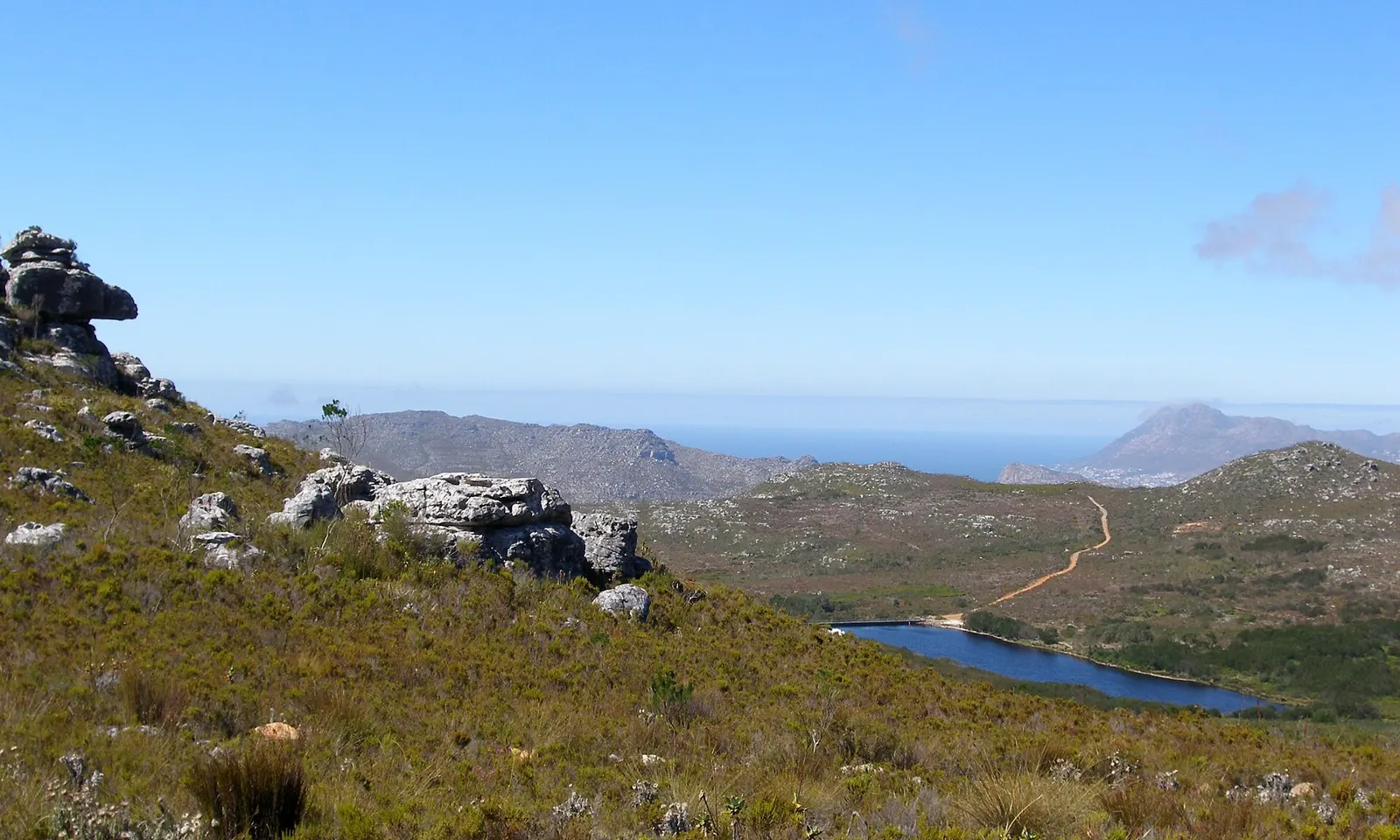
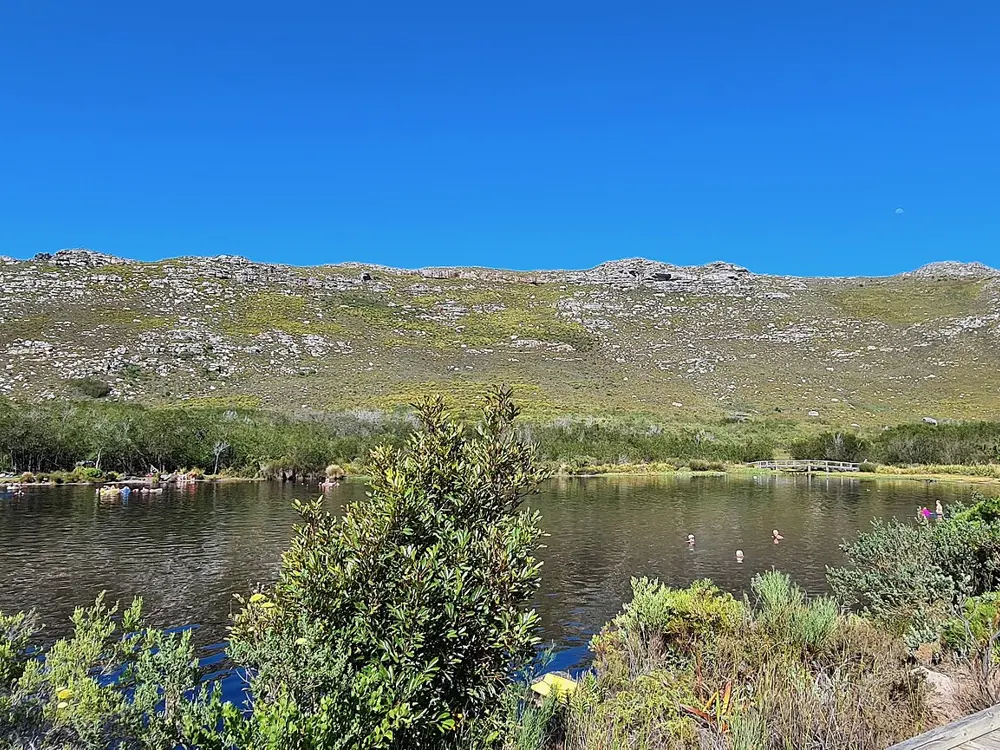
Fynbos slopes and sandstone outcrops above the Silvermine reservoir, with the sea beyond

Photos: China Crisis (CC BY-SA 3.0), Bernard DUPONT from FRANCE (CC BY-SA 2.0), Ian Wilson (CC BY 2.0), Fabian Sigler (CC BY 3.0)

Rock
Sandstone
Style
Sport, single pitch
Routes
More than 80 at Silvermine
Best season
All year

Why go

For bolted climbing near Cape Town, climbers head to the southern Peninsula. Silvermine, in Table Mountain National Park about 30 minutes from the city bowl, has six crags and more than 80 sport routes on high-quality rock. Nearby, The Mine is steep and powerful and can be climbed in the rain, and The Hole, on the coast near Muizenberg, is wildly overhanging on good holds.

The route

Grades are South African. Silvermine's Main Crag has routes up to 30 m on vertical walls with small crimps, mostly from 18 to 26: Sterling Silver (21), Trance Dance (23) and Pistolero (22), a long endurance route with crack sections. Lord of the Ring (16) at Lower Crag is the classic warm-up. The Mine climbs through roofs: Sickle Moon (22), Red Guitar on Fire (25), Swan Lake (25) and Gift of Wings (28). At The Hole most routes are 24 to 28, with warm-ups of 19 to 21 on the left, and Fleur de Mer (24+) and Fleur d'Afrique (25) are favourites. Lakeside Pinnacle, by the road above Muizenberg, suits beginners.

When to go

You can climb all year. The Mine is almost always in shade, good in summer and in light rain, but terrible when the south-easter howls. The Hole catches a chilly breeze on hot days, but the south-easter, which prevails in summer, can make its rock greasy, and it seeps in wet winters.

Getting there

Silvermine is reached by Ou Kaapse Weg (M64). Park at the Silvermine Dam lot for Main Crag, Silverminor and Blaze of Glory, or at the mountain bike car park for Lower Crag and the Pumphouse. Faulty Towers is about 500 m along Steenberg Ridge from Main Crag. For The Mine, follow a cairned path to a jeep track and its hairpin bend. Lakeside Pinnacle is a short walk from Boyes Drive.

Permits and booking

Silvermine is run by SANParks. Visitors show an ID or passport and pay a conservation fee, reported as R95 a person a day in 2023. Sport climbing also needs the annual My Activity Permit, which covers the whole Peninsula; Mountain Club members carry their membership card instead. The Mine and Lakeside Pinnacle have no fee. Bolting questions go to the Mountain Club's rock committee.

How hard it is

Silvermine runs from 13 to 27, with Main Crag harder than Lower Crag. The Hole wears you down quickly. Volunteers and local gyms check the bolts and anchors on clean-up days. At Peer's Cave, another crag off Ou Kaapse Weg, there have been safety incidents and car break-ins, so go in a group.

Where to sleep

These are day crags, half an hour from Cape Town and closer still from the False Bay towns, so climbers sleep in the city or along the coast.

Tips

  • Check the wind forecast before choosing a crag: the south-easter decides where you can climb.
  • The Cape Peninsula sport guide is on Rakkup, and theTopo carries Blue Mountain topos for Silvermine, The Mine and The Hole.
10 / 10

Du Toit's Kloof and Hellfire

Du Toitskloof Mountains, Western Cape

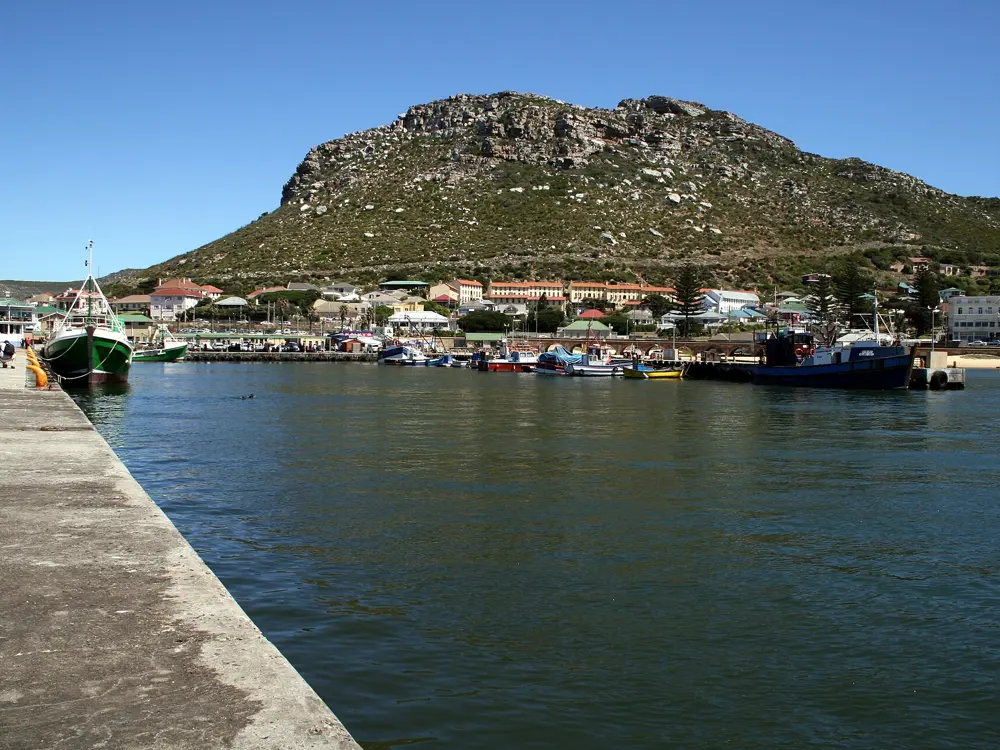
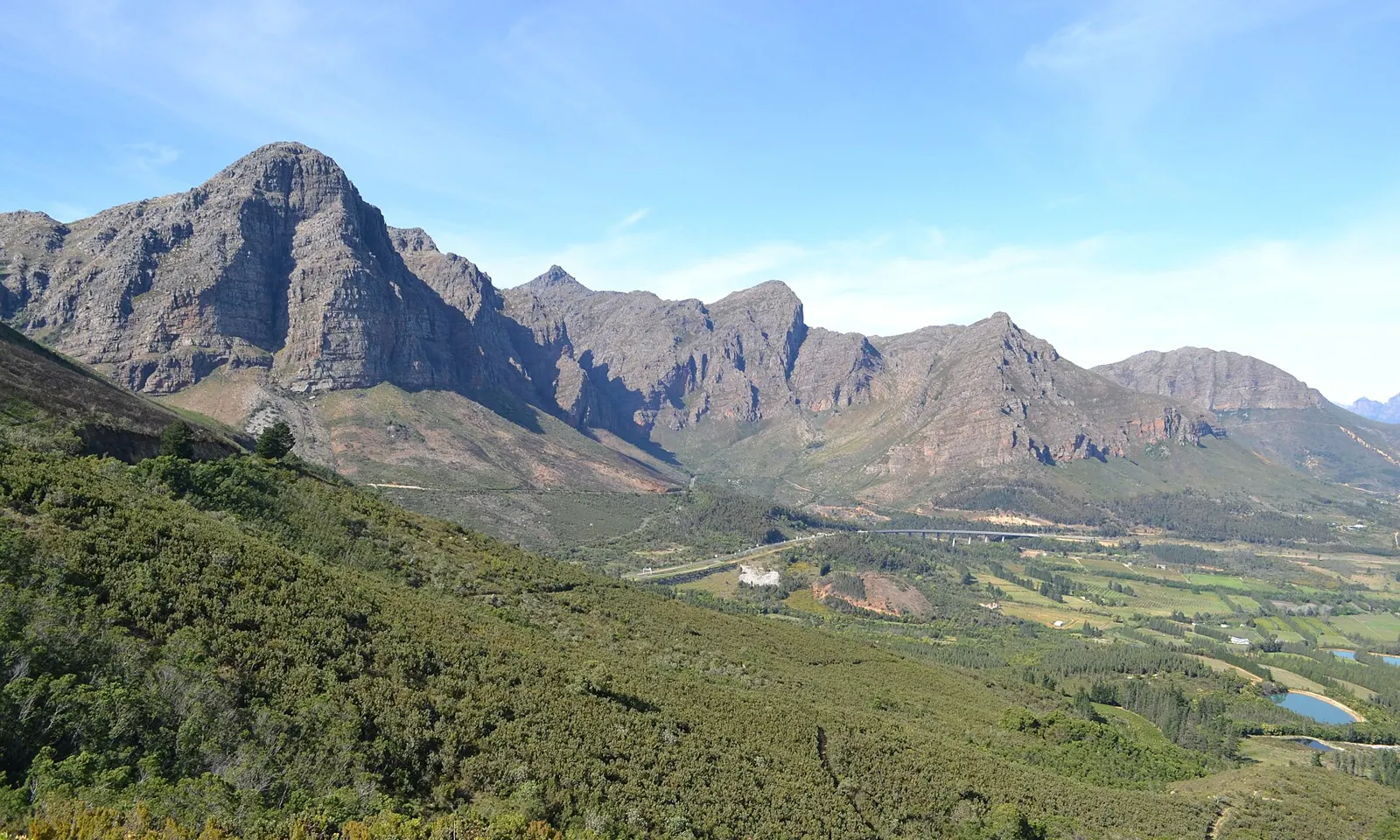
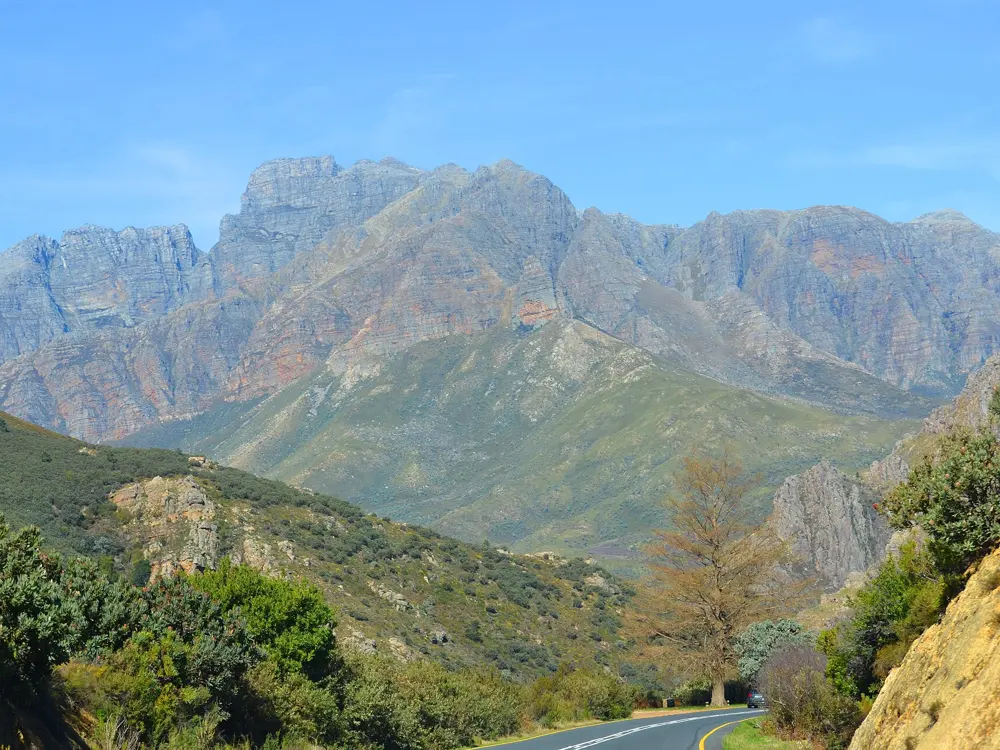
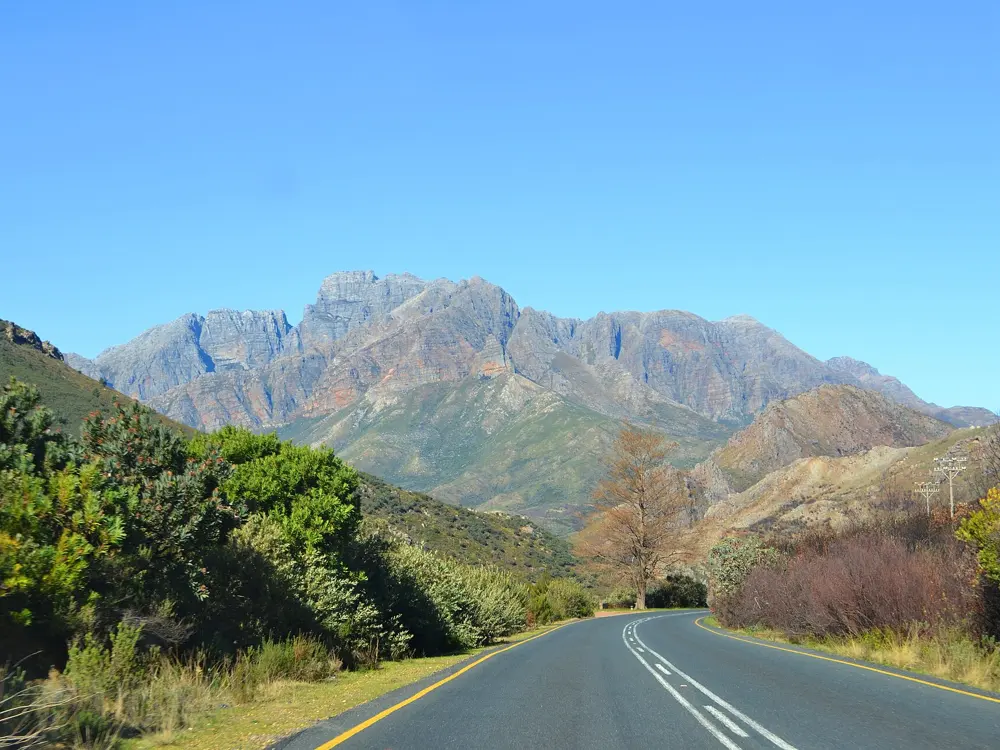
Rocky peaks of the Du Toitskloof Mountains above green slopes in Du Toit's Kloof

Photos: A3alb (CC BY-SA 3.0), A3alb (CC BY-SA 3.0), A3alb (CC BY-SA 3.0), A3alb (CC BY-SA 3.0)

Rock
Hard red sandstone at Hellfire
Style
Long trad routes, single and two-pitch sport
Highest peak
Du Toits Peak, 1,995 m
Best season
The cooler months

Why go

An hour from Cape Town on the N1, through the Huguenot Tunnel, the road comes out in Du Toit's Kloof, a steep mountain valley between Paarl and Worcester. Above it rise the Du Toitskloof Mountains, topped by Du Toits Peak at 1,995 m, with trad routes up to 400 m long and hard walk-ins. Closer to the road, Hellfire is a band of solid red sandstone with long single and two-pitch sport routes, quiet because of the drive and the approach.

The route

Grades are South African. On the big walls, Exposure in F Major (18), North West Frontal (19) and Armageddon Time (23) are recommended. Hellfire has 43 sport routes and many trad lines, spread across sectors such as the Combustion Chamber, Hellfire Buttress and Crown Crag, Magma Wall, the Melting Pot, the Pillar of Pain and the Wall of Flames. The Crow's Nest makes a good base, and the Pit of Despair offers shade on hot days.

When to go

Hellfire faces north and most of its crags are in sun from mid-morning, so it is generally too hot in summer and best in the cooler months. The surrounding peaks often carry snow.

Getting there

Take the N1 from Cape Town through the Huguenot Tunnel, 3.9 km long and a toll road, or over the Du Toitskloof Pass, which tops out at 820 m. Carry on past the Du Toits Kloof Lodge to the Klip River bridge, 2.7 km further, turn round and drive 700 m back towards Cape Town, and park on the verge after a low barrier and a large motorway sign. A cairned path climbs past two pylons to the crag, about 45 minutes from the road.

Permits and booking

Climbing at Hellfire needs a CapeNature permit, at a fee, or free for Wild Card holders, who must still book. Book on 021 483 0190 or reservation.alert@capenature.co.za, or buy one at the shop in the Du Toits Kloof Lodge, which opens at 9 am. Bolting is permitted only by application through the Mountain Club in Cape Town.

How hard it is

Hellfire is a sport crag with a mountain attitude. Some routes are too long to lower off in the usual way and need careful lowering or an abseil, and some crags involve scrambling to reach. The big trad routes are committing despite the road below, so bring mountain sense and a full rack.

Where to sleep

Most climbers come for the day from Cape Town, an hour away. Paarl is at the western end of the pass and Worcester at the eastern end.

Tips

  • Before bolting a new line at Hellfire, check it is not an existing trad route.
  • For the trad routes, look for Hellfire: Cragging in Du Toit's Kloof.

Sources

Distances, heights, seasons and permit rules were checked against these pages. Rules change, so check the park or trail authority before you go.